Topic

substantial justice

Substantial justice in Indian law refers to the principle that courts may overlook procedural technicalities to ensure fair outcomes when strict adherence to form would defeat the purpose of justice.

21 articlesLatest July 2026
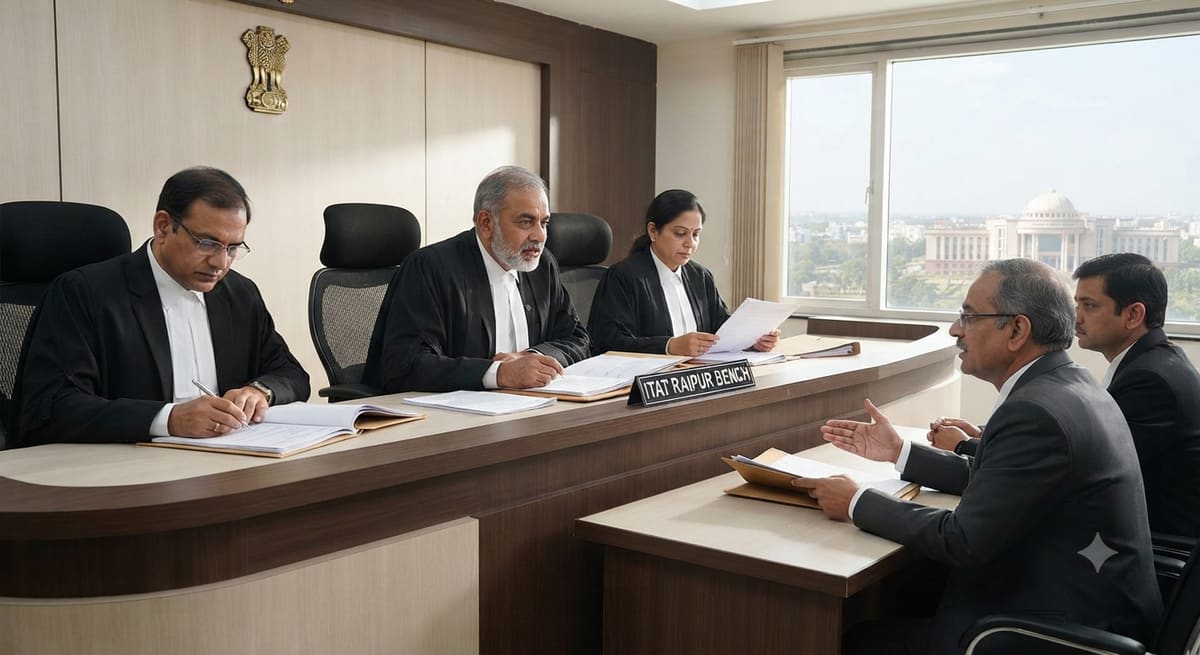
Natural Justice Requires Hearing Before Rejecting Appeal for Delay | ITAT Raipur
Case Law Analysis
|Income Tax Appellate Tribunal

Natural Justice Requires Hearing Before Rejecting Appeal for Delay | ITAT Raipur

The ITAT Raipur bench ruled that dismissing an income tax appeal solely due to delay, without affording the appellant an opportunity to explain the reason, violates fundamental principles of natural justice. This sets a critical precedent for taxpayers and tax authorities alike: procedural fairness trumps technical non-compliance when substantive rights are at stake.


Section 249(3) IT Act | Delay in First Appeal Condoned for Widow Caring for Seriously Ill Daughter on Substantial Justice Grounds : ITAT Agra
Case Law Analysis
|Income Tax Appellate Tribunal

Section 249(3) IT Act | Delay in First Appeal Condoned for Widow Caring for Seriously Ill Daughter on Substantial Justice Grounds : ITAT Agra

The ITAT Agra bench condoned a 59-day delay in filing an appeal before the CIT(A), holding that personal hardship-specifically, a widow’s sole responsibility for her daughter’s prolonged medical care-constitutes sufficient cause under Section 249(3). The ruling reinforces that technical limitation bars cannot override substantive justice in tax appeals, especially when the appellant faces extraordinary personal circumstances with no mala fide intent.

Section 249(3) Income Tax Act | 175-Day Delay in Appeal Condoned on Substantial Justice Over Technicality : ITAT Delhi
Case Law Analysis
|Income Tax Appellate Tribunal

Section 249(3) Income Tax Act | 175-Day Delay in Appeal Condoned on Substantial Justice Over Technicality : ITAT Delhi

ITAT Delhi has ruled that a 175-day delay in filing an income tax appeal must be condoned when the delay stems from genuine hardship, affirming that procedural rigidity cannot override the core principle of substantial justice. This reinforces that appellate authorities must interpret condonation provisions liberally to ensure access to justice for taxpayers, especially where no prejudice is shown to the revenue.

Section 249(3) IT Act | Sufficient Cause for 4-Year-9-Month Delay Condoned Liberally to Prevent Miscarriage of Justice : ITAT Delhi
Case Law Analysis
|Income Tax Appellate Tribunal

Section 249(3) IT Act | Sufficient Cause for 4-Year-9-Month Delay Condoned Liberally to Prevent Miscarriage of Justice : ITAT Delhi

ITAT Delhi has ruled that delays of nearly five years in filing income tax appeals may be condoned under Section 249(3) if denying relief would result in a miscarriage of justice, emphasizing that technical limitations must yield to substantive fairness. This sets a critical precedent for taxpayers facing prolonged administrative delays, reinforcing that procedural rigidity cannot override equitable outcomes in tax adjudication.

Condonation of Delay | Substantial Justice Overrides Technical Dismissal in Survey-Triggered Reassessment Appeals : ITAT Pune
Case Law Analysis
|Income Tax Appellate Tribunal

Condonation of Delay | Substantial Justice Overrides Technical Dismissal in Survey-Triggered Reassessment Appeals : ITAT Pune

ITAT Pune has ruled that delays in filing tax appeals must be condoned when the core issue involves substantial justice, particularly where reassessment stems from survey-based proceedings and the assessee has offered a plausible explanation. This sets a critical precedent for taxpayers facing technical rejections in complex, non-routine tax investigations, reinforcing that procedural lapses cannot override meritorious claims.

Section 249, Income-tax Act | Delay Condonation Permitted When Technical Defects Cannot Override Substantial Justice : ITAT Dehradun
Case Law Analysis
|Income Tax Appellate Tribunal

Section 249, Income-tax Act | Delay Condonation Permitted When Technical Defects Cannot Override Substantial Justice : ITAT Dehradun

ITAT Dehradun condoned a 399-day delay in filing an income tax appeal, reaffirming that rigid procedural compliance must yield to the principle of substantial justice established in Collector v. Katiji. This ruling empowers taxpayers facing genuine hardship to seek redress without being barred by technicalities, reinforcing the tribunal’s role as a forum for equitable tax justice.

Section 250(6) IT Act | Unchallenged Medical Evidence Justifies Condonation of Delay in Tax Appeals : ITAT Delhi
Case Law Analysis
|Income Tax Appellate Tribunal

Section 250(6) IT Act | Unchallenged Medical Evidence Justifies Condonation of Delay in Tax Appeals : ITAT Delhi

ITAT Delhi has ruled that when an assessee submits credible medical grounds for delay in filing an appeal and the Revenue fails to rebut them, the tribunal must condone the delay to uphold substantive justice. This sets a critical precedent for taxpayers facing health-related procedural setbacks, reinforcing that technical defaults cannot override legitimate humanitarian concerns under the Income Tax Act.

Section 80P Deduction | Condonation of Delay Granted Where Assessee Proves Genuine Hardship and No Revenue Prejudice : ITAT Mumbai
Case Law Analysis
|Income Tax Appellate Tribunal

Section 80P Deduction | Condonation of Delay Granted Where Assessee Proves Genuine Hardship and No Revenue Prejudice : ITAT Mumbai

ITAT Mumbai condoned a 10-day delay in filing an appeal, emphasizing that procedural technicalities cannot override substantial justice where the assessee demonstrated genuine hardship (portal unavailability and loss of physical copy) and no prejudice to the Revenue. The ruling reaffirms that co-operative credit societies are entitled to Section 80P(2) deductions on their entire income, including disallowed provisions for bad debts.

Commercial Courts Act | Delay in Document Filing Excusable Under CPC Order XI Rule 1 If Reasonable Cause Shown: Andhra Pradesh HC
Case Law Analysis
|Andhra Pradesh High Court

Commercial Courts Act | Delay in Document Filing Excusable Under CPC Order XI Rule 1 If Reasonable Cause Shown: Andhra Pradesh HC

The Andhra Pradesh High Court ruled that procedural delays in filing documents under the Commercial Courts Act are not fatal if a reasonable cause-such as misplacement-is demonstrated. The judgment reinforces that substantial justice must prevail over technicalities, offering relief to litigants in commercial disputes where document production is delayed due to bona fide errors.

Order 39 CPC | Mislabeling Injunction as 'Permanent' Doesn't Void Temporary Relief; Unmarked Documents Admissible for Prima Facie Case: Andhra Pradesh HC
Case Law Analysis
|Andhra Pradesh High Court

Order 39 CPC | Mislabeling Injunction as 'Permanent' Doesn't Void Temporary Relief; Unmarked Documents Admissible for Prima Facie Case: Andhra Pradesh HC

The Andhra Pradesh High Court clarifies that clerical errors in labeling an injunction as 'permanent' under Order 39 CPC do not invalidate the interim relief granted, and documents not formally marked as exhibits may still be considered if they substantiate the prima facie case, balance of convenience, and risk of irreparable injury. This empowers litigants to pursue substantive justice despite technical flaws in pleading or evidence presentation.

CPC Order XVII | Conditional Reopening of Evidence Permitted for Immovable Property Disputes Despite Procedural Delay: Punjab & Haryana HC
Case Law Analysis
|Punjab and Haryana High Court

CPC Order XVII | Conditional Reopening of Evidence Permitted for Immovable Property Disputes Despite Procedural Delay: Punjab & Haryana HC

The Punjab & Haryana High Court upheld the trial court’s decision to close the plaintiff’s evidence after 12 missed opportunities but granted two limited chances to complete testimony, conditioning relief on payment of ₹25,000 costs and service of dasti summons. This balances procedural discipline with substantive justice in land disputes, affirming that courts may bend rules for valuable property rights without rewarding dilatory conduct.

Section 253(5) IT Act | Condonation of Delay Mandatory If Order Non-Receipt Due to Incorrect Email : ITAT Bangalore
Case Law Analysis
|Income Tax Appellate Tribunal

Section 253(5) IT Act | Condonation of Delay Mandatory If Order Non-Receipt Due to Incorrect Email : ITAT Bangalore

ITAT Bangalore condones a 92-day delay in filing an appeal after the assessee failed to receive the CIT(A) order due to service on incorrect email IDs. The Tribunal emphasized that substantial justice prevails over procedural technicalities, directing authorities to ensure proper service of orders to avoid prejudice to taxpayers.

Section 5 Limitation Act | State as Litigant Entitled to Liberal Condonation of Delay : Bombay HC Rejects Pedantic Approach
Case Law Analysis
|Bombay High Court

Section 5 Limitation Act | State as Litigant Entitled to Liberal Condonation of Delay : Bombay HC Rejects Pedantic Approach

Bombay HC reaffirms that the State, like private litigants, deserves a liberal interpretation under Section 5 of the Limitation Act for condonation of delay. The court emphasized that substantial justice must prevail over technicalities, citing Supreme Court precedent to reject rigid or pedantic approaches in delay condonation cases.

Section 253(3) IT Act | 1-Day Delay in Appeal Condonation Mandatory Where Merits Favor Assessee : ITAT Pune
Case Law Analysis
|Income Tax Appellate Tribunal

Section 253(3) IT Act | 1-Day Delay in Appeal Condonation Mandatory Where Merits Favor Assessee : ITAT Pune

ITAT Pune rules that condonation of a single-day delay in filing an income tax appeal is mandatory if the assessee's case has merit, reinforcing that technicalities cannot override substantial justice. The decision underscores the obligation of appellate authorities to adjudicate appeals on merits rather than dismiss them for minor procedural lapses.