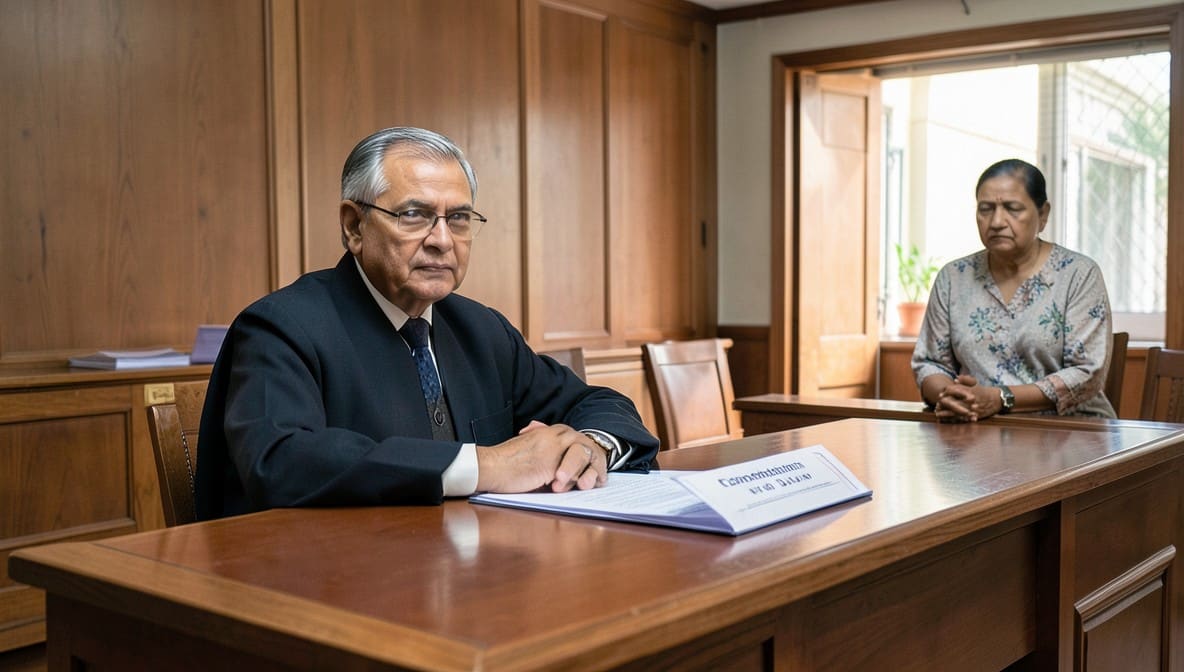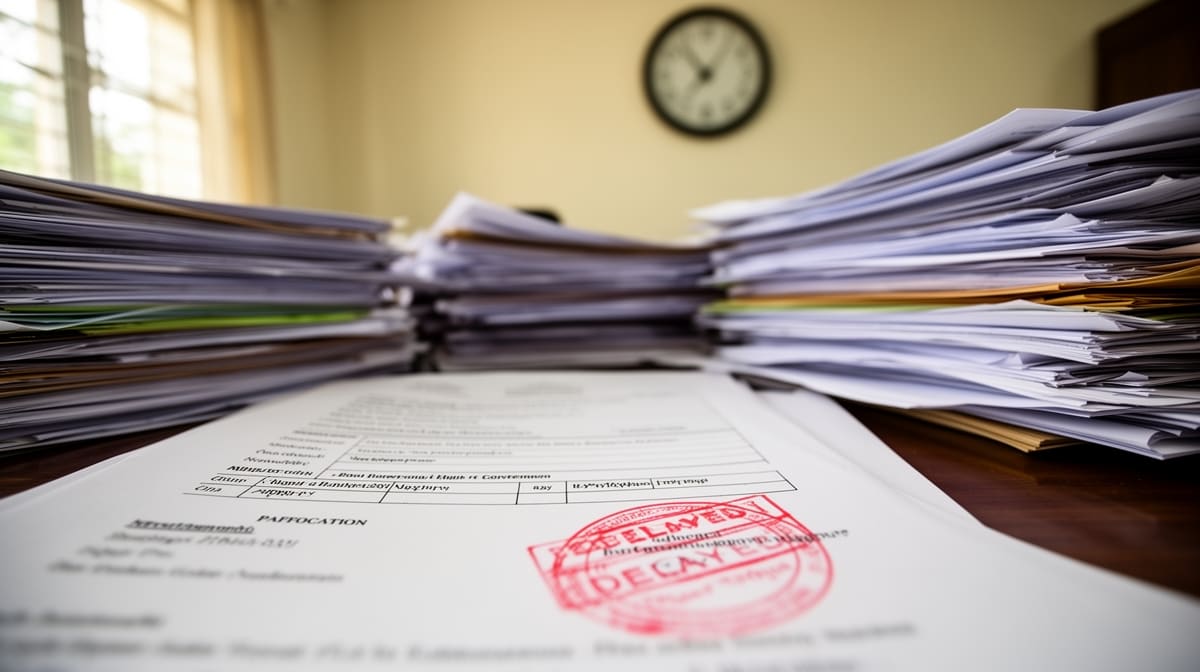
The Bombay High Court has reaffirmed that courts must adopt a liberal, justice-oriented approach when considering applications for condonation of delay, regardless of whether the applicant is the State or a private party. The judgment underscores that technicalities must not override the substantive merits of a case, particularly when delay is neither deliberate nor inordinate.
Background & Facts
The Dispute
The present Civil Application was filed seeking condonation of a 41-day delay in filing First Appeal (St.) No. 32383 of 2026, which challenged an order passed by the Maharashtra State Consumer Disputes Redressal Commission. The appellant, Murji Pancha Patel/Chowdhary, sought to challenge an adverse order dated 15.12.2025, which dismissed his complaint against the General Manager, Bombay Electric Supply & Transport Undertaking. The appeal was due to be filed by 14.01.2026, but was actually filed on 25.02.2026.
Key Facts
- The original complaint was filed before the State Commission on 10.08.2024
- The State Commission passed its order on 15.12.2025
- The limitation period for filing the appeal expired on 14.01.2026
- The appeal was filed on 25.02.2026, resulting in a delay of 41 days
- The appellant attributed the delay to administrative bottlenecks within the office, including delays in obtaining certified copies of the order and internal clearance procedures
- No allegation of mala fides, negligence, or deliberate procrastination was made
Procedural History
- 10.08.2024: Complaint filed before Maharashtra State Consumer Disputes Redressal Commission
- 15.12.2025: State Commission dismissed the complaint
- 14.01.2026: Deadline for filing First Appeal under Section 35 of the Consumer Protection Act, 2019
- 25.02.2026: First Appeal filed, 41 days late
- 01.03.2026: Civil Application No. 734 of 2017 filed for condonation of delay
- 07.04.2026: Hearing before Bombay High Court
Relief Sought
The appellant sought condonation of the 41-day delay in filing the appeal and permission to proceed with the appeal on its merits.
The Legal Issue
The central question was whether the delay of 41 days in filing an appeal by a public entity, attributed to bureaucratic inertia rather than mala fide, constitutes sufficient cause for condonation under Section 5 of the Limitation Act, 1963, and whether the State is entitled to the same liberal treatment as private litigants in such applications.
Arguments Presented
For the Appellant
Learned counsel for the appellant relied on the Supreme Court’s decision in Collector (LA) v. Katiji to argue that the expression "sufficient cause" under Section 5 is elastic and must be interpreted to serve the ends of justice. He emphasized that the delay was not inordinate, was explained with plausible reasons tied to administrative processes, and that no prejudice was caused to the respondent. He further contended that denying condonation on technical grounds would defeat the purpose of the Limitation Act, which is to enable adjudication on merits.
For the Respondent
The respondent opposed the application on the ground that delay, regardless of cause, must be strictly construed. Counsel argued that public bodies are expected to maintain higher standards of diligence and that bureaucratic inefficiency cannot be accepted as a valid excuse. He contended that allowing condonation in such cases would encourage laxity in public administration.
The Court's Analysis
The Court examined the principles laid down in Collector (LA) v. Katiji and held that the doctrine of condonation of delay must be applied with a pragmatic and justice-oriented mindset. The Court rejected the notion that the State, as a litigant, should be held to a stricter standard than private parties.
"The doctrine of equality before law demands that all litigants, including the State as a litigant, are accorded the same treatment and the law is administered in an even-handed manner. There is no warrant for according a step-motherly treatment when the 'State' is the applicant praying for condonation of delay."
The Court observed that delay by public authorities often stems from impersonal bureaucratic systems - file-pushing, multiple layers of approval, and lack of personal accountability - not from intentional procrastination. It noted that there is no presumption of mala fides or culpable negligence merely because the applicant is the State.
The Court further clarified that the phrase "every day’s delay must be explained" does not mandate a pedantic, minute-by-minute scrutiny of reasons. Instead, the explanation must be rational and plausible. The 41-day delay, coupled with a credible account of administrative delays in obtaining certified copies and internal clearances, satisfied the threshold for "sufficient cause".
The Court emphasized that the primary objective of Section 5 is to enable courts to decide cases on their merits, not to penalize litigants for non-deliberate procedural lapses. To deny relief on technical grounds would risk defeating substantial justice.
The Verdict
The Civil Application for condonation of delay was allowed. The Court condoned the 41-day delay in filing First Appeal (St.) No. 32383 of 2026. The appeal is now permitted to proceed on its merits. The respondent was directed to file its counter-affidavit within four weeks from the date of this order, and the appeal shall be heard on merits thereafter.
What This Means For Similar Cases
The State Is Not a Second-Class Litigant
- Practitioners may now confidently argue that the State is entitled to the same liberal condonation standards as private parties under Section 5
- Bureaucratic delays in obtaining documents or internal approvals are valid grounds for condonation if not shown to be mala fide
- Courts must not apply a higher threshold to public entities merely because of their institutional status
Substantial Justice Overrides Technical Compliance
- Delay alone is not fatal; the explanation must be assessed for plausibility, not perfection
- The burden is on the opposing party to demonstrate prejudice, not on the applicant to prove flawless conduct
- Applications for condonation must be decided on the spirit of Section 5, not its letter
Practical Takeaway for Litigants
- Always file condonation applications with detailed affidavits explaining administrative delays
- Attach supporting documents (e.g., correspondence for certified copies, internal memos) to substantiate claims
- Do not assume that delay by a public body will be viewed more harshly - this judgment removes that presumption