Topic

service rules

Service rules in India govern the terms of employment, promotions, pensions, and disciplinary actions for government employees under statutory and administrative regulations.

24 articlesLatest September 2026
POSH Act coexists with service rules; Voluntary Cessation of Service order cannot penalise harassment complainant | IDBI Bank v. Sharanjeet Kaur : Delhi HC
Case Law Analysis

POSH Act coexists with service rules; Voluntary Cessation of Service order cannot penalise harassment complainant | IDBI Bank v. Sharanjeet Kaur : Delhi HC

The Delhi High Court ruled that the POSH Act does not replace an employer’s service rules and that a Voluntary Cessation of Service order cannot be invoked to retaliate against an employee who files a harassment complaint. This safeguards complainants’ job security and entitles them to back-wages and compensation.

PSC recommendation does not confer a vested right; Rule 10 of 1983 Service Rules gives finality to eligibility decisions | Registrar appointment : SC
Case Law Analysis
|Supreme Court of India

PSC recommendation does not confer a vested right; Rule 10 of 1983 Service Rules gives finality to eligibility decisions | Registrar appointment : SC

A candidate recommended by a State Public Service Commission cannot claim an indefeasible right to appointment, as Rule 10 of the 1983 Service Rules makes the eligibility finding conclusive and bars any de novo review by the State. This limits State governments’ ability to reassess eligibility for registrar and similar posts.

Maternity Leave | Second Leave Entitled After Appointment Even If First Child Born Pre-Service : Allahabad HC
Case Law Analysis
|Allahabad High Court

Maternity Leave | Second Leave Entitled After Appointment Even If First Child Born Pre-Service : Allahabad HC

The Allahabad High Court has ruled that public sector employees are entitled to two maternity leaves under service rules, regardless of whether their first child was born before joining service. This clarifies a critical ambiguity in public employment benefits and affirms gender equity in administrative leave policies for female teachers and government staff.

Legitimate Expectation in Recruitment | Amended Service Rules Cannot Derogate from Commenced Selection Process: Bombay HC
Case Law Analysis
|Bombay High Court

Legitimate Expectation in Recruitment | Amended Service Rules Cannot Derogate from Commenced Selection Process: Bombay HC

The Bombay High Court held that once a recruitment process is initiated under existing service rules, subsequent amendments cannot be applied retroactively to cancel or alter the selection, protecting candidates' legitimate expectations. This reinforces the principle that public employment processes must remain stable and predictable, safeguarding applicants who have invested time and effort in good faith.

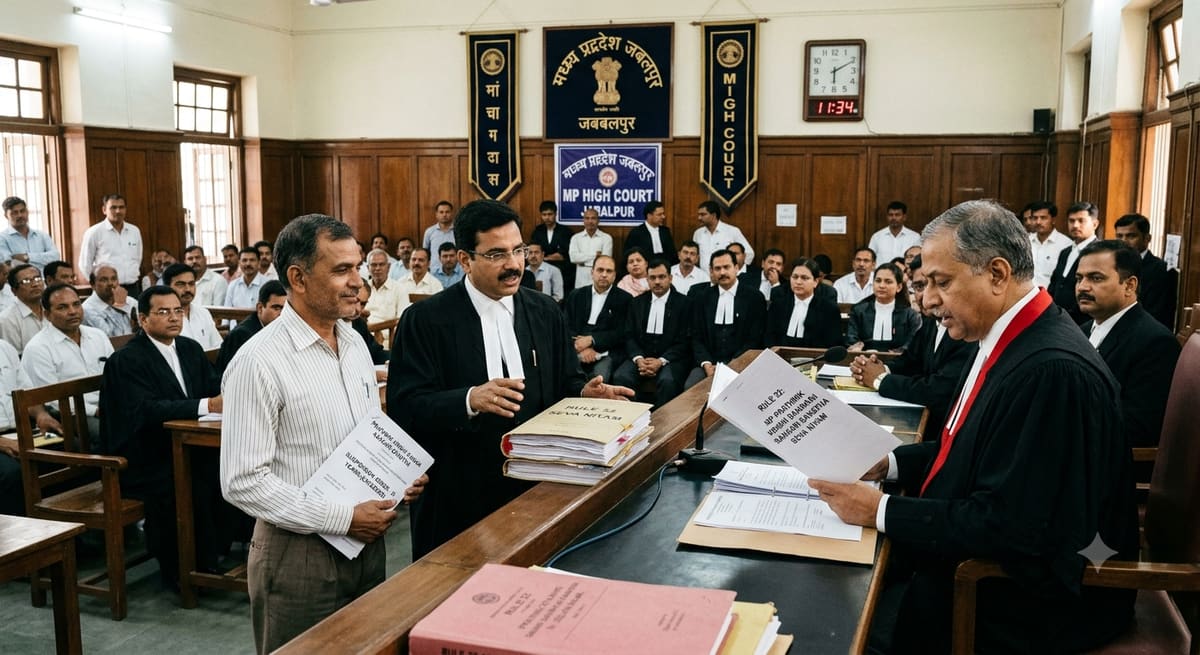
Rule 32, Prathmik Krishi Sakha Sahkari Sanstha Seva Niyam | Suspension of Government Employees Cannot Exceed One Year: MP HC Jabalpur
Case Law Analysis
|Madhya Pradesh High Court

Rule 32, Prathmik Krishi Sakha Sahkari Sanstha Seva Niyam | Suspension of Government Employees Cannot Exceed One Year: MP HC Jabalpur

The Madhya Pradesh High Court has ruled that suspension of agricultural cooperative service employees under Rule 32 cannot extend beyond one year, even if disciplinary proceedings remain pending. This binding limit reinforces procedural fairness in public employment and mandates immediate revocation of prolonged suspensions, affecting thousands of state-linked agricultural workers across MP.

Service Rules Supremacy | Circulars Cannot Authorize Deductions from Employee Salaries as Penalty : Kerala HC
Case Law Analysis
|Kerala High Court

Service Rules Supremacy | Circulars Cannot Authorize Deductions from Employee Salaries as Penalty : Kerala HC

The Kerala High Court has ruled that administrative circulars lack the legal authority to impose financial penalties on government employees, affirming that only statutory Service Rules govern disciplinary actions. This decision protects public sector workers from arbitrary deductions and reinforces the hierarchy of legal norms in administrative discipline, impacting all state-run corporations and departments in Kerala.

Section 10(10AA) Income Tax Act | IIT Employees Governed by Central Service Rules Entitled to Leave Encashment Exemption : ITAT Delhi
Case Law Analysis
|Income Tax Appellate Tribunal

Section 10(10AA) Income Tax Act | IIT Employees Governed by Central Service Rules Entitled to Leave Encashment Exemption : ITAT Delhi

The ITAT Delhi has ruled that employees of Indian Institutes of Technology, even as autonomous bodies, qualify for tax-free leave encashment under Section 10(10AA) if governed by Central Government service rules. This clarifies that employer status alone cannot override statutory eligibility when service conditions align with central rules, impacting thousands of academic and technical staff across IITs and similar institutions.

1993 Pay Scale Notification | Multipurpose Health Workers Entitled to Rs.950-1680 Scale After 10 Years Service Despite Lack of Training : Rajasthan HC
Case Law Analysis
|Rajasthan High Court

1993 Pay Scale Notification | Multipurpose Health Workers Entitled to Rs.950-1680 Scale After 10 Years Service Despite Lack of Training : Rajasthan HC

Rajasthan High Court rules that Multipurpose Health Workers with 10 years of service are entitled to the Rs.950-1680 pay scale under the 1993 notification, even without formal training. The judgment reinforces service law protections for long-serving employees in government health services, setting a precedent for similar cases.

Rule 12 Service Rules | Secretary Appointment to Nagaland Legislative Assembly Is a Selection Post Exempt from DPC: Gauhati HC
|Gauhati High Court

Rule 12 Service Rules | Secretary Appointment to Nagaland Legislative Assembly Is a Selection Post Exempt from DPC: Gauhati HC

The Gauhati High Court has ruled that the appointment of Secretary to the Nagaland Legislative Assembly qualifies as a selection post under Rule 12 of the Service Rules, making it immune to Departmental Promotion Committee processes. This decision affirms the autonomy of constitutional appointments over routine promotion mechanisms, impacting how legislative secretariats across states structure senior appointments and bypass DPC norms.

Retrospective Ratification of Disciplinary Authority Invalid Under Service Rules | Delhi HC Reinforces Prior Delegation Requirement
Case Law Analysis
|Delhi High Court

Retrospective Ratification of Disciplinary Authority Invalid Under Service Rules | Delhi HC Reinforces Prior Delegation Requirement

Delhi High Court rules that disciplinary actions taken by an unauthorized body cannot be retrospectively validated, even via ratification by a higher authority. The judgment underscores that statutory service rules mandate prior delegation of disciplinary powers, impacting all public sector employees facing termination proceedings.

Service Rules | Oral Hearing Mandatory When Charges Are Denied: Supreme Court Upholds Natural Justice in Departmental Enquiries : SC
Case Law Analysis
|Supreme Court of India

Service Rules | Oral Hearing Mandatory When Charges Are Denied: Supreme Court Upholds Natural Justice in Departmental Enquiries : SC

The Supreme Court has ruled that departmental enquiries are void if conducted without an oral hearing when the employee denies the charges, even when documentary evidence exists. This reinforces that procedural fairness under service rules cannot be substituted by paper-based proceedings, affecting all government and cooperative sector employees subject to disciplinary action.

Pension Continuity Under Rules of 2004 | Government Employee Retains Pension Rights Despite Transfer to Autonomous Institution : MP HC Gwalior
Case Law Analysis
|Madhya Pradesh High Court

Pension Continuity Under Rules of 2004 | Government Employee Retains Pension Rights Despite Transfer to Autonomous Institution : MP HC Gwalior

Madhya Pradesh High Court rules that a government employee transferred to an autonomous institution retains pensionary benefits under the 2004 Rules, holding the State liable for dues. The judgment clarifies service continuity for employees transitioning from government to autonomous bodies, ensuring pension rights remain intact.