Topic

Section 151 CPC

Section 151 of the Code of Civil Procedure grants Indian courts inherent powers to act in the interest of justice when no other provision applies, allowing them to prevent abuse of process or secure fair outcomes.

19 articlesLatest September 2026
No Lok Adalat Award Without Actual Settlement | Trial Court May Recall Withdrawal Under Section 151 CPC If Settlement Fails : Karnataka HC
Case Law Analysis
|Karnataka High Court

No Lok Adalat Award Without Actual Settlement | Trial Court May Recall Withdrawal Under Section 151 CPC If Settlement Fails : Karnataka HC

The Karnataka HC held that a Lok Adalat cannot issue a hybrid award without an actual settlement and that the trial court may recall its withdrawal permission under Section 151 CPC if settlement fails, dismissing writ petitions challenging re-opening of suits. This clarifies Lok Adalat’s limits and lets parties re-open suits when settlement does not materialize.

Section 151 CPC | Inherent Power to Restore Possession to Lessee During Suit Pendency Upheld : Gujarat HC
Case Law Analysis
|Gujarat High Court

Section 151 CPC | Inherent Power to Restore Possession to Lessee During Suit Pendency Upheld : Gujarat HC

The Gujarat High Court affirmed that a trial court may invoke Section 151 CPC to return possession to a lessee who has been unlawfully dispossessed while the underlying suit is pending. It clarified that even a mis-stated statutory citation does not defeat the court’s inherent jurisdiction. This ruling safeguards lessees’ rights to possession during protracted litigation.

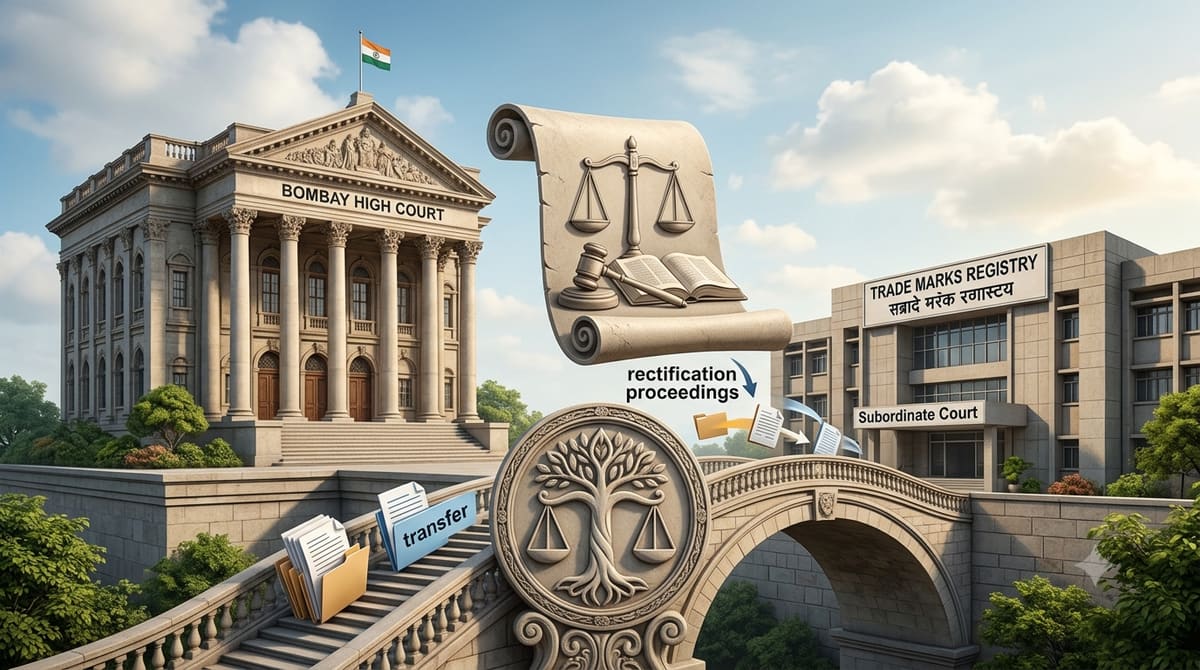
Section 24 CPC | Registrar of Trade Marks is a 'Subordinate Court' for Transfer of Rectification Proceedings : Bombay HC
Case Law Analysis
|Bombay High Court

Section 24 CPC | Registrar of Trade Marks is a 'Subordinate Court' for Transfer of Rectification Proceedings : Bombay HC

Bombay High Court holds that the Registrar of Trade Marks qualifies as a 'Court' under Section 24 CPC, enabling transfer of rectification proceedings to be consolidated with infringement suits. This ruling streamlines adjudication by preventing parallel litigation and reinforces the contextual interpretation of 'Court' under procedural laws, impacting trademark litigants and IP practitioners.

Section 151 CPC | Inherent Powers Cannot Be Invoked Routinely to Recall Witnesses Without Bona Fide Grounds : Andhra Pradesh HC
Case Law Analysis
|Andhra Pradesh High Court

Section 151 CPC | Inherent Powers Cannot Be Invoked Routinely to Recall Witnesses Without Bona Fide Grounds : Andhra Pradesh HC

The Andhra Pradesh High Court ruled that courts cannot routinely exercise inherent powers under Section 151 CPC to recall witnesses unless bona fide grounds or subsequent developments are demonstrated. This judgment reinforces judicial restraint in procedural matters, ensuring that recall applications are not misused to delay or derail civil proceedings.

Advocates Act 1961 | Absolute Right to Change Counsel Without NOC from Previous Advocate: Karnataka HC
Case Law Analysis
|Karnataka High Court

Advocates Act 1961 | Absolute Right to Change Counsel Without NOC from Previous Advocate: Karnataka HC

Karnataka High Court reaffirms that a litigant’s right to change counsel is absolute under the Advocates Act, 1961, and does not require a No Objection Certificate from the previous advocate. The ruling underscores professional ethics and the unconditional nature of the right to legal representation, ensuring litigants are not unduly restricted in choosing their counsel.

Section 151 CPC | Failure to Amend Cause Title After Impleadment Is Ministerial, Not Fatal: Karnataka HC (Dharwad)
Case Law Analysis
|Karnataka High Court

Section 151 CPC | Failure to Amend Cause Title After Impleadment Is Ministerial, Not Fatal: Karnataka HC (Dharwad)

The Karnataka High Court has ruled that omitting a consequential amendment to the cause title after impleadment is a mere ministerial oversight, not a ground to dismiss a Section 151 application. This clarifies that procedural technicalities cannot override substantive justice in property disputes, empowering litigants to correct clerical errors without risking dismissal of their claims.

Section 151 CPC | Inherent Powers Allow Recall of Withdrawn Partition Suit Without Consent of All Co-Sharers : Karnataka HC
Case Law Analysis
|Karnataka High Court

Section 151 CPC | Inherent Powers Allow Recall of Withdrawn Partition Suit Without Consent of All Co-Sharers : Karnataka HC

Karnataka High Court rules that defendants in partition suits can invoke Section 151 CPC to recall a suit dismissed due to unilateral withdrawal, even without the consent of all co-sharers. The judgment underscores the mandatory notice requirement and the court's inherent powers to ensure procedural fairness in property disputes.

Section 148A CPC | Ex Parte Interim Orders Void Without Caveat Notice: Calcutta HC Reinforces Natural Justice
Case Law Analysis
|Calcutta High Court

Section 148A CPC | Ex Parte Interim Orders Void Without Caveat Notice: Calcutta HC Reinforces Natural Justice

Calcutta High Court rules that any ex parte interim order passed without notice to a caveator is procedurally invalid and must be recalled immediately, regardless of the opposing party’s knowledge. The judgment underscores that lodging a caveat under Section 148A CPC imposes a mandatory duty on courts to issue notice before granting relief, failing which the order is liable to be set aside.

Order 9 Rule 4 CPC | Substantive Justice Prevails Over Procedural Lapses: MP HC Restores Suit Despite Pending Substituted Service Application
Case Law Analysis
|Madhya Pradesh High Court

Order 9 Rule 4 CPC | Substantive Justice Prevails Over Procedural Lapses: MP HC Restores Suit Despite Pending Substituted Service Application

The Madhya Pradesh High Court ruled that a suit dismissed for procedural non-compliance must be restored if an application for substituted service under Order 5 Rule 20 CPC was pending, emphasizing that procedural oversights cannot defeat substantive justice. This decision reinforces the court's power under Section 151 CPC to correct injustices arising from administrative lapses in trial courts.