Topic

preponderance of probabilities

Preponderance of probabilities is the standard of proof used in Indian civil, disciplinary, and administrative proceedings, where the likelihood of an event being true is assessed over mere suspicion or reasonable doubt.

16 articlesLatest 2 weeks ago
Motor Accident Claims | Preponderance of Probabilities Standard Overrides Concurrent Findings on Negligence : SC
Case Law Analysis
|Supreme Court of India

Motor Accident Claims | Preponderance of Probabilities Standard Overrides Concurrent Findings on Negligence : SC

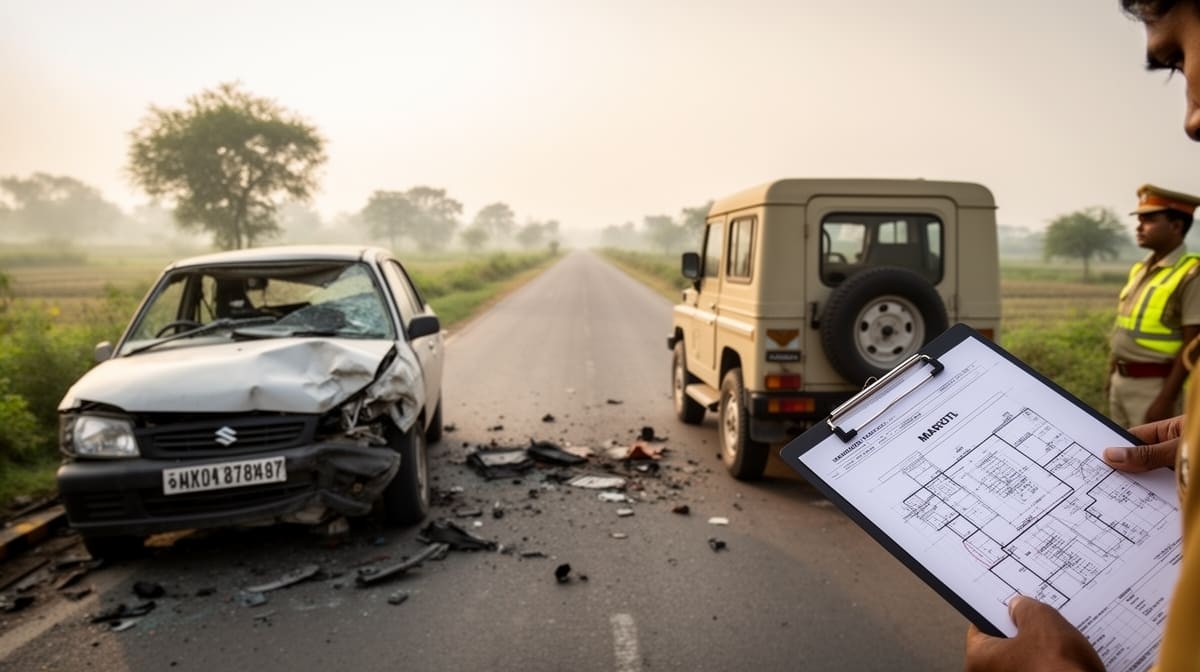
The Supreme Court reiterated that motor accident compensation claims must be adjudicated on the 'preponderance of probabilities' standard, not criminal law standards. The ruling sets aside concurrent findings of negligence where the Tribunal and High Court failed to apply this civil law principle, impacting compensation calculations under the Motor Vehicles Act 1988.

Preponderance of Probabilities Standard | Domestic Enquiries Under MRTU & PULP Act Require Only Balance of Evidence, Not Beyond Reasonable Doubt: Bombay HC
Case Law Analysis
|Bombay High Court

Preponderance of Probabilities Standard | Domestic Enquiries Under MRTU & PULP Act Require Only Balance of Evidence, Not Beyond Reasonable Doubt: Bombay HC

The Bombay High Court has ruled that in domestic enquiries under the MRTU & PULP Act, employers need only prove misconduct on a preponderance of probabilities-not beyond reasonable doubt. This lowers the evidentiary bar for disciplinary actions, directly impacting employee rights in industrial disputes and reinforcing the tribunal’s deference to internal investigations.

Criminal Conviction as Strong Corroboration for Civil Compensation | Punjab & Haryana HC Upholds ₹23 Lakh Award Under Tort Law for Wrongful Death
Case Law Analysis
|Punjab and Haryana High Court

Criminal Conviction as Strong Corroboration for Civil Compensation | Punjab & Haryana HC Upholds ₹23 Lakh Award Under Tort Law for Wrongful Death

Punjab & Haryana HC rules that a criminal conviction, though not binding, strongly corroborates civil liability in wrongful death claims. Compensation calculated on documented income and dependency multipliers sets precedent for tort law damages where evidence aligns between criminal and civil proceedings.

Verbal Agreement Enforceable Under Indian Contract Act | Silence After Notice Constitutes Conduct Supporting Specific Performance : Bombay HC
Case Law Analysis
|Bombay High Court

Verbal Agreement Enforceable Under Indian Contract Act | Silence After Notice Constitutes Conduct Supporting Specific Performance : Bombay HC

Bombay High Court rules that a verbal property sale agreement can be specifically enforced if the defendant's silence after a legal notice constitutes conduct under Section 9 of the Indian Contract Act. The judgment underscores that preponderance of probabilities can validate verbal contracts in real estate disputes, impacting property buyers and sellers relying on informal agreements.

Specific Performance Enforceable via Preponderance of Probabilities | Verbal Real Estate Agreement + Silence + Partial Payment : Bombay HC
Case Law Analysis
|Bombay High Court

Specific Performance Enforceable via Preponderance of Probabilities | Verbal Real Estate Agreement + Silence + Partial Payment : Bombay HC

The Bombay High Court enforced a 35-year-old verbal property sale contract not merely due to silence, but because the defendant’s conduct - accepting partial payment and failing to rebut a detailed notice - created a preponderance of probabilities that a binding agreement existed. This sets a critical precedent for oral real estate deals where written documentation is absent but conduct strongly implies mutual assent.

Domestic Enquiry Under Labour Law | Preponderance of Probabilities Suffices for Dismissal Despite Procedural Lapses : Bombay HC
Case Law Analysis
|Bombay High Court

Domestic Enquiry Under Labour Law | Preponderance of Probabilities Suffices for Dismissal Despite Procedural Lapses : Bombay HC

Bombay High Court rules that dismissal in a domestic enquiry can stand on the preponderance of probabilities, even if procedural irregularities exist. The court upheld the dismissal where the workman admitted to possessing an unauthorized item, reinforcing that substantive evidence outweighs technical flaws in disciplinary proceedings.

Non-Joinder of Negligent Driver Fatal to Motor Accident Claims | Punjab & Haryana HC Upholds Adverse Inference
Case Law Analysis
|Punjab and Haryana High Court

Non-Joinder of Negligent Driver Fatal to Motor Accident Claims | Punjab & Haryana HC Upholds Adverse Inference

The Punjab & Haryana High Court dismissed motor accident claims after ruling that the failure to implead the actual negligent driver-an occupant of the claimant’s car-prevented liability from being fastened on the Jeep’s driver or insurer. The court upheld the Tribunal’s adverse inference, reinforcing that non-joinder of a key party can defeat compensation claims under the Motor Vehicles Act.

Ombudsman's Clean Chit No Bar to Departmental Enquiry Under CCA Rules | Karnataka HC Upholds Preponderance of Probabilities Standard
Case Law Analysis
|Karnataka High Court

Ombudsman's Clean Chit No Bar to Departmental Enquiry Under CCA Rules | Karnataka HC Upholds Preponderance of Probabilities Standard

The Karnataka High Court ruled that an ombudsman's exoneration does not preclude disciplinary action under the CCA Rules. Disciplinary penalties are valid if supported by a preponderance of probabilities, even without criminal-level proof, reinforcing the autonomy of administrative proceedings from quasi-judicial findings.