The Bombay High Court has affirmed that in domestic enquiries under industrial law, a finding of misconduct need not rest on proof beyond reasonable doubt but on the preponderance of probabilities, even where procedural irregularities exist. The judgment underscores that courts must defer to factual findings of Labour Courts unless they are perverse or legally unsustainable.
Background & Facts
The Dispute
The petitioner, Ambadas Mahadev Khade, was a permanent workman employed with M/s Mahindra and Mahindra Limited since 1 November 1985 in the R&D-I Department, Nashik plant, holding the post of Group Captain. He was placed under suspension on 21 December 2011 following allegations of theft and dishonesty under the Model Standing Orders. A charge-sheet was issued on 28 February 2012, alleging that on 20 December 2011, during a surprise inspection, company property was found in a locker allegedly allotted to him. The petitioner was denied access to the locker during the inspection, and the panchanama recording the recovery was not signed in his presence nor provided to him at the time.
Key Facts
- The petitioner was employed continuously from 1 November 1985 until his dismissal on 24 January 2013.
- He was promoted to Group Captain in 1996 and had an unblemished service record.
- On 20 December 2011, a surprise locker inspection was conducted by Security Officer G.G. Wable in the presence of Assistant Managers Mangesh Palave and Narayan Mayekar.
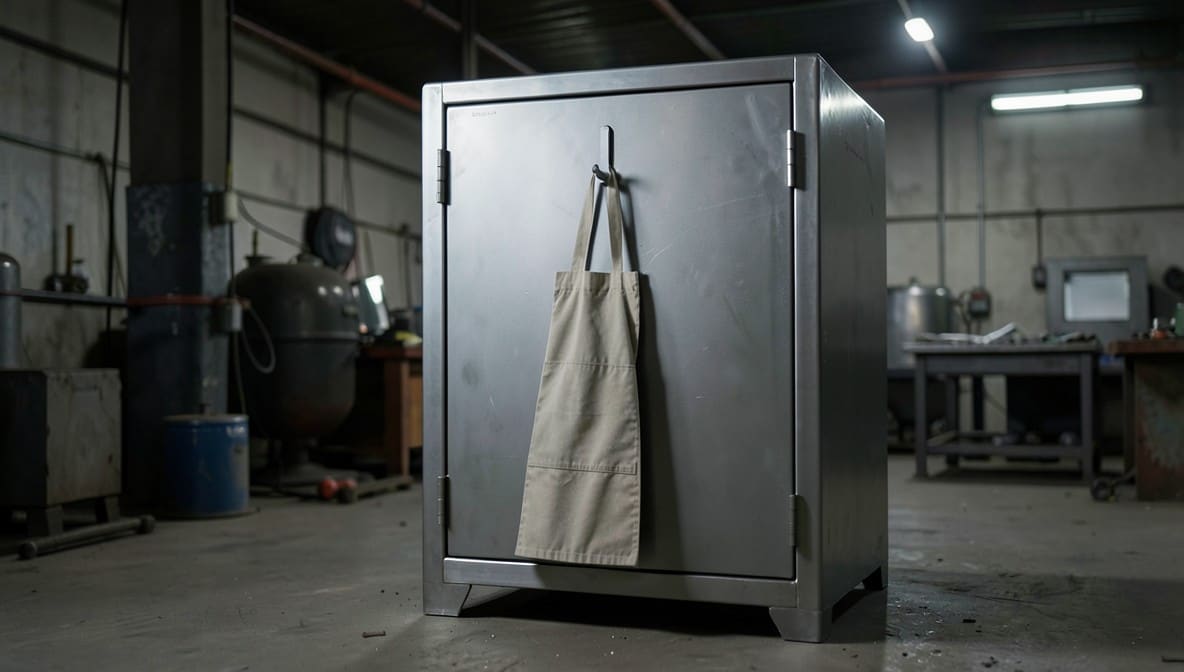
- The panchanama dated 20 December 2011 recorded the recovery of 49 items, including an apron, tools, and documents.
- The petitioner denied signing the panchanama and claimed no locker was allotted to him.
- He submitted a written reply on 9 April 2012, challenging the validity of the panchanama and the absence of documentary proof of locker allotment.
- The Enquiry Officer submitted his report on 22 November 2012.
- The petitioner was dismissed by order dated 24 January 2013.
- The Deputy Commissioner of Labour referred the dispute to the Labour Court on 4 April 2014.
- The Labour Court delivered its first award on 11 January 2018 and final award on 21 April 2018, upholding the dismissal.
- The petitioner attained superannuation on 31 May 2024.
- The petitioner admitted during evidence that the apron listed as item no. 30 in the panchanama belonged to him.
- Management witnesses admitted there was no register, record, or official document proving locker allotment to the petitioner.
- No criminal complaint was filed by the company.
- The seized articles were produced during the enquiry by Shri Raskar, who was not present at the time of recovery and did not verify the contents.
Procedural History
- 20 December 2011: Alleged discovery of company property in locker.
- 21 December 2011: Petitioner placed under suspension.
- 28 February 2012: Charge-sheet issued.
- 9 April 2012: Petitioner’s written reply submitted.
- 22 November 2012: Enquiry Officer’s report submitted.
- 24 January 2013: Order of dismissal passed.
- 4 April 2014: Industrial dispute referred to Labour Court (Reference (IDA) No. 42 of 2014).
- 11 January 2018: Labour Court’s preliminary award.
- 21 April 2018: Labour Court’s final award upholding dismissal.
- 2018: Writ Petition No. 7817 of 2018 filed before Bombay High Court.
- 12 March 2026: Judgment reserved.
- 26 March 2026: Judgment pronounced.
The Parties' Positions
Petitioner: Argued that the panchanama was fabricated, no locker was allotted to him, no copy was provided, and the signature was forged. He emphasized the absence of documentary proof of allotment, contradictions in witness testimony regarding locker sealing, and improper handling of seized articles. He contended that the delay in issuing the charge-sheet and lack of a separate show-cause notice for dismissal violated principles of natural justice.
Respondent (Mahindra & Mahindra): Maintained that the petitioner handed over the locker keys, which established his control over the locker. The presence of company property, coupled with the petitioner’s admission that his apron was among the seized items, supported the charge of misconduct. The Labour Court’s findings were based on preponderance of probabilities and were not perverse.
Relief Sought
The petitioner sought quashing of the Labour Court’s awards dated 11 January 2018 and 21 April 2018, reinstatement with full back wages and continuity of service from 24 January 2013, and costs. In the alternative, he sought a direction for a fresh enquiry.
The Legal Issue
The central question was whether the findings of the Labour Court, upholding dismissal based on a domestic enquiry with procedural irregularities and no documentary proof of locker allotment, were legally sustainable under the standard of preponderance of probabilities, particularly in light of the petitioner’s admission that his personal item was found in the locker.
Arguments Presented
For the Petitioner
The petitioner’s counsel contended that the panchanama was unreliable due to absence of his signature, lack of presence in the document, and non-supply of a copy. She emphasized that the Management admitted there was no record of locker allotment, rendering the inference of possession speculative. She relied on Divisional Controller, Maharashtra State Road Transport Corporation, Latur v. Bhushan Jagannathrao Bulbule to argue that procedural lapses affecting the fairness of enquiry vitiate the outcome. She further submitted that the delay in issuing the charge-sheet and absence of a separate show-cause notice for dismissal breached natural justice. The failure to produce seized articles by persons present at the time of recovery and the lack of sealing records further undermined the credibility of the case.
For the Respondent
The respondent’s counsel argued that the petitioner’s admission that his apron was among the recovered items created a strong circumstantial link to the locker. The handing over of keys, even without documentary proof, established control and use. The Labour Court’s finding that the misconduct was proved on preponderance of probabilities was entitled to deference. The absence of a criminal complaint was irrelevant, as departmental proceedings are independent. The procedural irregularities did not cause prejudice, as the petitioner had full opportunity to defend himself. The dismissal was proportionate given the nature of the alleged misconduct.
The Court's Analysis
The Court emphasized that its role under Articles 226 and 227 is not to re-appreciate evidence but to examine whether the Labour Court’s findings were perverse, illegal, or vitiated by breach of natural justice. The Court noted that while the petitioner raised serious objections to the panchanama and the absence of documentary proof of locker allotment, these objections could not be accepted merely on denial.
"The petitioner has not given a clear and satisfactory explanation as to how his apron came to be in that locker if the locker was not allotted to him or was not used by him. This gap in explanation becomes relevant while appreciating the overall probabilities."
The Court held that the petitioner’s admission regarding his apron was a critical circumstance that undermined his blanket denial of any connection with the locker. While the Management failed to produce a formal allotment record, the combination of key-handover testimony and the presence of the petitioner’s personal item created a reasonable inference of possession.
The Court acknowledged procedural shortcomings - delay in issuing the charge-sheet, lack of sealing records, and improper handling of seized articles - but held that these did not, in isolation, render the enquiry unfair. The Court observed:
"Absolute perfection in procedure is not required, but fairness is required. Here, the Labour Court has considered the material and found it sufficient. This Court does not find that the evidence is so unreliable that no reliance could be placed on it."
The Court further clarified that the standard of proof in domestic enquiries is preponderance of probabilities, not proof beyond reasonable doubt. The Labour Court’s conclusion that the charge was established was not impossible or wholly unreasonable. The absence of a separate show-cause notice for dismissal was held not to have caused prejudice, as the petitioner had already been heard on the charges and the enquiry was concluded.
The Court also rejected the argument that non-filing of a criminal complaint weakened the case, noting that departmental proceedings are autonomous.
The Verdict
The writ petition was dismissed. The impugned Awards dated 11 January 2018 and 21 April 2018 of the Labour Court, Nashik, in Reference (IDA) No. 42 of 2014, were upheld. The dismissal of the petitioner from service stands confirmed. The Court held that the findings of the Labour Court were not perverse and were based on a reasonable appreciation of evidence under the standard of preponderance of probabilities. No order as to costs was made. The amount deposited by the respondent-company shall remain with the office for eight weeks from the date of judgment, after which it may be withdrawn if no interim relief is granted by a superior court.
What This Means For Similar Cases
Preponderance of Probabilities Can Sustain Dismissal Despite Procedural Lapses
- Practitioners must argue that minor delays in issuing charge-sheets or lack of formal documentation do not automatically vitiate domestic enquiries if the employee had full opportunity to defend.
- Labour Courts are entitled to rely on circumstantial evidence, including admissions by the workman, to establish misconduct.
- Absence of criminal complaint does not invalidate departmental proceedings.
Admission of Personal Item in Employer’s Property Is a Critical Factor
- If a workman admits ownership of any item found in a disputed location (e.g., locker, office drawer), it creates a strong inference of access or control, even without formal allotment proof.
- Denial of overall possession becomes less credible when contradicted by a specific admission.
- This principle applies equally to cases involving tools, documents, or equipment.
Procedural Irregularities Must Be Linked to Actual Prejudice
- Courts will not interfere merely because procedures were imperfect - the defect must have materially affected the outcome.
- Failure to produce seized items by eyewitnesses or lack of sealing records may raise doubt but are not fatal if the core evidence (e.g., key-handover, admission) remains intact.
- Employers should maintain records of locker allotment, but failure to do so does not automatically defeat a case if other evidence supports the charge.