The Punjab and Haryana High Court has reaffirmed that in motor accident claims, liability cannot be imposed on a third party’s vehicle when the actual negligent driver and owner remain unimpleaded, even if injuries are proven. The judgment underscores the necessity of identifying and joining the correct party at fault under the summary regime of the Motor Vehicles Act.
Background & Facts
The Dispute
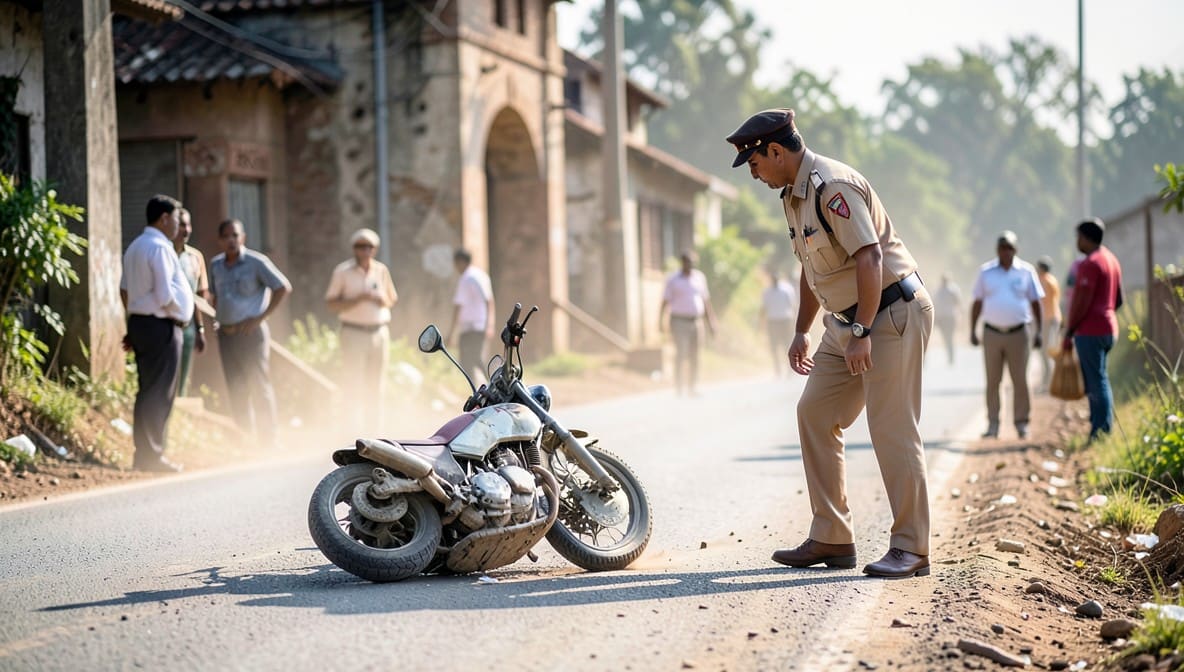
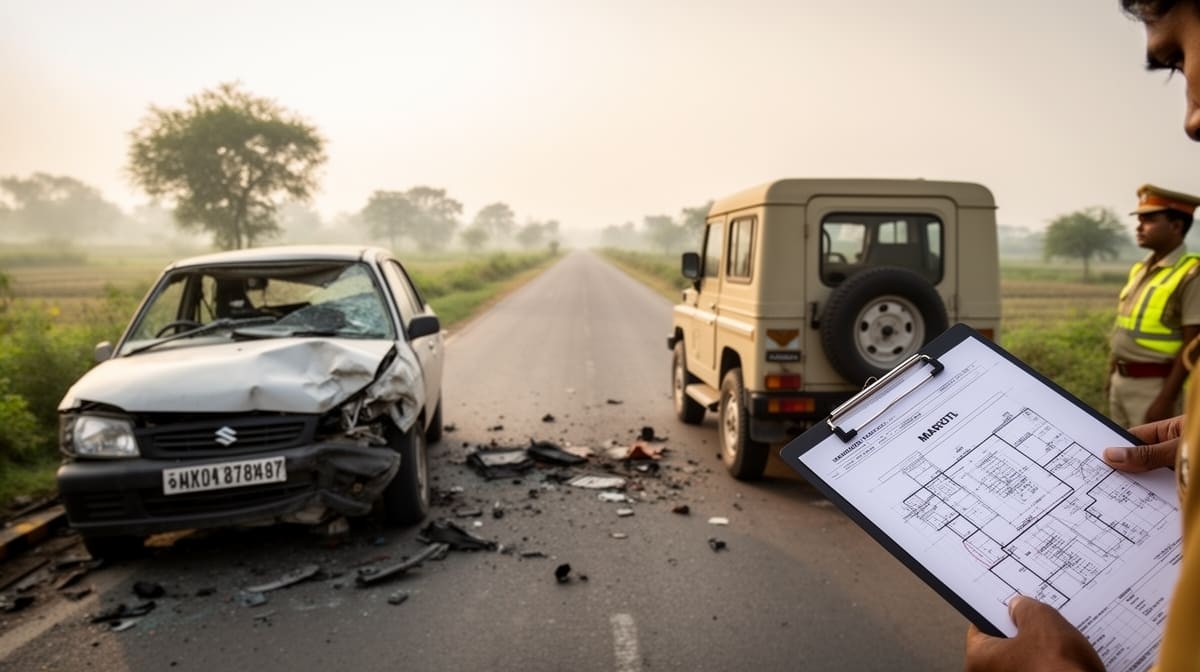
Two appeals were filed against a common award dated 22.01.2001 by the Motor Accident Claims Tribunal, Patiala, dismissing claim petitions filed by Satinder Kaur and Harinder Singh arising from a motor accident on 24.02.1997. The appellants, husband and wife, were occupants of a Maruti car (registration PB-10-D-843) that collided with a Jeep (registration HP-12-2417) near village Kauli while travelling from Rajpura to Patiala. Both sustained injuries. A third occupant, Bachittar Singh, also suffered serious injuries. The appellants claimed the Jeep, driven by respondent No.2 Ravinder Kumar, had crossed into their lane negligently. The respondents countered that the Maruti car was being driven rashly by Bachittar Singh, an SPO, under the influence of liquor, and had collided with the Jeep, which was lawfully on its side of the road.
Key Facts
- The accident occurred on 24.02.1997 near village Kauli, Punjab
- The Maruti car was driven by an unknown person; Harinder Singh claimed he was driving
- The Jeep was driven by respondent No.2, Ravinder Kumar
- Bachittar Singh, an occupant of the Maruti car, sustained severe abdominal injuries
- An FIR was registered against Ravinder Kumar on 24.02.1997
- The appellants filed claim petitions seeking ₹10,00,000 each for personal injuries
- Harinder Singh also filed a separate claim for damage to the Maruti car
- The respondents alleged the Maruti car’s driver was Bachittar Singh, who lacked a valid licence and was intoxicated
- The owner and insurer of the Maruti car were not impleaded as parties
- Photographs of the accident site (Ex.R1 to Ex.R3) were taken on 25.02.1997, one day after the accident
- A site plan prepared during criminal investigation indicated impact occurred on the extreme left side of the road (Patiala-Rajpura direction)
- Medical evidence (AW3 Dr. Rajinder Sharma) indicated Bachittar Singh’s injuries were consistent with impact against a steering wheel
- Bachittar Singh was not examined as a witness by the claimants
Procedural History
- 24.02.1997: Motor accident occurs
- 24.02.1997: FIR registered against Ravinder Kumar
- 22.01.2001: Motor Accident Claims Tribunal, Patiala, dismisses all claims
- 2001: Appeals filed before the High Court (FAO-2486-2001 and FAO-2485-2001)
- 11.03.2026: Appeals heard and reserved
- 16.03.2026: Judgment pronounced
The Parties' Positions
Appellants (Satinder Kaur and Harinder Singh): Claimed the Jeep driver was negligent, crossed the median, and caused the collision. Argued that the Tribunal erred in relying on criminal court acquittal (Ex.R10) and photographs taken after the accident. Asserted that their testimony as injured occupants was credible and should have been accepted.
Respondents (Ravinder Kumar, owner of Jeep, and insurer): Contended the Maruti car was driven rashly by Bachittar Singh, who was intoxicated and attempting to overtake a truck. Argued that the claimants failed to join the actual negligent party (driver, owner, insurer of the Maruti car), rendering the claims legally unsustainable.
Relief Sought
The appellants sought reversal of the Tribunal’s order and an award of ₹10,00,000 each for personal injuries, plus interest and costs. Harinder Singh also sought compensation for damage to the Maruti car.
The Legal Issue
The central question was whether a Motor Accident Claims Tribunal may dismiss a claim petition against the driver, owner, and insurer of a vehicle when the evidence points to negligence by an unimpleaded third party, and whether the Tribunal’s factual finding of negligence against the unjoined driver can stand without violating principles of natural justice.
Arguments Presented
For the Appellant
Counsel argued that the Tribunal gravely erred by relying on the criminal court’s acquittal of Ravinder Kumar (Ex.R10), which is not binding in civil proceedings. It was submitted that the photographs (Ex.R1 - R3) were taken a day after the accident and the vehicles had been moved, rendering them unreliable. The testimony of AW1 and AW2, the injured occupants, was credible and should have been preferred over the self-serving testimony of RW4, the Jeep driver. The Tribunal’s inference that Bachittar Singh was driving based on his abdominal injuries was speculative and unsupported. The claimants were entitled to compensation under the principle of strict liability and the summary nature of proceedings.
For the Respondent
Counsel contended that the Tribunal’s findings were based on a holistic appreciation of the site plan, medical evidence, and the failure of the claimants to examine Bachittar Singh. The point of impact on the extreme left side of the road, coupled with the nature of Bachittar Singh’s injuries, supported the conclusion that the Maruti car was on the wrong side. The non-joinder of the actual negligent party rendered the claims against the Jeep’s parties legally unsustainable. The Tribunal correctly applied Section 114(g) of the Evidence Act to draw an adverse inference from the non-examination of a key witness.
The Court's Analysis
The Court emphasized that proceedings before the Motor Accident Claims Tribunal are summary and governed by the principle of preponderance of probabilities, not strict rules of evidence (Bimla Devi v. Himachal Road Transport Corporation). However, this flexibility does not absolve claimants from the obligation to identify and join the correct party at fault.
"The conclusion reached by the Tribunal that the accident occurred due to rash and negligent driving of the Maruti car driver cannot be said to be perverse or unsupported by the evidence on record."
The Court noted that the Tribunal relied on multiple corroborative factors: the site plan indicating impact on the left side of the road, the unchanged position of the Jeep in photographs, the nature of Bachittar Singh’s injuries consistent with steering wheel impact, and the failure of the claimants to examine him despite his presence and injuries. The Court held that under Section 114 illustration (g) of the Evidence Act, the Tribunal was entitled to draw an adverse inference against the claimants for not examining a person who was present and likely to have material knowledge.
The Court further cited Sudhir Kumar v. Surinder Singh and N.K.V. Bros. (P) Ltd. v. M. Karumai Ammal to affirm that appellate courts must not substitute their own view merely because another interpretation is possible. The Tribunal’s findings were plausible, internally consistent, and grounded in documentary and oral evidence. The dismissal of claims against the Jeep’s parties was legally sound because the actual negligent driver and owner of the Maruti car were not made parties. The Court held that liability cannot be imposed on a non-party merely because the claimant’s vehicle was involved.
The Verdict
The appeals were dismissed. The High Court upheld the Motor Accident Claims Tribunal’s order dated 22.01.2001, which dismissed the claim petitions against the driver, owner, and insurer of the Jeep. No compensation was awarded to the appellants. The Court held that the failure to implead the actual negligent driver and owner of the Maruti car rendered the claims legally unsustainable, regardless of the injuries sustained.
What This Means For Similar Cases
Non-Joinder of Actual Negligent Party Is Fatal
- Practitioners must ensure that the driver, owner, and insurer of the vehicle actually at fault are impleaded as respondents in motor accident claims
- Failure to join the correct party, even if the claimant’s vehicle was involved, will result in dismissal of the claim
- Claimants cannot rely on the presence of a third-party vehicle to shift liability without proving its negligence and joining its parties
Adverse Inference for Non-Examination of Key Witnesses
- If a person who was present at the scene and likely to have material knowledge is not examined, the Tribunal may draw an adverse inference under Section 114(g) of the Evidence Act
- This applies even in summary proceedings where strict rules of evidence are relaxed
- Claimants must proactively identify and examine all potential witnesses, including co-occupants
Site Plans and Medical Evidence Can Override Oral Testimony
- In accident claims, objective evidence such as site plans, photographs, and medical reports carry greater weight than conflicting oral testimony
- Injuries sustained by occupants can be used to infer driving position, especially when corroborated by impact analysis
- Courts will not interfere with factual findings unless they are perverse or based on misreading of evidence