Topic

Mens Rea

Mens rea in Indian criminal law refers to the mental element or guilty intent required to establish criminal liability, distinguishing between accidental acts and intentional offenses under the IPC and BNS.

45 articlesLatest 3 weeks ago
Pre-Chargesheet Full EPF Restitution Neutralises Mens Rea for Criminal Breach of Trust | Sections 406/409 IPC Quashed : Calcutta HC
Case Law Analysis
|Calcutta High Court

Pre-Chargesheet Full EPF Restitution Neutralises Mens Rea for Criminal Breach of Trust | Sections 406/409 IPC Quashed : Calcutta HC

The court held that full deposit of Employees' Provident Fund dues before chargesheet filing erases the dishonest intention essential for criminal breach of trust under Sections 406 and 409 IPC. Continuing prosecution after complete restitution constitutes an abuse of process, particularly where the default arose from economic collapse of a single-screen cinema rather than fraudulent intent.

Three-Stage Attribution Framework for Corporate Mens Rea Established | Non-Identification of Natural Persons No Ground to Quash Proceedings Under Section 482 CrPC : SC
Case Law Analysis
|Supreme Court of India

Three-Stage Attribution Framework for Corporate Mens Rea Established | Non-Identification of Natural Persons No Ground to Quash Proceedings Under Section 482 CrPC : SC

The Supreme Court adopts a three-stage attribution framework derived from English jurisprudence (Tesco, Meridian, Barclays) to determine corporate mens rea, clarifying that a corporation can be prosecuted even if no individual officer is identified or arraigned, as non-identification alone does not warrant quashing proceedings under Section 482 CrPC.

Section 420 IPC | Failure to Repay Post-Registration Does Not Constitute Cheating Without Initial Fraud : AP HC
Case Law Analysis
|Andhra Pradesh High Court

Section 420 IPC | Failure to Repay Post-Registration Does Not Constitute Cheating Without Initial Fraud : AP HC

Andhra Pradesh High Court dismisses a cheating complaint under Section 420 IPC, ruling that failure to repay an amount after land registration does not amount to criminal dishonesty unless fraud existed at the time of the transaction. The judgment clarifies the distinction between civil disputes and criminal cheating, emphasizing the requirement of mens rea at inception.

Advance Authorisation | Confiscation Invalid Without Mens Rea for Procedural Lapses: CESTAT Kolkata
|Custom, Excise & Service Tax Tribunal

Advance Authorisation | Confiscation Invalid Without Mens Rea for Procedural Lapses: CESTAT Kolkata

CESTAT Kolkata rules that minor procedural breaches under the Advance Authorisation Scheme cannot justify confiscation of gold and jewellery unless there is intentional fraud or dishonest intent. This reinforces that administrative errors, absent mens rea, are curable and not punishable by asset seizure - a critical safeguard for exporters and jewellery traders facing rigid customs enforcement.

Section 302 IPC | Psychological Distress No Defence for Infanticide: Andhra Pradesh HC Upholds Life Imprisonment
Case Law Analysis
|Andhra Pradesh High Court

Section 302 IPC | Psychological Distress No Defence for Infanticide: Andhra Pradesh HC Upholds Life Imprisonment

The Andhra Pradesh High Court affirmed a mother’s conviction under Section 302 IPC for killing her two children, rejecting unsound mind claims. The court relied on extra-judicial confessions and medical evidence, emphasizing that psychological distress does not negate mens rea in heinous crimes. The ruling reinforces strict liability for infanticide under criminal law, impacting future cases involving mental health defences.

Section 107 BNS | Mere Reprimand Without Intentional Instigation Insufficient for Abetment of Suicide: Bombay HC Nagpur Bench
Case Law Analysis
|Bombay High Court

Section 107 BNS | Mere Reprimand Without Intentional Instigation Insufficient for Abetment of Suicide: Bombay HC Nagpur Bench

Bombay HC quashed an FIR under Section 107 of the Bhartiya Nyaya Sanhita, ruling that reprimanding a student for poor performance does not constitute abetment of suicide unless there is clear evidence of intentional instigation or repeated harassment. The judgment underscores that mens rea is a critical element for establishing criminal liability in such cases, offering protection to educators and authority figures from frivolous prosecutions.

Section 111(l) & 114A Customs Act | Marginal Measurement Discrepancy Without Mens Rea Cannot Sustain Redemption Fine & Penalty : CESTAT Mumbai
|Custom, Excise & Service Tax Tribunal

Section 111(l) & 114A Customs Act | Marginal Measurement Discrepancy Without Mens Rea Cannot Sustain Redemption Fine & Penalty : CESTAT Mumbai

CESTAT Mumbai quashes redemption fine and penalty under Sections 111(l), 111(m), and 114A of the Customs Act, ruling that a 13% excess in declared surface area-attributable to measurement methodology-does not constitute deliberate misdeclaration. The Tribunal emphasized that penalties require proof of mens rea, offering relief to importers facing disproportionate liabilities for minor discrepancies.

Section 304A IPC | Conviction Impermissible When Charge Was Only for Section 304 IPC Due to Divergent Mens Rea : HP HC
Case Law Analysis
|Himachal Pradesh High Court

Section 304A IPC | Conviction Impermissible When Charge Was Only for Section 304 IPC Due to Divergent Mens Rea : HP HC

The Himachal Pradesh High Court held that convicting an accused under Section 304A IPC for an act charged under Section 304 IPC violates procedural fairness, as the two offences require fundamentally different mental states-culpable homicide versus negligence. This ruling reinforces that charge framing is not a mere formality but a constitutional safeguard ensuring fair trial rights under CrPC.

Section 114 Customs Act | Commission Agent Liable for Smuggling via Fraudulent Docs Even Without Physical Seizure in India : CESTAT New Delhi
Case Law Analysis
|Custom, Excise & Service Tax Tribunal

Section 114 Customs Act | Commission Agent Liable for Smuggling via Fraudulent Docs Even Without Physical Seizure in India : CESTAT New Delhi

CESTAT holds that a commission agent who fabricates export documents to smuggle controlled substances like Ketamine abroad incurs liability under Section 114 of the Customs Act, even when the contraband is seized overseas. This establishes that intent, orchestration, and document fraud - not physical presence of seized goods in India - are sufficient to trigger penalties, reshaping accountability for intermediaries in cross-border smuggling networks.

Customs Brokers Licensing Regulations, 2013 | Procedural Lapse Without Fraud or Revenue Loss Cannot Justify License Revocation: CESTAT Chennai
Case Law Analysis
|Custom, Excise & Service Tax Tribunal

Customs Brokers Licensing Regulations, 2013 | Procedural Lapse Without Fraud or Revenue Loss Cannot Justify License Revocation: CESTAT Chennai

CESTAT Chennai has ruled that revoking a customs broker’s license for mere procedural non-compliance-without evidence of fraud, intent, or revenue loss-is disproportionate and violates principles of natural justice. The decision restores the license and security deposit, setting a critical precedent for regulatory fairness in trade compliance and protecting small brokers from punitive overreach.

Section 306 IPC | General Harassment Over Childlessness Without Proximate Instigation or Mens Rea Does Not Constitute Abetment of Suicide : Allahabad HC
Case Law Analysis
|Allahabad High Court

Section 306 IPC | General Harassment Over Childlessness Without Proximate Instigation or Mens Rea Does Not Constitute Abetment of Suicide : Allahabad HC

The Allahabad High Court overturned a conviction under Section 306 IPC, clarifying that persistent emotional distress due to childlessness, absent direct instigation or intent to drive the victim to suicide, cannot sustain a charge of abetment. This ruling reinforces the strict evidentiary threshold for Section 306, protecting individuals from criminal liability based on passive societal pressure rather than active culpability.

Section 112(b) Customs Act | Penalty Invalid Without Proof of Mens Rea and Physical Possession of Confiscable Goods : CESTAT
Case Law Analysis
|Custom, Excise & Service Tax Tribunal

Section 112(b) Customs Act | Penalty Invalid Without Proof of Mens Rea and Physical Possession of Confiscable Goods : CESTAT

CESTAT quashed a ₹10 lakh penalty under Section 112(b) of the Customs Act, ruling that vague third-party statements and absence of proof of knowledge or physical possession of confiscable goods cannot sustain penalty imposition. The decision reinforces that strict compliance with mens rea and possession requirements is mandatory for penal action under the Customs Act.

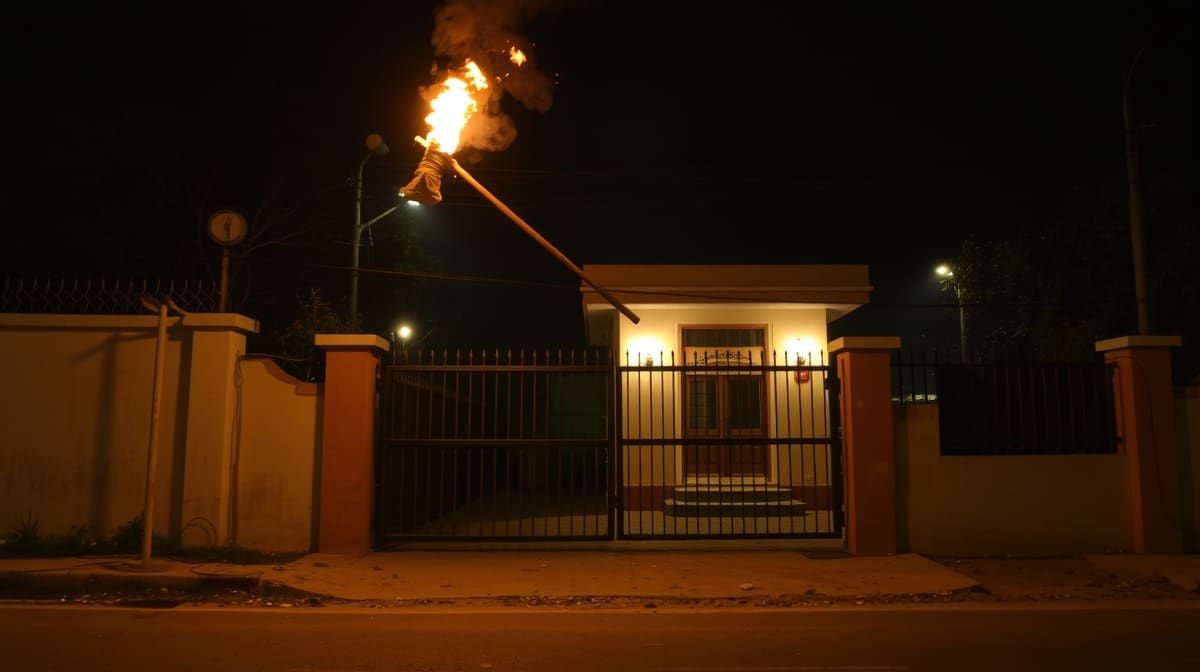
Section 307 IPC | Throwing Burning Effigy at Security Room with Occupants Constitutes Attempt to Murder, Even Without Injury or Weapon: Delhi HC
Case Law Analysis
|Delhi High Court

Section 307 IPC | Throwing Burning Effigy at Security Room with Occupants Constitutes Attempt to Murder, Even Without Injury or Weapon: Delhi HC

The Delhi High Court ruled that deliberately hurling a burning effigy at a guarded security room, knowing occupants are inside, amounts to attempt to murder under Section 307 IPC - protest intent cannot shield intentional acts likely to cause death. This sets a critical precedent for distinguishing legitimate dissent from lethal aggression in public demonstrations.