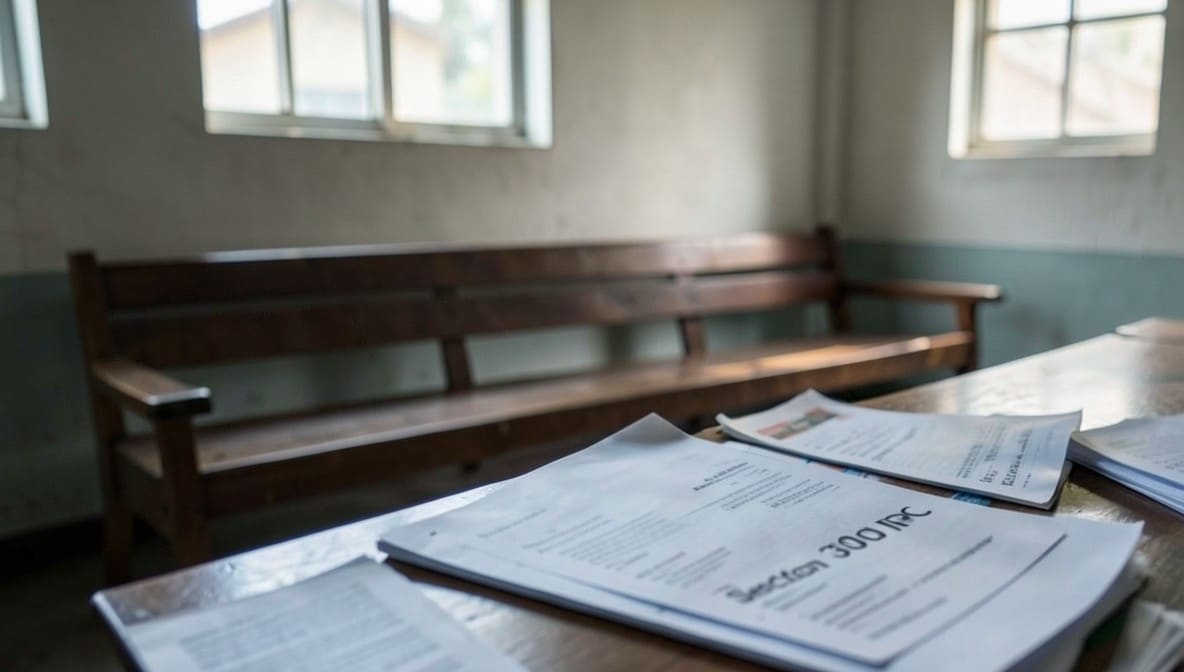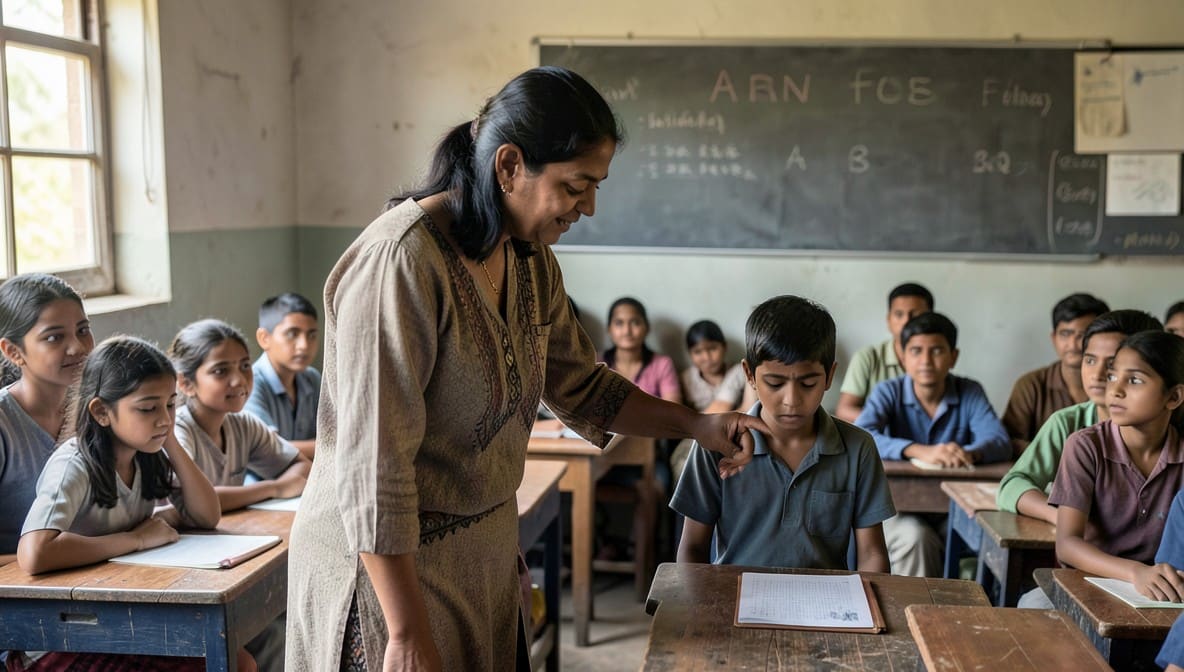
The Bombay High Court has quashed an FIR registered under Section 107 of the Bhartiya Nyaya Sanhita, 2023 (BNS), holding that reprimanding a student for poor academic performance or indiscipline does not amount to abetment of suicide. The judgment clarifies that mens rea - a deliberate intention to instigate or aid suicide - is a necessary ingredient for attracting criminal liability under this provision. The Court emphasized that a solitary act of scolding, without repeated harassment or intentional provocation, cannot be construed as abetment, even if the student is hypersensitive.
Background & Facts
The Dispute
The applicant, Gopal S/o. Maroti Suryawanshi, a teacher at Jai Bajrang School, Vasadi Bk., was accused of abetting the suicide of Vivek @ Vinayak (deceased), a student in his class. The deceased committed suicide on 01.07.2025 by hanging himself in the staircase of his house, leaving behind a suicide note alleging that the applicant had scolded him and passed derogatory remarks about his parents. The complaint was lodged by Keshav Vishnu Raut, leading to the registration of FIR No. 151/2025 under Section 107 BNS at Police Station Pimpalgaon Raja, Tah. Khamgaon, District Buldhana.
Key Facts
- On 01.07.2025, the applicant, while teaching, asked the deceased to define "Acceleration." When the deceased failed to answer, the applicant instructed him to perform 100 squats as punishment.
- The deceased managed only 20-25 squats and informed the applicant that he could not continue due to a leg injury. The applicant demanded to see the injury, and upon the deceased’s refusal, reprimanded him with derogatory remarks about his parents.
- During the school recess, the deceased left the premises and later committed suicide at his agricultural field.
- A suicide note was recovered from the deceased’s pocket, alleging that the applicant’s scolding and remarks led him to take the extreme step.
Procedural History
- 15.05.2025: Complaint lodged by Keshav Vishnu Raut leading to FIR No. 151/2025 under Section 107 BNS.
- Investigation: The police filed charge-sheet no. 30/2026 against the applicant.
- 18.06.2026: The present Criminal Application (APL) No. 1132 of 2025 was filed before the Bombay High Court, Nagpur Bench, seeking quashing of the FIR and consequent proceedings.
- 29.06.2026: The High Court pronounced its judgment, allowing the application.
Relief Sought
The applicant sought quashing of FIR No. 151/2025 and charge-sheet no. 30/2026, arguing that the allegations did not constitute the offence of abetment of suicide under Section 107 BNS.
The Legal Issue
The central question before the Court was whether a teacher’s act of reprimanding a student for poor academic performance or indiscipline, without any deliberate intention to instigate or aid suicide, constitutes abetment under Section 107 of the Bhartiya Nyaya Sanhita, 2023. Specifically, the Court had to determine:
- Whether the ingredients of abetment of suicide under Section 107 BNS were satisfied by the applicant’s conduct.
- Whether mens rea - the intention to instigate or aid suicide - was present in the applicant’s actions.
- Whether a solitary act of scolding, without repeated harassment or intentional provocation, could attract criminal liability under the provision.
Arguments Presented
For the Applicant
-
No Mens Rea: The applicant’s counsel argued that there was no intention to instigate or aid the deceased’s suicide. The reprimand was a routine disciplinary measure, and the deceased’s hypersensitivity should not impute criminal liability to the applicant.
-
No Instigation or Aid: The act of scolding did not amount to instigation or intentional aid under Section 45 BNS, which defines abetment. The applicant’s conduct lacked the requisite proximity and deliberate intent to push the deceased to suicide.
-
Precedents Cited: Reliance was placed on the following judgments:
- Geo Varghese v. State of Rajasthan and another (2021) 19 SCC 144: The Supreme Court held that reprimanding a student for indiscipline does not amount to abetment of suicide unless there is deliberate intent.
- Thangavel v. The State (SLP (Cri) No. 9099/2024): The Court ruled that no mens rea could be attributed to a correspondent who scolded a student based on a complaint, as the act was necessary for disciplinary purposes.
- Swamy Prahaladdas v. State of M.P. and another (1995 Supp (3) SCC 438): The Supreme Court held that mere words like "go and die" do not constitute abetment unless they reflect a deliberate intention to instigate suicide.
- Sanju Alias Sanjay Singh Sengar v. State of M.P. (2002) 5 SCC 371: The Court emphasized that instigation requires mens rea and that abusive words alone, without continuous harassment, do not amount to abetment.
-
Transfer of Applicant: It was submitted that the applicant had already been transferred to another school, indicating that no further threat of harassment existed.
For the Respondent/State
- Proximity of Act and Suicide: The State argued that the deceased committed suicide on the same day as the applicant’s reprimand, establishing a close proximity between the act and the suicide.
- Derogatory Remarks: The applicant’s distasteful and derogatory remarks about the deceased’s parents were alleged to have deeply hurt the deceased, constituting instigation under Section 107 BNS.
- Suicide Note: The suicide note explicitly mentioned the applicant’s scolding and remarks, which the State contended was prima facie evidence of abetment.
The Court's Analysis
The Court undertook a detailed examination of Sections 45 and 107 of the Bhartiya Nyaya Sanhita, 2023, which define abetment and prescribe punishment for abetment of suicide, respectively. The analysis focused on the following key principles:
-
Ingredients of Abetment: The Court reiterated that abetment requires either instigation, conspiracy, or intentional aid under Section 45 BNS. Mere harassment or scolding, without a deliberate intention to provoke suicide, does not satisfy the ingredients of the offence.
-
Mens Rea: The Court emphasized that mens rea is a necessary concomitant of instigation. Without proof of intentional instigation or aid, a person cannot be held liable for abetment of suicide. The Court relied on the following observations from Geo Varghese:
"What is required to constitute an alleged abetment of suicide under Section 306 IPC is there must be an allegation of either direct or indirect act of incitement to the commission of offence of suicide and mere allegations of harassment of the deceased by another person would not be sufficient in itself, unless, there are allegations of such actions on the part of the accused which compelled the commission of suicide. Further, if the person committing suicide is hypersensitive and the allegations attributed to the accused is otherwise not ordinarily expected to induce a similarly situated person to take the extreme step of committing suicide, it would be unsafe to hold the accused guilty of abetment of suicide."
-
Proximity and Nature of Act: The Court noted that while there was proximity between the applicant’s act and the suicide, the nature of the act - a solitary reprimand for poor performance - did not amount to instigation or intentional aid. The Court distinguished the present case from situations involving repeated harassment or deliberate insults designed to provoke suicide.
-
Hypersensitivity of the Deceased: The Court observed that the deceased was hypersensitive, and an ordinary student in a similar situation would not have taken the extreme step of committing suicide. The applicant’s act, though harsh, did not reflect an intention to push the deceased to suicide.
-
Precedents Applied: The Court relied on the following judgments to support its reasoning:
- Madan Mohan Singh v. State of Gujarat and another (2010) 8 SCC 628: The Supreme Court held that allegations must be of a definite nature and not inferential. The suicide note in that case expressed anguish but fell short of depicting intentional instigation.
- S.S. Chheena v. Vijay Kumar Mahajan and another (2010) 12 SCC 190: The Court emphasized that abetment involves a mental process of instigating or intentionally aiding a person to commit suicide. Without a positive act to instigate or aid, conviction cannot be sustained.
- M.Mohan v. State Represented by the Deputy Superintendent of Police (2011) 3 SCC 626: The Supreme Court reiterated that mens rea and an active act are necessary to constitute abetment.
-
Distinction from Repeated Harassment: The Court clarified that a solitary act of reprimanding, without continuous harassment or deliberate insult, does not amount to abetment. The applicant’s conduct was not part of a pattern designed to provoke the deceased.
The Verdict
The Bombay High Court allowed the application and quashed FIR No. 151/2025 and charge-sheet no. 30/2026 registered under Section 107 BNS. The Court held that:
- The applicant’s act of reprimanding the deceased for poor academic performance did not constitute abetment of suicide under Section 107 BNS.
- There was no mens rea - no deliberate intention to instigate or aid the deceased’s suicide.
- The deceased’s hypersensitivity could not be used to impute criminal liability to the applicant, as an ordinary student would not have reacted similarly.
- The proximity between the act and the suicide was insufficient to establish abetment, given the lack of repeated harassment or intentional provocation.
What This Means For Similar Cases
Mens Rea Is Non-Negotiable for Abetment of Suicide
- Intentional Instigation Required: Practitioners must now emphasize that mere scolding, reprimanding, or harsh words, without deliberate intent to provoke suicide, do not satisfy the ingredients of Section 107 BNS. The prosecution must prove mens rea - that the accused intended to instigate or aid the suicide.
- Precedents to Rely On: Defense counsels can cite Geo Varghese, Thangavel, and Swamy Prahaladdas to argue that routine disciplinary actions do not amount to abetment.
Hypersensitivity Alone Cannot Impute Liability
- Objective Standard: The Court applied an objective standard - whether an ordinary person in the deceased’s position would have been provoked to suicide. Hypersensitivity of the victim cannot be the sole basis for holding the accused liable.
- Psychological Factors: Courts will now scrutinize psychological factors of the deceased, such as hypersensitivity, to determine whether the accused’s conduct was sufficient to provoke suicide.
Proximity Is Not Conclusive
- Context Matters: While proximity between the act and suicide is a relevant factor, it is not conclusive. The Court will examine the nature of the act, whether it was part of a pattern of harassment, and whether it was intended to provoke suicide.
- Solitary Acts vs. Repeated Harassment: A solitary act of scolding, even if harsh, will not attract liability under Section 107 BNS. However, repeated harassment or deliberate insults designed to provoke suicide may still constitute abetment.
Practical Takeaways for Legal Practitioners
- Drafting Complaints/FIRs: Prosecutors must specifically allege mens rea and intentional instigation in complaints under Section 107 BNS. Vague allegations of scolding or reprimanding will not suffice.
- Defense Strategy: Defense counsels should highlight the lack of mens rea and absence of repeated harassment to seek quashing of FIRs under Section 482 CrPC.
- Evidence Appreciation: Courts will now closely examine suicide notes to determine whether they reflect intentional instigation or merely express the deceased’s subjective feelings.
- Disciplinary Actions: Institutions (schools, workplaces) can take routine disciplinary actions without fear of criminal liability, provided they do not deliberately provoke suicide.