Topic

Maintenance and Welfare of Parents and Senior Citizens Act 2007

11 articlesLatest 3 weeks ago
Senior Citizens Act 2007 | Cannot Evict Estranged Daughter-In-Law From Shared Household; Plea Filed at Son's Behest to Settle Scores : Punjab & Haryana HC
Case Law Analysis
|Punjab and Haryana High Court

Senior Citizens Act 2007 | Cannot Evict Estranged Daughter-In-Law From Shared Household; Plea Filed at Son's Behest to Settle Scores : Punjab & Haryana HC

The Punjab and Haryana High Court held that the Senior Citizens Act, 2007 cannot be invoked to evict an estranged daughter-in-law with a right to reside in the shared household, confirming the plea was filed at the son's behest to settle matrimonial scores. The ruling safeguards a daughter-in-law's residence rights against the misuse of senior citizen maintenance law as a proxy for matrimonial disputes.

Section 17 of Maintenance Act Ultra Vires of Section 30 Advocates Act - Senior Citizens Entitled to Legal Representation before Maintenance Tribunal : Calcutta HC
Case Law Analysis
|Calcutta High Court

Section 17 of Maintenance Act Ultra Vires of Section 30 Advocates Act - Senior Citizens Entitled to Legal Representation before Maintenance Tribunal : Calcutta HC

The Calcutta High Court ruled that Section 17 of the Maintenance and Welfare of Parents and Senior Citizens Act, 2007 exceeds the scope of Section 30 of the Advocates Act, 1961, thereby affirming the right of senior citizens to be represented by a chosen advocate before the Maintenance Tribunal. This ensures tribunals cannot deny legal counsel, strengthening procedural safeguards for elderly litigants.

Rule 20 AP Rules 2011 | District Magistrate Must Enforce Senior Citizens Tribunal Orders Within Three Months : AP HC
Case Law Analysis
|Andhra Pradesh High Court

Rule 20 AP Rules 2011 | District Magistrate Must Enforce Senior Citizens Tribunal Orders Within Three Months : AP HC

Andhra Pradesh High Court mandates District Magistrate to enforce maintenance orders (Rs. 60,000/month) issued by Senior Citizens Tribunal within three months, clarifying statutory compliance under Rule 20 of AP Rules, 2011. The ruling sets a precedent for timely enforcement of tribunal orders, ensuring senior citizens' welfare rights are upheld without administrative delays.

Section 16 Maintenance Act | Exhaustion of Appeal Remedy Mandatory Before Writ Petition Under Article 226 : AP HC
|Andhra Pradesh High Court

Section 16 Maintenance Act | Exhaustion of Appeal Remedy Mandatory Before Writ Petition Under Article 226 : AP HC

Andhra Pradesh High Court dismisses writ petition under Article 226, reinforcing that aggrieved parties must first exhaust statutory appeals under Section 16 of the Maintenance and Welfare of Parents and Senior Citizens Act, 2007 before approaching constitutional courts. The ruling underscores the primacy of alternative remedies in maintenance disputes involving senior citizens' rights.

Maintenance and Welfare of Parents Act | Eviction Orders Void Without Strict Procedural Compliance: Bombay HC
Case Law Analysis
|Bombay High Court

Maintenance and Welfare of Parents Act | Eviction Orders Void Without Strict Procedural Compliance: Bombay HC

Bombay High Court sets aside an eviction order under the Maintenance and Welfare of Parents and Senior Citizens Act, 2007, ruling that procedural lapses-such as non-compliance with prescribed formats-render such orders legally unsustainable. The judgment reinforces that senior citizens' eviction proceedings must adhere to strict due process to avoid prejudice.

DV Act Residence Rights Override Senior Citizens Act Eviction Orders When Premises Are Shared: Bombay HC
Case Law Analysis
|Bombay High Court

DV Act Residence Rights Override Senior Citizens Act Eviction Orders When Premises Are Shared: Bombay HC

Bombay High Court held that protection orders under the Domestic Violence Act prevail over eviction directives under the Senior Citizens Act when the premises are shared and domestic violence proceedings are pending. The ruling safeguards a victim’s residence rights, even if the property is owned by senior citizens, ensuring legal recourse against harassment is not undermined by parallel eviction claims.

Section 23 Maintenance and Welfare of Parents Act | Deed of Gift Void Only If Explicit Maintenance Condition Exists : Karnataka HC
Case Law Analysis
|Karnataka High Court

Section 23 Maintenance and Welfare of Parents Act | Deed of Gift Void Only If Explicit Maintenance Condition Exists : Karnataka HC

Karnataka High Court clarifies that a deed of gift under Section 23 of the Maintenance and Welfare of Parents and Senior Citizens Act can only be voided if it explicitly includes a maintenance condition. Mere non-compliance with maintenance orders is insufficient for cancellation, reinforcing the need for clear contractual terms in property transfers involving senior citizens.

Section 23 Maintenance and Welfare of Parents Act | Mandamus Issued for Two-Week Disposal of Petition Seeking Settlement Deed Cancellation : Madurai HC
Case Law Analysis
|Madras High Court

Section 23 Maintenance and Welfare of Parents Act | Mandamus Issued for Two-Week Disposal of Petition Seeking Settlement Deed Cancellation : Madurai HC

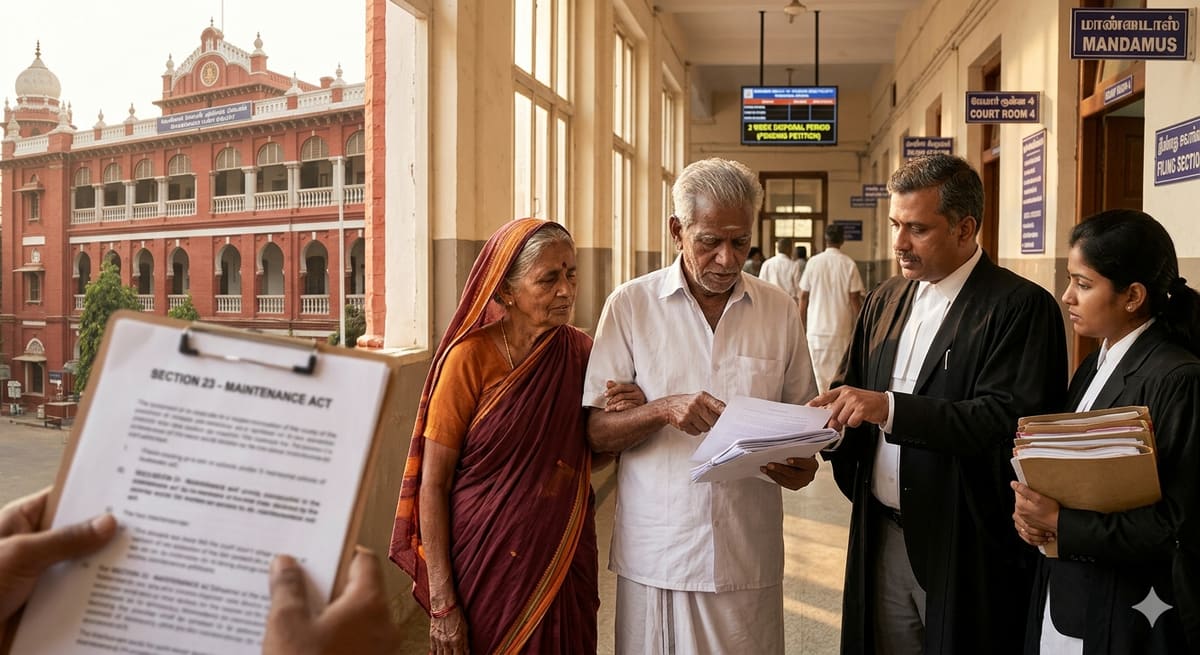
Madurai High Court directs the Sub-Collector to dispose of a petition under Section 23 of the Maintenance and Welfare of Parents and Senior Citizens Act, 2007 within two weeks, reinforcing the statutory duty to adjudicate senior citizens' property disputes expeditiously. The ruling underscores that administrative delays in such petitions violate the Act's intent and warrant judicial intervention via mandamus.

Section 23 of Maintenance and Welfare of Parents Act | Arbitrary Land Transfer Order Violates Senior Citizen Rights : Telangana HC
Case Law Analysis
|Telangana High Court

Section 23 of Maintenance and Welfare of Parents Act | Arbitrary Land Transfer Order Violates Senior Citizen Rights : Telangana HC

Telangana High Court sets aside an arbitrary land transfer order under the Maintenance and Welfare of Parents and Senior Citizens Act, 2007, ruling that such orders must align with the Act's provisions. The court directed a lump sum payment of Rs. 1,00,000 to the senior citizen, emphasizing the protection of elderly rights in property disputes.