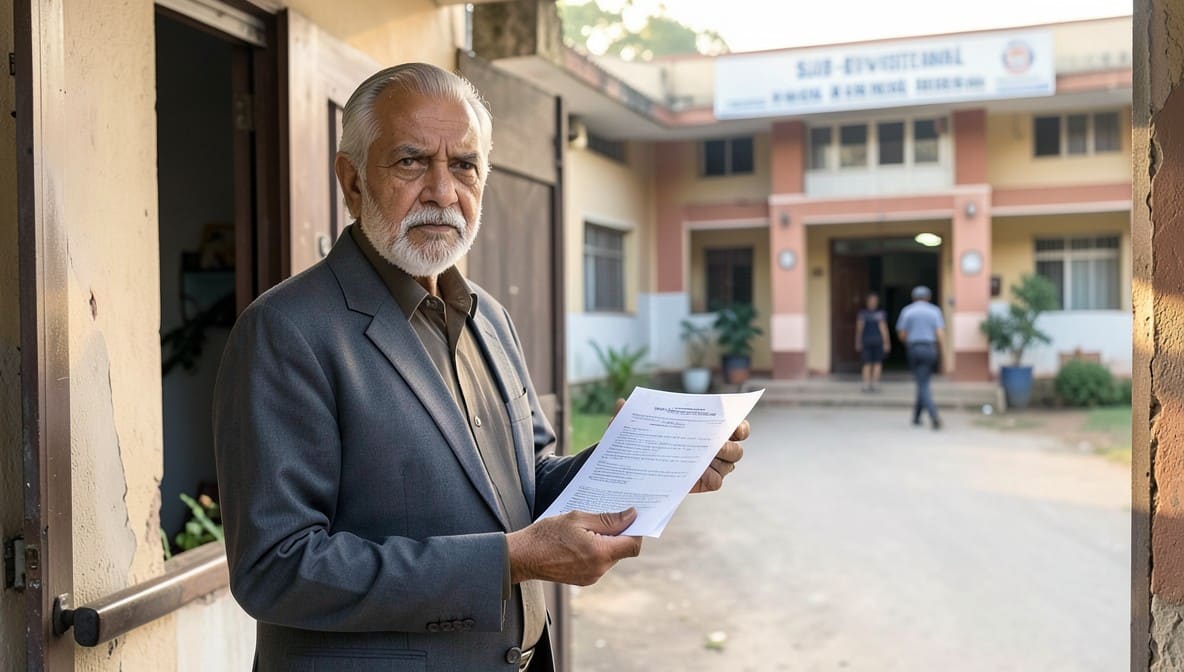
The Bombay High Court has underscored the importance of procedural compliance in eviction orders under the Maintenance and Welfare of Parents and Senior Citizens Act, 2007. In a recent interim order, the Court stayed a drastic eviction order passed against the petitioners, highlighting that the application for eviction did not conform to the prescribed format and had caused prejudice. The judgment reaffirms that statutory procedures must be strictly followed to ensure fairness in proceedings under the Act.
Background & Facts
The Dispute
The petitioners, Swarupanand Shankar Surywanshi and Anr., are occupants of the first floor of a three-storied building in Kolhapur. The ground floor is occupied by the respondents, Shankar Tulasiram Surywanshi and Ors. (respondent Nos. 1 and 2), who operate a shop on the front side and reside in the back premises. The second floor is occupied by respondent No. 3, Girish, the petitioners' elder brother. These are independent residential and commercial units within the same building.
Key Facts
- The respondents (parents/senior citizens) filed an application under the Maintenance and Welfare of Parents and Senior Citizens Act, 2007 seeking eviction of the petitioners from the first floor.
- The Sub-Divisional Officer passed an eviction order on 19.06.2026, which was subsequently confirmed by the Appellate Authority under the Act.
- The petitioners challenged the eviction order in Writ Petition No. 2695 of 2026, contending that the application for eviction did not comply with the prescribed format.
- The petitioners claimed that the impugned order had caused them prejudice, warranting judicial intervention.
Procedural History
- 19.06.2026: Eviction order passed by the Sub-Divisional Officer under the Maintenance and Welfare of Parents and Senior Citizens Act, 2007.
- 19.06.2026: Order confirmed by the Appellate Authority.
- 2026: Petitioners filed Writ Petition No. 2695 of 2026 before the Bombay High Court, Circuit Bench at Kolhapur.
- 30.06.2026: Hearing conducted; notice issued to respondents for final disposal, returnable on 10.08.2026.
- 30.06.2026: Learned Assistant Government Pleader (AGP) waived notice for respondent Nos. 5 to 7.
Relief Sought
The petitioners sought:
- Quashing of the eviction order dated 19.06.2026 passed by the Sub-Divisional Officer and confirmed by the Appellate Authority.
- Ad-interim relief in terms of prayer clause (c), staying the eviction order pending final disposal of the writ petition.
The Legal Issue
The central question before the Court was whether an eviction order under the Maintenance and Welfare of Parents and Senior Citizens Act, 2007 can be sustained if the application for eviction does not conform to the prescribed format, thereby causing prejudice to the occupants.
Arguments Presented
For the Petitioners
- The application for eviction filed by the respondents did not comply with the prescribed format under the Act.
- The impugned eviction order had caused prejudice to the petitioners, warranting judicial intervention.
- The drastic nature of the eviction order necessitated interim relief to prevent irreparable harm.
For the Respondent-State
- The learned AGP waived notice for respondent Nos. 5 to 7, indicating no opposition to the interim relief sought by the petitioners.
The Court's Analysis
The Court observed that the application for eviction preferred by the respondents was not in consonance with the prescribed format under the Maintenance and Welfare of Parents and Senior Citizens Act, 2007. This procedural lapse, coupled with the drastic nature of the eviction order, prima facie caused prejudice to the petitioners. The Court emphasized that statutory procedures must be strictly adhered to, especially in matters involving eviction, to ensure fairness and prevent misuse of the Act.
"Prima facie, the impugned order of eviction has caused prejudice to the petitioners."
The Court further noted that the parties would have the liberty to file replies, rejoinders, or compilations of documents, ensuring a thorough examination of the matter at the final disposal stage.
The Verdict
The Bombay High Court granted ad-interim relief in terms of prayer clause (c), staying the eviction order dated 19.06.2026 until the final disposal of the writ petition. The Court directed that the parties act on an authenticated copy of the order and listed the matter for further hearing on 10.08.2026.
What This Means For Similar Cases
Procedural Compliance Is Non-Negotiable
- Courts are increasingly scrutinizing procedural lapses in applications under the Maintenance and Welfare of Parents and Senior Citizens Act, 2007. Non-compliance with prescribed formats can vitiate eviction orders.
- Practitioners must ensure that applications for eviction strictly adhere to statutory requirements to avoid judicial set-aside.
Interim Relief as a Safeguard
- The judgment reaffirms that drastic orders, such as eviction, can be stayed if they cause prejudice to the affected party. This provides a safeguard against arbitrary or procedurally flawed orders.
- Petitioners challenging eviction orders under the Act can seek interim relief by demonstrating procedural irregularities or prejudice.
Liberty to File Additional Documents
- The Court's direction allowing parties to file replies, rejoinders, or compilations of documents underscores the importance of a comprehensive factual record. Practitioners should leverage this opportunity to strengthen their case with additional evidence or legal submissions.