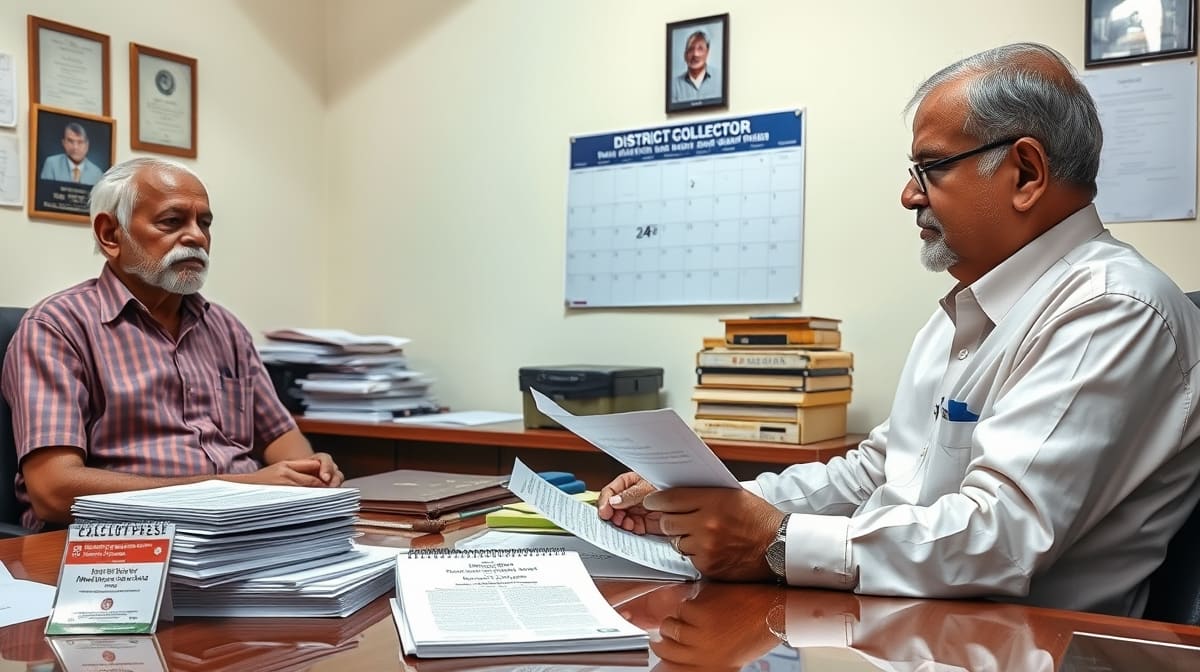
The Andhra Pradesh High Court has clarified the enforcement mechanism for orders passed under the Maintenance and Welfare of Parents and Senior Citizens Act, 2007. In a writ petition seeking implementation of a Tribunal order directing monthly maintenance of Rs. 60,000, the Court directed the District Collector to dispose of the petitioner's representation within three months, while ensuring procedural fairness by issuing notice to the respondents. This judgment underscores the District Magistrate's statutory role in enforcing senior citizens' rights while balancing due process requirements.
Background & Facts
The Dispute
The petitioner, Chundru Subba Rao, a 67-year-old senior citizen from Nallajarla Mandal, East Godavari District, sought enforcement of an order passed by the Maintenance and Welfare of Parents and Senior Citizens Tribunal (4th respondent). The Tribunal, in O.P. No. 44 of 2022 dated 17.12.2022, had directed the petitioner's children (unofficial respondents 6 and 7) to pay Rs. 60,000 per month towards his maintenance, in addition to the rents derived from leased properties.
Key Facts
- The petitioner filed representations dated 14.02.2024 and 17.11.2023 before the District Collector and other authorities, seeking enforcement of the Tribunal's order
- The Tribunal's order mandated payment of Rs. 60,000 per month, apart from property rents
- The unofficial respondents (6 and 7) filed a counter-affidavit offering to:
- Take care of the petitioner if he resided with them
- Provide all necessities
- Pay Rs. 60,000 per month only after cancelling the registered lease deed (Document No. 5698/2022 dated 15.09.2022)
- The petitioner alleged threats and non-compliance with the Tribunal's order
Procedural History
- 17.12.2022: Tribunal passed order in O.P. No. 44/2022 directing maintenance
- 17.11.2023 and 14.02.2024: Petitioner filed representations before authorities
- 2024: Writ Petition No. 8286/2024 filed before Andhra Pradesh High Court
- 10.07.2026: High Court disposed of the writ petition with directions
Relief Sought
The petitioner sought:
- A Writ of Mandamus or other appropriate writ/direction declaring the inaction of respondents as illegal and arbitrary
- Enforcement of the Tribunal's order dated 17.12.2022
- Action against unofficial respondents for violating the Tribunal's order
- Directions to respondents 2-5 to implement the order
The Legal Issue
The central question was whether the District Magistrate (District Collector) is obligated to enforce orders passed by the Maintenance and Welfare of Parents and Senior Citizens Tribunal under Section 27 of the Senior Citizens Act, 2007, and if so, what procedural safeguards must be followed before taking action against non-compliant parties.
Arguments Presented
For the Petitioner
- Relied on Rule 20 of the Andhra Pradesh Maintenance of Parents and Senior Citizens Rules, 2011, which designates the District Magistrate as the competent authority to enforce the Act
- Contended that Section 27 of the Senior Citizens Act, 2007 bars Civil Court jurisdiction, implying that enforcement lies solely with the District Magistrate
- Argued that the respondents' failure to implement the Tribunal's order was arbitrary and violated the petitioner's statutory rights
For the Respondents
- The unofficial respondents (6 and 7) offered an undertaking to:
- Take care of the petitioner if he resided with them
- Provide all necessities
- Pay Rs. 60,000 per month only after cancelling the lease deed dated 15.09.2022
- The State respondents (2-5) did not contest the petitioner's right to enforcement but sought procedural fairness
The Court's Analysis
The Court examined the statutory framework under the Maintenance and Welfare of Parents and Senior Citizens Act, 2007 and the Andhra Pradesh Rules, 2011:
-
Statutory Role of District Magistrate: The Court noted that Rule 20 explicitly designates the District Magistrate as the authority responsible for enforcing the Act's provisions. This includes implementing orders passed by the Tribunal.
-
Jurisdictional Bar: The Court observed that Section 27 bars Civil Court jurisdiction for matters under the Act, reinforcing the District Magistrate's exclusive role in enforcement.
-
Procedural Fairness: While emphasizing the District Magistrate's duty to enforce the Tribunal's order, the Court also underscored the need for procedural fairness. It directed the District Collector to:
- Dispose of the petitioner's representation dated 14.02.2024 as per law
- Issue notice to the unofficial respondents (arrayed as respondents 6 and 7 in a connected writ petition, W.P. No. 19047/2025) to consider their objections
- Pass appropriate orders within three months from the date of receipt of the order
-
Balancing Enforcement and Due Process: The Court's directions reflect a balance between the petitioner's right to maintenance and the respondents' right to be heard. The undertaking offered by the unofficial respondents was noted but not accepted unconditionally, as the Tribunal's order was to be enforced independently of their conditions.
"Under Rule 20 of the Andhra Pradesh Maintenance of Parents and Senior Citizens Rules, 2011, the District Magistrate is the competent authority to ensure the implementation of the provisions of the Maintenance and Welfare of Parents and Senior Citizens Act, 2007."
"The present Writ Petition is disposed of directing the 2nd respondent herein to dispose of representation dated 14.02.2024 as per law. Before taking any action, the 2nd respondent is directed to issue notice to the writ petitioners in W.P. No.19047 of 2025 who are arrayed as respondent Nos.6, 7 in W.P. No.8286 of 2024, for considering their objections."
The Verdict
The Court disposed of the writ petition with the following directions:
- The District Collector (2nd respondent) was directed to dispose of the petitioner's representation dated 14.02.2024 as per law
- The District Collector must issue notice to the unofficial respondents (respondents 6 and 7 in W.P. No. 8286/2024, who are petitioners in W.P. No. 19047/2025) to consider their objections
- The District Collector must pass appropriate orders in accordance with law within three months from the date of receipt of the order
- No order as to costs was passed
- Pending interlocutory applications, if any, were closed
What This Means For Similar Cases
District Magistrate's Enforcement Role Is Non-Negotiable
- Practitioners must note that Rule 20 of the Andhra Pradesh Rules, 2011 vests the District Magistrate with the exclusive authority to enforce orders under the Senior Citizens Act, 2007
- The judgment reinforces that Section 27's jurisdictional bar on Civil Courts does not absolve the District Magistrate of their duty to act
- Senior citizens and their legal representatives should:
- File representations before the District Magistrate for enforcement of Tribunal orders
- Cite Rule 20 and this judgment to underscore the statutory obligation of the District Magistrate
Procedural Safeguards Must Be Followed
- While enforcement is mandatory, the District Magistrate must ensure procedural fairness by:
- Issuing notice to non-compliant parties before taking action
- Considering objections raised by respondents
- Passing reasoned orders within the three-month timeline set by the Court
- Practitioners representing respondents should:
- Ensure objections are filed promptly upon receipt of notice
- Highlight any conditions precedent (e.g., cancellation of lease deeds) that may affect compliance
Undertakings Are Not Substitutes for Statutory Compliance
- The Court did not accept the unofficial respondents' undertaking as a substitute for enforcing the Tribunal's order
- Practitioners should note that:
- Conditional undertakings (e.g., payment only after cancellation of a lease) may not override the Tribunal's directions
- The District Magistrate must enforce the order independently of any private agreements between parties