The Calcutta High Court, in a writ petition filed by a senior citizen, declared that the prohibition on legal representation in the Maintenance and Welfare of Parents and Senior Citizens Act, 2007 cannot override the later-enacted right of advocates to practice before tribunals, thereby affirming the petitioner’s entitlement to be represented by counsel.
Background & Facts
The Dispute
The petitioner, Kripal Singh Khurana, a 63-year-old senior citizen and owner of Flat No. 4B, Middleton Apartment, Kolkata (inherited) and Flat No. G (purchased in his wife’s name), sought to evict his wife and son from the premises and obtain protection of his life and property. The petition arose from a dispute before the Maintenance Tribunal constituted under the Maintenance and Welfare of Parents and Senior Citizens Act, 2007.
Key Facts
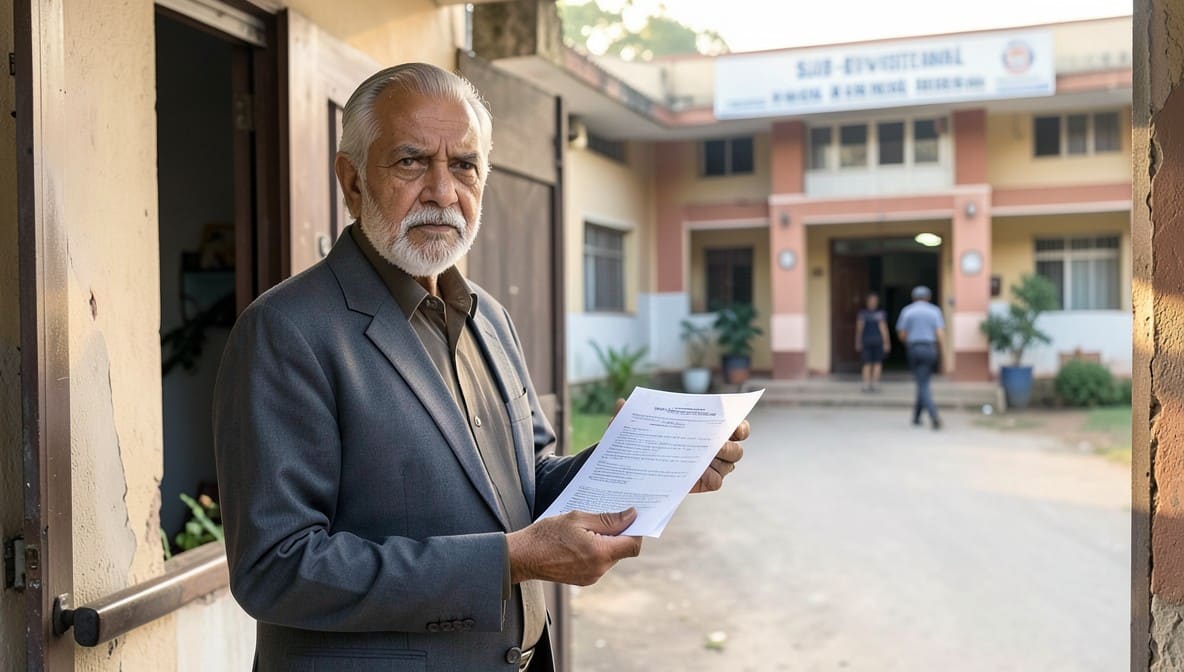
- 21 April 2026: Petitioner appeared before the Maintenance Tribunal with his learned advocate; the Tribunal refused representation, invoking Section 17 of the 2007 Act.
- 15 June 2011: Section 30 of the Advocates Act, 1961 came into force, granting every advocate the right to practice before any tribunal or authority legally authorized to take evidence.
- 9 August 2011: An interim order stayed the operation of Section 17 in a related case.
- 9 June 2011: Notification issued bringing Section 30 into force.
- 27 May 2014: Union of India produced the notification confirming Section 30’s commencement.
- 26 May 2014: Arguments were heard on whether Section 30 had been operational.
- 31 December 2007: The Maintenance and Welfare of Parents and Senior Citizens Act, 2007 came into force.
- 21 July 2026: Hearing concluded.
- 10 August 2026: Judgment delivered and uploaded.
Procedural History
- 21 April 2026: Petitioner's application before the Maintenance Tribunal was rejected; petitioner withdrew the application.
- W.P.O. No. 202 of 2026: Writ petition filed before the Calcutta High Court seeking a mandamus directing the Tribunal to permit representation by an advocate of the petitioner's choice.
- 21 July 2026: Hearing concluded.
- 10 August 2026: Court delivered judgment, allowing the writ petition.
Parties' Positions
- Petitioner (through Mr. Srijib Chakraborty and co-counsel) argued that Section 30 of the Advocates Act confers an absolute statutory right to practice before any tribunal that is “legally authorized to take evidence,” and that this right cannot be defeated by the “notwithstanding” clause of Section 17 of the 2007 Act, especially because Section 30 became law after Section 17 was enacted.
- Respondents 1-5 (State of West Bengal and others, represented by Mr. D.N. Ray, Mr. Atanu Basu, Mr. Nikhil Jhunjhunwala, Mr. Ramesh Chandra Paul, Mr. Raspreet Singh Khurana) contended that Section 17 was a valid legislative restriction designed to ensure speedy, inexpensive resolution of maintenance matters and that it could not be overridden by a later provision.
Relief Sought
The petitioner sought a declaration that Section 17 of the Maintenance Act is ultra vires of Section 30 of the Advocates Act and that he is entitled to be represented by an advocate of his choice before the Maintenance Tribunal, the Appellate Tribunal and any court constituted under the Act.
The Legal Issue
Whether Section 17 of the Maintenance and Welfare of Parents and Senior Citizens Act, 2007 - which bars legal representation before the Tribunal - can be read down or declared ultra vires in view of the later-enacted Section 30 of the Advocates Act, 1961, which grants advocates the right to practice before any tribunal or authority legally authorized to take evidence.
Arguments Presented
For the Petitioner
- Section 30, effective 15 June 2011, confers an absolute right on every advocate to appear before any tribunal that can take evidence; the phrase “legally authorized to take evidence” in Section 30 includes the Maintenance Tribunal, which possesses powers of a civil court under Sections 6, 8 and 11 of the 2007 Act.
- The “notwithstanding anything contained in any law” wording of Section 17 can only refer to statutes that were in force at the time of its enactment; Section 30 was not law on 31 December 2007, therefore it cannot be overridden.
- Precedent: Paramjit Kumar Saroya v. Union of India (Punjab & Haryana HC), Adv. K.G. Suresh v. Union of India (Kerala HC), and Pawan Reley v. Union of India (Delhi HC) all held that Section 17 is ultra vires of Section 30.
- Constitutional guarantee under Article 19(1)(g) to practice any profession supports the advocate’s right.
For the Respondents
- Section 17 was enacted to ensure the maintenance scheme remains speedy and cost-effective; allowing advocates could delay proceedings.
- The “notwithstanding” clause is intended to create an absolute bar, irrespective of later statutes, to preserve the legislative intent of the 2007 Act.
- Citing Lingappa Pochanna Appealwar v. State of Maharashtra (AIR 1985) that the right of an advocate to appear before a tribunal is not absolute and depends on the specific statutory scheme.
The Court's Analysis
The Court began by examining the legislative chronology. Section 30 of the Advocates Act was brought into force on 15 June 2011, more than three years after the Maintenance Act (effective 31 December 2007) and its Section 17 were enacted. The Court noted that the “notwithstanding anything contained in any law” language in Section 17 can only refer to statutes that existed at the time of its commencement. Since Section 30 was not yet law, it could not be the “law” contemplated by the clause.
"The provision of Section 30 became law on 15.06.2011, whereas Section 17 was enacted on 31.12.2007 when Section 30 was not in force. Consequently, Section 17 cannot override a statute that did not exist at the time of its enactment."
The Court then turned to the substantive rights conferred by Section 30. The provision expressly includes the right to practice before “any tribunal or person legally authorized to take evidence.” The Maintenance Tribunal, under Sections 6, 8 and 11 of the 2007 Act, possesses powers of a civil court, including the power to take evidence on oath, enforce attendance, and issue warrants. Hence, the Tribunal falls squarely within the ambit of “legally authorized to take evidence.”
Reference was made to the earlier judgments of the Punjab & Haryana HC (Paramjit Kumar Saroya), Kerala HC (Adv. K.G. Suresh), and Delhi HC (Pawan Reley), all of which held that Section 17 is inconsistent with the later-enacted Section 30 and must be read down. The Court distinguished Lingappa Pochanna Appealwar on the ground that the latter dealt with a different statutory context where the right of an advocate was expressly limited by a specific provision, whereas here the later statute expressly expands the advocate’s right.
The Court also considered constitutional principles. Article 19(1)(g) guarantees the freedom to practice any profession, subject only to reasonable restrictions. A blanket prohibition on legal representation, when a later statute expressly grants that right, amounts to an unreasonable restriction and therefore violates the constitutional guarantee.
Finally, the Court addressed the policy argument that allowing advocates would delay proceedings. It observed that the presence of counsel does not inherently impede speedy resolution; rather, it ensures due process, especially where complex evidentiary matters arise (e.g., property disputes, fraud allegations). The Court cited the legislative intent of the 2007 Act to protect senior citizens, noting that denying legal assistance would undermine that very protection.
In sum, the Court concluded that Section 17 is ultra vires of Section 30, and the petitioner is entitled to representation by an advocate of his choice.
The Verdict
The writ petition (W.P.O. No. 202 of 2026) is allowed. The Court declares Section 17 of the Maintenance and Welfare of Parents and Senior Citizens Act, 2007 ultra vires of Section 30 of the Advocates Act, 1961. Consequently, the petitioner may be represented by an advocate before the Maintenance Tribunal, the Appellate Tribunal and any court constituted under the Act. The parties are entitled to act on the basis of the server copy of this judgment, and urgent Xerox-certified copies will be provided upon compliance with requisite formalities.
What This Means For Similar Cases
Representation Before Tribunals Is No Longer Barred
- Advocates can now appear before any Maintenance Tribunal or Appellate Tribunal, provided they are enrolled under the Advocates Act.
- Litigants should file applications for legal representation promptly, citing the Court’s declaration.
Statutory Chronology Governs “Notwithstanding” Clauses
- When a later statute confers a right, an earlier “notwithstanding” provision cannot defeat it if the later statute was not in force at the time of the earlier law’s enactment.
- Practitioners must examine the commencement dates of conflicting provisions before raising a “notwithstanding” defence.
Constitutional Safeguards Override Legislative Barriers
- Article 19(1)(g) will be invoked to challenge any statutory bar that impedes a professional’s constitutional right to practice.
- Courts are likely to scrutinise blanket prohibitions that lack a reasonable basis.
Actionable Takeaways
- Verify the commencement date of any statutory provision that limits professional rights.
- Cite Paramjit Kumar Saroya, Adv. K.G. Suresh, and Pawan Reley when confronting similar “no-lawyer” clauses.
- Advise senior-citizen clients that they may now retain counsel for maintenance proceedings.