In a significant ruling balancing the rights of senior citizens and domestic violence survivors, the Bombay High Court held that protection orders under the Protection of Women from Domestic Violence Act (DV Act) prevail over eviction orders under the Maintenance and Welfare of Parents and Senior Citizens Act, 2007 when the premises are shared. The judgment underscores that senior citizens cannot use eviction proceedings as a counterblast to ongoing domestic violence litigation.
Background & Facts
The Dispute
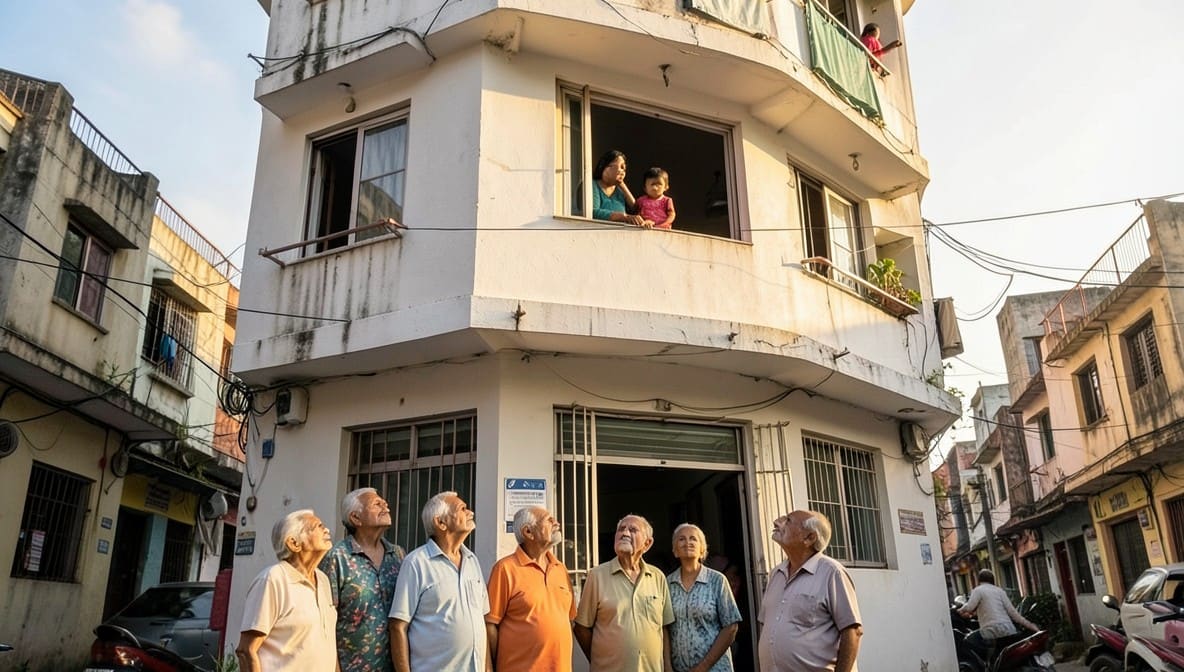
The petitioner, Farjana Asfaq Shaikh, is a 30-year-old woman residing at Sector 140/6, Gulmohar Society, Walhekarwadi, Chinchwad, Pune. She married respondent No. 3, Asfaq Liyakat Shaikh, on 22nd April 2006 and has a minor daughter from the marriage. The respondents - Hasina Liyakat Shaikh (mother-in-law), Liyakat Isaq Shaikh (father-in-law), and Asfaq Liyakat Shaikh (husband) - reside in the same premises, a three-storied building with approximately 19 rooms. The petitioner occupies the third floor with her daughter.
The dispute arose when respondent No. 3 contracted a second marriage with Samina Pathan during the subsistence of his first marriage. Following this, the respondents allegedly neglected and harassed the petitioner, prompting her to file Miscellaneous Application No. 1157 of 2017 under the Protection of Women from Domestic Violence Act, 2005 (DV Act) before the Judicial Magistrate First Class (JMFC), Pimpri.
Key Facts
- The suit premises were purchased using dowry amounts provided by the petitioner’s father to respondent No. 3.
- Respondent No. 2 filed a civil suit for recovery of possession of the premises, which is pending.
- To counter the DV Act proceedings, respondents No. 1 to 3 filed an application under the Maintenance and Welfare of Parents and Senior Citizens Act, 2007 (Senior Citizens Act) before the Sub-Divisional Officer (SDO), Pune.
- On 25th November 2018, the SDO allowed the application and directed the petitioner to vacate the premises.
- The Additional Collector, Pune, confirmed the SDO’s order on 25th February 2019 in Appeal No. 6 of 2018.
- Meanwhile, on 11th September 2019, the JMFC granted the petitioner maintenance and protection from eviction under the DV Act.
Procedural History
- 22nd April 2006: Petitioner’s marriage to respondent No. 3.
- Post-2006: Respondent No. 3 contracts a second marriage.
- 2017: Petitioner files Misc. Application No. 1157/2017 under the DV Act.
- 2018: Respondents file application under the Senior Citizens Act before the SDO.
- 25th November 2018: SDO directs petitioner to vacate the premises.
- 25th February 2019: Additional Collector confirms SDO’s order.
- 11th September 2019: JMFC grants protection to petitioner under the DV Act.
- 2019: Petitioner files Writ Petition No. 1335 of 2019 before the Bombay High Court.
The Parties' Positions
For the Petitioner
- The petitioner contended that the respondents filed the Senior Citizens Act application to counterblast her DV Act proceedings.
- The JMFC had already granted her protection from eviction, which the SDO and Additional Collector ignored.
- The suit premises were purchased using dowry amounts provided by her father, establishing her right to residence.
- The respondents have separate rooms and do not face inconvenience if the petitioner continues to reside on the third floor.
For the Respondents
- Respondent No. 2 claimed the property was purchased out of his own income.
- Due to continuous disputes, respondent No. 3 directed both the petitioner and himself to vacate the premises.
- Respondents No. 1 and 2, being senior citizens, require the premises for their accommodation.
- The Senior Citizens Act was enacted for the benefit of senior citizens, and the SDO’s order was reasoned and justified.
Relief Sought
The petitioner sought quashing of the Additional Collector’s order dated 25th February 2019, which confirmed the eviction directive under the Senior Citizens Act.
The Legal Issue
The central question was whether an eviction order under the Senior Citizens Act can override a protection order under the DV Act, particularly when the premises are shared and the domestic violence survivor has been granted residence rights by a competent court.
Arguments Presented
For the Petitioner
- The Senior Citizens Act application was filed maliciously to counter the DV Act proceedings.
- The JMFC’s protection order under the DV Act legally bars eviction, and the SDO/Additional Collector failed to consider this.
- The respondents have alternative accommodation within the same premises, negating any claim of inconvenience.
- Reliance was placed on S. Vanitha v. Deputy Commissioner, Bengaluru Urban District and ors ((2021) 15 SCC 730), where the Supreme Court held that DV Act protections prevail over senior citizens' rights in shared premises.
For the Respondents
- The Senior Citizens Act is a special legislation enacted for the welfare of elderly parents.
- The SDO and Additional Collector rightly exercised their discretion under the Act.
- The petitioner’s continued occupation causes inconvenience to the senior citizens.
- The DV Act proceedings do not automatically nullify the Senior Citizens Act’s provisions.
The Court's Analysis
The Bombay High Court critically examined the interplay between the DV Act and the Senior Citizens Act, emphasizing the purpose and scope of both legislations. The Court observed:
"Admittedly, the suit for recovery of possession against the petitioner is filed by respondent No. 2 after filing of the DV application by the petitioner. Thereafter, the application under the Senior Citizens Act was filed by the respondent Nos.1 to 3 against the petitioner. It shows that to counterblast the DV application, the said proceedings were filed."
The Court noted that the JMFC had already granted protection to the petitioner under the DV Act, barring her eviction from the suit premises. This protection was binding and could not be ignored by the SDO or Additional Collector. The Court further held:
"It is significant to note that in the DV application, the learned JMFC has protected the petitioner from eviction from the suit premises. Moreover, the suit premises is a three-storied building. The petitioner stays with her daughter on the third floor. The respondents have separate rooms to stay. Hence, it cannot be said that inconvenience is being caused to the respondents."
Relying on the Supreme Court’s decision in S. Vanitha, the Court reiterated that DV Act protections take precedence when the premises are shared, and the survivor has been granted residence rights. The Court underscored that senior citizens cannot weaponize eviction proceedings to undermine ongoing domestic violence litigation.
The Verdict
The Bombay High Court allowed the writ petition and set aside the impugned orders. Specifically:
- The order dated 25th February 2019 passed by the Additional Collector, Pune, in Appeal No. 6 of 2018 was quashed and set aside.
- The petitioner retains her right to reside in the suit premises, as protected by the JMFC’s order under the DV Act.
- No costs were awarded.
What This Means For Similar Cases
DV Act Protections Override Senior Citizens' Eviction Rights in Shared Premises
- Practitioners must argue that DV Act protection orders create a legal bar against eviction under the Senior Citizens Act, especially when the premises are shared.
- Courts are likely to scrutinize the timing of Senior Citizens Act applications - if filed after DV Act proceedings, they may be viewed as malicious counterblasts.
Senior Citizens Cannot Weaponize Eviction Proceedings
- Senior citizens cannot use eviction orders to undermine ongoing domestic violence litigation.
- The burden of proof shifts to senior citizens to demonstrate genuine inconvenience - mere ownership or seniority is insufficient.
Shared Premises Require Balanced Consideration
-
Courts will assess whether alternative accommodation exists within the premises for senior citizens.
-
In multi-storied buildings, separate floors or rooms may negate claims of inconvenience, as seen in this case.
-
Key Takeaways for Lawyers:
- Always cross-reference DV Act protection orders when defending against Senior Citizens Act eviction applications.
- Argue malicious intent if the Senior Citizens Act application is filed after DV Act proceedings.
- Highlight alternative accommodation within the premises to counter senior citizens' claims of inconvenience.
- Cite S. Vanitha v. Deputy Commissioner to establish precedential support for DV Act protections prevailing over senior citizens' rights.