The Kerala High Court has clarified that a panchayat’s installation of a handrail to demarcate a public pathway from adjacent private land does not constitute an unlawful obstruction under the Bharatiya Nagarik Suraksha Sanhita. This judgment reinforces the authority of local bodies to safeguard public assets from de facto encroachment, even in the absence of formal land acquisition.
Background & Facts
The Dispute
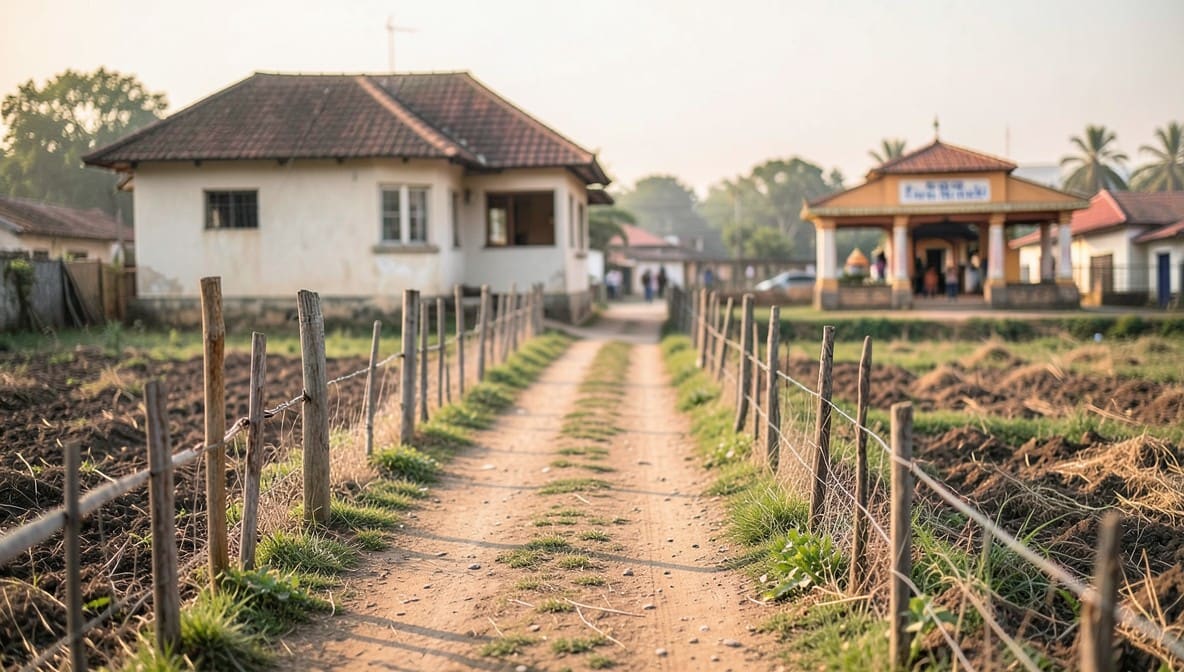
The dispute centers on a 3-foot-wide public pathway in Ward No. 13 of Ponmundam Grama Panchayat, running north-south from Koyappady to Aripeediyengal. This pathway is vested in the Panchayat and used by local residents. Immediately to the west of this pathway lies a 7-foot-wide strip of land co-owned by the third respondent, Arifa Methiyil, and a person named Muneer. The third respondent sought to merge the 3-foot public pathway with her 7-foot private strip to create a 10-foot-wide vehicular access road to her property.
Key Facts
- The pathway has been in public use for decades and is recorded in the Panchayat’s Asset Register (Annexure A3)
- Muneer constructed a wall along the eastern boundary of his land, abutting the pathway, without Panchayat permission
- The Panchayat demolished Muneer’s unauthorized wall in response to a complaint by the third respondent
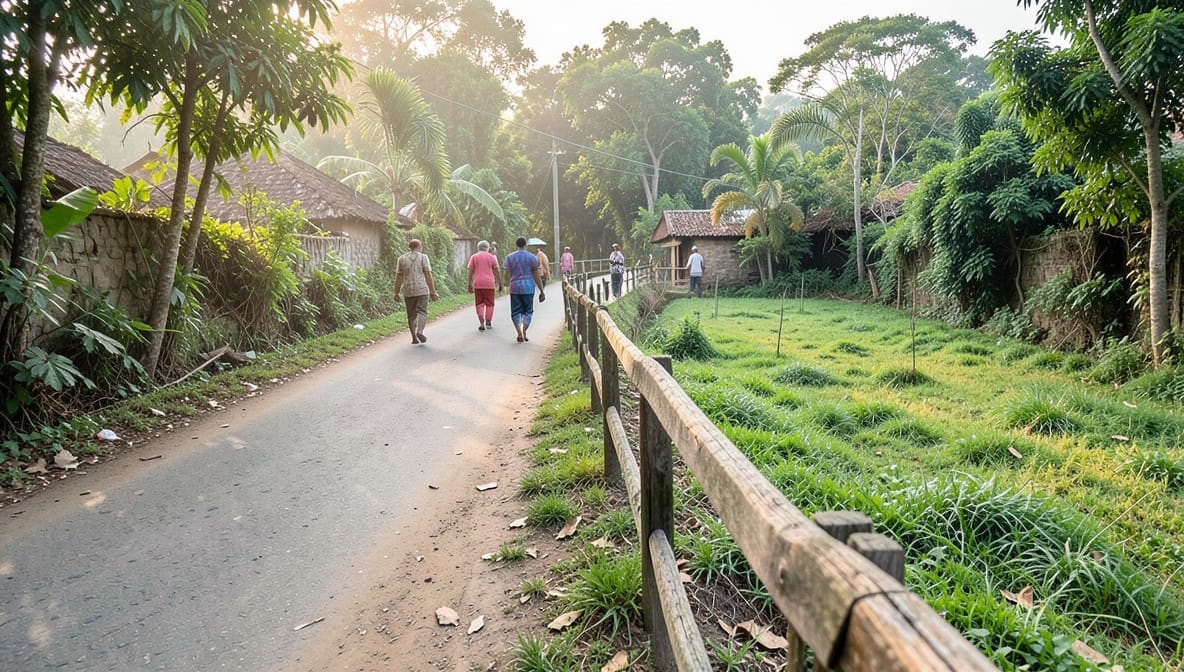
- To prevent further encroachment, the Panchayat installed a handrail along the western edge of the 3-foot pathway, clearly demarcating public from private land
- The third respondent filed a complaint on 18.03.2025 (Annexure A4) alleging obstruction of her "10-foot road"
- The Panchayat submitted a written objection on 23.07.2025 (Annexure A6), proposing that if the third respondent and Muneer surrendered their 7-foot strip, the Panchayat would construct a proper 10-foot pakka road for public use
- Photographs (Annexure R3(A)) show the handrail as a low, non-intrusive barrier, not a physical blockage
Procedural History
- 18.03.2025: Third respondent files complaint before Sub Divisional Magistrate (SDM), Tirur
- 11.07.2025: SDM issues conditional order under Section 160 of BNSS, directing Panchayat to show cause why the handrail should not be removed
- 23.07.2025: Panchayat files objection, offering to convert the entire 10-foot strip into a public road if private owners surrender their claim
- 04.08.2025: SDM passes impugned order directing removal of the handrail
- 05.06.2026: Hearing concluded before the Kerala High Court
- 09.06.2026: Judgment delivered
The Parties' Positions
Revision Petitioner (Ponmundam Grama Panchayat): Argued that the handrail was a protective measure to prevent permanent encroachment and preserve public land. Emphasized its willingness to upgrade the entire 10-foot corridor into a proper road if private owners relinquished their claim. Stressed that the handrail did not block passage - it merely defined boundaries.
Third Respondent (Arifa Methiyil): Claimed the handrail obstructed her access to a "10-foot road" she alleged she had been using. Contended that the pathway had become part of her private access route through long-term use.
Relief Sought
The Panchayat sought quashing of the SDM’s order dated 04.08.2025, restoration of its right to maintain the handrail, and a declaration that its actions were lawful under its statutory duties under the Kerala Panchayat Raj Act.
The Legal Issue
The central question was whether the construction of a handrail to demarcate a public pathway from adjacent private land constitutes an "obstruction" under Section 160 of the Bharatiya Nagarik Suraksha Sanhita, warranting its removal by a Magistrate.
Arguments Presented
For the Petitioner
The Panchayat’s counsel argued that the handrail was not an obstruction but a protective boundary marker. Cited Section 112 of the Kerala Panchayat Raj Act, 1994, which empowers Panchayats to manage public pathways and prevent encroachment. Emphasized that the Panchayat had acted proactively to prevent future claims of easement or adverse possession. Highlighted its offer to upgrade the entire 10-foot corridor into a public road as evidence of good faith.
For the Respondent
The third respondent’s counsel contended that the handrail physically impeded access to a route she had been using for years, thereby violating her right of passage. Relied on the SDM’s finding that the structure interfered with her "use of a 10-foot road," arguing that long-term usage created a de facto right.
The Court's Analysis
The Court rejected the notion that a low, non-intrusive handrail constitutes an obstruction under Section 160 of the BNSS. It observed that the provision is intended to address physical barriers that prevent passage, not boundary markers that prevent unlawful appropriation.
"By no stretch of imagination, it could be said that the aforesaid act of the Panchayat amounts to causing obstruction to a public pathway."
The Court emphasized that the Panchayat’s action was not arbitrary but a reasonable exercise of its statutory duty to protect public property. It noted that the third respondent’s claim to a 10-foot road was based on her desire to annex public land to her private property - a claim that, if permitted, would set a dangerous precedent for encroachment on public assets.
The Court further held that the SDM failed to consider the Panchayat’s reasonable offer to convert the entire 10-foot strip into a public road if the private owners surrendered their rights. This omission rendered the order unsustainable.
The Court distinguished this case from those involving actual blocking of pathways, noting that the handrail allowed pedestrian passage and did not impede access. It affirmed that local bodies must be empowered to act preemptively to prevent the erosion of public land through gradual encroachment.
The Verdict
The revision petition is allowed. The orders dated 04.08.2025 (Annexures A1 and A2) passed by the Sub Divisional Magistrate, Tirur, are set aside. The Panchayat is permitted to retain the handrail. The Court directs the Panchayat to proceed with the proposed upgrade of the 10-foot corridor into a pakka road within 12 weeks, subject to the third respondent and Muneer surrendering their 7-foot private strip. Costs of Rs. 15,000 are awarded to the Panchayat.
What This Means For Similar Cases
Panchayats May Erect Boundary Markers Without Fear of Prosecution
- Local bodies can install low barriers, fences, or handrails to demarcate public pathways from adjacent private land
- Such measures are not "obstructions" under BNSS Section 160 if they do not impede passage
- Courts must distinguish between protective demarcation and unlawful blocking
Preemptive Action to Prevent Easement Claims Is Lawful
- Panchayats are not required to wait until encroachment becomes permanent before acting
- Offering to upgrade the area into a public road strengthens the legitimacy of boundary actions
- Long-term usage without formal grant does not create a legal right to public land
Judicial Deference to Local Governance in Land Management
- Magistrates must consider statutory powers of Panchayats under the Kerala Panchayat Raj Act
- Courts should not substitute their judgment for that of local bodies on matters of public land use
- Procedural fairness requires Magistrates to evaluate offers of compromise before issuing removal orders