Topic

Cross-examination

Cross-examination in Indian law is the legal right of a party to question witnesses presented by the opposing side to test credibility and uncover inconsistencies, governed by the CrPC, CPC, and special statutes like POCSO.

37 articlesLatest July 2026
Section 124 Customs Act | Right to Cross-Examination & Corroboration of Retracted Statements Mandatory for Confiscation : CESTAT Allahabad
Case Law Analysis
|Custom, Excise & Service Tax Tribunal

Section 124 Customs Act | Right to Cross-Examination & Corroboration of Retracted Statements Mandatory for Confiscation : CESTAT Allahabad

CESTAT Allahabad rules that confiscation and penalties under the Customs Act cannot stand without affording the accused the right to cross-examine witnesses and corroborating retracted statements. The tribunal sets aside orders imposing ₹61.9 lakh duty drawback recovery and penalties, reinforcing natural justice in adjudication proceedings.

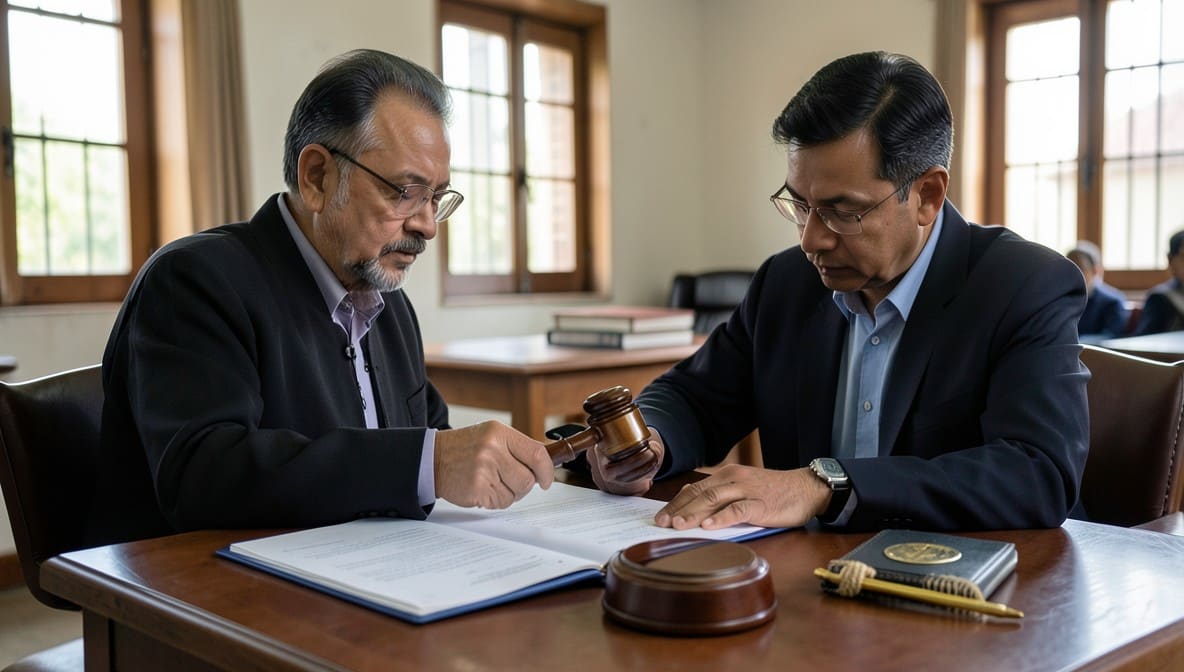
Section 302 IPC | Eyewitness Testimony Must Be Corroborated Through Rigorous Cross-Examination; FIR Delay and Contradictions Fatal to Conviction: Allahabad HC
Case Law Analysis
|Allahabad High Court

Section 302 IPC | Eyewitness Testimony Must Be Corroborated Through Rigorous Cross-Examination; FIR Delay and Contradictions Fatal to Conviction: Allahabad HC

Allahabad High Court acquitted accused in a murder case, ruling that prosecution witnesses' contradictions, unexplained FIR delay, and failure to subject testimony to rigorous cross-examination failed to prove guilt beyond reasonable doubt. The judgment reinforces that eyewitness accounts alone are insufficient without corroboration and procedural compliance.

Section 151 CPC | Inherent Powers Cannot Be Invoked Routinely to Recall Witnesses Without Bona Fide Grounds : Andhra Pradesh HC
Case Law Analysis
|Andhra Pradesh High Court

Section 151 CPC | Inherent Powers Cannot Be Invoked Routinely to Recall Witnesses Without Bona Fide Grounds : Andhra Pradesh HC

The Andhra Pradesh High Court ruled that courts cannot routinely exercise inherent powers under Section 151 CPC to recall witnesses unless bona fide grounds or subsequent developments are demonstrated. This judgment reinforces judicial restraint in procedural matters, ensuring that recall applications are not misused to delay or derail civil proceedings.

Natural Justice in Departmental Enquiries | Oral Evidence Mandatory for Punishment Under Service Law: Bombay HC
|Bombay High Court

Natural Justice in Departmental Enquiries | Oral Evidence Mandatory for Punishment Under Service Law: Bombay HC

Bombay High Court quashed MSEDCL’s punishment order, ruling that documentary evidence alone is insufficient in departmental enquiries without examining witnesses or allowing cross-examination. The judgment reinforces that natural justice principles require oral proof for disciplinary actions, impacting service law proceedings across public sector employment.

Section 138 NI Act | Right to Cross-Examine Prosecution Witnesses Cannot Be Denied Without Just Cause: Kerala HC
Case Law Analysis
|Kerala High Court

Section 138 NI Act | Right to Cross-Examine Prosecution Witnesses Cannot Be Denied Without Just Cause: Kerala HC

The Kerala High Court has ruled that denying an accused the opportunity to cross-examine prosecution witnesses in a cheque bounce case violates the fundamental right to a fair trial under Article 21. This mandates trial courts to ensure timely and uninterrupted cross-examination, especially when witness testimonies are interdependent, reinforcing procedural fairness over procedural convenience in NI Act prosecutions.

Natural Justice | Denial of Cross-Examination Must Be Proven, Not Presumed; Declined Opportunity ≠ Denied Right : Bombay HC
Case Law Analysis
|Bombay High Court

Natural Justice | Denial of Cross-Examination Must Be Proven, Not Presumed; Declined Opportunity ≠ Denied Right : Bombay HC

The Bombay High Court clarified that in disciplinary proceedings, a mere refusal to exercise an offered chance to cross-examine does not amount to a violation of natural justice - the burden lies on the employee to prove actual denial, not assume it. This sets a critical precedent for universities and public employers handling service disputes, reinforcing that procedural fairness requires active assertion, not passive assumption.

POCSO Act | Right to Cross-Examination Mandatory for Fair Trial; Conviction Set Aside for Violating Fundamental Defence Rights : Bombay HC
Case Law Analysis
|Bombay High Court

POCSO Act | Right to Cross-Examination Mandatory for Fair Trial; Conviction Set Aside for Violating Fundamental Defence Rights : Bombay HC

Bombay High Court acquitted three accused in a POCSO case, ruling that untested prosecution evidence due to denial of cross-examination violates the right to a fair trial. The judgment reinforces that statutory protections under the POCSO Act cannot override constitutional guarantees of effective legal representation.

Section 254 BNSS | Accused’s Right to Immediate Cross-Examination After Chief Testimony Cannot Be Deferred Until All Prosecution Witnesses Are Examined : MP HC Gwalior
Case Law Analysis
|Madhya Pradesh High Court

Section 254 BNSS | Accused’s Right to Immediate Cross-Examination After Chief Testimony Cannot Be Deferred Until All Prosecution Witnesses Are Examined : MP HC Gwalior

The Madhya Pradesh High Court at Gwalior has ruled that delaying cross-examination until the completion of all prosecution witnesses' chief examinations violates the accused’s statutory right to a fair trial under Section 254 of the Bharatiya Nagarik Suraksha Sanhita. This decision reinforces that procedural fairness requires timely opportunity to challenge testimony, preventing prejudice and ensuring meaningful defense participation in real time.

Section 311 CrPC | Recall of Witnesses Permissible in Section 138 NI Act Cases Despite Dilatory Tactics, Subject to Costs : Karnataka HC
Case Law Analysis
|Karnataka High Court

Section 311 CrPC | Recall of Witnesses Permissible in Section 138 NI Act Cases Despite Dilatory Tactics, Subject to Costs : Karnataka HC

Karnataka High Court rules that an accused's right to fair cross-examination under Section 311 CrPC outweighs dilatory tactics in cheque bounce cases, allowing witness recall even after multiple prior applications, but imposes costs to deter abuse. The judgment balances procedural fairness with judicial efficiency in economic offences.

Cenvat Credit Denial Invalid Without Assessee's Knowledge Proof or Corroborative Evidence : CESTAT
|Custom, Excise & Service Tax Tribunal

Cenvat Credit Denial Invalid Without Assessee's Knowledge Proof or Corroborative Evidence : CESTAT

CESTAT rules that Cenvat credit cannot be denied based solely on third-party statements or fake invoices unless the Revenue proves the assessee's knowledge of fraud or provides corroborative evidence. The ruling reinforces natural justice principles, requiring direct evidence linking the assessee to fraudulent transactions to disallow credit claims.

Right to Cross-Examine Under Haryana Rent Act | Bar Association Strike Cannot Deny Procedural Fairness : Punjab & Haryana HC
Case Law Analysis
|Punjab and Haryana High Court

Right to Cross-Examine Under Haryana Rent Act | Bar Association Strike Cannot Deny Procedural Fairness : Punjab & Haryana HC

The Punjab & Haryana High Court ruled that a Bar Association strike does not justify denying a party's right to cross-examine witnesses in eviction proceedings under the Haryana Rent Act. The court emphasized that judicial proceedings cannot be stalled by unlawful professional abstentions, reinforcing the mandatory nature of procedural fairness in civil disputes.

Natural Justice in Reassessment | Cross-Examination Mandatory When Relying on Third-Party Statements: ITAT Delhi
Case Law Analysis
|Income Tax Appellate Tribunal

Natural Justice in Reassessment | Cross-Examination Mandatory When Relying on Third-Party Statements: ITAT Delhi

ITAT Delhi rules that reassessment proceedings based on third-party statements without affording the assessee the right to cross-examination violate principles of natural justice, rendering the order null and void. The decision underscores procedural fairness in tax assessments, particularly where additions hinge on unverified external evidence.

Section 138 NI Act | Right to Cross-Examination Mandatory Before Non-Bailable Warrant : Allahabad HC
Case Law Analysis
|Allahabad High Court

Section 138 NI Act | Right to Cross-Examination Mandatory Before Non-Bailable Warrant : Allahabad HC

Allahabad HC rules that issuing a non-bailable warrant in cheque bounce cases without affording the accused an opportunity to cross-examine the complainant violates principles of natural justice. The court stayed the warrant and directed a one-day examination with costs, reinforcing procedural fairness in criminal complaints under the Negotiable Instruments Act.

UP VAT Act Section 14(3) | Best Judgment Assessment Invalid Without Cross-Examination of Third-Party Sources : Allahabad HC
Case Law Analysis
|Allahabad High Court

UP VAT Act Section 14(3) | Best Judgment Assessment Invalid Without Cross-Examination of Third-Party Sources : Allahabad HC

The Allahabad High Court has ruled that tax authorities cannot reject a taxpayer's books of account and impose a best judgment assessment solely on unverified third-party information, without affording the assessee an opportunity to cross-examine the source. This reinforces natural justice in commercial tax proceedings and sets a binding standard for assessing authorities across Uttar Pradesh.