The Bombay High Court recently underscored the fundamental right to effective legal representation in criminal trials, particularly in cases involving serious offences under the Protection of Children from Sexual Offences Act, 2012. The Court set aside convictions under Sections 376, 506(ii) IPC, and Sections 6, 17, and 21 of the POCSO Act after finding that the accused were not afforded a proper opportunity to cross-examine prosecution witnesses. This judgment reaffirms that procedural fairness is non-negotiable, even in cases involving grave allegations.
Background & Facts
The Dispute
The case arose from allegations that on 12 June 2019, a 17-year-old girl was lured by an unknown woman to meet a Maulana under the pretext of gaining financial benefits. The victim was taken to a room near Plot No. 19, Hakkani Masjid, Bainganwadi, Govandi, Mumbai, where she alleged that accused No. 1 (Layis Mohammad @ Langada Munna Sharif Khan) forcibly committed rape on her multiple times between 1:00 PM and 4:00 PM. The victim claimed that after the incident, she was threatened with defamation if she disclosed the matter. Her brother-in-law subsequently filed a police report.
Key Facts
- Alleged Incident Date: 12 June 2019 (though the judgment later refers to 5 May 2019 as the date of offence)
- Arrest of Accused: 15 June 2019
- Chargesheet Filed: 21 August 2019
- Victim’s Age: Allegedly 17 years at the time of the incident
- Accused:
- Accused No. 1: Layis Mohammad @ Langada Munna Sharif Khan (charged under Sections 376, 506(ii) IPC, and Section 6 POCSO Act)
- Accused No. 2: Mohammad Razaulla Isrial Ansari (charged under Sections 109 r/w 376 IPC, and Sections 17 and 21 POCSO Act)
- Accused No. 3: Afrinbano Guljar Ahmad Khan (charged under the same provisions as Accused No. 2)
Procedural History
- 17 June 2023: Trial Court convicted all three accused:
- Accused No. 1 was sentenced to 10 years rigorous imprisonment and a fine of Rs. 25,000 (default: 3 months simple imprisonment) under Section 6 POCSO Act, and 2 years rigorous imprisonment under Section 506(ii) IPC.
- Accused Nos. 2 and 3 were sentenced to 10 years rigorous imprisonment and a fine of Rs. 5,000 (default: 15 days simple imprisonment) under Section 17 POCSO Act, and 6 months rigorous imprisonment under Section 21 POCSO Act.
- 20 November 2025: Bombay High Court (Single Judge) noted that the accused were represented by a legal aid advocate who failed to cross-examine prosecution witnesses (PW-1 to PW-6 and PW-11). The Court directed the trial court to recall these witnesses and allow the accused to cross-examine them, with a 3-month deadline for completion.
- 2 May 2026: Trial Court, after allowing cross-examination, recorded findings that the prosecution failed to prove:
- The victim’s age as a minor at the time of the incident
- The chain of custody for forensic evidence (DNA report)
- The identity of the accused
- The presumption under Section 29 POCSO Act
- The abetment charges against Accused Nos. 2 and 3
- 10 June 2026: Bombay High Court (Division Bench) disposed of the appeals, setting aside the convictions and acquitting all accused based on the trial court’s findings.
Relief Sought
The appellants sought:
- Quashing of the conviction order dated 17 June 2023
- Acquittal on all charges
- Immediate release from custody if not required in any other case
- Refund of any fine amounts deposited
The Legal Issue
The central question before the Court was whether a conviction can stand when the accused were denied the right to effective legal representation and cross-examination, particularly in a trial involving serious offences under the POCSO Act. Additionally, the Court had to determine whether the trial court’s findings post-cross-examination could form the basis for acquittal without affording the prosecution an opportunity to challenge those findings.
Arguments Presented
For the Appellants
- The appellants’ legal aid advocate failed to cross-examine key prosecution witnesses, violating their right to a fair trial under Article 21 of the Constitution and Section 304 CrPC.
- The trial court’s initial conviction was based on untested evidence, rendering it legally unsustainable.
- The findings recorded post-cross-examination (dated 2 May 2026) conclusively disproved the prosecution’s case, warranting acquittal.
For the Respondent-State and Victim
- The State argued that the appeals should be remanded to the trial court for a fresh decision, as the findings dated 2 May 2026 were based on evidence that the prosecution could not challenge.
- The victim’s counsel contended that the initial conviction should not be set aside without giving the prosecution an opportunity to appeal the trial court’s findings.
The Court's Analysis
The Court conducted a detailed examination of the procedural lapses in the trial and the legal implications of denying cross-examination:
-
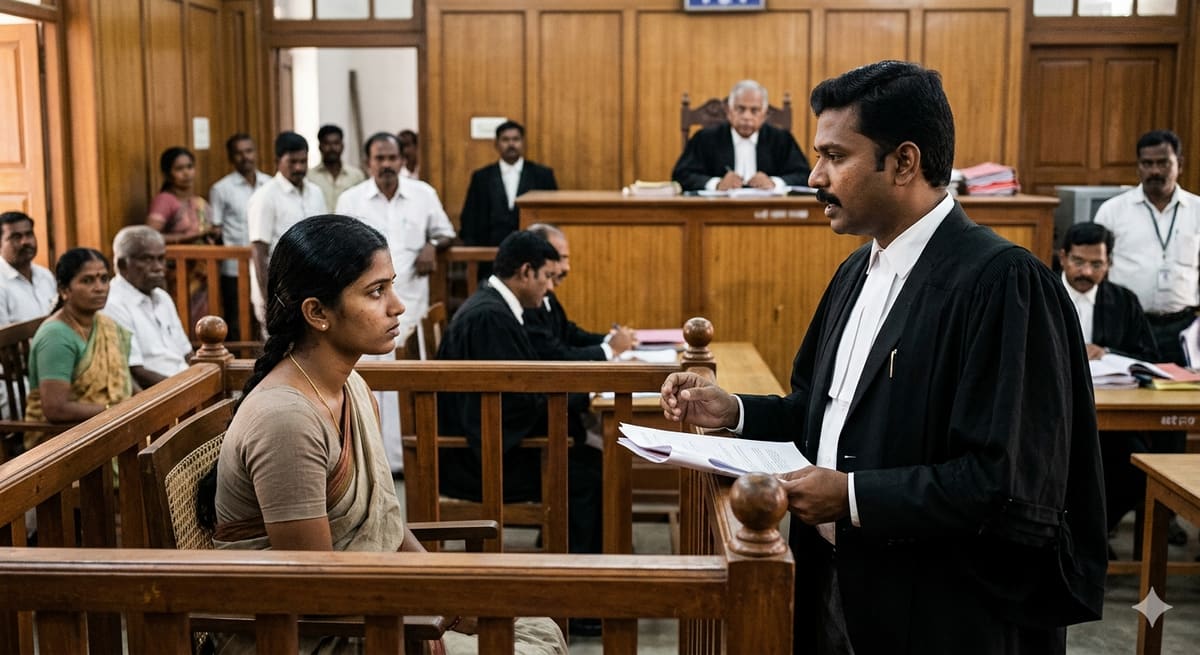
Right to Effective Legal Representation: The Court relied on the principle that legal aid must ensure effective representation, particularly in serious offences. It noted that the failure to cross-examine witnesses amounted to a miscarriage of justice, as the evidence remained untested. The Court observed:
"Since the Appellants were represented by the legal aid Advocate, it was incumbent on the part of the learned Trial Court to ensure that during the trial the accused is represented effectively and that in case of serious offences, the learned Trial Court ought to have been more vigilant in this regard."
-
Procedural Fairness Over Technicalities: The Court rejected the appellants’ request to set aside the conviction and remand the case, as no such request was made during the trial. Instead, it directed the trial court to allow cross-examination and record findings based on the new evidence. The Court emphasized:
"Ends of justice would meet if the appellant is given an opportunity to cross examine the above stated witnesses and the Trial Court is called upon to record finding upon such evidence brought on record."
-
Contradictory Findings: The Court noted that the initial conviction (17 June 2023) was based on evidence that was not cross-examined, while the post-cross-examination findings (2 May 2026) concluded that the prosecution failed to prove its case. The Court held that the latter findings must prevail, as they were based on tested evidence.
-
Finality of Acquittal: The Court clarified that while the State and victim could challenge the trial court’s findings (dated 2 May 2026), the appeals would be disposed of based on those findings. This ensured that the acquittal was not merely procedural but substantive, grounded in the failure of the prosecution’s case.
The Verdict
The Bombay High Court set aside the conviction order dated 17 June 2023 and acquitted all three appellants based on the trial court’s findings dated 2 May 2026. The Court directed:
- Immediate release of the appellants if they were not required in any other case
- Refund of fine amounts deposited by the appellants
- Disposal of the POCSO Special Case No. 491 of 2019 in terms of the trial court’s order dated 2 May 2026, with a clarification that the State or victim could challenge this order by filing an appropriate appeal
What This Means For Similar Cases
Right to Cross-Examination Is Non-Negotiable
- Courts must actively ensure that accused persons, especially those represented by legal aid, exercise their right to cross-examine witnesses. Failure to do so can vitiate the entire trial.
- Trial courts must be vigilant in cases involving serious offences (e.g., POCSO, IPC) to prevent procedural lapses that could lead to miscarriages of justice.
Legal Aid Must Be Effective, Not Nominal
- Legal aid advocates must actively engage in the trial process, including cross-examination. Courts cannot assume that legal aid representation is sufficient without verifying its effectiveness.
- Remedial measures: If cross-examination is omitted, courts should recall witnesses and allow the accused to test the prosecution’s evidence, as done in this case.
Acquittal Based on Untested Evidence Is Vulnerable
- Convictions based on uncross-examined evidence are legally fragile and can be set aside on appeal, even if the allegations are grave.
- Prosecution must ensure that all witnesses are available for cross-examination and that forensic evidence (e.g., DNA reports) is properly collected and preserved to avoid acquittals on technical grounds.