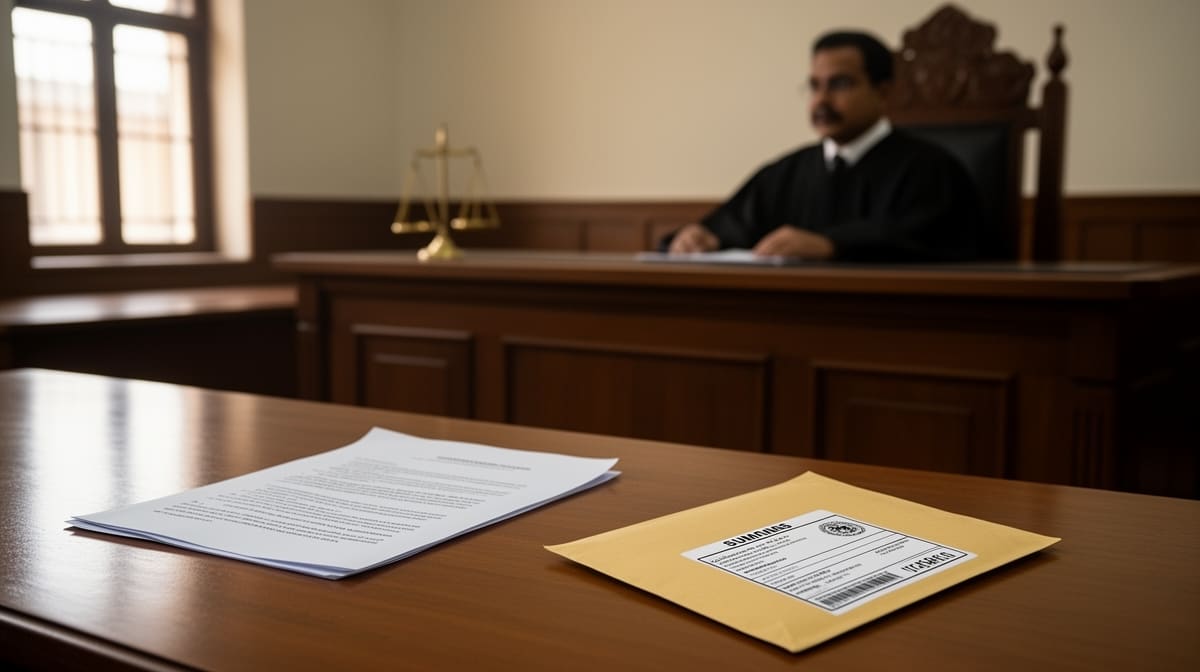
The Punjab and Haryana High Court has reaffirmed that procedural rights, including the right to cross-examine a witness, cannot be forfeited on the grounds of a Bar Association strike. In a decisive ruling under Article 227, the Court held that such strikes do not constitute valid legal justification for non-appearance or failure to participate in judicial proceedings, especially when multiple opportunities are afforded.
Background & Facts
The Dispute
The petitioner, Bali Sharma, was the tenant of premises in Haryana against whom the respondent-landlord, Parkash Dev Dhankhar, filed an eviction petition under the Haryana Urban (Control of Rent and Eviction) Act, 1973. The matter proceeded to evidence stage, with the landlord producing PW-1, a key witness who had traveled from Austria to testify.
Key Facts
- The witness, PW-1, arrived in India specifically to depose in the eviction proceeding.
- Examination-in-chief of PW-1 was recorded on December 1, 2023.
- The witness had booked a return flight to Austria on December 5, 2023, with airfare cost of €613.35, proof of which was submitted to the court.
- The petitioner’s counsel did not appear on December 1, 2023, citing a Bar Association resolution to suspend work.
- The Rent Controller adjourned the matter to December 2, 2023, to accommodate the petitioner’s counsel.
- On December 2, 2023, the petitioner’s counsel again failed to appear.
- The Rent Controller, by order dated December 2, 2023, recorded cross-examination as 'Nil' and dismissed the petitioner’s application for recall of PW-1.
- The petitioner filed a revision petition before the High Court on January 15, 2024, challenging the order.
Procedural History
- November 29, 2023: PW-1 appeared before the Rent Controller; petitioner’s counsel absent.
- December 1, 2023: Examination-in-chief of PW-1 completed; petitioner’s counsel absent due to Bar Association strike.
- December 2, 2023: Petitioner’s counsel again absent; Rent Controller passed order treating cross-examination as 'Nil'.
- December 4, 2023: Petitioner filed application for recall of PW-1; rejected by Rent Controller.
- January 15, 2024: Writ petition under Article 227 filed before the High Court.
- March 18, 2026: Hearing held before Justice Virinder Aggarwal.
- April 30, 2026: Judgment delivered dismissing the revision petition.
The Parties' Positions
Petitioner: Argued that the Bar Association’s strike created an unavoidable professional constraint, making counsel’s appearance legally and ethically untenable. The petitioner claimed the strike was binding and that non-compliance would result in a penalty of ₹11,000. The failure to cross-examine was not contumacious but compelled by external circumstances.
Respondent: Contended that the witness had traveled internationally at personal cost and expense, and had remained available for three separate dates. The petitioner had ample opportunity to cross-examine and chose not to, relying on an unlawful strike. The burden of airfare should not be shifted to the landlord.
Relief Sought
The petitioner sought quashing of the Rent Controller’s orders dated December 2, 2023, and December 4, 2023, and a direction to recall PW-1 for cross-examination. Alternatively, the petitioner sought a direction that the landlord bear the cost of the witness’s return airfare.
The Legal Issue
The central question was whether a Bar Association strike constitutes a legally valid excuse for the failure to exercise the fundamental right of cross-examination in a civil proceeding, particularly when the opposing party has incurred significant expense and the court has granted multiple adjournments.
Arguments Presented
For the Petitioner
Counsel argued that the Bar Association’s resolution to suspend work was binding on its members, and appearing in court would have violated professional ethics and invited financial penalties. Reliance was placed on the principle of force majeure and the necessity of adhering to collective professional decisions. The petitioner contended that the Rent Controller should have deferred the proceedings to a later date rather than penalizing the accused for circumstances beyond their control.
For the Respondent
The respondent emphasized that the witness had traveled from Austria at personal cost, had appeared on three separate dates, and had clearly communicated the urgency of his departure. The petitioner had been given three opportunities to cross-examine and failed each time. The respondent argued that the strike was not a recognized legal ground for adjournment under the Code of Civil Procedure or the Rent Act, and that allowing such excuses would undermine judicial efficiency and fairness to litigants who incur expenses to comply with court processes.
The Court's Analysis
The Court undertook a detailed review of the procedural timeline and the conduct of both parties. It noted that the Rent Controller had already extended considerable leniency by granting two adjournments - from December 1 to December 2, 2023 - despite the witness’s imminent departure.
"The judiciary is duty-bound to maintain an equitable balance between the parties. Where a party fails to cross-examine a witness despite being fully cognizant of the peculiar and urgent circumstances, and does so on the legally untenable pretext of a strike, no justifiable ground for interference exists."
The Court observed that the Bar Association’s strike, while perhaps politically or professionally motivated, had no legal sanctity under Indian law. The Supreme Court has repeatedly held that advocates cannot abstain from court work on the basis of unilateral resolutions, as it violates the public duty inherent in the legal profession.
The Court further held that the witness’s travel arrangements, though made unilaterally, were not unreasonable given the context of a pending court proceeding. The petitioner had been explicitly informed of the return flight date and the financial consequences of non-appearance. The burden of such costs cannot be imposed on the party who has fulfilled their evidentiary obligations.
The Court emphasized that the right to cross-examine is not absolute if it is exercised in bad faith or through deliberate delay. The petitioner’s repeated non-appearance, even after being granted additional time, amounted to a waiver of the right.
The Verdict
The revision petition was dismissed. The High Court upheld the Rent Controller’s order dated December 2, 2023, treating cross-examination as 'Nil'. The Court held that the petitioner’s failure to cross-examine PW-1 was not excusable and that the landlord cannot be held liable for the witness’s airfare of €613.35. All pending applications were disposed of as infructuous. No costs were awarded.
What This Means For Similar Cases
Bar Strikes Do Not Override Court Procedures
- Practitioners must not rely on Bar Association resolutions to justify non-appearance in court.
- Courts are under no obligation to adjourn proceedings indefinitely due to strikes, especially when witnesses are under time constraints.
- Failure to appear despite multiple opportunities may be construed as waiver of the right to cross-examine.
Witnesses’ Travel Costs Are Not Automatically Recoverable - But Neither Are They the Petitioner’s Burden
- A party seeking to rely on a witness who has traveled internationally must notify the court and opposing party of travel plans.
- However, the cost of such travel cannot be imposed on the opposing party unless the court specifically directs it after considering fairness and conduct.
- The burden remains on the party seeking to cross-examine to ensure timely participation.
Procedural Fairness Requires Proactive Conduct
- Courts will not permit procedural delays based on non-legal or extrajudicial pressures.
- Lawyers must plan for contingencies and ensure availability during scheduled hearings.
- The principle of audi alteram partem does not extend to enabling deliberate obstruction under the guise of professional solidarity.