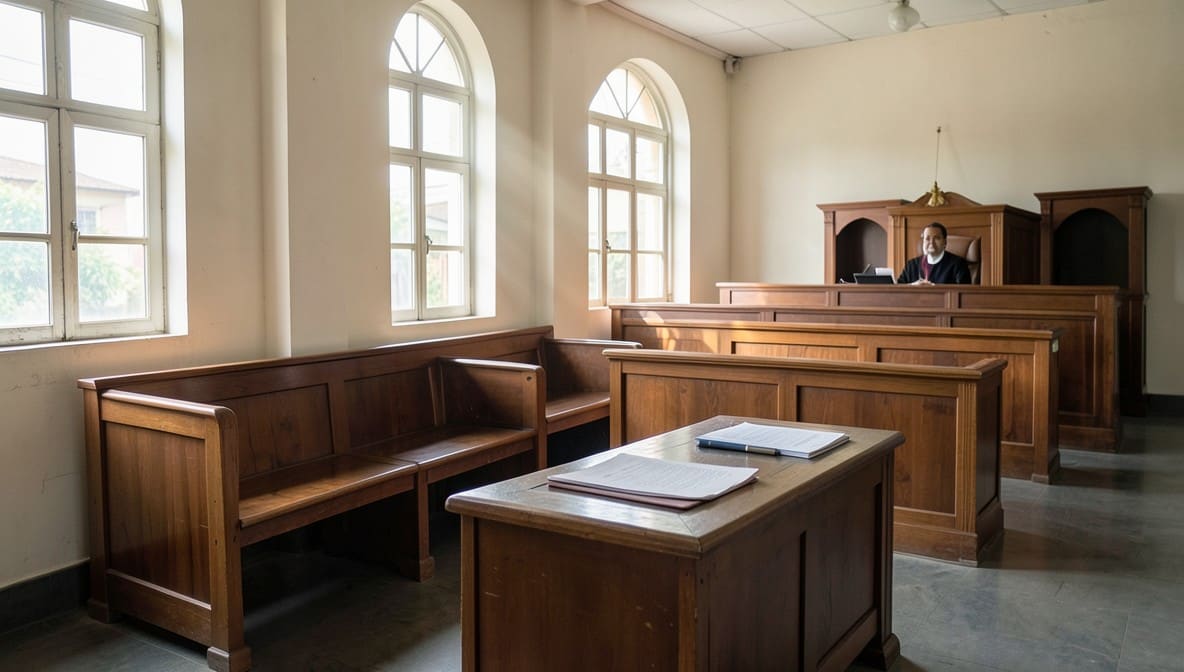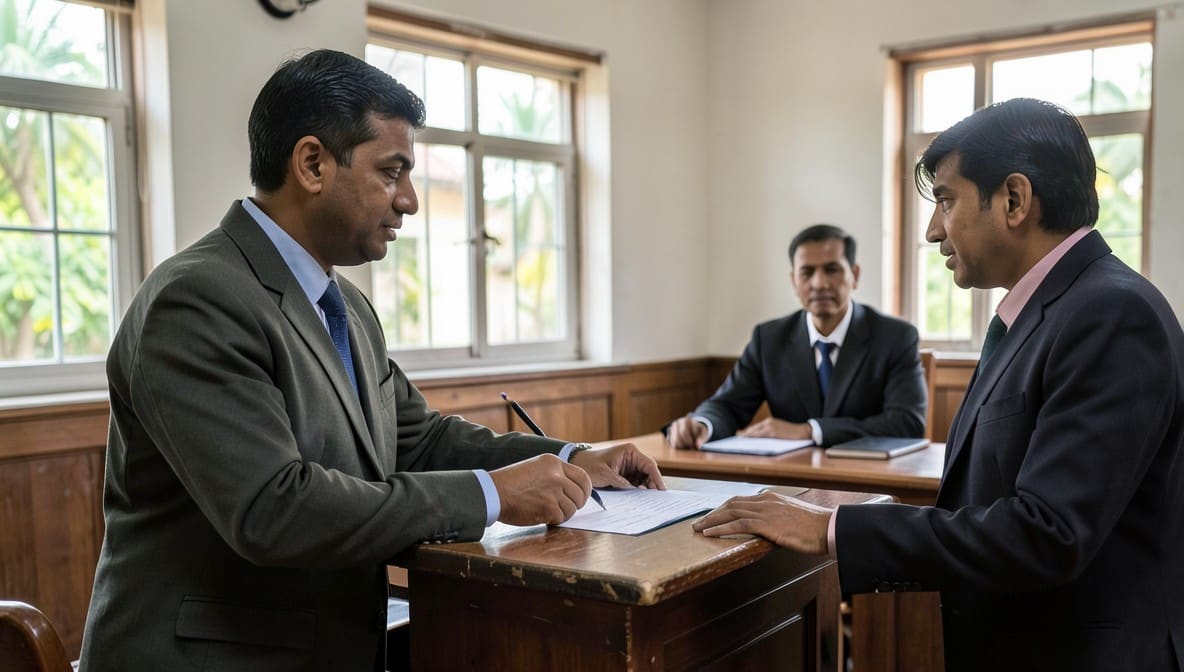
The Kerala High Court has reaffirmed that the right to cross-examine prosecution witnesses in a cheque bounce case under Section 138 of the Negotiable Instruments Act is not a mere formality but a fundamental component of a fair trial. Denial of this right without valid justification undermines the accused’s constitutional guarantee under Article 21 and renders the trial procedurally defective.
Background & Facts
The Dispute
The petitioner, Leena Roy, is the accused in Criminal Case No. 1242 of 2022 before the Judicial First Class Magistrate Court-III, Muvattupuzha. The case arises from a complaint filed by the second respondent, P.A. Johnny, alleging that a cheque issued by the petitioner for Rs. 5,00,000 was dishonoured due to insufficient funds. The complaint was registered under Section 138 of the Negotiable Instruments Act, 1881.
Key Facts
- The cheque was issued on 15.11.2021 and presented for payment on 20.12.2021
- The cheque was returned unpaid on 25.12.2021
- A legal notice under Section 138 was issued on 05.01.2022 and received by the petitioner on 10.01.2022
- The petitioner failed to make payment within 15 days, prompting the complainant to file the complaint on 18.03.2022
- The trial court admitted the complaint on 02.04.2022
- Prosecution witnesses PW1 (complainant), PW2, PW3, and PW4 were examined between 10.02.2025 and 26.03.2024
- Exhibits P1 to P8, including the cheque, bank return memo, and legal notice, were marked during prosecution evidence
- The petitioner’s counsel was not ready for cross-examination on two adjourned dates, despite payment of costs
- PW1, aged 76, is a key witness and currently abroad
Procedural History
- 18.03.2022: Complaint filed before Judicial First Class Magistrate Court-III, Muvattupuzha
- 02.04.2022: Complaint admitted by the Trial Court
- 26.03.2024: Petitioner’s plea recorded under Section 313 CrPC
- 10.02.2025: PW1 examined; Exhibits P1-P8 marked
- 17.01.2026: Trial Court dismissed C.M.P. No. 1/2026 seeking permission to cross-examine PWs 1 to 3 (Annexure A2)
- 20.05.2026: Trial Court submitted report to High Court explaining delay and refusal to allow cross-examination
- 08.06.2026: High Court stayed proceedings pending hearing
- 22.06.2026: High Court heard arguments and passed order
The Parties' Positions
For the Petitioner
The petitioner contended that the Trial Court’s refusal to permit cross-examination of PWs 1 to 3 violated her right to a fair trial under Article 21 of the Constitution. She argued that the testimonies of these witnesses contained material contradictions that could only be exposed through effective cross-examination. The delay in seeking cross-examination was due to counsel’s unavailability, not bad faith.
For the Respondent/State
The State and complainant argued that the petitioner had repeatedly failed to appear for cross-examination despite multiple adjournments and payment of costs. They submitted that the prosecution witnesses, particularly PW1 and PW2, were elderly and currently abroad, with plans to depart permanently next month. Allowing cross-examination at this stage would cause undue delay.
Relief Sought
The petitioner sought setting aside of the Trial Court’s order dated 17.01.2026 (Annexure A2), permission to cross-examine PWs 1 to 3, and direction to the Trial Court to conclude the trial expeditiously.
The Legal Issue
The central question was whether the right to cross-examine prosecution witnesses in a criminal trial under Section 138 NI Act can be denied on grounds of delay or counsel’s unavailability, without considering the accused’s right to a fair trial under Article 21.
Arguments Presented
For the Petitioner
The petitioner relied on Natasha Singh v. CBI (State) and Kalyani Baskar v. M.S. Sampoornam to argue that cross-examination is not a privilege but a statutory and constitutional right essential to test the credibility of prosecution evidence. She contended that the Trial Court’s refusal was arbitrary and violated the principles laid down in State of Haryana v. Bhajan Lal, which mandates that no accused should be deprived of the opportunity to challenge evidence. The delay, she submitted, was not intentional but due to logistical constraints.
For the Respondent/State
The State countered that the petitioner had ample opportunity to cross-examine the witnesses but deliberately chose not to do so. The complainant emphasized that PW1 and PW2 were elderly and would be leaving the country permanently, making their re-examination impossible. Allowing cross-examination now would cause irreparable prejudice to the prosecution and violate the principle of laches.
The Court's Analysis
The Court examined the procedural history and found that while the petitioner’s counsel had not been ready for cross-examination on two occasions, the Trial Court had not considered whether this refusal was due to bona fide reasons or mala fide delay. The Court noted that the prosecution had already closed its evidence and examined all four witnesses, including the complainant, without any objection from the defence at the time.
"The right to cross-examine is not a mere procedural formality but a substantive safeguard against wrongful conviction. Denial of this right, especially in cases where the prosecution relies on oral testimony, strikes at the heart of fair trial.
The Court distinguished Natasha Singh, where the Supreme Court held that delay in cross-examination may be fatal if it prejudices the accused’s ability to defend, and Kalyani Baskar, which emphasized that the accused must be given a meaningful opportunity to rebut prosecution evidence. The Court observed that the Trial Court’s order was based solely on the petitioner’s counsel’s past conduct, without assessing whether the accused herself had acted in bad faith.
The Court further noted that the complainant’s witnesses were not being recalled for fresh testimony but were being asked to appear for cross-examination on a scheduled date. The Court held that the petitioner’s payment of Rs. 15,000 as cost demonstrated her bona fides and willingness to proceed.
The Court rejected the argument that the witnesses’ impending departure justified denial of cross-examination. It held that the Trial Court could have issued summons to the witnesses abroad or permitted video conferencing under Section 273 CrPC, which permits evidence to be recorded in the presence of the accused even if the witness is abroad.
The Verdict
The petitioner succeeded. The High Court set aside the Trial Court’s order dated 17.01.2026 and directed that PWs 1 to 3 be present before the Trial Court on 24.06.2026 for cross-examination by the petitioner’s counsel. PW4 shall be summoned and cross-examined thereafter. The Trial Court is directed to conclude the trial and dispose of the complaint within two months from 22.06.2026. The petitioner has paid Rs. 15,000 as cost to the complainant.
What This Means For Similar Cases
Cross-Examination Is a Non-Negotiable Right
- Practitioners must assert the right to cross-examine even if there has been prior delay, provided the accused demonstrates bona fides
- Courts cannot deny cross-examination merely because the accused’s counsel was unprepared on earlier dates
- The burden is on the prosecution to show actual prejudice, not mere inconvenience
Procedural Fairness Trumps Expediency
- In cheque bounce cases, where conviction hinges on witness credibility, the right to cross-examine cannot be sacrificed for speed
- Courts must explore alternatives like video conferencing for witnesses abroad under Section 273 CrPC
- Delay alone is not a ground to deny cross-examination unless it is intentional and prejudicial
Trial Courts Must Act Proactively
- Trial courts should not close evidence prematurely if cross-examination is pending
- Judges must record reasons for denying cross-examination applications, not merely cite delay
- The directive to dispose of cases within two months reinforces the need for time-bound trials under Section 138 NI Act