The Eastern Zonal Bench of the Customs, Excise and Service Tax Appellate Tribunal upheld the appellant’s classification of imported polyester warp knitted fabrics under the residual tariff entry 6005 9000, thereby confirming entitlement to the 10% concessional Basic Customs Duty and setting aside both the differential duty demand and the penalties imposed by the Revenue.
Background & Facts
The Dispute
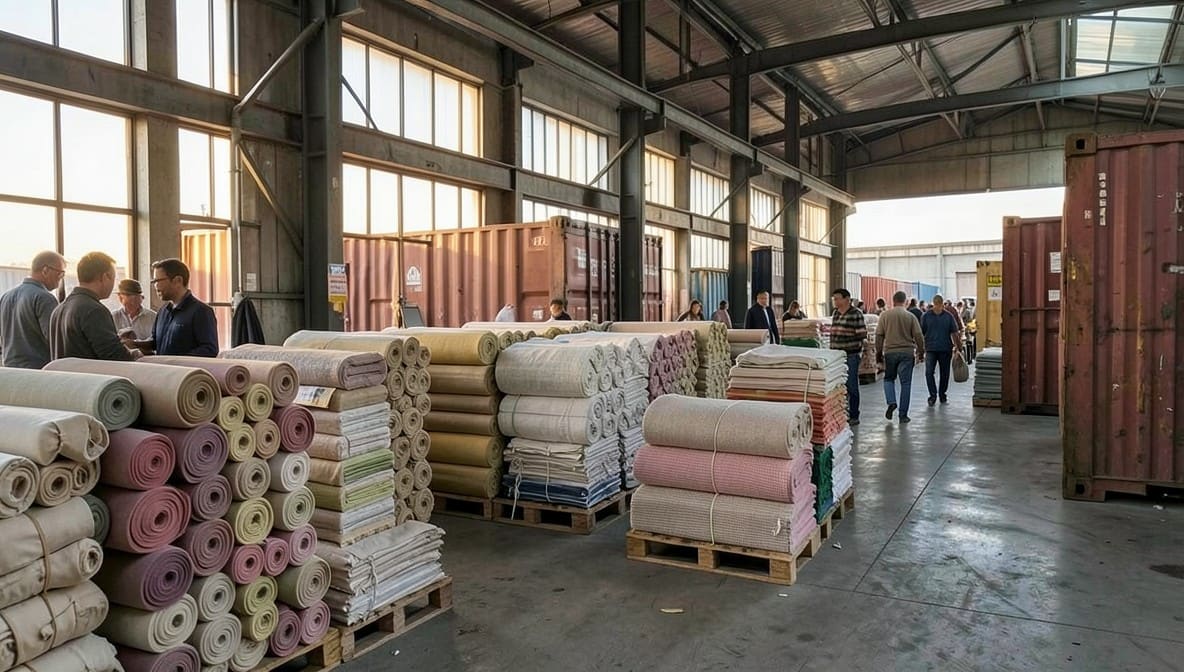
M/s. Elvance Overseas LLP, a Delhi-based importer of textile fabrics, imported five consignments of "Mixed Lot of Polyester Warp Knitted Fabrics" from overseas suppliers (M/s. Dauer International Ltd., U.K. and M/s. LCL Group Co. Ltd., H.K.) between May and July 2018. The importer self-assessed the goods under Customs Tariff Item No. 6005 9000 of the First Schedule to the Customs Tariff Act, 1975 and claimed the benefit of the concessional Basic Customs Duty (BCD) rate of 10% under Serial No. 166 of Notification No. 82/2017-Customs dated 27-10-2017. Accordingly, a duty of Rs.56,05,789 was discharged and the goods were cleared for home consumption.
Key Facts
- Bills of Entry: Five Bills of Entry were filed (see table below) with a cumulative assessable value of Rs.3,38,71,839.
- 14-05-2018: Bill No. 6374269 - Rs.76,96,458 (Supplier: Dauer International Ltd., U.K.)
- 15-05-2018: Bill No. 6379031 - Rs.50,37,134 (Supplier: LCL Group Co. Ltd., H.K.)
- 21-06-2018: Bill No. 6893293 - Rs.77,79,313 (Supplier: Dauer International Ltd., U.K.)
- 12-07-2018: Bill No. 7189011 - Rs.80,31,090 (Supplier: Dauer International Ltd., U.K.)
- 12-07-2018: Bill No. 7189955 - Rs.53,27,844 (Supplier: LCL Group Co. Ltd., H.K.)
- Revenue’s View: The Department argued that the description "Polyester Warp Knitted Fabric" indicated a synthetic fibre product, which should be classified under tariff entries 6005 3500 to 6006 3900, attracting a BCD rate of 20% plus surcharge and IGST.
- Show-Cause Notice: Dated 06-12-2019, proposing re-classification and a differential duty demand of Rs.39,12,198 together with interest and penalties under Sections 114A and 114AA of the Customs Act, 1962.
- Order-in-Original: Dated 31-05-2021, confirming the differential duty demand and imposing a penalty of Rs.5,00,000 under Section 114AA.
- Order-in-Appeal: Dated 21-04-2023, upheld the Order-in-Original and rejected the appellant’s appeal.
Procedural History
- 14-05-2018 to 12-07-2018: Bills of Entry filed and duty of Rs.56,05,789 paid.
- 06-12-2019: Show-Cause Notice issued demanding re-classification and differential duty.
- 31-05-2021: Order-in-Original passed by the Joint Commissioner, confirming differential duty and penalties.
- 21-04-2023: Order-in-Appeal by the Commissioner of Customs (Appeals) upheld the Order-in-Original.
- 20-07-2026: Hearing of the present appeal before the Eastern Zonal Bench, CESTAT.
- 25-08-2026: Decision delivered, appeal allowed.
The Parties' Positions
- Appellant: Asserted that the burden of proof lies on the Revenue; classification under the residual entry 6005 9000 is correct for mixed-lot fabrics; demanded laboratory or expert evidence before any re-classification; sought setting aside of differential duty and penalties.
- Respondent: Contended that "Polyester Warp Knitted Fabric" is a synthetic fibre product, should fall under specific entries 6005 3500-6006 3900, and that the appellant deliberately mis-classified to obtain a lower duty rate.
Relief Sought
The appellant prayed for:
- Confirmation of the classification under Customs Tariff Item No. 6005 9000.
- Allowance of the 10% concessional BCD under Serial No. 166 of Notification No. 82/2017-Customs.
- Set-aside of the differential duty demand of Rs.39,12,198 and the penalties under Sections 114A and 114AA.
- Restoration of the original duty payment of Rs.56,05,789.
The Legal Issue
Whether the Revenue can re-classify imported goods without producing technical or scientific evidence and, consequently, whether the appellant is entitled to the concessional Basic Customs Duty rate of 10% under Serial No. 166 of Notification No. 82/2017-Customs.
Arguments Presented
For the Appellant
- The burden of proof for mis-classification rests on the Revenue, as held in HPL Chemicals Ltd. v. CCE and Commissioner of Central Excise v. Wockhardt Life Sciences Ltd..
- Re-classification requires laboratory testing, expert opinion, or other scientific evidence; mere suspicion or reliance on description is insufficient.
- The appellant’s self-assessment was accepted by the Proper Officer without objection; the assessment attained finality and cannot be reopened without fresh material evidence.
- The goods are mixed-lot fabrics; the term "Polyester Warp" does not imply 100% polyester content, thus the residual entry 6005 9000 is appropriate.
For the Respondent
- The description "Polyester Warp Knitted Fabric" denotes a synthetic fibre product, which under Chapter Note 1 to Chapter 54 of the Customs Tariff Act, 1975, must be classified under specific entries 6005 3500-6006 3900.
- The Revenue relied on contemporaneous import data showing similar goods classified under the higher duty rate.
- The appellant allegedly mis-declared the goods to obtain the concessional duty, justifying the differential duty demand and penalties.
The Court's Analysis
The Tribunal began by reiterating the settled principle that the burden of proving an erroneous classification lies squarely on the Revenue. It quoted the Supreme Court’s observations in Commissioner of Central Excise v. Wockhardt Life Sciences Ltd. that “the burden to prove classification lies upon Revenue” and that “a mere suspicion of mis-classification is not sufficient.”
"The Department must produce technical evidence / scientific evidence / expert opinion / literature laboratory report before rejecting the declared classification. This view has been held by the Hon'ble Supreme Court..."
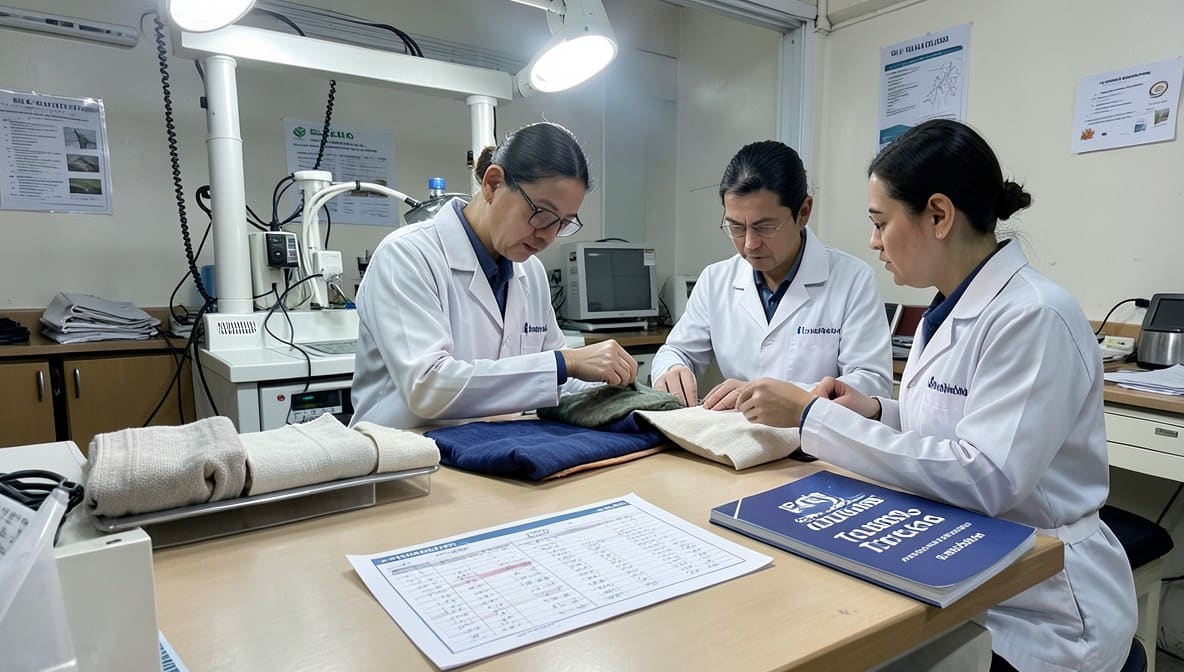
The Tribunal examined the structure of Chapter 60 of the Customs Tariff Act, 1975, noting that the residual entry 6005 9000 is to be used only when the goods do not fall within any specific sub-heading. It observed that the appellant had declared the goods as “Mixed Lot of Polyester Warp Knitted Fabrics” and that no laboratory analysis, textile committee report, or expert testimony was produced to demonstrate that the fabrics were exclusively synthetic. Consequently, the Revenue’s reliance on the description alone was deemed insufficient.
The Tribunal also stressed the principle of finality of self-assessment. Since the Proper Officer had examined the goods, accepted the classification under 6005 9000, and cleared the duty of Rs.56,05,789 without objection, the assessment attained finality. The Tribunal held that “the assessment has not been challenged; it cannot be reopened without fresh evidence.”
Further, the Tribunal distinguished the Revenue’s argument that contemporaneous assessments at other ports supported a higher duty rate. It held that uniform practice is not determinative; the Revenue must still produce concrete technical evidence to overturn an accepted classification.
Applying these principles, the Tribunal concluded that the absence of any corroborative technical evidence meant the Revenue could not justify re-classification. Accordingly, the classification under Customs Tariff Item No. 6005 9000 was upheld, and the appellant was deemed eligible for the concessional BCD rate of 10% under Serial No. 166 of Notification No. 82/2017-Customs.
The Tribunal also examined the penalties under Sections 114A and 114AA. Since the allegation of mis-classification was not sustained, the penalties were held “not warranted” and were set aside.
The Verdict
The appeal is allowed. The Tribunal upholds the classification of the imported fabrics under Customs Tariff Item No. 6005 9000, confirms the appellant’s entitlement to the 10% concessional Basic Customs Duty under Serial No. 166 of Notification No. 82/2017-Customs, and sets aside the differential duty demand of Rs.39,12,198, the interest thereon, and the penalties of Rs.5,00,000 under Sections 114A and 114AA of the Customs Act, 1962. No further monetary award is made; the original duty of Rs.56,05,789 remains payable.
What This Means For Similar Cases
Burden of Proof Lies with Revenue
- Practitioners must be prepared to demonstrate that the Revenue has produced technical or scientific evidence before a classification can be altered.
- Mere reliance on product description or trade practice will not satisfy the evidentiary threshold.
Technical Evidence Is Mandatory for Re-classification
- Obtain laboratory test reports, expert opinions, or textile committee findings when contesting a Revenue classification.
- In the absence of such evidence, the original self-assessment enjoys presumption of correctness and cannot be reopened.
Finality of Self-Assessment Cannot Be Overturned Without Fresh Evidence
- Once the Proper Officer has cleared goods and no objection is raised, the assessment attains finality.
- Any attempt to revisit the classification must be supported by new material facts; otherwise, the Tribunal will uphold the original entry.
Actionable Takeaways
- File laboratory analysis reports proactively when importing mixed-lot textiles.
- Challenge any Revenue notice promptly and insist on production of expert evidence.
- Cite HPL Chemicals Ltd. v. CCE and Commissioner of Central Excise v. Wockhardt Life Sciences Ltd. to reinforce the burden-of-proof argument.