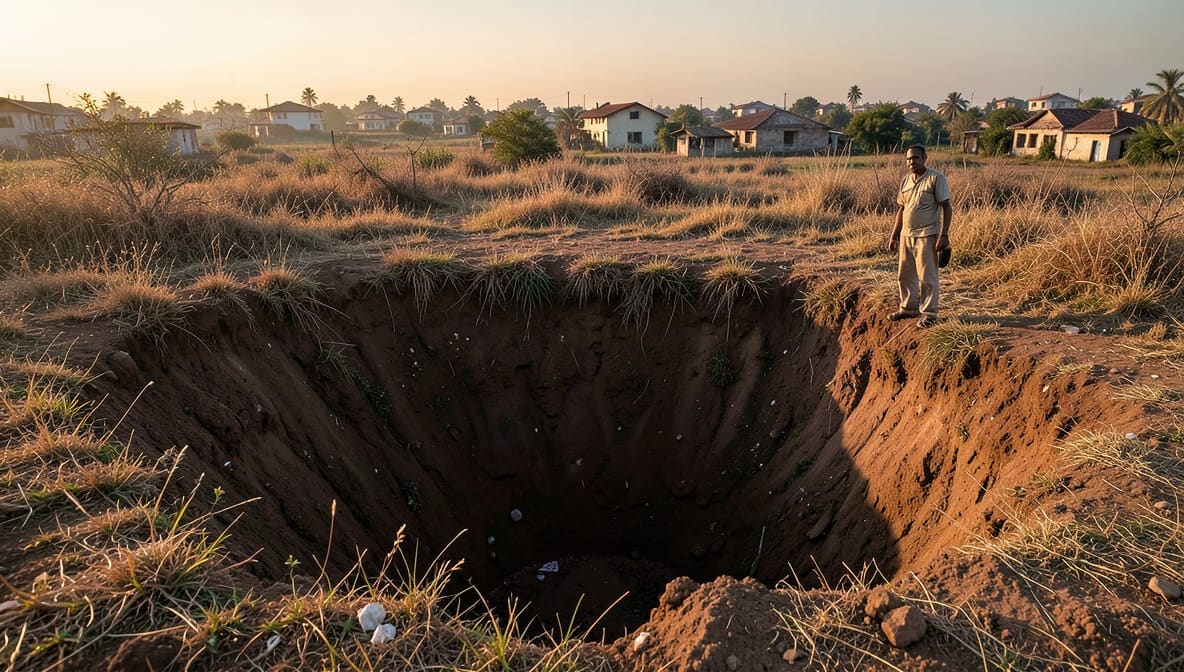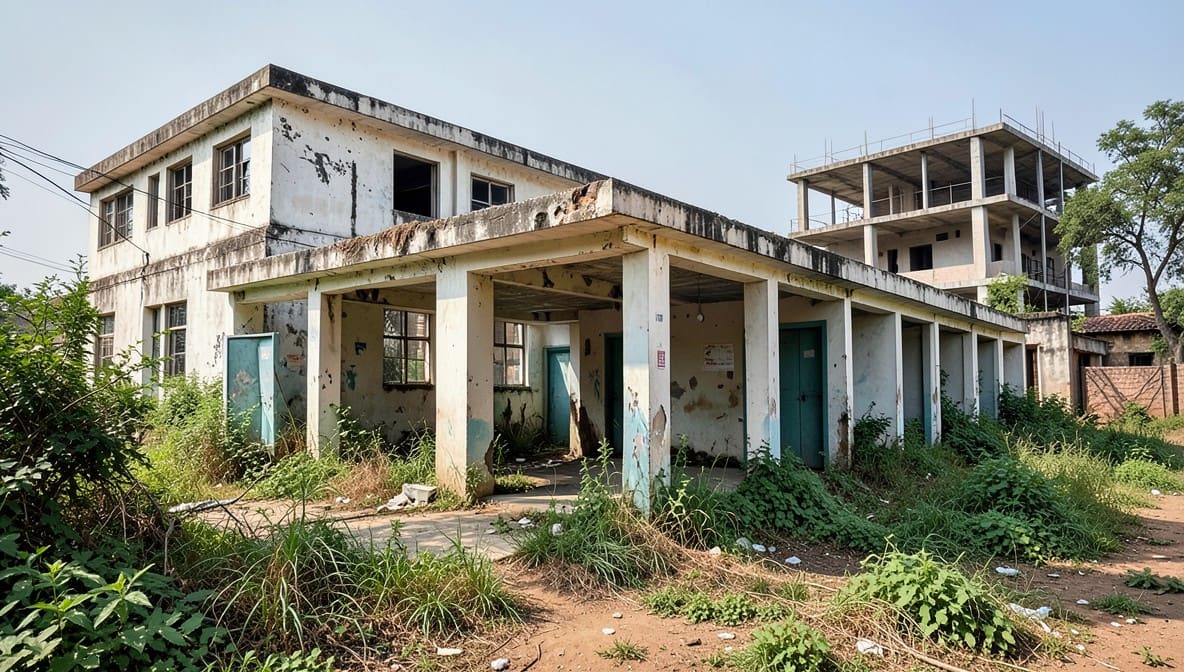
The Madras High Court has reinforced the principle that public funds must not be wasted on redundant infrastructure projects when existing facilities remain functional. In a significant administrative law ruling, the Court directed authorities to prioritize maintenance over new construction, setting a precedent for sustainable public service delivery in rural India.
Background & Facts
The Dispute
The petitioner, S. Ponnaiah, challenged the proposed construction of a new public toilet complex in Survey No. 455/6 of Illuppur Village, Pudukkottai District, on the grounds that a fully functional but neglected toilet-cum-washing complex already exists nearby. The petitioner submitted a representation dated 06.02.2026 urging the respondents to reconsider the project in light of the existing infrastructure.
Key Facts
- Illuppur Village has an approximate population of 700 residents.
- A toilet-cum-washing complex with 8 units (each comprising a toilet and bathroom) was constructed in 2012.
- The existing complex is structurally sound, with tiles laid up to a height of 6 feet, but has been abandoned due to lack of maintenance.
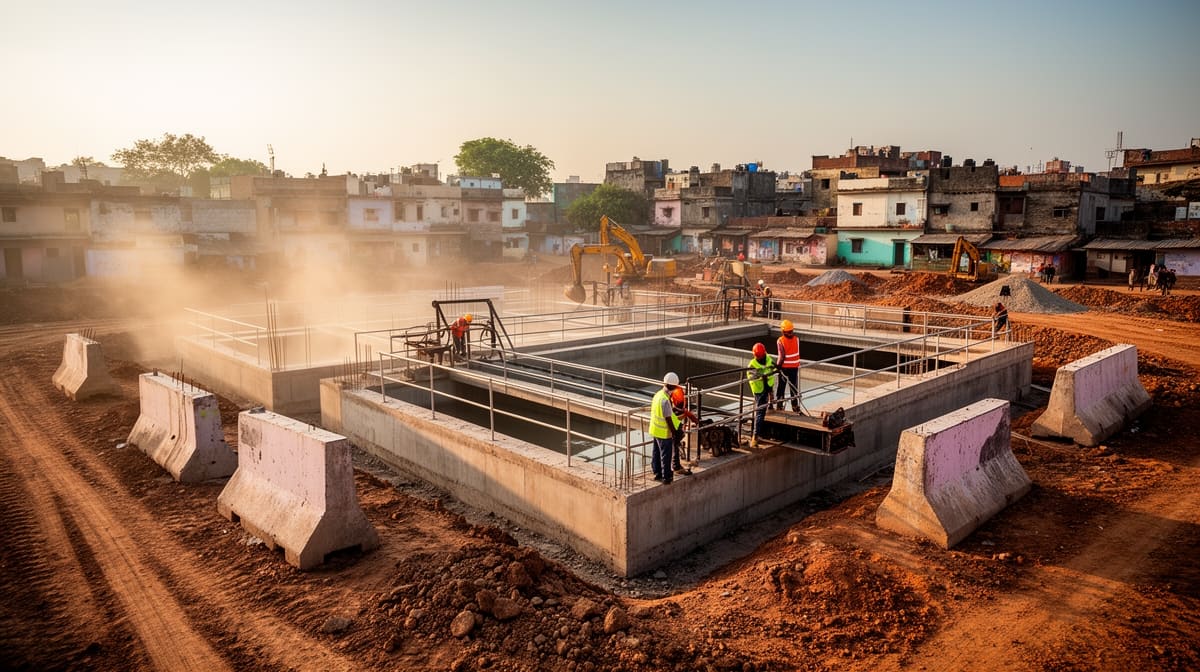
- The proposed new toilet complex is under construction adjacent to the petitioner’s property and is approximately 50% complete.
- The existing complex is located about 200 meters from the proposed site.
- The construction is being undertaken under the Swachh Bharat Scheme, which also provides subsidies for individual household toilets.
- The petitioner has no objection to public sanitation infrastructure per se, but objects to duplication and wastage of public funds.
Procedural History
- 06.02.2026: Petitioner submitted formal representation to the District Collector and Illuppur Town Panchayat requesting halt to construction.
- No formal response was received from the respondents.
- 17.03.2026: Writ Petition (W.P.(MD) No. 7120 of 2026) filed before the Madurai Bench of the Madras High Court under Article 226 of the Constitution.
- 17.03.2026: Connected Miscellaneous Petition (W.M.P.(MD) No. 5835 of 2026) filed seeking interim stay.
Relief Sought
The petitioner sought a writ of mandamus directing the respondents to refrain from proceeding with the construction of the new toilet complex and to consider the petitioner’s representation dated 06.02.2026.
The Legal Issue
The central question was whether public authorities may proceed with new infrastructure projects under central schemes while ignoring the potential for rehabilitation and reuse of existing, functional public facilities, particularly when such new construction is challenged on grounds of fiscal prudence and public interest.
Arguments Presented
For the Petitioner
The petitioner’s counsel, Mr. P. Ganapathi Subramanian, argued that the existing toilet complex, though abandoned, remains structurally intact and capable of service with minimal investment in cleaning and water supply. He contended that constructing a new facility under the Swachh Bharat Scheme while leaving the 2012 structure to decay constitutes wasteful expenditure and violates the constitutional mandate of efficient public resource management. He cited the principle of audi alteram partem and the duty of public authorities to act reasonably and not arbitrarily.
For the Respondent
The learned Special Government Pleader, Mr. P. Subbaraj, submitted that the new toilet is being constructed to serve the immediate needs of the village under a centrally funded scheme. He argued that the distance of 200 meters from the existing facility renders it inconvenient for residents and that the new project is not redundant but complementary. He did not dispute the condition of the old facility but maintained that the new construction was legally sanctioned and in public interest.
The Court's Analysis
The Court examined the factual matrix with particular attention to the lifecycle of public infrastructure and the intent behind the Swachh Bharat Scheme. It noted that while the scheme encourages household toilets, it does not mandate multiple public toilet complexes in small villages with populations under 1,000. The Court emphasized that the existence of a functional facility constructed just 13 years prior makes the new construction prima facie unnecessary.
"It is a common occurrence in villages that several public buildings remain abandoned. With the introduction of new schemes, authorities often focus on constructing new buildings, while existing facilities such as Primary Health Centre Buildings, ration shops, and toilet complexes are neglected."
The Court observed that the petitioner’s objection was not against sanitation infrastructure but against duplication and misallocation of public funds. It held that the respondents had failed to demonstrate any assessment of the existing facility’s utility or any effort to restore it. The Court further noted that the partial construction could be repurposed, thereby avoiding total waste.
The Court rejected the notion that proximity to the petitioner’s residence was the sole basis of objection, instead focusing on the broader administrative duty to avoid fiscal waste and ensure rational planning. It held that the decision-making process was flawed for lacking any evaluation of alternatives.
The Verdict
The writ petition was disposed of with directions. The District Collector is directed to consider the petitioner’s representation dated 06.02.2026, issue due notice to the petitioner and the Panchayat authorities, and conduct a fresh assessment of the necessity for the new toilet complex. The existing facility must be evaluated for restoration with adequate water supply. If deemed unnecessary, the partially constructed building may be converted into a library or other beneficial public use. The entire process must be completed within four weeks from the date of receipt of this order. No costs are awarded.
What This Means For Similar Cases
Existing Infrastructure Cannot Be Ignored
- Public authorities must conduct a prior assessment of existing facilities before approving new construction under any scheme.
- Abandoned infrastructure that is structurally sound cannot be deemed unusable without a formal evaluation.
Fiscal Responsibility Is a Legal Duty
- Wasteful expenditure on redundant public projects may be challenged under Article 226 as arbitrary administrative action.
- Courts may intervene where there is no evidence of rational planning or cost-benefit analysis.
Repurposing Is a Viable Alternative
-
Partially constructed public buildings may be legally repurposed for other community needs, such as libraries, anganwadis, or health kiosks.
-
This approach aligns with sustainable development goals and reduces public expenditure.
-
Practitioners should routinely document the condition and utility of existing public infrastructure before new projects are initiated.
-
Petitioners in similar cases may now cite this judgment to challenge new constructions where functional alternatives exist.
-
Local bodies must maintain records of public assets and their maintenance status to justify future funding requests.