A significant directive has been issued by the Madurai Bench of the Madras High Court clarifying the procedural obligations of municipal authorities when granting access structures over irrigation channels. The judgment balances environmental protection with fundamental access rights, establishing a clear timeline for administrative action under judicial supervision.
Background & Facts
The Dispute
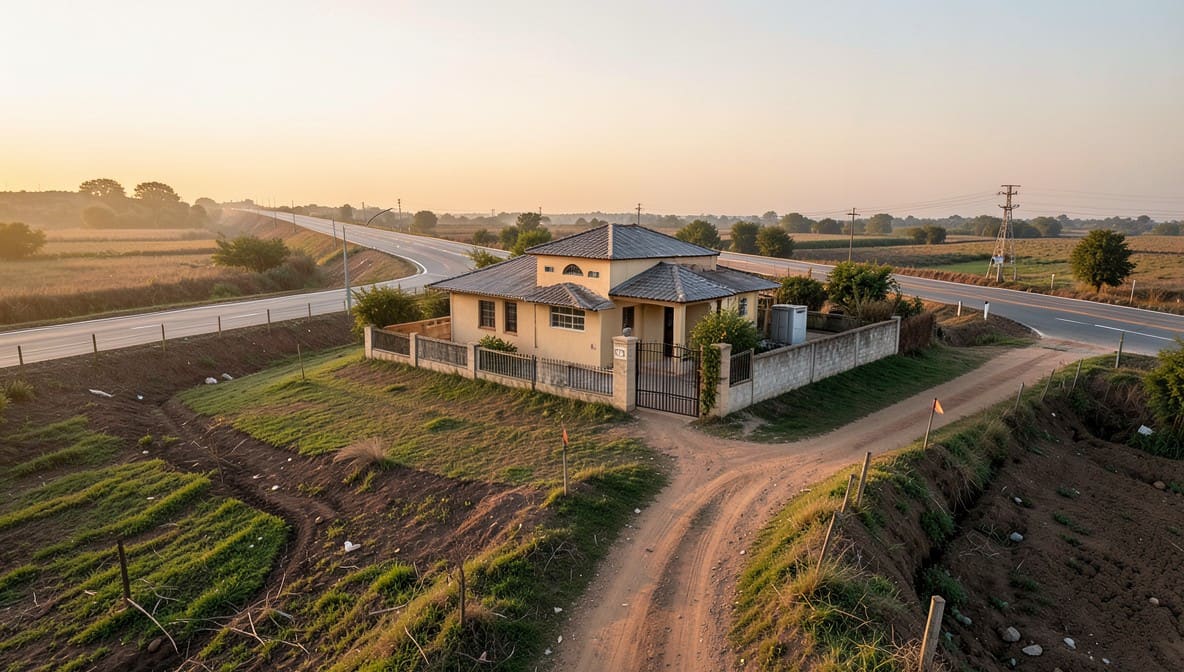
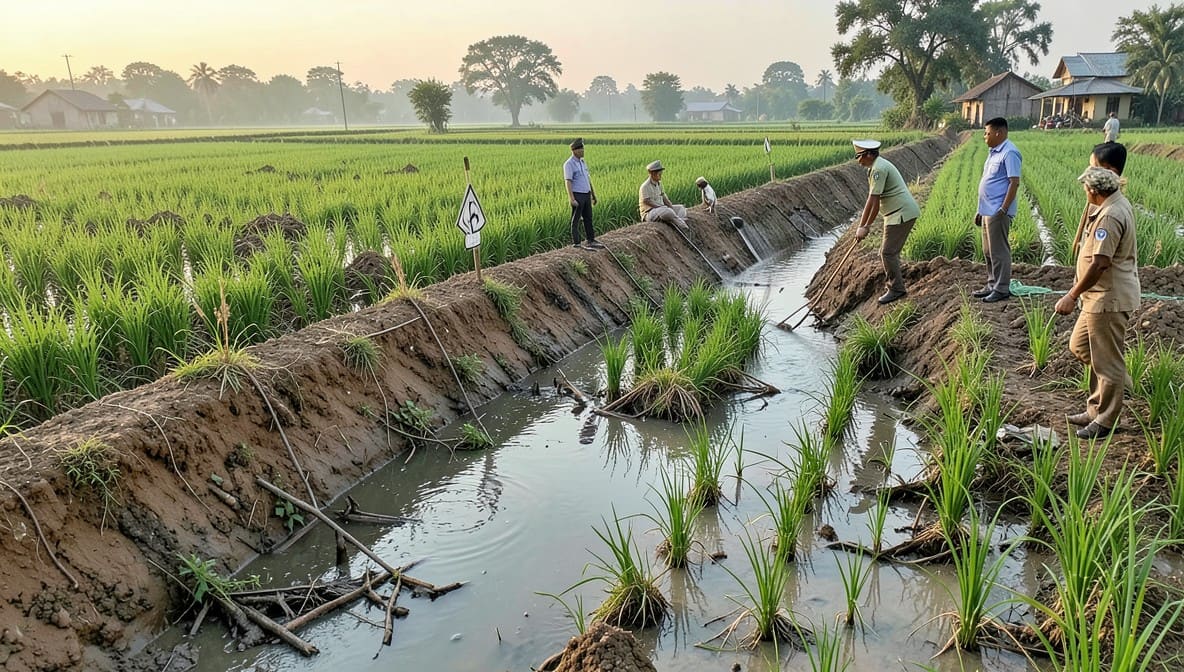
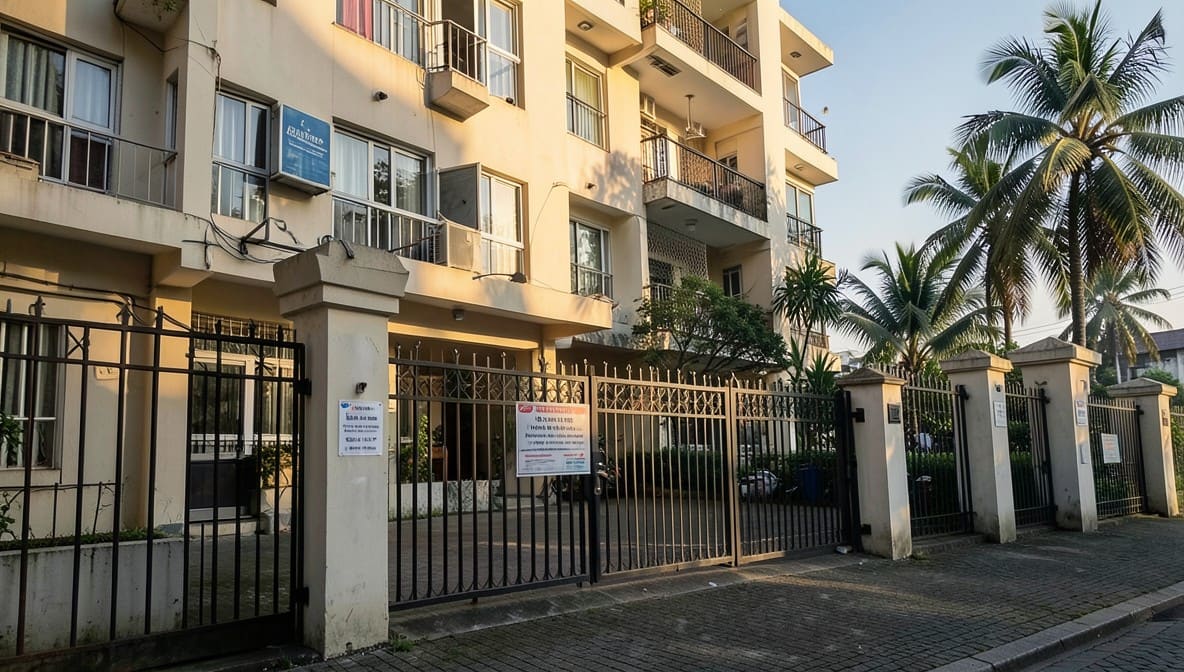
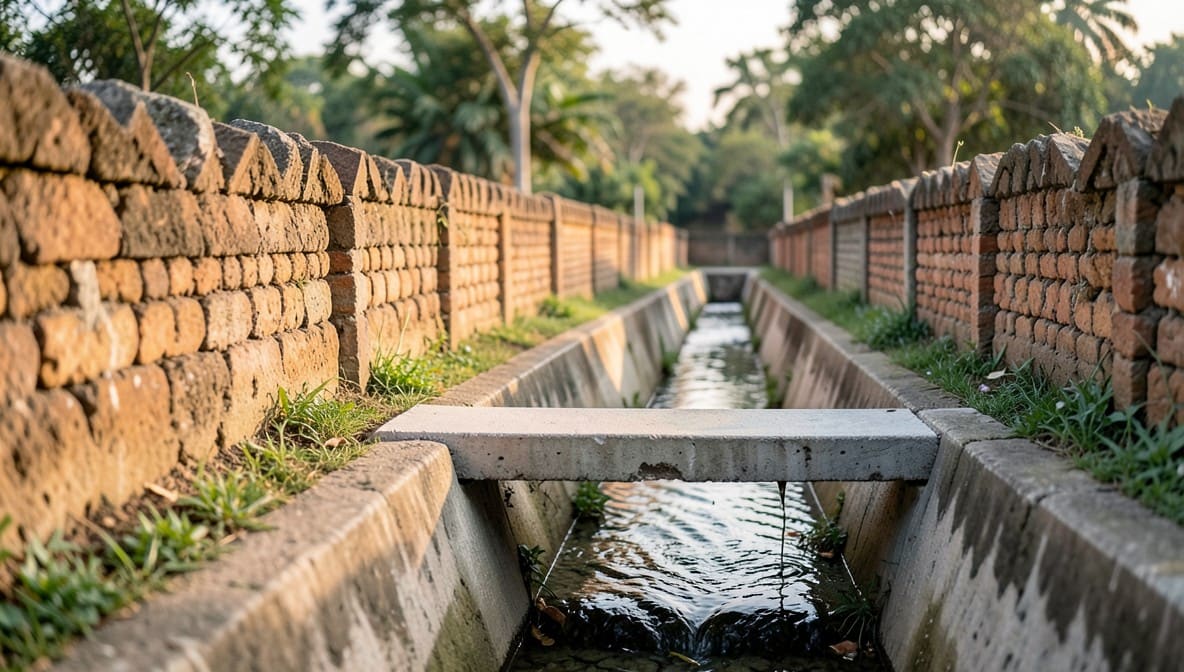
The petitioner, a property owner in Kumbakonam, sought permission from the Kumbakonam Municipal Corporation (second respondent) to construct a pre-fabricated concrete slab culvert over a sewage canal running immediately in front of his property. The canal, which serves as an irrigation channel, is bounded on both sides by reinforced concrete walls. The petitioner’s compound wall abuts the canal, and there is no alternative means of ingress or egress to his property without crossing the channel.
Key Facts
- The petitioner submitted a formal request for construction of a culvert to facilitate access to his property.
- The Kumbakonam Municipal Corporation rejected the request by order dated 09.02.2026.
- The rejection cited a pending Review Application in Contempt Petition No.556 of 2024 before the Principal Bench of the Madras High Court.
- The impugned order relied on Paragraph 9 of the order dated 24.04.2025 in Contempt Petition No.556 of 2024, which restrained unauthorized construction over "Vaikals" (irrigation channels).
- The petitioner submitted photographs showing the canal is already fully lined with concrete on both sides, eliminating any risk of encroachment or reduction in width.
- The petitioner’s proposed structure is limited to a slab covering only the necessary span to permit pedestrian access, with no alteration to the channel’s flow or structure.
Procedural History
- 09.02.2026: Kumbakonam Municipal Corporation issued order rejecting petitioner’s request, citing pending review in Contempt Petition No.556 of 2024.
- 17.03.2026: Writ Petition No.7144 of 2026 filed before the Madurai Bench of the Madras High Court under Article 226 of the Constitution.
The Parties' Positions
For the Petitioner: The petitioner’s counsel argued that the rejection was mechanically based on a pending proceeding unrelated to the specific nature of the proposed structure. He emphasized that the canal is already structurally secured, and the proposed culvert is a minimal, non-intrusive solution to a legitimate access issue.
For the Respondents: The Standing Counsel for the Municipal Corporation contended that Paragraph 9 of the order dated 24.04.2025 in Contempt Petition No.556 of 2024 explicitly prohibits any individual from constructing a bridge over Vaikals without express permission from the Water Resources Department. The Corporation, it was argued, cannot act independently until the review petition is decided.
Relief Sought
The petitioner sought quashing of the order dated 09.02.2026 and a direction to the respondents to grant permission for construction of the culvert.
The Legal Issue
The central question was whether a municipal corporation may indefinitely defer a legitimate request for a non-intrusive access structure over a reinforced irrigation channel solely on account of a pending review application in a separate contempt proceeding, when the proposed structure poses no threat to the channel’s integrity.
Arguments Presented
For the Petitioner
The petitioner relied on the factual distinction between the general prohibition in Contempt Petition No.556 of 2024 - addressing unauthorized encroachments and reduction of channel width - and the petitioner’s specific proposal for a pre-fabricated slab over a fully concreted channel. He argued that the doctrine of res judicata or lis pendens does not apply to unrelated administrative requests. He further cited principles of natural justice and the right to reasonable access to one’s property.
For the Respondent
The Municipal Corporation contended that Paragraph 9 of the order dated 24.04.2025 vests exclusive authority over bridge construction over Vaikals in the Water Resources Department, and that the Corporation lacks independent power to grant permission. It argued that acting before the review petition is decided would violate the spirit of the High Court’s earlier directive and risk contempt.
The Court's Analysis
The Court acknowledged the necessity of preserving irrigation channels and upheld the principle that no unauthorized construction may be permitted over Vaikals. However, it distinguished between encroachment and minimal access infrastructure. The Court noted that the canal in question is already protected by concrete linings on both sides, rendering the petitioner’s proposal non-threatening to the channel’s function or width.
"It is evident that the Kumbakonam Municipal Corporation is vested with the authority to put up necessary structures, subject to obtaining permission from the Water Resources Department."
The Court rejected the notion that a pending review application in a separate contempt matter could serve as a blanket bar to administrative consideration of a distinct, factually different request. It emphasized that administrative inaction under such circumstances amounts to denial of a fundamental right to access one’s property.
The Court further clarified that while the Corporation cannot unilaterally approve the structure, it is not powerless. It must proactively initiate the process by forwarding the request to the Water Resources Department for evaluation and obtain its express permission, as contemplated under Paragraph 9 of the earlier order.
The Verdict
The writ petition was disposed of with directions. The Kumbakonam Municipal Corporation is directed to examine the petitioner’s request for installation of a pre-fabricated concrete slab culvert, strictly confined to the minimum necessary span, and without altering the channel’s structure. The Corporation must obtain express permission from the Water Resources Department before acting. The Corporation must communicate its final decision to the petitioner within three months from the date of receipt of a web copy of this order. The cost of construction shall be borne entirely by the petitioner, and the Corporation may recover applicable charges. No costs are awarded.
What This Means For Similar Cases
Municipal Authorities Cannot Use Pending Litigation as a Blanket Excuse for Inaction
- Practitioners may now argue that administrative bodies must evaluate requests on their merits, even if related to a broader litigation matter.
- A pending review or appeal in one case does not automatically freeze all administrative decisions on factually distinct applications.
- Delay in decision-making on access structures may be challenged as violation of Article 21 (right to life and liberty) when it deprives property owners of reasonable access.
Pre-Fabricated, Non-Intrusive Structures May Qualify for Approval Under Environmental Safeguards
- Proposals for minimal infrastructure - such as pre-fabricated slabs over concreted channels - are distinguishable from encroachments or bridge constructions.
- Courts are likely to favor solutions that preserve infrastructure integrity while enabling lawful access.
- Municipalities must initiate the required approvals (e.g., from Water Resources Department) rather than merely citing procedural barriers.
Procedural Timelines Are Enforceable by Writ Jurisdiction
- Courts will impose clear deadlines (e.g., 3 months) on public authorities to prevent indefinite delay.
- Acceptance of web copies of orders as sufficient for triggering timelines reduces procedural burdens on litigants.
- Cost recovery mechanisms are permissible, provided they are transparent and non-discriminatory.