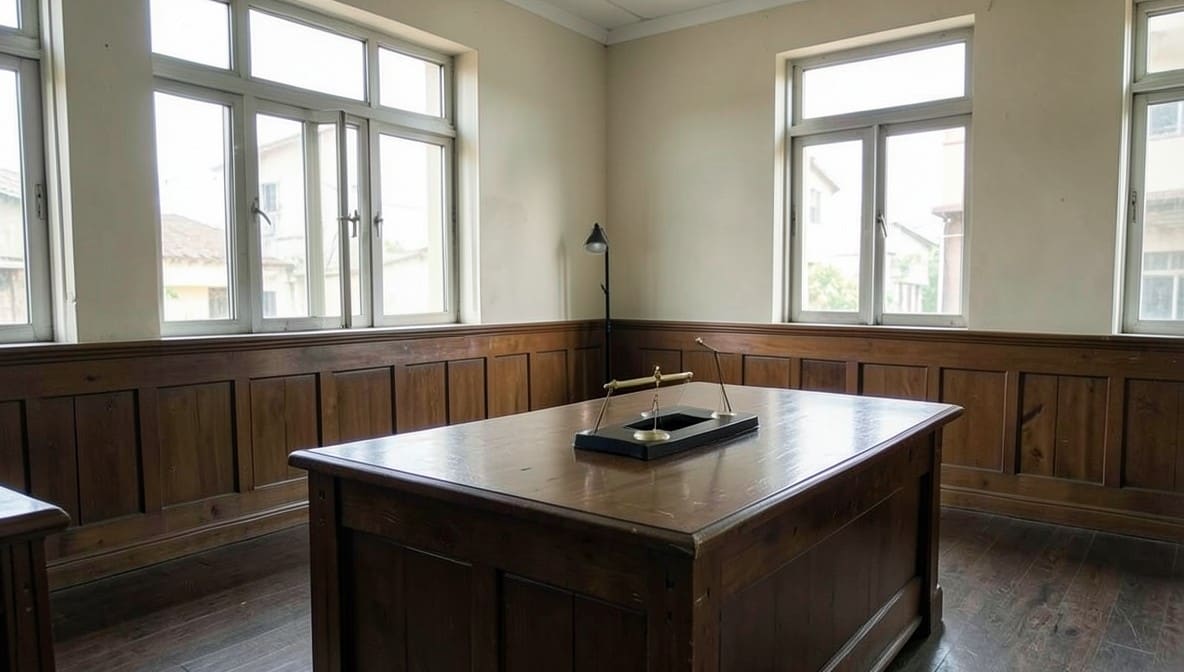
The Madhya Pradesh High Court has clarified that a marginal excess over the statutory small quantity threshold under the NDPS Act does not justify automatic denial of bail pending appeal. This ruling reinforces proportionality in sentencing and underscores the need for judicial discretion in cases involving minimal contraband.
Background & Facts
The Dispute
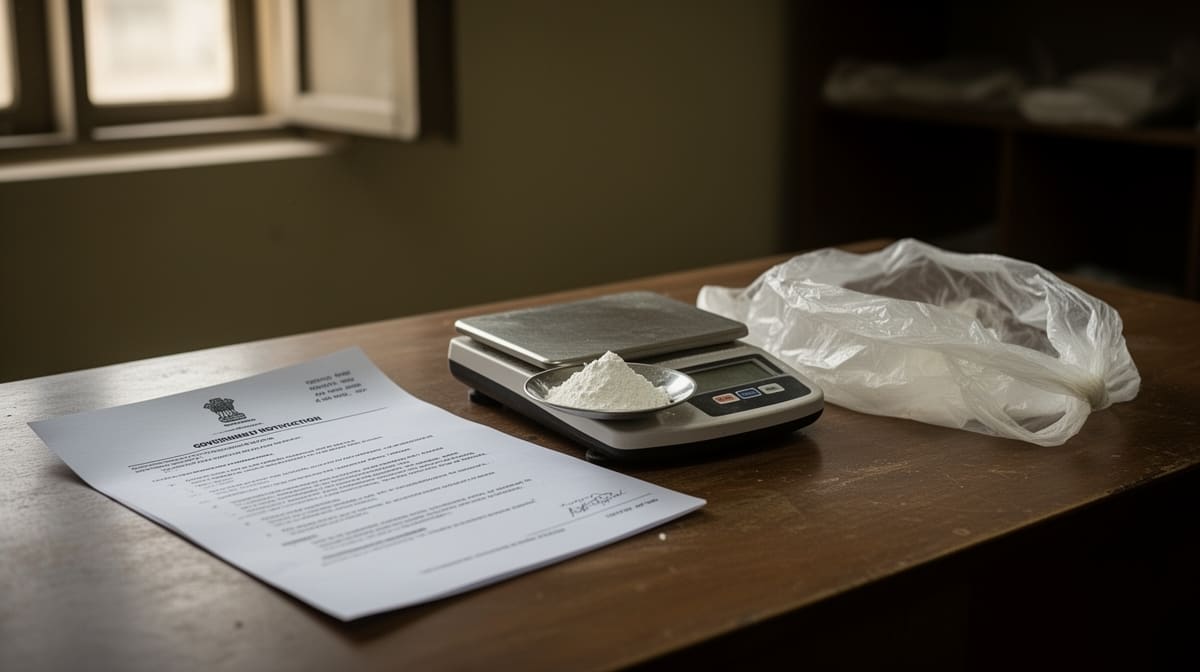
The appellant, Arbaaz, was convicted under Section 8(c) read with Section 21(B) of the NDPS Act for possessing 6 grams of brown sugar, identified as diacetylmorphine (heroin). The Special Judge (NDPS), Barwani, sentenced him to three years of rigorous imprisonment and a fine of Rs. 10,000, with a default stipulation. The prosecution established recovery of the contraband from the appellant’s possession during a lawful search.
Procedural History
- October 17, 2025: Conviction and sentencing by Special Judge (NDPS), Barwani, in Special (NDPS) Case No. 12/2023.
- December 2025: Appeal filed before the High Court of Madhya Pradesh, Indore, CRA No. 1348 of 2026.
- January 19, 2026: Co-accused Darshan @ DK was granted suspension of sentence by the same court in CRA No. 106078/2025.
- February 17, 2026: Application for condonation of delay (I.A. No. 1749/2026) allowed; application for suspension of sentence (I.A. No. 1747/2026) heard.
Relief Sought
The appellant sought suspension of his sentence and release on bail pending appeal, citing:
- The quantity recovered (6 grams) is only marginally above the small quantity threshold of 5 grams for heroin.
- He had already undergone seven months of custody.
- Similar co-accused had been granted bail.
- The appeal has substantial merit and would take considerable time for final hearing.
The Legal Issue
The central question was whether Section 37 of the NDPS Act permits suspension of sentence and grant of bail pending appeal when the quantity of contraband is only marginally in excess of the small quantity threshold, and the accused has already served a significant portion of custody.
Arguments Presented
For the Appellant
Counsel argued that the possession of 6 grams of heroin constitutes a de minimis violation, falling squarely within the spirit of proportionality recognized in prior judgments. He relied on State of Punjab v. Baldev Singh and Kamaljit Singh v. State of Punjab, emphasizing that Section 37 requires courts to consider the nature and quantity of the offence before denying bail. The appellant’s prolonged custody and the co-accused’s prior bail grant were cited as equitable grounds.
For the Respondent
The State contended that Section 37 imposes a stringent bar on bail for NDPS offences, and that any possession above the small quantity threshold, however marginal, triggers the mandatory denial of bail unless exceptional circumstances are shown. It argued that the statutory framework must be strictly applied to deter drug trafficking, regardless of the quantity’s proximity to the threshold.
The Court's Analysis
The Court examined the strict bail regime under Section 37 of the NDPS Act, which requires the court to be satisfied that there are reasonable grounds for believing the accused is not guilty and that he is not likely to commit any offence while on bail. However, the Court noted that Section 37 does not preclude judicial discretion where the facts demonstrate a minimal, non-commercial violation.
"The quantity recovered is only one gram over the small quantity limit prescribed under the notification... such a marginal excess cannot be equated with commercial trafficking or serious criminal intent."
The Court distinguished this case from those involving large-scale trafficking or repeat offenders. It emphasized that the purpose of the NDPS Act is to curb trafficking, not to punish minor personal use. The fact that the co-accused, similarly situated, had already been granted bail reinforced the principle of parity. The Court further observed that the appellant’s seven months of custody already served constituted a significant punitive consequence, and continued incarceration pending appeal would be disproportionate.
The Court declined to prejudge the merits of the appeal but held that the balance of convenience, the minimal nature of the offence, and the absence of any risk of evidence tampering or flight warranted interim relief.
The Verdict
The appellant succeeded. The Court held that suspension of sentence and grant of bail pending appeal are permissible under Section 37 of the NDPS Act when the quantity of contraband is only marginally above the small quantity threshold, and the accused has served a substantial portion of custody. The appellant was released on a personal bond of Rs. 50,000 with one surety.
What This Means For Similar Cases
Marginal Excess Does Not Trigger Automatic Denial of Bail
- Practitioners must now argue that Section 37 NDPS Act permits bail where the quantity is barely above the small quantity limit, especially if the accused has no prior record.
- Courts cannot mechanically apply the bar on bail merely because the quantity exceeds the statutory threshold by grams.
- The focus must shift to the intent, scale, and context of possession.
Parity Among Co-Accused Is a Relevant Consideration
- When co-accused in the same case or similar circumstances are granted bail, denial to another accused without justification violates Article 14.
- This judgment establishes parity as a legitimate ground for interim relief in NDPS appeals.
- Lawyers should cite comparable bail grants in their applications to strengthen the argument for equitable treatment.
Custody Duration Must Inform Bail Decisions
- Prolonged pre-appeal custody (e.g., six to eight months) should be weighed as a mitigating factor.
- Courts are now expected to consider whether continued incarceration serves any legitimate penal or deterrent purpose.
- This creates a new benchmark: bail becomes more likely after six months of custody in minor NDPS cases.