The Himachal Pradesh High Court has clarified that possession of an intermediate quantity of heroin under the NDPS Act, coupled with a clean criminal record and strong societal roots, warrants bail even where the offence is serious. The judgment reinforces that bail is the norm, not the exception, and that speculative fears of reoffending cannot override constitutional guarantees of personal liberty.
Background & Facts
The Dispute
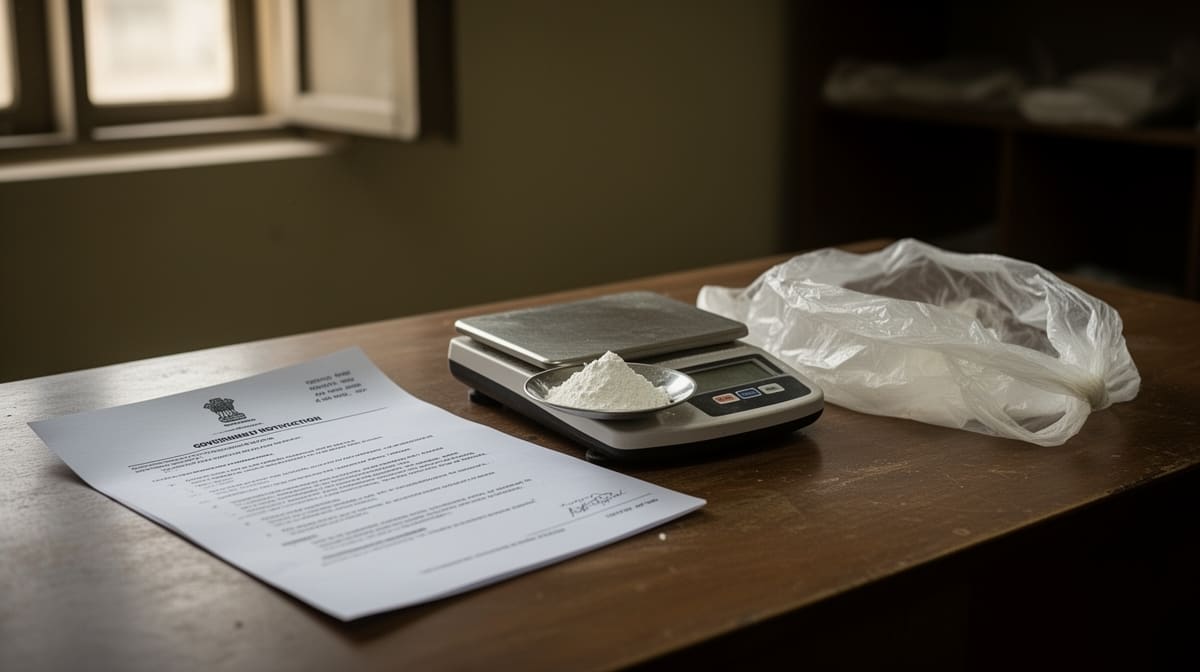
The petitioner, Ayush Thakur, a first-year B. Pharmacy student, was arrested in connection with FIR No. 319 of 2025, registered at Police Station Sadar, Hamirpur, on 27.11.2025, for offences under Section 21 and Section 29 of the Narcotic Drugs and Psychotropic Substances Act (NDPS Act). The prosecution alleges that during a routine night patrol at approximately 1:50 A.M., police observed two individuals seated on a platform at the HRTC Bus Stand entrance. One of them, identified as the petitioner, had a backpack on his legs. Upon inquiry, the individuals appeared nervous. The bag was searched, and 105.23 grams of heroin were recovered. The petitioner and his co-accused, Rajat Mehra, were arrested on the spot. The substance was sent to the State Forensic Science Laboratory, Junga, and confirmed to be Diacetylmorphine (heroin).
Key Facts
- The petitioner is a student of B. Pharmacy, 1st Year, enrolled at a recognized institution.
- The quantity of heroin recovered - 105.23 grams - falls within the intermediate range under Section 37 of the NDPS Act.
- No prior FIR or criminal record exists against the petitioner.
- The petitioner is a permanent resident of Bilaspur, Himachal Pradesh, with established family and social ties.
- The police filed the charge sheet on or before 08.04.2026, and charges were formally framed on that date.
- The trial is scheduled for recording prosecution witness statements on 05.06.2026 and 16.06.2026.
- The petitioner has not undergone custodial interrogation beyond initial arrest and has no further need for police custody.
Procedural History
- 27.11.2025: FIR No. 319 of 2025 registered at Police Station Sadar, Hamirpur.
- 27.11.2025: Petitioner arrested and remanded to judicial custody.
- 08.04.2026: Charges framed by the Special Judge, NDPS Court.
- 04.05.2026: Petition for regular bail heard and reserved.
- 08.05.2026: Judgment delivered granting bail.
The Parties' Positions
For the Petitioner
- The petitioner is innocent and falsely implicated.
- The quantity of heroin is intermediate, not commercial, and does not trigger the stringent conditions of Section 37 of the NDPS Act.
- He is a first-time offender with no criminal antecedents.
- His continued detention will irreparably harm his academic career and future prospects.
- He has deep roots in society and no risk of absconding.
- He undertakes to comply with all bail conditions.
For the Respondent/State
- The quantity of heroin (105.23 grams) is substantial and indicative of trafficking, not personal use.
- Narcotics severely damage public welfare, and leniency undermines deterrence.
- The seriousness of the offence justifies continued custody.
- No assurance can be given that the petitioner will not reoffend if released.
Relief Sought
The petitioner sought regular bail, arguing that his detention was unjustified given his clean record, student status, and the intermediate nature of the quantity involved. He requested release on reasonable bail bonds and conditions.
The Legal Issue
The central question was whether the rigours of Section 37 of the NDPS Act apply to a case involving an intermediate quantity of heroin, and whether the petitioner’s clean record, student status, and societal roots justify the grant of bail despite the seriousness of the alleged offence.
Arguments Presented
For the Petitioner
Counsel relied on the principle that bail is the rule and jail the exception, citing State of Rajasthan v. Balchand. It was argued that the quantity of 105.23 grams of heroin is intermediate under Section 37, and therefore, the mandatory denial of bail under that provision does not apply. The petitioner’s status as a first-time offender, his enrollment in a professional course, and his permanent residence in Bilaspur were emphasized as indicators of low flight risk and high potential for reform. Counsel further contended that speculative fears of reoffending cannot override the presumption of innocence and the right to liberty under Article 21.
For the Respondent/State
The Additional Advocate General argued that 105.23 grams of heroin is a large quantity, far exceeding personal consumption limits, and thus reflects commercial intent. He cited societal harm caused by narcotics and urged the Court to adopt a deterrent approach. He contended that the gravity of the offence, even if intermediate, warrants continued custody to prevent the accused from influencing witnesses or reoffending.
The Court's Analysis
The Court undertook a structured analysis of bail jurisprudence as laid down by the Supreme Court in Pinki v. State of U.P., Prahlad Singh Bhati v. State (NCT of Delhi), and Brijmani Devi v. Pappu Kumar. It emphasized that while the nature of the offence and quantity of drugs are critical, they must be balanced against the accused’s personal circumstances.
"The jurisdiction to grant bail has to be exercised on the basis of well-settled principles, having regard to the circumstances of each case and not in an arbitrary manner."
The Court noted that the petitioner’s possession of an intermediate quantity of heroin - as opposed to a commercial quantity - significantly alters the legal calculus under Section 37. The provision, which mandates denial of bail for offences involving commercial quantities, does not apply here. The Court further observed that the charge sheet has been filed and charges framed, indicating that the investigation is complete and custodial interrogation is no longer necessary.
The Court accepted the petitioner’s assertion of being a first-time offender, a claim unchallenged in the status report. His status as a student and permanent resident of Bilaspur were deemed strong indicators of societal roots and low risk of absconding. The Court rejected the State’s argument that the petitioner might reoffend, holding that such speculation cannot be the basis for denying liberty. The Court observed:
"The bail cannot be denied on the ground that the petitioner is likely to misuse the concession of the bail."
It further clarified that if the petitioner violates any condition, the prosecution retains the right to seek cancellation of bail. The Court underscored that the grant of bail does not imply any finding on the merits of the case.
The Verdict
The petitioner succeeded. The Court granted regular bail subject to the following conditions: (1) execution of a personal bond of ₹1,00,000 with one surety of like amount; (2) no intimidation or influence of witnesses; (3) attendance at all trial hearings without seeking unnecessary adjournments; (4) prior intimation to the SHO and Trial Court before leaving the present address for more than seven days; (5) surrender of passport, if any; and (6) furnishing and updating mobile number and social media contacts within five days of any change. The Court directed the Jail Superintendent and Trial Court to be informed of this order via FASTER. The observations made are without prejudice to the trial’s outcome.
What This Means For Similar Cases
Intermediate Quantity Triggers Different Bail Standards
- Practitioners must distinguish between commercial, intermediate, and personal-use quantities under the NDPS Act when arguing for bail.
- Possession of 100 - 200 grams of heroin is generally treated as intermediate; bail should be granted unless strong evidence of trafficking exists.
- Section 37’s mandatory denial of bail applies only to commercial quantities - not intermediate.
Clean Record and Student Status Are Weighty Factors
- First-time offenders with no criminal history, especially students or professionals, are entitled to bail even in serious drug cases.
- Academic pursuits and societal roots are valid considerations under Prahlad Singh Bhati and Brijmani Devi.
- Courts must avoid presuming guilt based on the nature of the substance alone.
Speculative Risk Cannot Override Liberty
-
The prosecution cannot deny bail on the basis of hypothetical future misconduct.
-
Conditions, not denial, are the proper tool to mitigate risk.
-
Bail cancellation remains available as a remedy if conditions are breached.
-
Always argue for bail under Section 37 by first establishing the quantity category.
-
Submit proof of education, employment, and residential stability to demonstrate societal roots.
-
Propose specific, enforceable bail conditions to address prosecution concerns without denying liberty.