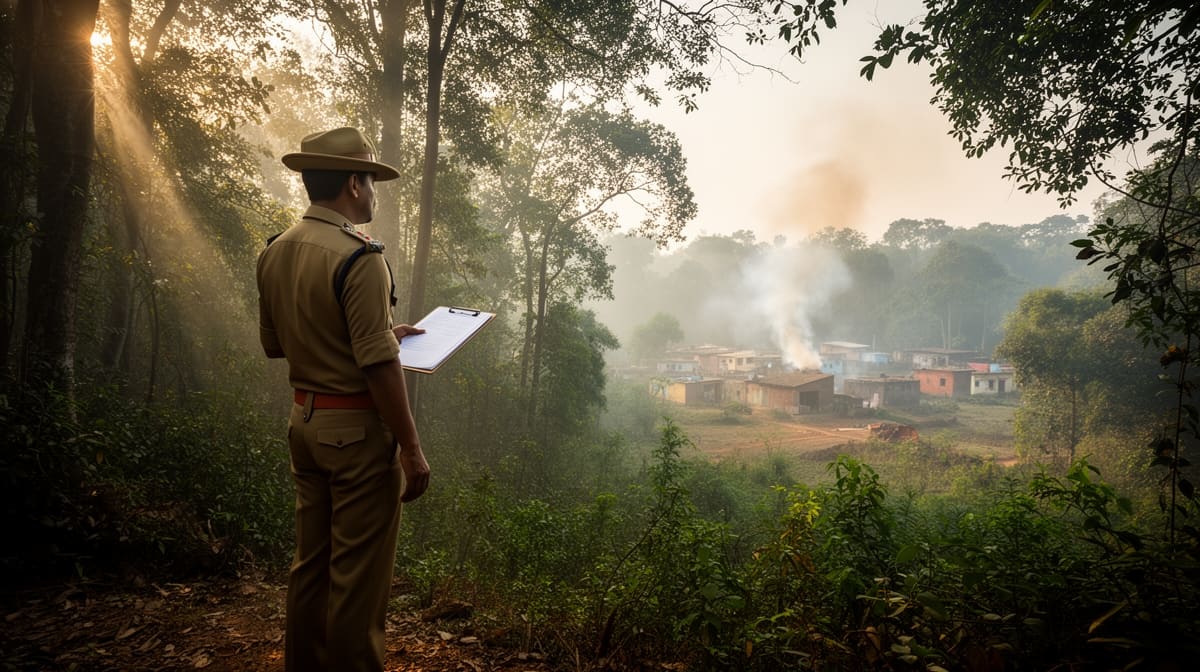
The Bombay High Court has affirmed its power to initiate suo motu public interest litigation based on media reports highlighting systemic failures in wildlife conservation and public safety. This decision underscores the judiciary’s proactive role in addressing urgent public concerns when administrative inaction endangers human life and ecological integrity.
Background & Facts
The Dispute
Media reports in the Marathi daily Loksatta dated 21 February 2026 revealed a sharp rise in fatal tiger attacks in the Pench Tiger Reserve over the past three to four years. Despite the loss of human lives, local administration allegedly prioritized tourism expansion - particularly the planned organization of a music festival in the Kolitmara eco-sensitive zone - over implementing protective measures for nearby communities.
Procedural History
The matter originated not through a formal petition, but through the Court’s own observation of public interest concerns raised in journalistic reports:
- 21 February 2026: Two news articles published in Loksatta detailing tiger-related fatalities and administrative neglect
- 24 February 2026: High Court takes cognizance suo motu, treating the reports as a potential public interest issue
- 24 February 2026: Court appoints Mr. C.R. Sharma as Amicus Curiae to file a formal PIL within two weeks
Relief Sought
Though no formal petition was filed, the Court’s intervention implies a demand for:
- Immediate safety measures for communities bordering the tiger reserve
- Suspension of tourism activities in ecologically sensitive zones
- Transparent policy review by the Ministry of Environment, Forest and Climate Change
The Legal Issue
The central question was whether the High Court can initiate a suo motu Public Interest Litigation based solely on media reports of grave public concern, even in the absence of a formal petition, when administrative inaction threatens life and ecological balance.
Arguments Presented
For the Petitioner
No formal petitioner existed. However, the Court, acting through its suo motu jurisdiction, implicitly relied on the principle that public interest litigation is not confined to formal petitioners. The Amicus Curiae, once appointed, would be expected to argue that the state’s failure to protect citizens from predictable wildlife threats violates Article 21 of the Constitution and the state’s duty under the Wildlife (Protection) Act, 1972.
For the Respondent
The State, represented by the Advocate General, did not oppose the Court’s suo motu action. The absence of a counter-argument suggests tacit acceptance of the Court’s authority to intervene where public safety and environmental governance are at stake.
The Court's Analysis
The Court grounded its decision in the well-established doctrine that judicial activism in public interest matters is not contingent on formal petitions. It emphasized that the judiciary, as a guardian of constitutional rights, must act when systemic failures are brought to light through credible public sources.
"Since the issue involved in the aforesaid articles is of public importance, we treat the same as a Suo Motu Public Interest Litigation."
The Court did not require corroboration beyond the newspaper reports, recognizing that in remote or marginalized regions, media often serves as the only conduit for exposing state neglect. It further noted that the cancellation of the music festival following media exposure demonstrated the public’s sensitivity to the issue and the potential for institutional harm if left unaddressed.
The Court’s approach aligns with precedents such as S.P. Gupta v. Union of India, which expanded the locus standi in PILs, and Vishaka v. State of Rajasthan, where the Court acted suo motu to establish binding guidelines in the absence of legislative action. Here, the Court extended that logic to environmental and human safety contexts.
The appointment of an Amicus Curiae was not merely procedural - it was a strategic mechanism to ensure that the Court’s intervention would be informed by structured legal argument, while preserving the integrity of the suo motu process.
The Verdict
The Court initiated a suo motu PIL based on media reports of tiger attacks and administrative negligence in the Pench Tiger Reserve. It held that public importance, as evidenced by credible journalism, is sufficient grounds for judicial intervention under Article 32 and Article 226. The matter was listed for further hearing after the Amicus Curiae files a formal PIL.
What This Means For Similar Cases
Media Reports Can Trigger Judicial Action
- Practitioners may now cite this judgment to urge courts to treat credible media coverage as a valid trigger for suo motu PILs in environmental, public health, or human rights cases
- No formal complainant is required - courts may act on the basis of documented public concern
- This lowers the barrier for judicial intervention in cases where affected communities lack legal representation
Environmental Governance Is Judicially Reviewable
- The judgment reinforces that state inaction in wildlife conservation can constitute a violation of Article 21 rights to life and dignity
- Authorities must now demonstrate proactive risk mitigation, not just reactive tourism promotion
- Failure to implement buffer zone protections or community safety protocols may be challenged even without a formal petition
Amicus Curiae as a Tool for Structured Intervention
- Courts may increasingly appoint Amici in suo motu matters to ensure legal rigor
- Practitioners should prepare to engage with Amicus filings as de facto petition documents
- This creates a new procedural pathway for public interest litigation where traditional petitioners are absent or silenced