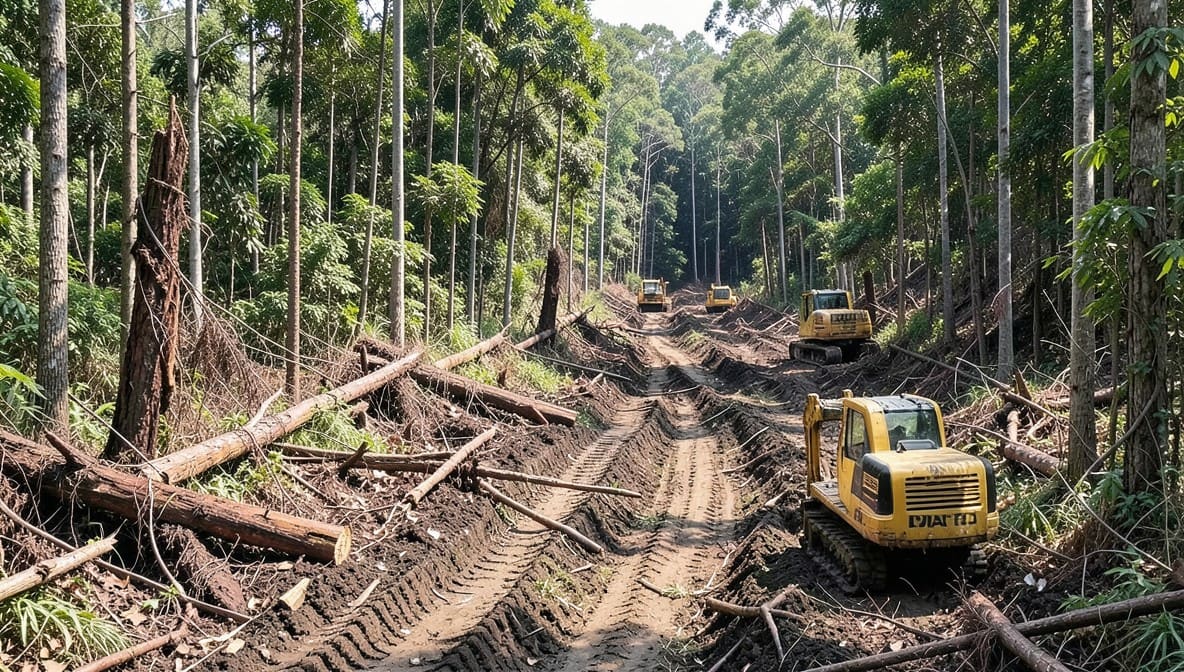
The National Green Tribunal has taken suo moto cognizance of illegal brick kiln operations within the buffer zone of the Ratapani Tiger Reserve, recognizing the cumulative threat to air and water quality, wildlife, and human health. This intervention underscores the Tribunal’s proactive role in enforcing environmental statutes where state agencies have failed to act, setting a critical precedent for the protection of ecologically sensitive zones.
Background & Facts
The Dispute
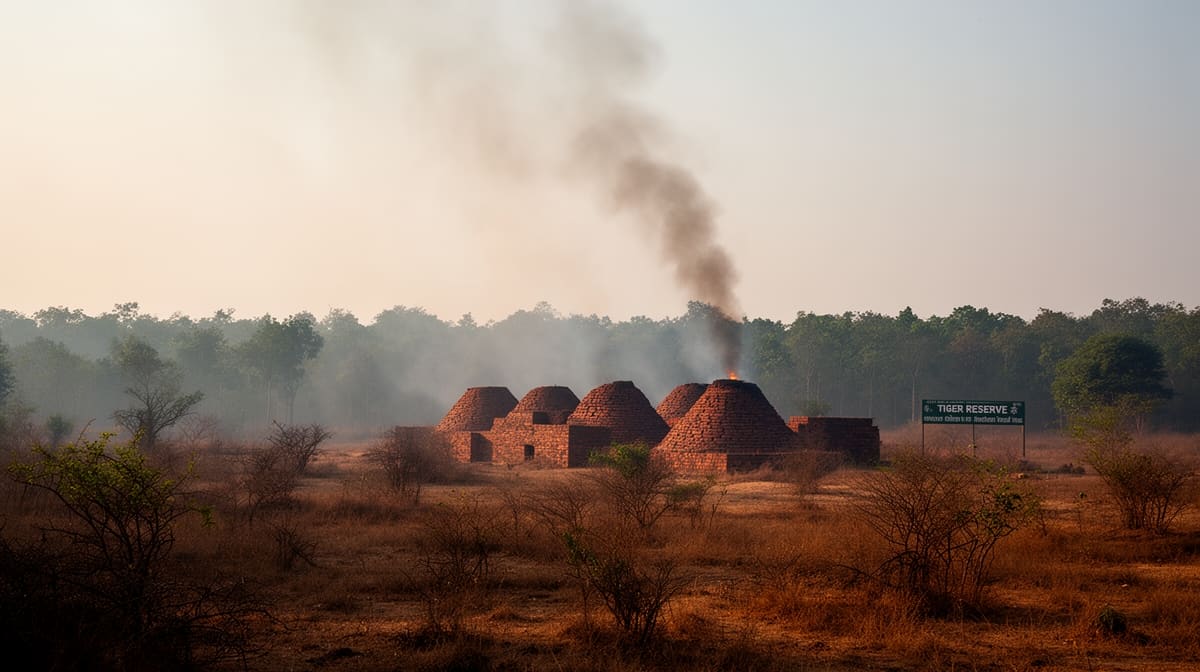
Residents of six villages - Nasipur, Bamanai, Karmai, Jaundra, Kukakhau, and Biran - located within the buffer zone of the Ratapani Tiger Reserve in Raisen District, Madhya Pradesh, submitted a registered complaint detailing widespread environmental degradation caused by 15 - 20 unregulated hand-moulded brick kilns. These kilns operate illegally on government and forest land, along river drains, and without environmental clearances. The combustion of plastic and toxic waste in kilns releases hazardous fumes and ash, contaminating air, soil, and water sources. Excavation for clay extraction has eroded riverbanks, further destabilizing the ecosystem.
Procedural History
The complaint, dated 14 November 2025, was received by the National Green Tribunal as a letter petition. The Tribunal treated it as a suo moto matter under its powers to initiate proceedings on environmental violations, bypassing the need for a formal petitioner. No prior litigation or administrative action had been recorded against the kiln operators.
Relief Sought
The complainants sought immediate closure of all illegal brick kilns, enforcement of environmental norms under the Air (Prevention and Control of Pollution) Act, 1981 and the Water (Prevention and Control of Pollution) Act, 1974, and accountability of state agencies for permitting or ignoring the violations.
The Legal Issue
The central question was whether operating brick kilns in the buffer zone of a notified tiger reserve, using toxic fuels and causing pollution to air and water, constitutes a violation of environmental statutes and triggers the National Green Tribunal’s jurisdiction even in the absence of a formal petitioner.
Arguments Presented
For the Appellant/Petitioner
As this was a suo moto proceeding, no formal appellant presented arguments. However, the Tribunal relied on the factual assertions in the letter petition, which invoked Section 19 of the Environment (Protection) Act, 1986, and Section 15 of the NGT Act, 2010, empowering the Tribunal to act on complaints or suo moto on environmental degradation. The petition cited Rule 12 of the Air Act Rules and Rule 10 of the Water Act Rules, which prohibit discharge of pollutants without authorization.
For the Respondent/State
No formal reply had been filed at the time of the order. The Tribunal noted the absence of any action by the Madhya Pradesh Pollution Control Board, the Divisional Forest Officer, or the District Collector, implying inaction or complicity.
The Court's Analysis
The Tribunal emphasized that buffer zones of tiger reserves are not merely administrative boundaries but legally protected ecological buffers under the Wildlife (Protection) Act, 1972, and National Tiger Conservation Authority guidelines. The operation of polluting industries in these zones directly contravenes the precautionary principle and the polluter pays principle, both integral to Indian environmental jurisprudence as affirmed in M.C. Mehta v. Union of India.
"The degradation of air and water quality in a critical wildlife habitat cannot be tolerated merely because the polluters are small-scale or operate on government land. The state’s duty to protect the environment under Article 21 and Article 48A is non-delegable."
The Tribunal rejected any notion that the scale of operations or the use of government land immunizes the kilns from liability. It held that illegal use of forest land and discharge of pollutants into water drains independently violate the Forest (Conservation) Act, 1980, and the Water Act, 1974, regardless of land ownership. The Tribunal further noted that the use of plastic and hazardous waste as fuel constitutes hazardous waste management violations under the Hazardous and Other Wastes (Management and Transboundary Movement) Rules, 2016.
The Tribunal also affirmed its authority to act suo moto under Section 14(1)(b) of the NGT Act, which permits initiation of proceedings upon receipt of information indicating environmental harm. The gravity of the threat to a globally significant biodiversity hotspot justified immediate intervention.
The Verdict
The National Green Tribunal ruled in favor of environmental protection. It held that illegal brick kiln operations in the buffer zone of a tiger reserve violate environmental statutes and ordered the constitution of a joint committee to inspect the site, submit an action-taken report, and recommend closure and remediation measures. The respondents were directed to file replies and comply with procedural norms for e-filing.
What This Means For Similar Cases
Environmental Violations in Buffer Zones Are Non-Negotiable
- Practitioners must now treat any industrial activity in buffer zones of protected areas as prima facie illegal unless full environmental clearances are produced
- The burden shifts to the state to prove compliance; mere absence of a formal complaint does not absolve duty-bearers
NGT Can Act Sua Sponte on Pollution in Ecologically Sensitive Areas
- Suo moto jurisdiction under the NGT Act is not limited to formal petitions; credible letter complaints triggering environmental harm suffice
- Legal teams should proactively file letter petitions in pollution cases near protected areas, knowing the Tribunal may treat them as suo moto matters
State Agencies Are Liable for Inaction
- District Collectors, Forest Departments, and Pollution Control Boards are now on notice that failure to enforce environmental laws in buffer zones constitutes a breach of statutory duty
- Practitioners can cite this order to demand accountability in writ petitions under Article 226 for administrative negligence