The National Green Tribunal's Central Zone Bench at Bhopal has initiated suo motu proceedings to investigate large-scale illegal felling of thousands of trees and unauthorized excavation in the Ratapani Tiger Reserve's adjoining forest area. The Tribunal has directed the formation of a committee to conduct an on-ground inquiry and submit a factual report within six weeks, while also impleading key state agencies including the District Magistrate, Forest Department, and Pollution Control Board.
Background & Facts
Genesis of the Suo Motu Proceedings
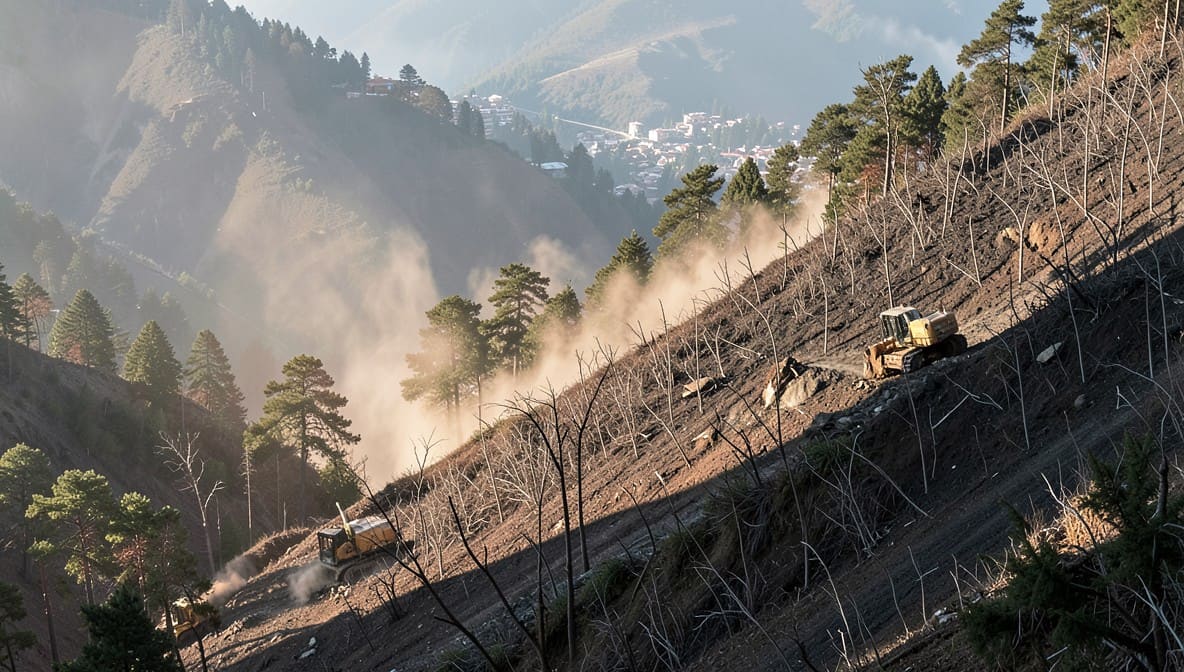
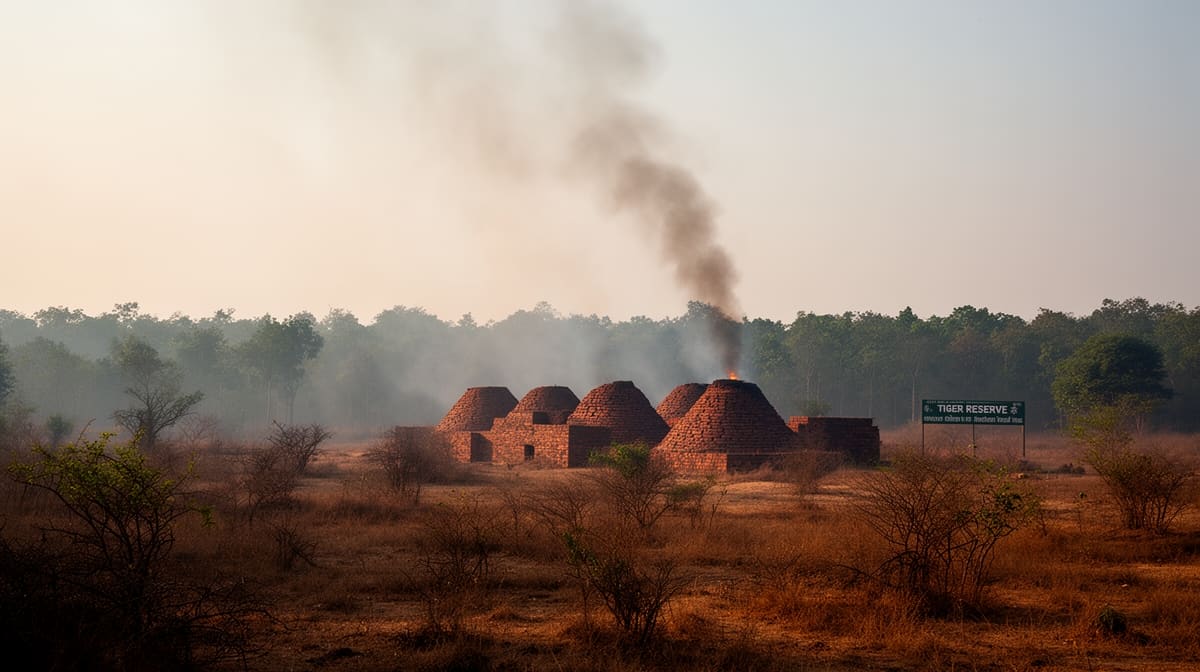
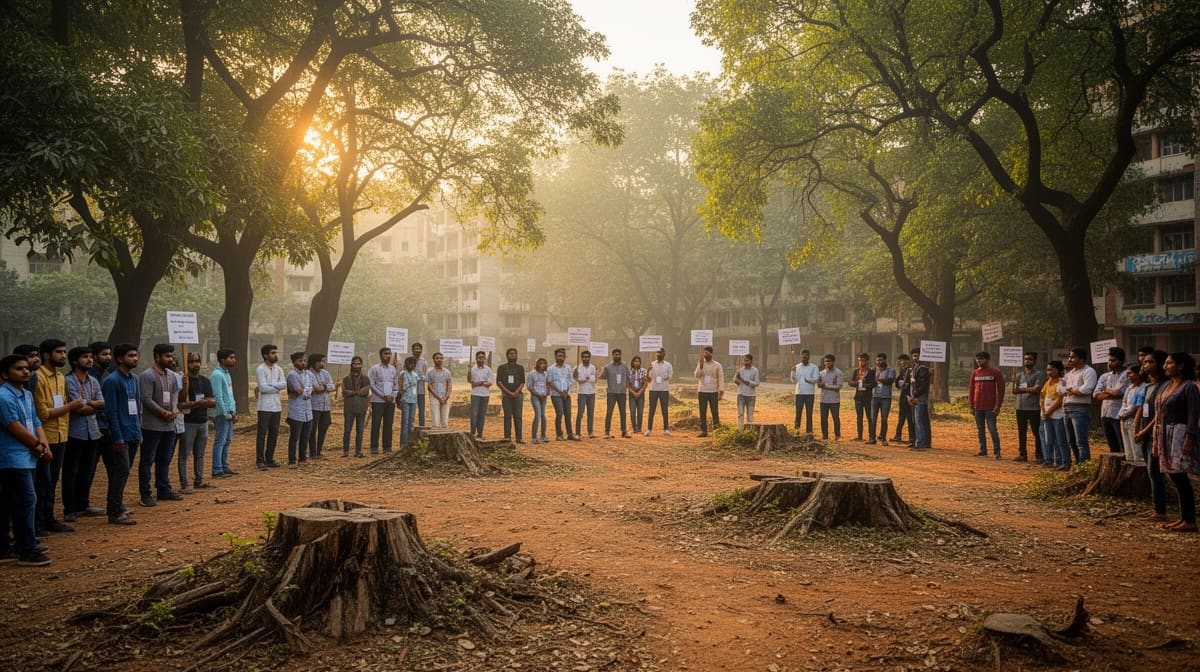
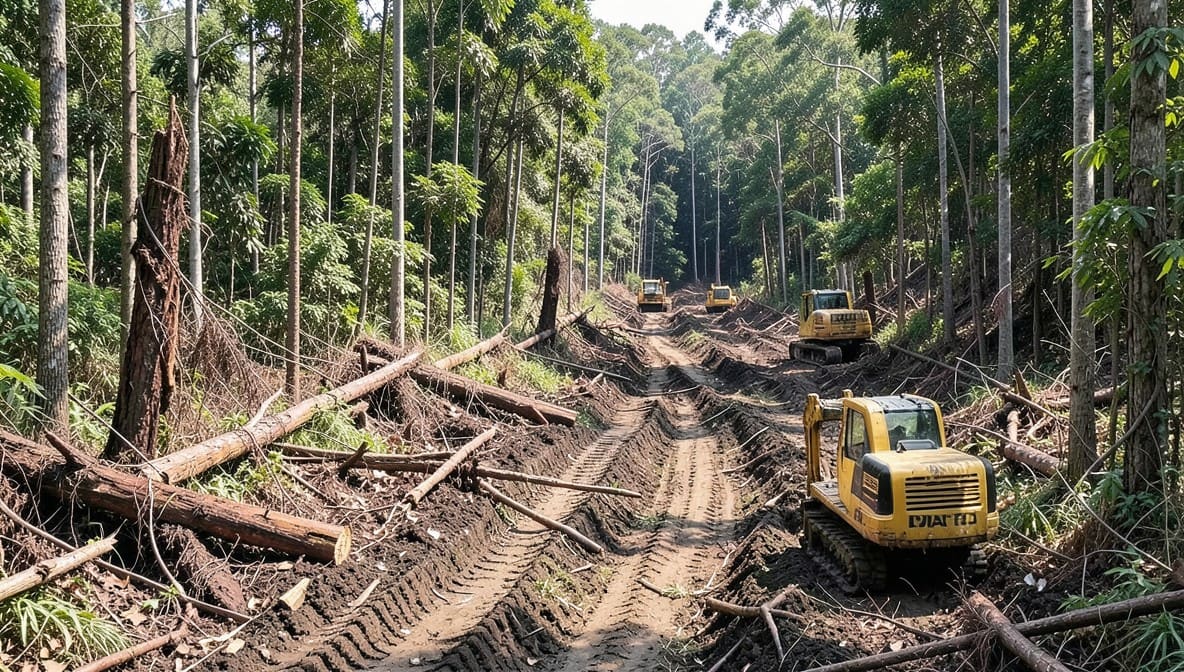
The Tribunal took cognizance based on a news item titled "Rashukh Ke Aage Bebas Jungle Hazaron Pedon Ki Katai Se Sawalon Ke Ghere Me Tantra" published in Nav Duniya newspaper on 06.07.2026. The report highlighted the illegal felling of thousands of valuable timber trees, including teak and saag, and large-scale excavation using heavy machinery in the forest adjoining the core area of the Ratapani Tiger Reserve. Local residents alleged that such extensive alteration of the forest's natural landscape was facilitated by the connivance of the Revenue Department.
Key Facts
- Thousands of valuable timber trees, including teak and saag, have been felled in the area.
- Preparations for the construction of a resort are reportedly underway, with land being leveled using JCB and Poclain machines.
- The land in question appears to fall within a forest area or belongs to a disputed category, raising serious questions about the validity of its transfer and registration.
- Permission for land leveling was allegedly obtained from the Gram Panchayat, but prescribed conditions were not complied with.
- Despite these violations, no action has been taken by the Revenue Department or other responsible authorities.
Procedural History
- 06.07.2026: News item published in Nav Duniya newspaper highlighting illegal felling and excavation.
- 23.07.2026: NGT Central Zone Bench takes suo motu cognizance and registers Original Application No.153/2026(CZ).
- 23.07.2026: Tribunal issues notice to respondents, returnable within four weeks, and directs submission of replies within six weeks.
- 23.07.2026: Tribunal directs formation of a committee to visit the site and submit a factual and action-taken report within six weeks.
- 10.09.2026: Matter listed for next hearing.
Relief Sought
The Tribunal has directed the formation of a committee comprising representatives from the District Magistrate's office, Forest Department, and State Pollution Control Board to conduct an on-ground inquiry and submit a report within six weeks. The State PCB has been designated as the nodal agency for coordination and logistic support.
The Legal Issue
The central question is whether the Tribunal can exercise suo motu jurisdiction to initiate proceedings based on media reports and direct an inquiry into alleged environmental violations, including illegal felling of trees and unauthorized excavation in a protected forest area.
Arguments Presented
For the Applicant (Suo Motu)
The Tribunal, acting on its own motion, initiated proceedings based on a credible media report highlighting environmental violations. The grievance pertains to illegal felling of thousands of trees and unauthorized excavation in the Ratapani Tiger Reserve's adjoining forest area, which falls within the ambit of environmental protection laws.
For the Respondents
No formal appearance was made by any party, as the matter was initiated suo motu. However, the Tribunal directed the impleadment of key state agencies, including the State of Madhya Pradesh, District Magistrate, Forest Department, and Pollution Control Board, to ensure accountability.
The Court's Analysis
The Tribunal examined the suo motu jurisdiction conferred under the National Green Tribunal Act, 2010, and observed that environmental degradation and illegal activities affecting protected areas warrant immediate intervention. The Tribunal noted that the allegations, if true, constitute serious violations of the Forest (Conservation) Act, 1980, and the Wildlife (Protection) Act, 1972.
"This matter has been registered on the basis of a later petition. The grievance of the illegal felling of thousands of trees and large-scale excavation using heavy machinery in the forest adjoining the core area of the Ratapani Tiger Reserve. Local residents allege that such extensive alteration of the forest's natural landscape would not have been possible without the alleged connivance and patronage of the Revenue Department."
The Tribunal emphasized the need for a coordinated response from state agencies to address the alleged violations and directed the formation of a committee to conduct an on-ground inquiry. The Tribunal also directed the respondents to submit their replies within six weeks and directed the applicant to ensure service of notice and documents to the committee and respondents.
The Verdict
The Tribunal directed the formation of a committee to visit the site and submit a factual and action-taken report within six weeks. The State Pollution Control Board was designated as the nodal agency for coordination and logistic support. The respondents were directed to submit their replies within six weeks through the E-filing portal in searchable PDF format. The matter was listed for hearing on 10.09.2026. The Tribunal also directed the impleadment of key state agencies, including the District Magistrate, Forest Department, and Pollution Control Board.
What This Means For Similar Cases
Suo Motu Jurisdiction Is a Powerful Tool for Environmental Protection
- The judgment reaffirms the Tribunal's power to initiate proceedings suo motu based on credible media reports or public interest information.
- Practitioners should note that the Tribunal can direct inquiries into environmental violations even in the absence of formal complaints, provided the allegations are serious and credible.
Inter-Agency Coordination Is Critical
- The Tribunal directed the formation of a multi-agency committee to ensure accountability and coordination among state agencies.
- Practitioners should anticipate that the Tribunal may direct the formation of committees comprising representatives from multiple agencies to address complex environmental issues.
Procedural Compliance Is Non-Negotiable
- The Tribunal directed the respondents to submit replies in searchable PDF format through the E-filing portal, emphasizing the importance of procedural compliance.
- Practitioners should ensure that all submissions to the Tribunal are in the prescribed format and comply with procedural requirements to avoid delays or adverse orders.