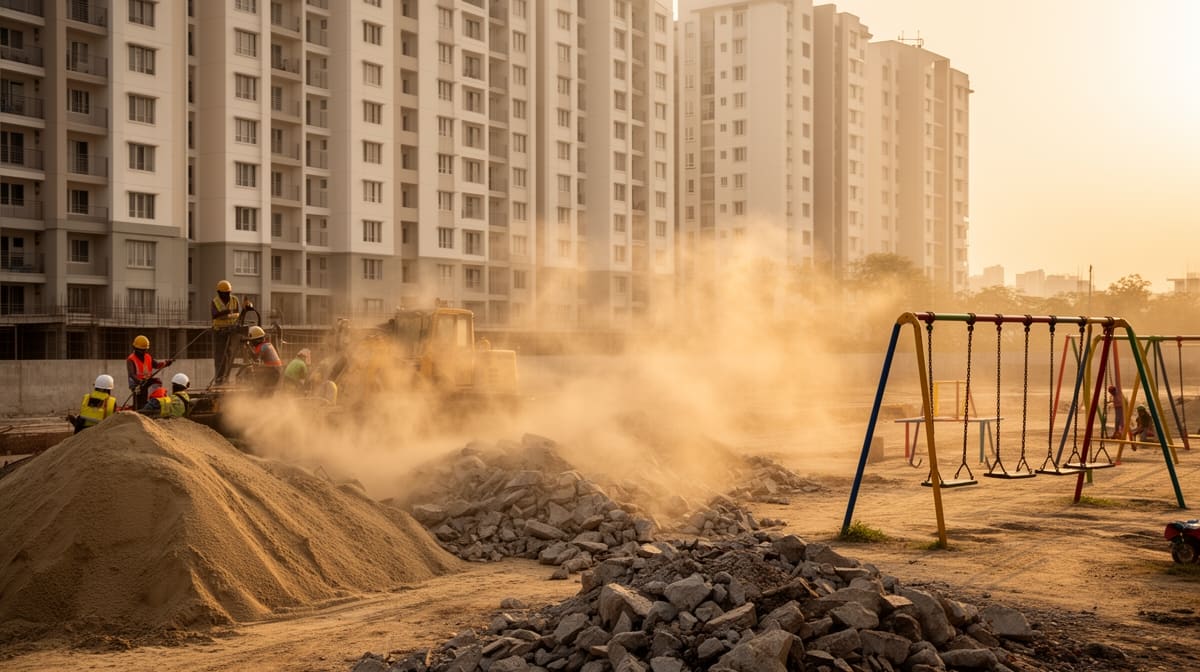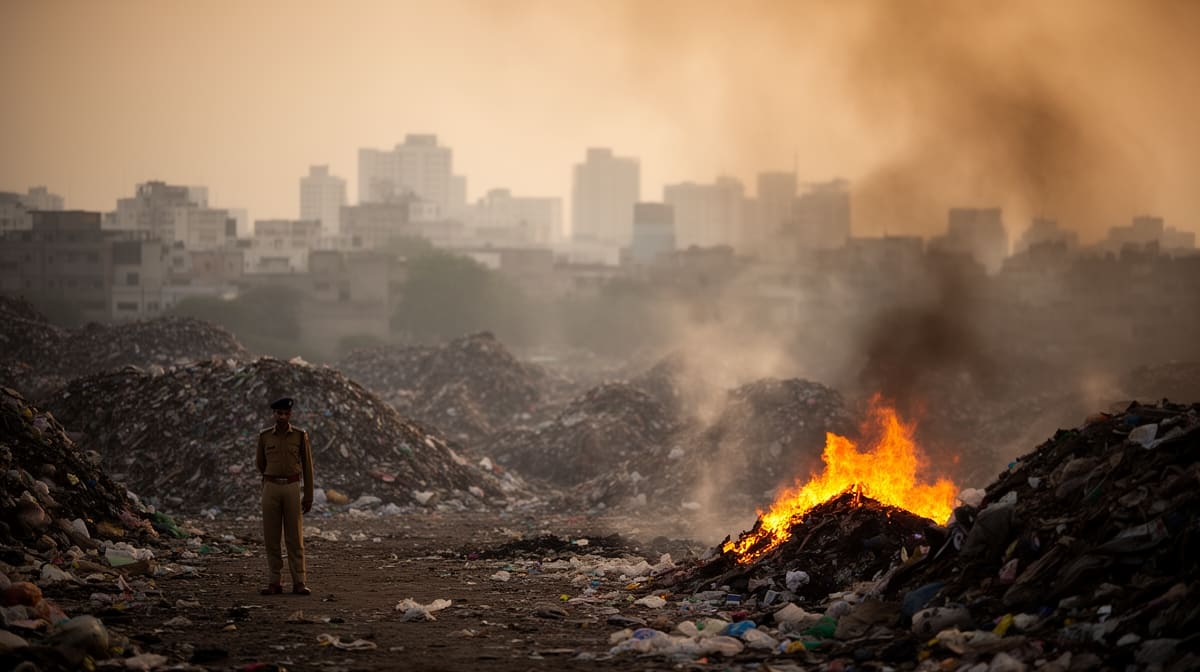
The National Green Tribunal’s interim order in Original Application No.38/2026(CZ) marks a decisive judicial affirmation of the state’s non-negotiable duty to prevent open burning of municipal waste. This case underscores the legal consequences of systemic negligence by municipal authorities and reinforces the enforceability of environmental statutes as fundamental rights under Article 21.
Background & Facts
The Dispute
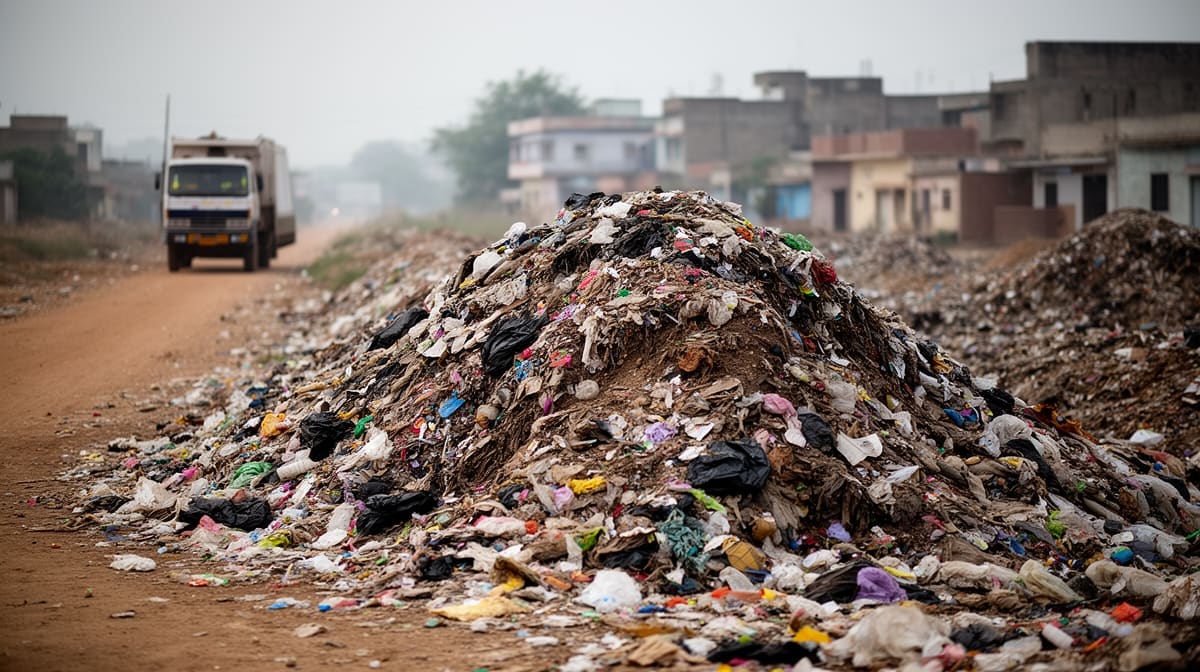
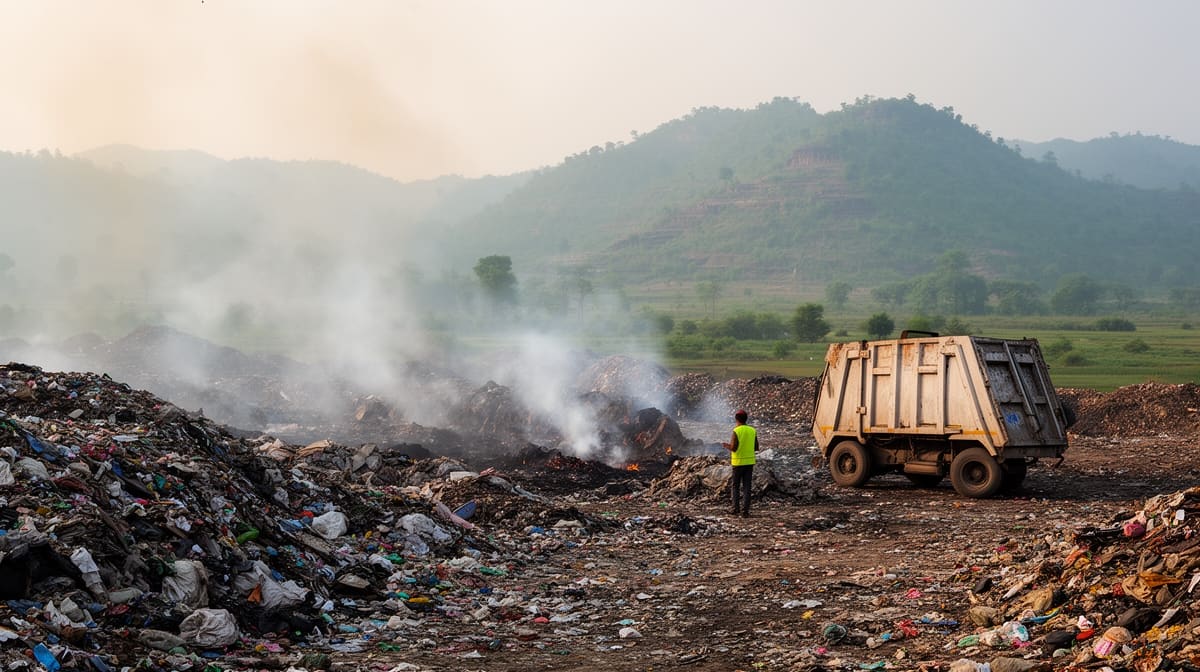
The applicant, Prabhat Pandey, brought forward evidence of illegal open burning of municipal solid waste at the BHEL Dussehra Ground in Bhopal following the conclusion of the Bhopal Utsav Mela. According to a report in the Free Press Journal dated 12.01.2026, sanitation staff of the Bhopal Municipal Corporation deliberately set fire to accumulated garbage, resulting in thick toxic smoke and a sharp deterioration in ambient air quality. The Air Quality Index (AQI) spiked to 315, classified as "hazardous" under the National Air Quality Index standards, posing acute health risks to nearby residents.
Procedural History
The matter was initiated as an Original Application before the National Green Tribunal’s Central Zone Bench in Bhopal. No prior litigation or administrative complaint was cited by the applicant, indicating a direct recourse to environmental jurisprudence under the NGT Act, 2010. The Tribunal treated the newspaper report as a credible trigger for judicial intervention under its suo motu powers and the doctrine of public trust.
Relief Sought
The applicant sought immediate cessation of open burning, accountability of municipal officials, and enforcement of the Solid Waste Management Rules, 2016. The application also invoked the Environment (Protection) Act, 1986, and the Air (Prevention and Control of Pollution) Act, 1981, as statutory bases for relief.
The Legal Issue
The central question was whether open burning of municipal solid waste by a statutory authority constitutes a violation of the Solid Waste Management Rules, 2016, and whether such conduct triggers liability under the Environment (Protection) Act, 1986, even in the absence of a prior complaint or formal notice.
Arguments Presented
For the Petitioner
The applicant relied on Rule 4(1) and Rule 15(1) of the Solid Waste Management Rules, 2016, which prohibit open burning of waste and mandate scientific disposal methods. He cited M.C. Mehta v. Union of India to argue that the state’s duty to protect the environment is non-delegable and that public health emergencies justify immediate judicial intervention. The applicant emphasized that the incident occurred in a densely populated urban zone, amplifying the public harm.
For the Respondent
No written reply was filed at the time of the order. The Tribunal noted the absence of any defense or explanation from the State of Madhya Pradesh or the Bhopal Municipal Corporation, which was treated as an admission of procedural lapse and non-compliance.
The Court's Analysis
The Tribunal held that the public trust doctrine imposes an affirmative obligation on municipal bodies to manage waste in a manner that does not degrade air quality or endanger public health. It observed that Rule 15(1) of the Solid Waste Management Rules, 2016, explicitly prohibits open burning of waste, and that such violations are not excused by operational convenience or festival-related logistics.
"The open burning of municipal solid waste in an urban setting, especially when carried out by statutory functionaries, is not merely a lapse in administration - it is a direct contravention of statutory mandates and a breach of the state’s constitutional obligation under Article 21."
The Court further noted that the Air (Prevention and Control of Pollution) Act, 1981, and the Environment (Protection) Act, 1986, collectively create a framework where pollution from municipal sources is actionable without requiring proof of mens rea. The Tribunal rejected any notion that newspaper reports are insufficient to initiate proceedings, affirming that environmental harm of this magnitude triggers the Tribunal’s jurisdiction under Section 14 of the NGT Act.
The Court emphasized that the continuing nature of the violation - evidenced by recurring incidents of open burning in Bhopal - justified the appointment of a Joint Committee to investigate systemic failures, not merely this isolated event.
The Verdict
The applicant succeeded. The National Green Tribunal held that open burning of municipal waste violates the Solid Waste Management Rules, 2016, and constitutes a breach of environmental law. The Tribunal directed the formation of a Joint Committee to investigate the incident and submit a factual report within six weeks, and mandated strict compliance with e-filing protocols for all submissions.
What This Means For Similar Cases
Municipal Waste Management Is a Non-Discretionary Duty
- Practitioners must now treat Rule 15(1) of the SWM Rules, 2016 as a mandatory prohibition, not a guideline
- Any open burning by municipal staff, even during festivals or clean-up drives, is prima facie illegal
- Local bodies cannot invoke "operational necessity" to justify violations of statutory environmental norms
NGT Will Act on Media Reports as Triggering Evidence
- Newspaper reports documenting environmental harm are sufficient to invoke NGT jurisdiction under Section 14
- No prior complaint to pollution control boards is required to initiate proceedings
- The Tribunal may act suo motu when public health is at imminent risk, even without formal petitions
E-Filing and Document Integrity Are Mandatory
- All submissions to the NGT must be in searchable PDF or OCR-supported format
- Image-based PDFs will be rejected as non-compliant
- This directive ensures transparency and enables independent verification by expert members