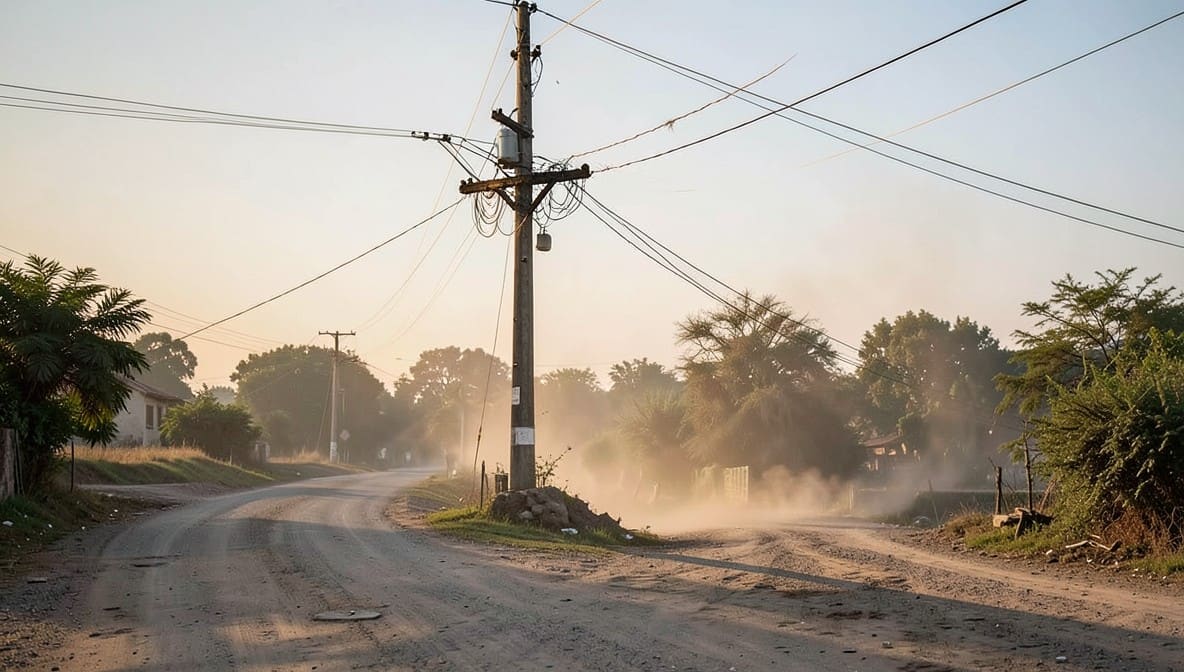
The Gujarat High Court has held that an electricity distribution company bears strict liability for electrocution deaths caused by live wires, even where the dangerous condition originated from a third party's unauthorized tapping. In allowing a first appeal against a trial court decree that fastened sole liability on a property owner, the Division Bench ruled that the statutory duty to prevent escape of dangerous energy rests squarely on the supplier, and the defence of stranger's mischief is unavailable. The Board was directed to pay the decretal amount of Rs. 3,70,000 with 7.5% simple interest from the date of suit within one month.
Background & Facts
The Dispute
The original plaintiffs, heirs of deceased Narsibhai N. Patel, instituted a suit claiming compensation of Rs. 45,90,000 for the death of Hitesh, son of the original plaintiff, aged about 23-24 years. Hitesh was employed with the Surat Municipality drawing a monthly salary of Rs. 3,000 and also assisted in agricultural operations. The appellant, Chunilal Govanbhai Patel, a resident of the same village, had fixed the marriage of his daughter Madhuben on 20.05.2000 and invited the family of the deceased. Pursuant to the invitation, Hitesh went to the appellant's residence and, while rendering assistance in marriage-related work as directed, came into contact with a live electric wire and died on the spot due to electrocution.
Key Facts
- The plaintiffs alleged the appellant, with intention of committing theft of electricity, illegally drew and left exposed live electric wires in a negligent manner, creating a dangerous situation resulting in the fatal accident.
- Defendants Nos. 2 and 3, the electricity distribution companies (Dakshin Gujarat Vij Company Ltd. and another), were alleged to have failed in their statutory duty to prevent electricity theft and ensure safety of supply lines.
- Compensation was claimed under various heads: loss of future earnings for 35 years, loss of agricultural assistance, retirement benefits, mental agony quantified at Rs. 5,00,000, and funeral expenses of Rs. 5,000.
- The appellant initially remained absent and the suit proceeded ex-parte; later he filed a written statement denying the invitation, the alleged theft of electricity, any negligence, and asserting the death occurred due to contact with a wire taken from the field of one Mansingbhai.
- The electricity companies denied liability, contending none of their supply lines had broken and the incident was solely attributable to the private and illegal act of the appellant.
- The suit was registered as Special Civil Suit No. 282 of 2000 and later renumbered as Special Civil Suit No. 44 of 2002.
Procedural History
- 30.09.2006: Learned Civil Court, Navsari passed judgment and decree in Special Civil Suit No. 44 of 2002, partly decreeing the suit. The court held the appellant alone liable for Rs. 3,70,000 (Rs. 2,70,000 towards loss of dependency assessed on notional monthly income of Rs. 2,000 after deducting Rs. 500 personal expenses, applying multiplier of 15; and Rs. 1,00,000 towards mental agony) with simple interest at 7.5% per annum from date of suit till realisation. The amount was to be deposited within 30 days and apportioned: 25% to plaintiff No. 1.1, 25% to plaintiff No. 1.2, 50% to plaintiff No. 2, with 70% of each share in fixed deposit for five years.
- 2011: Appellant preferred First Appeal No. 2043 of 2011 under Section 96 of the Code of Civil Procedure, 1908 before the High Court of Gujarat.
- 07.09.2026: High Court (Division Bench of Justice Ilesh J. Vora and Justice R.T. Vachhani) delivered judgment allowing the appeal.
Relief Sought
The appellant sought quashing of the impugned judgment and decree in their entirety, dismissal of the suit, and alternatively, if liability was to be fastened, that it be shifted to the electricity distribution companies. The respondents (original plaintiffs) sought confirmation of the decree. Defendants Nos. 3 and 4 (electricity companies) sought confirmation of their exoneration.
The Legal Issue
The central question was whether the property owner (appellant) could be held solely liable for an electrocution death caused by an unauthorized temporary electricity connection on his premises during a marriage function, where the official Electrical Inspector's reports consistently attributed the illegal hooking to an "unknown person" and did not name the appellant, and where the electricity distribution company claimed exoneration on the ground that the dangerous condition was created by a stranger's private act.
Arguments Presented
For the Appellant
Learned counsel submitted the trial court's judgment was illegal, perverse, and contrary to settled principles of tort law and evidence. The court attached undue weight to examination-in-chief of plaintiffs' witnesses while overlooking material admissions in cross-examination favouring the appellant. The finding of negligence rested on pure hearsay evidence inadmissible under the Indian Evidence Act. The burden of proving illegal drawing of live wires and negligence lay entirely on plaintiffs and was never discharged. The panchnama related to a field 700-800 metres from appellant's residence, yet the trial court proceeded on assumption the incident occurred at appellant's house. Oral evidence established a cyclone had struck two days earlier with several electric wires lying broken in fields; this crucial circumstance was ignored. The appellant held an authorised electric connection for years with no necessity for unauthorised connection. In criminal proceedings under Sections 39 and 43 of the Indian Electricity Act, the appellant was acquitted; this fact was not adverted to. Reliance was placed on H.S.E.B. and Others v. Ram Nath and Others, (2004) 5 SCC 793.
For the Respondents (Original Plaintiffs) and Defendants Nos. 1.1, 1.2, 2
Learned counsel submitted the trial court rightly decided Issues 1 to 3 in favour of plaintiffs. The invitation card (Exh. 66) established the appellant invited the family. Dilipbhai Narsinhbhai (Exh. 65) deposed Hitesh went to appellant's residence and contacted the live wire drawn by appellant through unauthorised hook. The panchnama, recovery of wire and hook, and Inspector's report (Exh. 121/122) corroborated the temporary connection was made for the marriage and current passed through galvanised wire of the mandap which Hitesh was holding. The plea of hearsay was misconceived; factum of death by electrocution was undisputed; cause and responsible person stood proved by contemporaneous documents and surrounding circumstances. The cyclone and authorised connection did not exonerate appellant from specific temporary theft. The criminal case outcome was neither binding nor relevant in the civil proceeding founded on negligence. On quantum, the trial court adopted a just and conservative approach: notional income of Rs. 2,000 per month for a young graduate, personal deduction of Rs. 500, multiplier of 15 years yielding Rs. 2,70,000; Rs. 1,00,000 towards mental agony to mother was moderate. Brothers, as legal heirs, were rightly awarded a share.
For Defendants Nos. 3 and 4 (Electricity Distribution Companies)
Learned counsel submitted the companies supported the trial court's findings absolving them. The trial court correctly held on Issues 1 to 4 that the unauthorised temporary connection was drawn by the appellant alone on 20.05.2000 by fixing a hook on the GEB line near Mansingbhai's well/DP and extending a PVC wire towards his premises. The Inspector's report, panchnama, and recovery of burnt wire and hook the next day established the act was private, clandestine, and of one-day duration only. No application for temporary supply was made. The companies had neither knowledge nor opportunity to detect or prevent the temporary theft. The ordinary statutory duty to maintain supply lines and check unauthorised connections cannot be stretched to cover a purely private and momentary act by a consumer on a single day. Once the trial court found appellant alone created the dangerous situation, the companies stood rightly exonerated.
The Court's Analysis
The High Court conducted a meticulous examination of the documentary evidence, particularly the reports of the Electrical Inspector (Exh. 118, 121, 122) and the site sketch (Exh. 123). The deposition of the Electrical Inspector (Exh. 118) revealed he never visited the place of occurrence, had no personal knowledge, and admitted all papers collected during inquiry were not produced. The witness stated the report did not fasten liability on the Board. The Court held: "In the absence of the author of the report having been examined and in the light of the clear admission that the complete set of papers was never placed on record, the contents of the report cannot be pressed into service for drawing an inference of negligence against the appellant on the basis of assumptions and presumptions."
The report at Exh. 121 recorded the fatal accident did not occur due to any defect in the Board's line or system, but took place in a private field belonging to the appellant on account of electricity drawn by "some unknown person" in an unauthorised manner. The report noted no unauthorised wiring was found at the time of inspection as it had already been removed. Significantly, throughout the report the act of putting the hook and drawing the temporary connection was attributed only to "some unknown person," and nowhere was the appellant named. The detailed structured report at Exh. 122 similarly recorded that specific responsibility could not be fastened upon any particular person, and the cause was attributed solely to "some unknown person."
The Court observed: "The consistent use of the expression 'by some unknown person' in both Exh. 121 and Exh. 122 assumes significance, more particularly when the temporary connection itself was not found existing at the time of inspection and had already been removed." The site sketch (Exh. 123) placed the origin of the alleged hook near the well of Mansingbhai, not immediately adjoining the appellant's residential house, and contained no endorsement attributing the act to the appellant.
The appellant's deposition (Exh. 130) disclosed a clear and consistent stand that electricity for the marriage was obtained from his own authorised domestic connection, he had no knowledge of any unauthorised arrangement, and he produced the certified copy of the criminal court judgment (Exh. 131) acquitting him under the Indian Electricity Act. The trial court discarded the entire deposition without cogent reason and fastened liability on conjectures rather than positive evidence.
Turning to the principle of strict liability, the Court relied on Karnataka Power Transmission Corporation Ltd. v. Rekha and Others, 2026 LiveLaw (SC) 799, Rajasthan State Electricity Board and Another v. Varda and Another, 2026 SCC OnLine Raj 4392, Parvati Devi v. Commissioner of Police, Delhi, (2000) 3 SCC 754, and Madhya Pradesh Electricity Board v. Shail Kumari, (2002) 2 SCC 162. The Court quoted the Supreme Court in Shail Kumari: "It is no defence on the part of the management of the Board that somebody committed mischief by siphoning such energy to his private property and that the electrocution was from such diverted line. It is the look out of the managers of the supply system to prevent such pilferage by installing necessary devices."
The Court further cited H.S.E.B. and Others v. Ram Nath and Others, (2004) 5 SCC 793, holding an electricity company carries on an inherently dangerous business and must ensure no injury results from its activities. The principle of strict liability, read with Sections 63 and 68 of the Electricity Act, 2003 relating to safety of supply and overhead lines, squarely applied. The Board miserably failed to prove its stance to relieve itself from responsibility. The investigation was not proved in accordance with the law of evidence. The primary duty to prevent escape of dangerous energy rests on the Board.
The Verdict
The appellant succeeded. The High Court allowed the First Appeal, set aside the trial court's finding of exclusive liability against the appellant, and held Dakshin Gujarat Vij Company Ltd. (original defendant No. 2) responsible for the occurrence. The Board was directed to deposit the decretal amount of Rs. 3,70,000 with simple interest at 7.5% per annum from the date of suit (as awarded by the judgment dated 30.09.2006) before the Learned Civil Court, Navsari, within one month. The appellant was granted liberty to withdraw the decretal amount already deposited, and the Registry was directed to release the same after due verification. The appeal was disposed of in these terms.
What This Means For Similar Cases
Electricity Supplier's Strict Liability Is Non-Negotiable
The judgment reinforces that electricity distribution entities bear strict liability for electrocution deaths arising from their supply network, irrespective of whether the immediate dangerous condition was created by a third party's unauthorized tapping. The supplier cannot escape liability by pleading the act of a stranger. The statutory duty under Sections 63 and 68 of the Electricity Act, 2003 to maintain safety of supply and overhead lines imposes an affirmative obligation to install devices preventing pilferage and to ensure live wires do not remain accessible. Practitioners should invoke this principle in all electrocution claims against distribution companies, even where the accident occurs on private premises.
Official Reports Must Be Proved Strictly; "Unknown Person" Findings Cut Both Ways
The Court's refusal to rely on the Electrical Inspector's reports - because the author was not examined, the complete inquiry papers were not produced, and the reports themselves attributed the illegal act to an "unknown person" - establishes a critical evidentiary benchmark. Where official reports do not specifically name the alleged wrongdoer, courts cannot fill the gap by presumption based on proximity or ownership of premises. Lawyers must scrutinize whether statutory reports are properly proved under the Indian Evidence Act and whether they actually inculpate the defendant, rather than merely describing the incident generically.
Criminal Acquittal Has Persuasive Value in Civil Tort Claims
While not binding, the appellant's acquittal in the criminal proceedings under the Indian Electricity Act was treated as a relevant circumstance weighing against civil liability founded on the same factual allegations. In cases where civil and criminal proceedings arise from the same incident, practitioners should ensure the criminal court's findings are placed on record and argued as supporting the absence of culpable act by the defendant, particularly when the civil liability is sought to be imposed on the basis of assumptions rather than direct evidence.
Quantum Principles for Electrocution Deaths: Notional Income and Multiplier Approach
The Court upheld the trial court's conservative quantification: notional monthly income of Rs. 2,000 for a young graduate, personal expense deduction of Rs. 500, multiplier of 15 years (yielding Rs. 2,70,000), and Rs. 1,00,000 for mental agony to the mother. The judgment notes that Motor Vehicles Act multiplier formulas cannot be strictly applied mutatis mutandis to electrocution claims under the Electricity Act, 2003, and compensation must be determined on the principle of just, fair, and reasonable compensation based on proven income and relevant facts. This provides a framework for arguing quantum in similar electrocution fatalities where formal employment proof is lacking.