The National Consumer Disputes Redressal Commission has reaffirmed that state agencies cannot deny financial benefits to industrial entrepreneurs when their own failures to provide essential infrastructure and inputs directly cause business closure. This ruling clarifies the scope of state liability under the Consumer Protection Act when public services are deficient.
Background & Facts
The Dispute
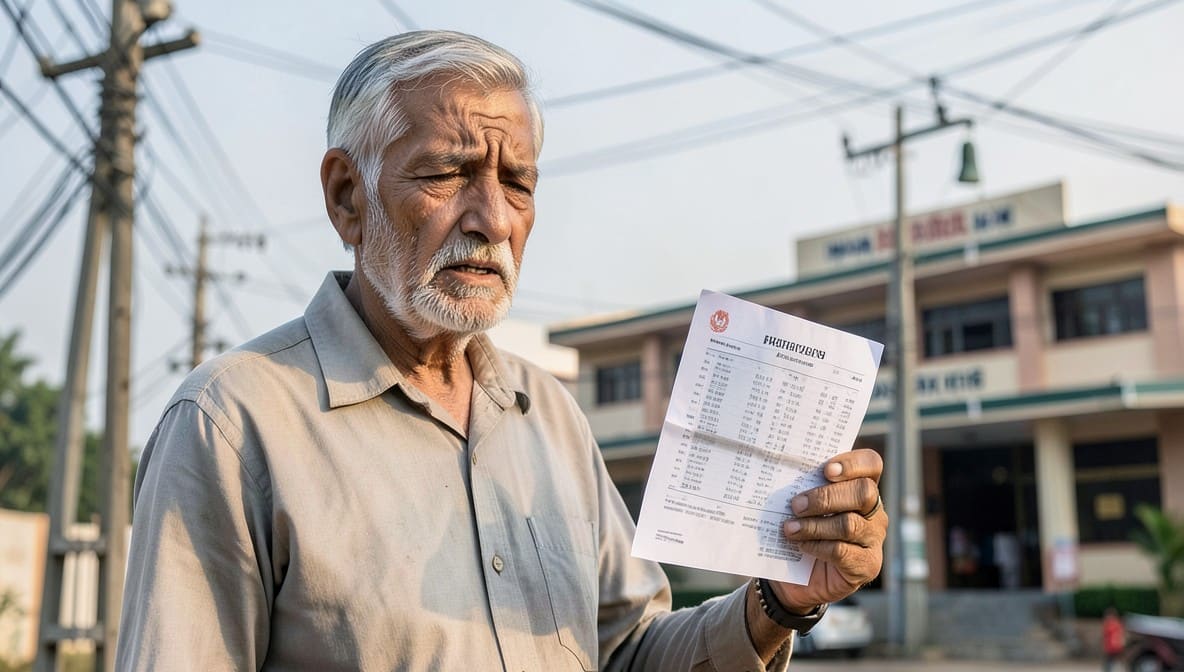
The petitioner, Rajendra Kumar Tiwari, a postgraduate unemployed youth from Amethi, Uttar Pradesh, applied in 1994 for the allotment of Industrial Shed C-1 in the Industrial Area, Bhetua, through the Uttar Pradesh State Industrial Development Corporation (UPSIDC). He sought to establish a unit for manufacturing and selling cattle feed using molasses as the primary raw material. He paid an initial fee of Rs. 5,200/- for the shed allotment and deposited Rs. 44,214.70/- towards the cost of the shed. He also submitted a Project Report and applied to the Excise Department for the supply of molasses, a controlled substance.
Key Facts
- The petitioner was granted allotment of Industrial Shed C-1 in 1994.
- He deposited Rs. 44,214.70/- for the shed and received a subsidy of Rs. 31,599/- under the State Capital Subsidy Scheme.
- The subsidy scheme required continuous operation of the unit for five years to retain eligibility.
- The petitioner applied for molasses supply under the Excise Department’s controlled item policy.
- The District Magistrate, Sultanpur, recommended molasses supply in writing.
- The District Industries Centre (DIC) and other agencies failed to provide reliable electricity and infrastructure.
- Despite repeated requests, molasses was never supplied.
- An inspection on 16.08.1996 revealed the unit was closed.
- A notice dated 19.09.1996 was issued seeking explanation; the petitioner responded but no corrective action followed.
- A senior officers’ meeting on 29.02.2000 cancelled the subsidy on grounds of non-operation.
- The petitioner had not sold machinery or abandoned the unit voluntarily; closure was due to lack of inputs.
Procedural History
- 1997: Petitioner filed Consumer Complaint No. 531/1997 before the District Consumer Forum, Sultanpur.
- 12.02.2001: District Forum held that Respondents 4 to 6 (Excise Authorities) were guilty of deficiency in service and directed them to pay Rs. 1,00,000/- as compensation and Rs. 1,000/- as litigation cost. It also directed Respondents 1 to 3 to refund the subsidy amount of Rs. 31,599/- and deposited shed amount of Rs. 34,214.70/-. The refund was to be made within 60 days.
- 31.08.2015: State Consumer Disputes Redressal Commission, Uttar Pradesh, allowed the appeal filed by Respondents 1 to 3. It held that since the unit did not operate for five years, the subsidy and deposited amount were forfeitable under the scheme. The rest of the District Forum’s order was upheld.
- 02.04.2026: Revision Petition filed before the National Consumer Disputes Redressal Commission.
The Parties' Positions
For the Petitioner: Argued that he was a consumer under the Consumer Protection Act, 1986, having paid for shed allotment and relied on state agencies for essential services. The failure to supply molasses and electricity was attributable to the state, not his default. The cancellation of subsidy was arbitrary and punitive, violating principles of natural justice.
For Respondents 1 to 3: Contended that the subsidy scheme explicitly required five years of continuous operation. The unit was closed as per inspection on 16.08.1996, and the petitioner failed to respond adequately to the show-cause notice. The cancellation was procedurally valid under the scheme.
Relief Sought
The petitioner sought restoration of the District Forum’s order dated 12.02.2001, directing refund of Rs. 31,599/- as subsidy and Rs. 34,214.70/- as deposited shed amount, along with confirmation of the Rs. 1,00,000/- compensation against the Excise Authorities.
The Legal Issue
The central question was whether a consumer who has paid for an industrial shed and relied on state agencies for essential inputs can be denied subsidy and deposited amounts under a government scheme when the failure to operate for five years was caused solely by the state’s deficiency in service.
Arguments Presented
For the Petitioner
The petitioner’s counsel relied on the Consumer Protection Act, 1986, emphasizing that the definition of consumer includes any person who hires or avails of any service for a consideration. He cited the District Magistrate’s recommendation for molasses supply, the Certificate of Readiness for Production, and minutes of the Udyog Bandhu meeting as proof of state’s commitment. He argued that the state’s failure to provide molasses and electricity rendered the unit non-viable, making the petitioner’s non-compliance with the five-year condition involuntary. He invoked principle of equity and doctrine of estoppel, asserting that the state cannot benefit from its own default.
For the Respondent
The counsel for Respondents 1 to 3 relied on the explicit terms of the State Capital Subsidy Scheme, which mandated five years of continuous operation. They cited the inspection report of 16.08.1996 and the non-responsive reply to the notice dated 19.09.1996 as evidence of abandonment. They argued that the subsidy was a conditional grant, not a contractual obligation, and that the cancellation followed due process under the scheme’s rules.
The Court's Analysis
The Commission examined the nature of the transaction: the petitioner paid for an industrial shed and relied on the state to provide essential services without which the enterprise could not function. The Court noted that molasses was a controlled item, and its supply was entirely within the discretion of the Excise Department. The District Magistrate’s recommendation was not merely advisory - it was an official endorsement of the petitioner’s eligibility.
"The Complainant was undoubtedly under obligation to pay for such supply of Molasses which would therefore bring him within the meaning of a 'Consumer'. He could not run his Unit on account of not only non-supply of electricity on behalf of the Respondent Nos.7 & 8, but also due to non-supply of Molasses by the concerned Excise Authorities of the State of Uttar Pradesh which disabled him for running his Unit."
The Court rejected the argument that the petitioner’s failure to operate for five years justified forfeiture. It held that the state cannot invoke contractual conditions to deny benefits when its own inaction is the root cause of non-performance. The State Commission erred in treating the petitioner as a defaulting beneficiary when the deficiency lay squarely with the state agencies.
The Commission emphasized that the Consumer Protection Act is a welfare legislation designed to protect individuals who enter into transactions with public authorities for services. The state, as a service provider, cannot evade liability by invoking technical conditions when its own conduct is the proximate cause of failure.
The Verdict
The Revision Petition was allowed. The impugned order dated 31.08.2015 of the State Consumer Disputes Redressal Commission was set aside. The original order of the District Consumer Forum dated 12.02.2001 was restored. Respondent Nos. 1 to 3 were directed to refund the subsidy amount of Rs. 31,599/- and the deposited shed amount of Rs. 34,214.70/- to the petitioner. Respondent Nos. 4 to 6 were directed to pay compensation of Rs. 1,00,000/- and litigation cost of Rs. 1,000/-. Parties were directed to bear their own costs.
What This Means For Similar Cases
State Cannot Use Its Own Failure as Ground for Denial
- Practitioners must argue that when a state agency fails to deliver a service integral to a subsidized enterprise, the beneficiary cannot be penalized for non-compliance with conditions tied to that service.
- This applies to subsidies under industrial, agricultural, or MSME schemes where infrastructure, utilities, or raw material supply are state responsibilities.
Consumer Status Extends to Public Service Transactions
- The judgment reinforces that individuals who pay for services from public bodies (e.g., shed allotment, utility connections, permits) qualify as consumers under the Act.
- Government departments acting as service providers are subject to the same liability as private entities for deficiency.
Subsidy Conditions Are Not Absolute
- Conditional grants must be interpreted in light of the principle of utmost good faith.
- If the state creates a dependency (e.g., by recommending molasses supply), it cannot later use non-fulfilment of conditions to forfeit benefits.
- Legal notices and inspections must be evaluated in context: silence or non-response does not equate to abandonment if the cause of failure is external and attributable to the state.
Documentary Evidence Prevails
- Official recommendations, meeting minutes, and inspection reports carry greater weight than generic scheme conditions.
- Practitioners should prioritize collecting and submitting contemporaneous official communications to establish state liability.
Burden of Proof Shifts to the State
- Once the consumer establishes that essential inputs were withheld by the state, the burden shifts to the state to prove that the failure was not due to its own negligence or inaction.
- This creates a new threshold for defending subsidy cancellations in consumer forums.