The Delhi State Consumer Disputes Redressal Commission dismissed an appeal challenging the District Commission’s order that upheld the electricity provider’s sanctioned load at 6 kW and directed the consumer to pay the outstanding 50 % of a disputed bill. Holding that the consumer had suppressed the fact of an earlier dismissed complaint, the Commission affirmed that no deficiency of service or unfair trade practice was established, reinforcing the principle that material non-disclosure can defeat a consumer claim.
Background & Facts
The Dispute
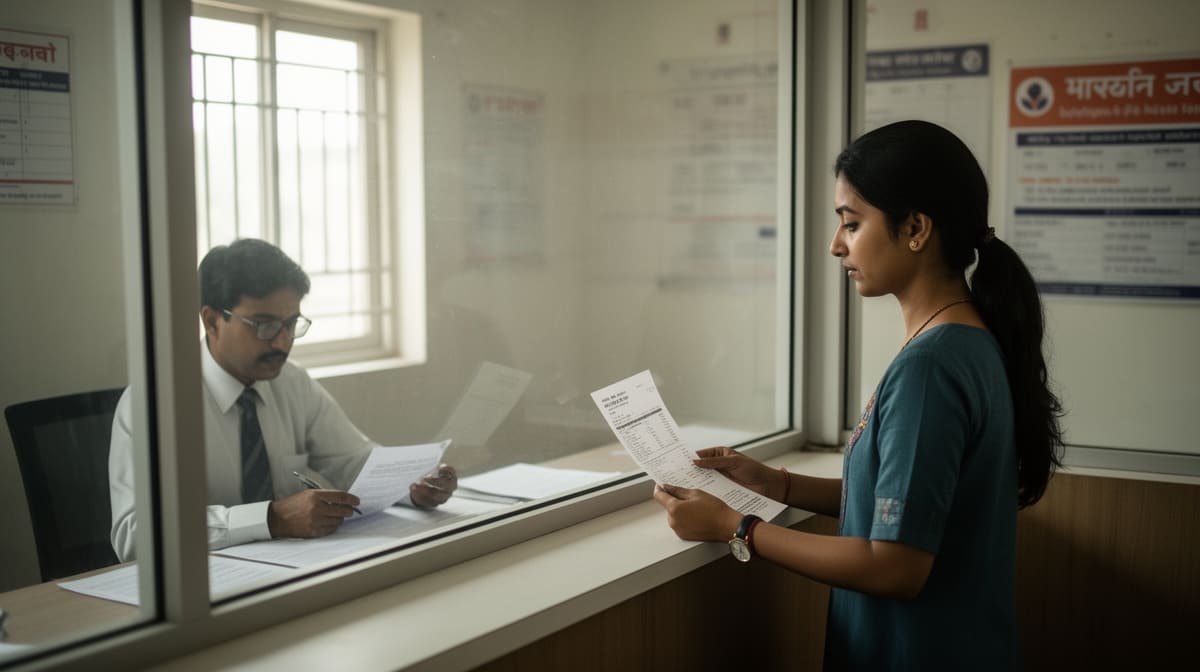
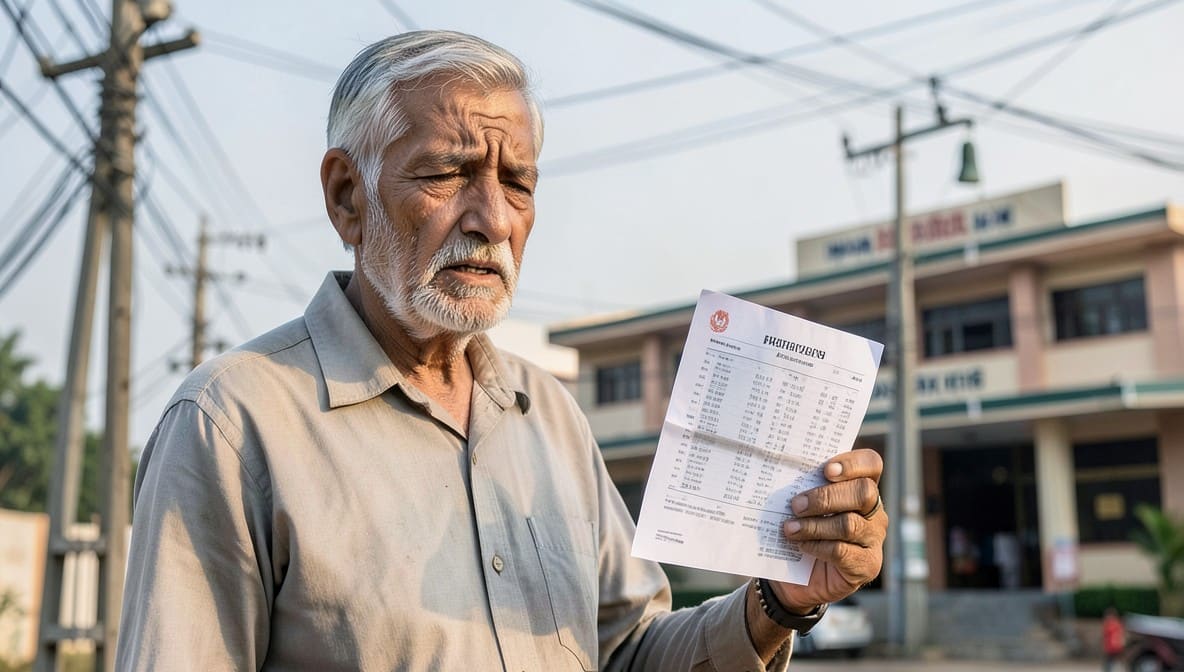
The appellant, Mr. Nityanand Khatua, a residential electricity consumer in Shalimar Bagh, Delhi, challenged the respondent TPDDL Ltd.’s unilateral increase of the sanctioned load from 3 kW to 6 kW, which resulted in inflated bills. He sought revision of the bills for July and August 2019, refund of excess charges, restraint on disconnection, and compensation of ₹50,000 for harassment.
Key Facts
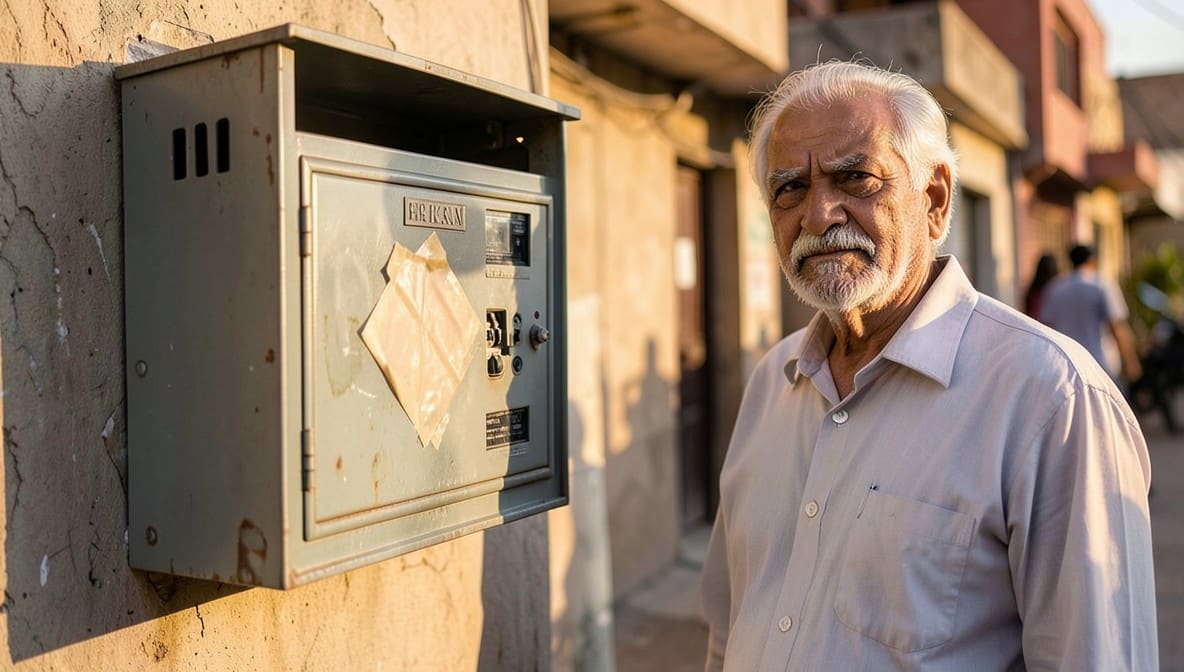
- The consumer’s meter (CA No.60012926279) recorded regular bill payments.
- TPDDL increased the sanctioned load to 6 kW without intimation, raising fixed and energy charges.
- The consumer installed a 1.5 ton AC used only in summer.
- Bill dated 09.07.2019: ₹5,300 (current demand ₹5,297, arrears ₹8.57, sanctioned load 6 kW, NTA amount ₹1,658.13 due to pending case No.749/2018).
- Bill dated 13.08.2019: ₹12,810 (current demand ₹5,684.40, arrears ₹5,305.78, non-energy ₹1,508, LPSC ₹319.51).
- On 30.04.2019 the consumer applied to TPDDL for load reduction from 6 kW to 3 kW.
- TPDDL served a disconnection notice on 13.08.2019 and sent threatening text messages.
- The consumer paid 50 % of the ₹12,810 bill (₹6,405) on 30.08.2019 pursuant to an interim order.
- Security deposits: ₹1,600 (09.05.2013), ₹600 (27.05.2017), ₹1,200 (14.06.2018).
- MDI readings used for load revision: 8.200 kW (17.06.2017), 6.10 kW (22.07.2017), 5.360 kW (24.08.2017).
- Earlier complaint No.749/2018 was dismissed in default on 26.07.2019.
- The District Commission passed order on 01.07.2024 directing payment of the remaining 50 % of the ₹12,810 bill and load reduction from 6 kW to 3 kW.
Procedural History
- 09.05.2013: Security deposit of ₹1,600 made.
- 27.05.2017: Security deposit of ₹600 made.
- 14.06.2018: Security deposit of ₹1,200 made.
- 17.06.2017: MDI 8.200 kW recorded.
- 22.07.2017: MDI 6.10 kW recorded.
- 24.08.2017: MDI 5.360 kW recorded.
- 12.07.2018: Bill No.10103333125 for ₹11,178.62 issued.
- 30.04.2019: Consumer applied for load reduction from 6 kW to 3 kW.
- 09.07.2019: Bill of ₹5,300 issued.
- 13.08.2019: Bill of ₹12,810 issued; disconnection notice served.
- 16.07.2019: TPDDL letter No.CSM(D)SMB/2019-20/58/D/101 stating matter subjudice.
- 26.07.2019: Earlier complaint No.749/2018 dismissed in default.
- 30.08.2019: Interim order; consumer paid 50 % of the bill (₹6,405).
- 01.07.2024: District Commission order passed (remaining 50 % payable, load reduction directed).
- 27.07.2024: Appeal instituted (FA/501/2024).
- 10.08.2026: Date of hearing.
- 16.10.2026: Date of judgment.
Relief Sought
The appellant sought: (i) revision of the bills dated 09.07.2019 and 13.08.2019 reflecting a sanctioned load of 3 kW; (ii) direction to TPDDL not to disconnect electricity supply; (iii) refund of amounts allegedly excess charged on the 6 kW load; (iv) compensation of ₹50,000 for harassment, pain and agony; and (v) litigation costs.
The Legal Issue
The central question was whether the District Commission erred in directing the respondent to reduce the sanctioned load from the date of its order rather than from the date of the appellant’s request (April 2019), and whether the appellant’s failure to disclose the earlier dismissed complaint No.749/2018 defeated his claim of deficiency of service and entitlement to compensation under the Consumer Protection Act, 2019.
Arguments Presented
For the Appellant/Petitioner
The appellant contended that TPDDL had collected money unfairly by inflating the sanctioned load without justification, that the load-reduction direction should operate from the date of his request (April 2019), and that the District Commission ignored evidence of unfair trade practice. He relied on Anvar P.V. vs. P.K. Basheer & Ors. (AIR 2015 SC 180) for electronic evidence principles, Arjun Panditrao Khotkar vs. Kailash Kushanrao Gorantyal (AIR 2020 SC 4908) for secondary evidence, and Ravinder Singh @ Kaku vs. State of Punjab (decided 04.05.2022) regarding appreciation of digital evidence.
For the Respondent/State
The respondent submitted that no error existed in the impugned order, that the application for load reduction was not considered due to the pending earlier complaint No.749/2018 as per the letter dated 16.07.2019, and that the appellant’s non-compliance caused any delay. It cited Revision Petition No.809 of 2023: H. Wadhwa vs. BSES Rajdhani Power (decided 07.05.2024) and Writ Petition No.32216 of 2021: YKM Entertainments and Hotels Pvt. Ltd. vs. SBI (decided 17.01.2022) to support the view that the Commission’s findings were correct.
The Court's Analysis
The Commission first noted that the appellant had concealed the fact of an earlier dismissed complaint (No.749/2018) on the same cause of action, which constituted suppression of material facts. It held that, as per the record, the appellant failed to establish any deficiency of service or unfair trade practice on the part of TPDDL. The increase in sanctioned load was found to be based on Maximum Demand Indicator (MDI) readings for June, July and August 2017, and the respondent’s reliance on such data was in accordance with Regulation 17(4) of the DERC (Supply Code and Performance Standards) Regulations, 2017. The Commission observed that the direction to reduce the load from 6 kW to 3 kW required a reasonable time for implementation, and therefore ordering the reduction from the date of the District Commission’s order was appropriate. It further emphasized that the appellant had already paid 50 % of the bill pursuant to an interim order and that the remaining 50 % was legitimately payable. The Commission quoted:
"From the above discussion, we find no infirmity in the order dated 01.07.2024. Consequently, we are in agreement with the reasons given by the District Commission and fail to find any cause or reasons to reverse the findings of the District Commission. Therefore, we uphold the order dated 01.07.2024 passed by the District Consumer Disputes Redressal Commission-V, North -West District, Govt. of NCT of Delhi , CSC -Block -C, Pocket-C, Shalimar Bagh, Delhi -1100 88."
Having found no infirmity, the Commission dismissed the appeal, affirmed the District Commission’s order, and directed compliance with its operative directions.
The Verdict
The respondent TPDDL succeeded. The Commission upheld the District Commission’s order dated 01.07.2024, directing the appellant to pay the remaining 50 % of the electricity bill dated 13.08.2019 (amounting to ₹6,405) within one month of receipt of the order, restrained the respondent from disconnecting supply pending compliance, and directed the respondent to initiate the load-reduction process from 6 kW to 3 kW within one month, with the appellant to complete all commercial formalities within the same period. No costs were awarded.
What This Means For Similar Cases
Material Non-Disclosure Can Defeat a Consumer Claim
- A consumer who conceals a prior dismissed complaint on the same cause of action risks having the current claim rejected.
- The burden lies on the consumer to disclose all material facts; suppression undermines the allegation of deficiency of service.
Load-Reduction Directions Require a Reasonable Implementation Period
- Utilities must be afforded a reasonable time to give effect to load-reduction orders; the date of the order, not the date of the consumer’s request, may be the appropriate starting point.
- Consumers must complete all requisite commercial formalities within the stipulated period to avoid being deemed non-compliant.
Utility Providers’ Actions Based on MDI Data Are Lawful Absent Deficiency
- When a sanctioned load is revised on the basis of verified Maximum Demand Indicator readings, the provider’s action is presumed to be in accordance with applicable regulations.
- Absent proof that the revision was arbitrary or resulted in excess charging, no liability for unfair trade practice arises.