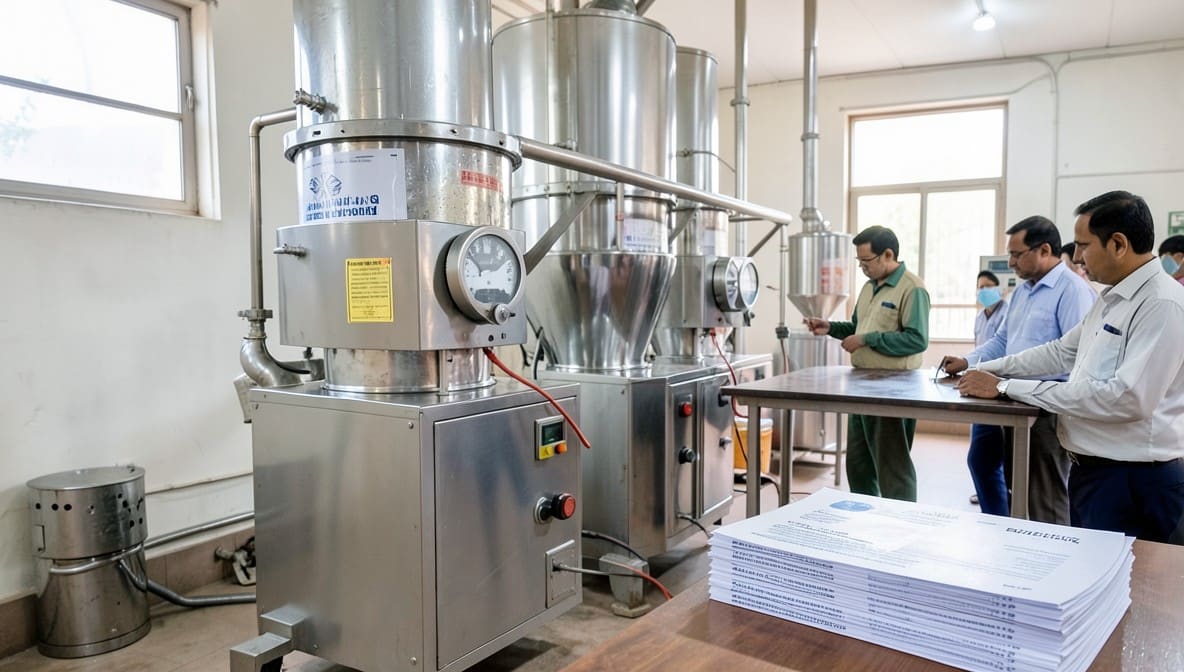
The Andhra Pradesh High Court, in a common order dismissing over 50 writ petitions, held that the Standard Operating Procedures (SOPs) issued by the Department of Food and Public Distribution (DFPD) for quality control of fortified rice are binding on all stakeholders, including rice millers. The Court ruled that the finality of test results under the appeal procedure precludes judicial interference, even where millers alleged procedural irregularities in sample collection and testing. The judgment underscores the strict compliance required under government schemes aimed at addressing micronutrient deficiencies through the Public Distribution System (PDS).
Background & Facts
The Dispute
The petitioners, registered partnership firms engaged in rice milling, entered into contracts with the Andhra Pradesh State Civil Supplies Corporation Limited (APSCSCL) for supplying Custom Milled Rice (CMR) to the Food Corporation of India (FCI) under the Kharif Marketing Season (KMS) 2022-23. The Government of India introduced a scheme for fortification of rice to address nutritional deficiencies, mandating blending of Fortified Rice Kernels (FRK) with CMR in a 1:100 ratio using automatic blending machines. The petitioners complied with these norms and supplied fortified rice to FCI through APSCSCL.
Key Facts
- 15.03.2016: Petitioners began supplying CMR to FCI under contractual agreements.
- 04.05.2023: FCI issued proceedings (Lr. No. QC 2(2)/FRK/KMS 2022-2023/LAB) stating samples of FRK rice supplied by petitioners failed micronutrient tests (Folic Acid, Vitamin B12, and iron).
- 08.08.2023: FCI directed APSCSCL to replace non-compliant stocks and stop further deliveries from petitioners.
- 09.04.2024: FCI collected fresh samples in the presence of millers, which were found compliant with FSSAI standards.
- 24.04.2024: FCI Regional Office granted ad hoc approval to accept CMR from petitioners pending final decision.
- 10.06.2024: DFPD declared test results final under Clause 9 of the Procedure for Appeal dated 15.03.2023, directing replacement of non-compliant stocks.
- 30.08.2024: FCI Regional Office directed APSCSCL to replace 52 stacks of non-compliant fortified rice.
- 2016-2024: Petitioners’ pending bills for supplied rice remained unreleased.
Procedural History
- Multiple dates (2024-2025): Petitioners filed Writ Petition Nos. 26620/2024 & batch before the Andhra Pradesh High Court, challenging:
- FCI’s letters dated 02.09.2024, 13.11.2024, 15.10.2024, and 16.10.2024 directing stock replacement.
- Non-release of pending bills from FY 2016-17 to FY 2023-24.
- Alleged violation of principles of natural justice in sample collection and testing.
- 23.02.2026: Court heard arguments and reserved the order.
- 17.06.2026: Common order dismissing all writ petitions.
The Parties' Positions
Petitioners’ Contentions
- No Control Over FRK Composition: Petitioners argued their role was limited to blending FRK (supplied by APSCSCL) with CMR in the prescribed ratio. They had no control over micronutrient levels.
- Procedural Irregularities: Samples were initially collected in their absence, violating principles of natural justice. Later samples, collected in their presence, were found compliant.
- Stock Not for Human Consumption: Fortified rice supplied was diverted for ethanol production, rendering micronutrient deficiencies irrelevant.
- Ad Hoc Approval: FCI’s letter dated 24.04.2024 granted temporary approval for CMR acceptance, pending final decision.
Respondents’ Contentions
- Strict SOP Compliance: FCI and DFPD acted in accordance with:
- SOP dated 16.07.2021 (Quality Monitoring of Food Grains).
- SOP dated 15.03.2022 (Quality Management Protocols for FRK/Fortified Rice).
- Operational Guidelines dated 13.12.2022 (Quality Control for FRK/Fortified Rice).
- Procedure for Appeal dated 15.03.2023 (Appeal against rejection of FR stocks).
- Surprise Inspections: SOP dated 16.07.2021 permits surprise inspections without prior notice.
- Finality of Test Results: Clause 9 of the Procedure for Appeal states results of review samples are final and binding on all stakeholders.
- Millers’ Duty to Verify FRK: Annexure-2 of Operational Guidelines mandates millers to cross-check FRK sanctity via random testing at FSSAI-notified labs.
- No Privity of Contract: FCI’s contractual obligations were with APSCSCL, not the petitioners.
Relief Sought
Petitioners sought:
- Declaration of impugned letters as illegal and arbitrary.
- Direction to FCI to allow supply of FRK rice and implement the 24.04.2024 ad hoc approval.
- Release of pending bills with interest from FY 2016-17 onwards.
The Legal Issue
The central question was whether the impugned orders directing petitioners to replace non-compliant fortified rice stocks warranted interference under Article 226 of the Constitution of India, given:
- The binding nature of SOPs issued by DFPD.
- The finality of test results under the appeal procedure.
- The alleged violation of principles of natural justice in sample collection.
Arguments Presented
For the Petitioners
- Relied on absence of prior notice for sample collection, arguing it violated principles of natural justice.
- Contended that micronutrient levels were exclusively determined by FRK suppliers (APSCSCL), not millers.
- Argued that retested samples (collected in millers’ presence) were compliant, rendering replacement directions untenable.
- Highlighted FCI’s ad hoc approval dated 24.04.2024 as binding.
For the Respondents
- Cited Chandigarh Administration v. Jagjit Singh ((1995) 1 SCC 745) to argue that illegal orders cannot be repeated merely because one was passed earlier.
- Relied on Nalgonda District Rice Millers Association v. Union of India (MANU/TL/O405/2025) to assert that surprise inspections under SOP do not require prior notice.
- Emphasized strict adherence to SOPs, which provide for appeal and review mechanisms.
- Argued that millers failed to cross-check FRK sanctity as mandated by Operational Guidelines.
The Court's Analysis
The Court conducted a multi-pronged analysis of the legal and factual matrix:
-
Binding Nature of SOPs The Court held that the SOPs and Operational Guidelines issued by DFPD were binding on all stakeholders, including rice millers. These documents were framed to ensure quality and nutritional standards in fortified rice supplied under government schemes. The Court noted:
"The Department of Food and Public Distribution, vide SOP dated 15.03.2022 for Quality Management Protocols for FRKs, defined the responsibility of all the stakeholders, including Rice Millers and the State Government."
-
Surprise Inspections and Natural Justice The Court rejected the petitioners’ argument that sample collection in their absence violated principles of natural justice. It held:
- SOP dated 16.07.2021 explicitly permits surprise inspections without prior notice.
- Clause A.2(b) of the SOP allows inspections at any time without notifying concerned authorities.
- Confidentiality and Avoidance of Undue Influence: Presence of millers during inspections could compromise the process.
- No Statutory Mandate: Petitioners failed to cite any provision requiring millers’ presence during inspections.
-
Millers’ Duty to Verify FRK The Court held that millers had a duty to cross-check FRK sanctity under Annexure-2 of the Operational Guidelines dated 13.12.2022, which mandates random testing at FSSAI-notified labs. The Court observed:
"As per the Operational Guidelines dated 13.12.2022, a duty is cast on the rice millers to cross-check the sanctity of the FRK supplied by the FRK manufacturers or suppliers by testing a sample at FSSAI-Notified NABL-Accredited Lab, on random basis." Since petitioners failed to adduce evidence of such cross-checking, their plea of no liability for micronutrient content was rejected.
-
Finality of Test Results Under Appeal Procedure The Court upheld the finality of test results under Clause 9 of the Procedure for Appeal dated 15.03.2023, which states:
"The results of the review sample tested at referral/appellate labs of the Ministry are final and cannot be challenged by any agencies/stakeholders." The Court noted:
- Samples were tested thrice (primary, appeal, and review stages) and found non-compliant each time.
- DFPD’s letter dated 10.06.2024 declared results final, precluding further challenges.
- FCI’s ad hoc approval dated 24.04.2024 was subject to final decision and did not confer any rights on petitioners.
-
No Privity of Contract Between FCI and Millers The Court clarified that contractual obligations for fortification lay between APSCSCL and millers, not FCI. Thus, FCI’s directions to replace stocks were not arbitrary.
-
Judicial Restraint Under Article 226 The Court emphasized that extraordinary jurisdiction under Article 226 cannot be invoked where:
- The impugned action is in accordance with law.
- No fundamental or statutory rights are infringed.
- Alternative remedies (appeal/review) were exhausted.
The Verdict
The Court dismissed all writ petitions, holding:
- The procedure adopted by respondents strictly complied with SOPs and Operational Guidelines.
- Surprise inspections were valid under SOP dated 16.07.2021.
- Millers’ duty to verify FRK was not discharged, rendering their plea of no liability untenable.
- Test results under the appeal procedure were final and binding under Clause 9 of the Procedure for Appeal.
- No costs were awarded.
What This Means For Similar Cases
Strict Compliance with SOPs Is Non-Negotiable
- Government schemes involving public health and nutrition (e.g., PDS, ICDS, PM POSHAN) mandate strict adherence to SOPs.
- Judicial interference under Article 226 is unwarranted where:
- The impugned action follows prescribed procedures.
- Alternative remedies (appeal/review) are exhausted.
- No mala fides are attributed to authorities.
Millers’ Liability Extends Beyond Mechanical Blending
- Rice millers cannot absolve themselves of liability merely by mechanically blending FRK with CMR.
- Operational Guidelines cast a duty on millers to:
- Cross-check FRK sanctity via random testing at FSSAI-notified labs.
- Ensure compliance with micronutrient standards before supply.
- Failure to discharge this duty precludes millers from contesting quality control directions.
Finality of Test Results Under Appeal Procedure
- Clause 9 of the Procedure for Appeal confers finality on test results from referral/appellate labs.
- Judicial review is barred where:
- Samples fail multiple tests (primary, appeal, review).
- DFPD declares results final.
- No procedural irregularities are established.
- Ad hoc approvals (e.g., FCI’s 24.04.2024 letter) are subject to final decisions and do not create enforceable rights.