The Andhra Pradesh High Court has reaffirmed that administrative action affecting livelihood must comply with the foundational principle of natural justice, particularly the requirement of a clear and specific show cause notice. The judgment underscores that vague directives, even when backed by public interest concerns, cannot justify deprivation of rights without proper procedural fairness.
Background & Facts
The Dispute
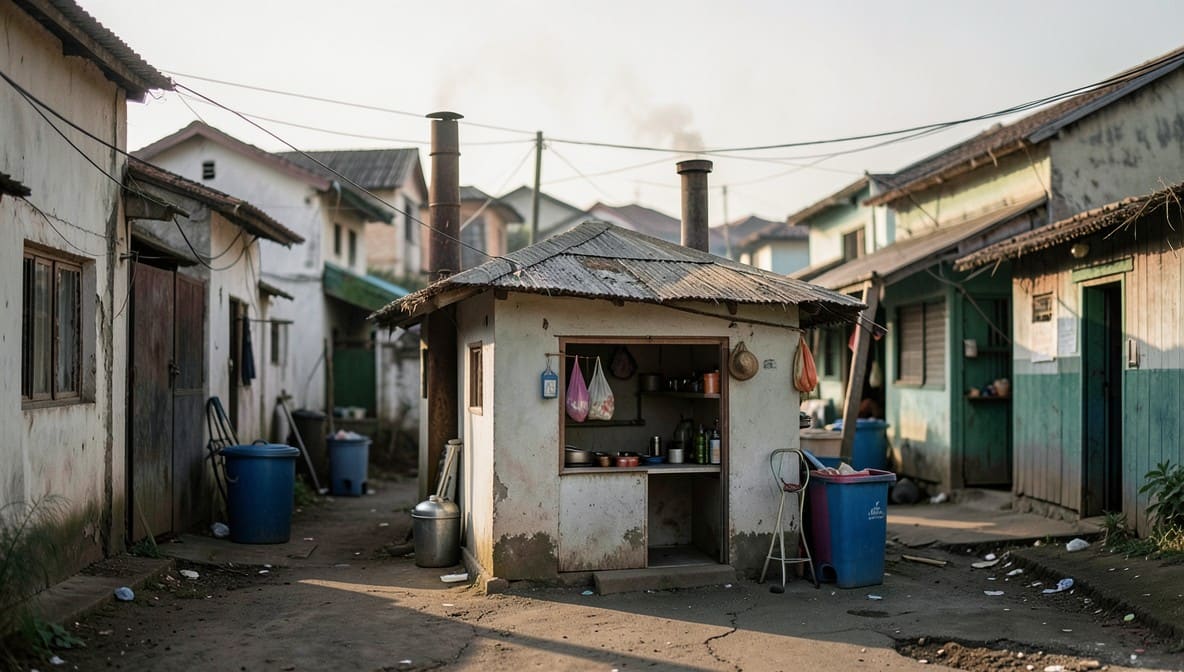
The petitioner, Thandyala Prasada Rao, a resident of Ponduru Village and Mandal in Srikakulam District, has been engaged in the preparation and sale of sweets for over twenty years. He operates a retail shop named "Meenakshi Sweets Centre" and runs a separate manufacturing unit (karkhana) in a residential area, leased from Smt. Malipeddi Parvathi. The unit uses wood powder and corn waste as fuel to ignite ovens, with a 20-foot stack to mitigate smoke. The petitioner claims no significant smoke emission and asserts no public nuisance.
Key Facts
- The petitioner began operating the sweet-making unit over ten years ago.
- He obtained a license from the Gram Panchayat for the retail shop (Ex.P1), but not for the manufacturing unit.
- The manufacturing unit is located in a residential zone, adjacent to homes on Hospital Street and Gadala Street.
- On 19.12.2022, residents filed a complaint regarding smoke nuisance from the unit.
- The Andhra Pradesh Pollution Control Board (APPCB) inspected the unit on 05.01.2025 and observed minor smoke emission, advising use of cleaner fuel (LPG) but clarified it does not issue permissions for such units.
- The 5th Respondent (Ponduru Gram Panchayat) issued two notices:
- Ex.P2: Dated 31.01.2023, directing closure within 48 hours.
- Ex.P3: Dated 09.02.2023, directing use of LPG instead of wood/corn waste.
- The petitioner submitted a detailed explanation on 22.02.2023 (Ex.P4).
- An interim order dated 03.05.2023 restrained enforcement of Ex.P3.
- The petitioner filed additional affidavits on 07.03.2026 and 31.01.2022, attaching tax receipts and a representation made on 30.03.2026.
- The 6th Respondent (Allamsetty Ravi) was impleaded on 17.09.2024.
- The 7th Respondent (APPCB) was impleaded suo-moto on 08.12.2025.
Procedural History
- 19.12.2022: Residents file complaint regarding smoke nuisance.
- 20.12.2022: Gram Panchayat issues preliminary memo.
- 31.01.2023: Notice Ex.P2 issued directing closure within 48 hours.
- 09.02.2023: Notice Ex.P3 issued directing use of LPG.
- 22.02.2023: Petitioner submits explanation.
- 03.05.2023: High Court grants interim stay on enforcement of Ex.P3.
- 05.01.2025: APPCB inspects unit and submits report.
- 07.03.2026: Petitioner files additional affidavit clarifying separation of shop and manufacturing unit.
- 17.09.2024: I.A. No.2 of 2023 for impleadment of 6th Respondent allowed.
- 08.12.2025: APPCB impleaded suo-moto.
- 07.05.2026: Judgment delivered by Justice Subba Reddy Satti.
The Parties' Positions
For the Petitioner:
- The unit has operated for over a decade without complaint.
- Smoke emission is minimal and mitigated by a 20-foot stack.
- The Gram Panchayat has collected license fees for the shop, implying tacit approval.
- The notices fail to specify statutory violations, violating natural justice.
- Closure would destroy livelihood.
For the Respondents:
- The manufacturing unit is unlicensed and located in a residential area.
- Use of wood/corn waste violates environmental norms and public health.
- APPCB has advised use of LPG and clarified it does not regulate such units.
- The petitioner has no license under the Andhra Pradesh Panchayat Raj Act or Food Safety Act.
- The shop license does not cover manufacturing.
- Residents suffer health impacts from smoke.
Relief Sought
The petitioner sought:
- Declaration that notices Ex.P2 and Ex.P3 are illegal and violative of Article 19(1)(g) and principles of natural justice.
- Direction to the respondents not to interfere with the sweet-making unit.
- Permission to continue operations pending application for proper license.
The Legal Issue
The central question was whether a show cause notice issued under the Andhra Pradesh Panchayat Raj Act, directing cessation of activity or change of fuel, satisfies the requirements of natural justice when it fails to specify the statutory provisions allegedly violated.
Arguments Presented
For the Petitioner
The petitioner’s counsel relied on Gorkha Security Services v. Govt. (NCT of Delhi), Nasir Ahmad v. Assistant Custodian General, and UMC Technologies v. FCI to argue that a valid show cause notice must clearly state: (i) the specific grounds of violation, and (ii) the proposed action. The notices Ex.P2 and Ex.P3 merely directed use of LPG or closure without citing any rule, section, or statutory breach. The petitioner was thus denied a meaningful opportunity to defend himself. The counsel emphasized that the petitioner had been paying fees and operating for years, and the Gram Panchayat’s inaction constituted acquiescence.
For the Respondent
The respondents contended that the petitioner’s unit operates without any license under Section 119 of the Andhra Pradesh Panchayat Raj Act, 1994, and Rule 3(n) of the 1966 Rules, which prohibit preparation of sweetmeats without a license. They further cited Section 31 of the Food Safety and Standards Act, 2006, which mandates registration for food manufacturing. The notices, they argued, were issued in public interest to prevent health hazards, and the petitioner’s failure to apply for a license was deliberate. The respondents relied on M.C. Mehta v. Union of India to argue that courts cannot permit continuation of illegal activities merely because they are longstanding.
The Court's Analysis
The Court undertook a detailed examination of the notices and the statutory framework. It held that while the petitioner’s unit was clearly operating without license under Section 119 of the Andhra Pradesh Panchayat Raj Act and Rule 3(n), and also in violation of the Food Safety and Standards Act, 2006, the procedural illegality of the notices could not be overlooked.
"It is essential for the notice to specify the particular grounds on the basis of which an action is proposed to be taken so as to enable the noticee to answer the case against him. If these conditions are not satisfied, the person cannot be said to have been granted any reasonable opportunity of being heard."
The Court noted that Ex.P2 and Ex.P3 merely stated that smoke was causing nuisance and directed use of LPG or closure. They did not mention any specific provision of law breached, nor did they indicate the nature of the proposed penalty beyond the directive. This rendered the notices procedurally defective under the settled jurisprudence of the Supreme Court.
The Court further rejected the petitioner’s argument that payment of shop license fees implied approval for manufacturing. It held that the shop and manufacturing unit are distinct entities under the law, and no license for the latter was ever obtained.
The Court acknowledged the public health concerns raised by residents and the APPCB’s advice, but emphasized that even in matters of public welfare, procedural fairness is non-negotiable. The Court cited Anurag Kumar Singh v. State of Uttarakhand to affirm that judicial discretion cannot override statutory mandates, and M.C. Mehta v. Union of India to reiterate that courts cannot perpetuate illegality.
"Equity can only supplement the law, but it cannot supplant or override it. The legal position on this aspect is discussed infra."
The Court concluded that while the petitioner’s conduct was unlawful, the manner in which the authorities acted was procedurally flawed. The notices were therefore set aside, but the Court made clear that the petitioner’s continued operation without license could not be permitted.
The Verdict
The writ petition was disposed of with the following directions:
- The notices dated 31.01.2023 (Ex.P2) and 09.02.2023 (Ex.P3) are set aside.
- The 5th Respondent (Gram Panchayat) may issue a fresh notice specifying the exact statutory violations under Section 119 of the Andhra Pradesh Panchayat Raj Act, 1994, Rule 3(n) of the 1966 Rules, and Section 31 of the Food Safety and Standards Act, 2006.
- The petitioner shall not manufacture sweets in the residential premises until he obtains the requisite licenses.
- The petitioner may apply for a license, and the authority shall decide strictly in accordance with law.
- There shall be no order as to costs.
What This Means For Similar Cases
Show Cause Notices Must Cite Specific Statutory Provisions
- Practitioners must ensure that administrative notices under Panchayat Raj Acts, Municipal Acts, or Food Safety laws explicitly reference the violated provision.
- Vague directives like "stop causing nuisance" or "use cleaner fuel" without citing rules are void for non-compliance with natural justice.
- Authorities must state both the nature of the violation and the proposed action.
Licensing Requirements for Food Manufacturing Are Non-Negotiable
- Retail licenses do not extend to manufacturing units, even if located on the same premises.
- Food businesses must comply with both local municipal/panchayat licensing and FSSAI registration under the Food Safety and Standards Act, 2006.
- Dual compliance is mandatory; failure on either front renders operations illegal.
Equity Cannot Shield Statutory Violations
-
Long-standing illegal operations do not create vested rights.
-
Courts will not permit continuation of unlawful activities merely because closure causes hardship.
-
Petitioners must proactively seek licenses; passive reliance on administrative inaction is not a defense.
-
Practitioners should advise clients to apply for licenses proactively, even if enforcement is delayed.
-
Authorities must act procedurally correctly even when enforcing public interest norms.
-
This judgment reinforces that procedural fairness is not a technicality - it is a constitutional imperative under Article 14 and Article 21.