The Gujarat High Court has clarified a critical distinction in food safety jurisprudence: substandard food products under the Food Safety and Standards Act, 2006 attract only penalty or fine, not criminal conviction. This judgment reinforces the principle that unsafe food must be distinguished from substandard food, with significant implications for food business operators and prosecutors alike.
Background & Facts
The Dispute
The applicant, Mahesh Jayantilal Rana, challenged the acquittal of the respondents, Vijaybhai Ramniklal Manak and another, by the 3rd Additional Sessions Judge, Surat. The trial court had initially convicted the respondents on 13 May 2016 for an offence committed in 2008 under the Prevention of Food Adulteration Act, 1954 (later repealed by the Food Safety and Standards Act, 2006).
Procedural History
The case progressed through the following stages:
- 2008: Alleged offence under the Prevention of Food Adulteration Act
- 2016: Trial court convicted the respondents
- 2017: 3rd Additional Sessions Judge, Surat acquitted the respondents in Criminal Appeal No. 71 of 2016
- 2018: Present Criminal Revision Application filed before the Gujarat High Court
Relief Sought
The applicant sought to quash and set aside the acquittal order dated 8 September 2017, arguing that the appellate court erred in relying on Nemi Chand v. State of Rajasthan ((2018) 17 SCC 448), which was inapplicable to the facts of the case.
The Legal Issue
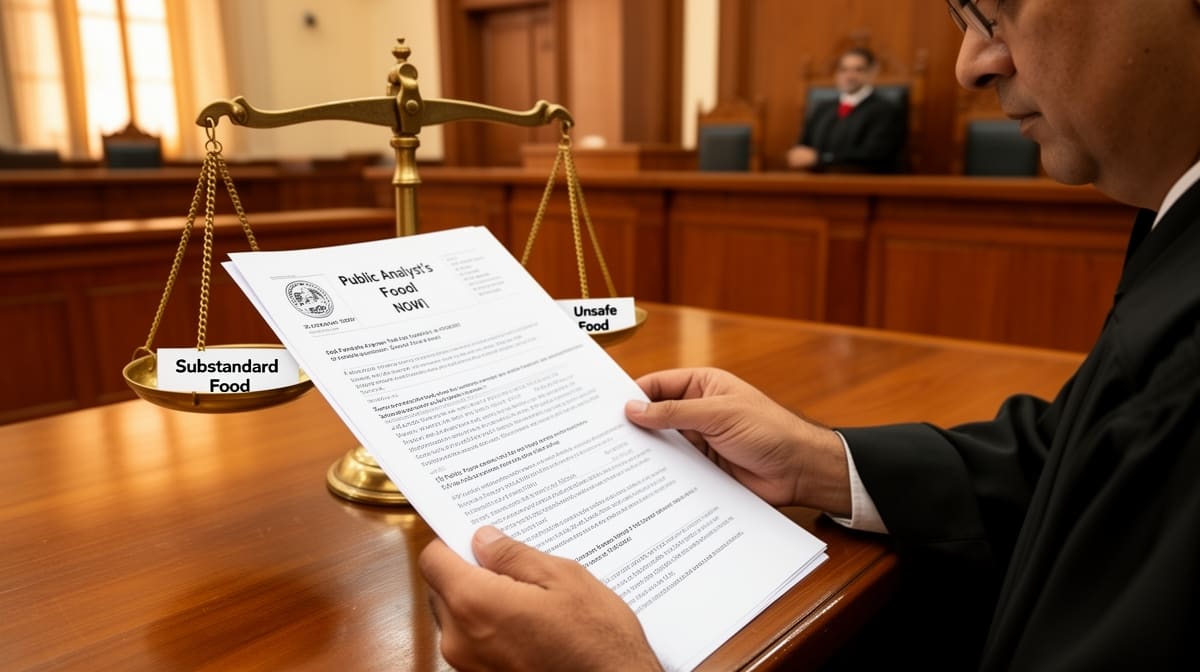
The central question was whether substandard food, as opposed to unsafe food, under the Food Safety and Standards Act, 2006, warrants criminal conviction or merely penalty in the form of fine.
Arguments Presented
For the Applicant
The applicant contended that:
- The appellate court misapplied Nemi Chand v. State of Rajasthan, as the contravention of food safety laws was proved on record.
- The conviction should stand because the offence involved adulteration, regardless of whether the food was unsafe or substandard.
For the Respondent
The respondents argued that:
- The Public Analyst’s report did not classify the food as unsafe, only substandard.
- Under the Food Safety and Standards Act, 2006, substandard food attracts only penalty or fine, not criminal conviction.
- The judgment in Nemi Chand v. State of Rajasthan and Triloki Chand v. State of Himachal Pradesh ((2020) 10 SCC 763) supported their acquittal.
The Court's Analysis
The Court examined the Public Analyst’s report and held that the food in question was substandard, not unsafe. It relied on the following legal principles:
-
Distinction Between Substandard and Unsafe Food: The Food Safety and Standards Act, 2006 treats substandard food and unsafe food differently. While unsafe food may attract criminal liability, substandard food is subject only to penalty or fine.
"If the article in question is substandard in nature and does not fall within the category of unsafe food, then, relying upon the provisions of the Food Safety and Standards Act, 2006, only penalty or levy of fine is contemplated."
-
Precedential Support: The Court cited Nemi Chand v. State of Rajasthan and Triloki Chand v. State of Himachal Pradesh to reinforce that substandard food does not warrant criminal conviction.
-
No Error in Acquittal: The Sessions Judge did not commit any error in acquitting the respondents, as the evidence did not establish unsafe food.
The Verdict
The Criminal Revision Application was dismissed. The Court held that:
- Substandard food under the Food Safety and Standards Act, 2006 attracts only penalty or fine, not criminal conviction.
- The acquittal order passed by the 3rd Additional Sessions Judge, Surat was upheld.
What This Means For Similar Cases
Substandard Food Does Not Attract Criminal Conviction
- Practitioners must distinguish between substandard and unsafe food when prosecuting or defending food adulteration cases.
- Criminal charges should be reserved for unsafe food, while substandard food may only attract penalty or fine.
Reliance on Public Analyst’s Report Is Crucial
- The Public Analyst’s report plays a decisive role in determining whether food is substandard or unsafe.
- Prosecutors must ensure the report clearly classifies the food to avoid acquittals based on technical distinctions.
Precedents Reinforce Limited Liability for Substandard Food
- Courts are likely to follow Nemi Chand and Triloki Chand in cases involving substandard food.
- Defendants can rely on these precedents to argue for reduced liability where the food is not unsafe.