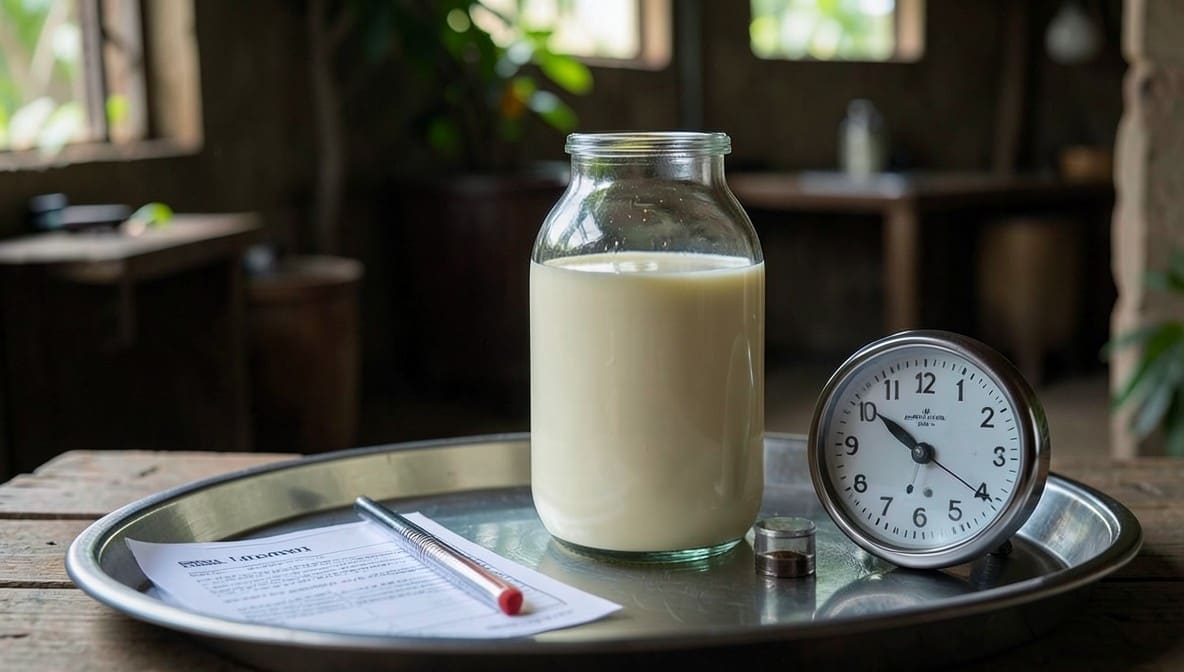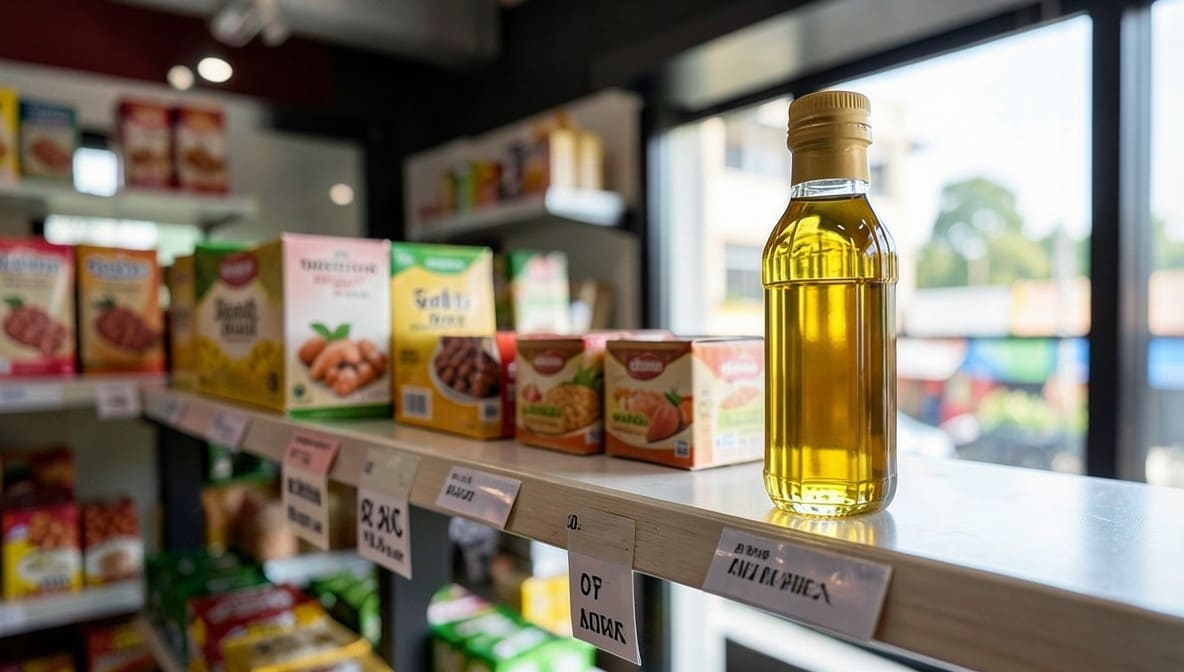
The High Court of Himachal Pradesh has reaffirmed that strict compliance with mandatory sampling procedures under the Prevention of Food Adulteration Act is non-negotiable. A conviction cannot stand if the prosecution fails to prove that the sample was collected in clean and dry containers, even when the final analysis confirms adulteration. This judgment underscores the primacy of procedural integrity over substantive findings in food safety prosecutions.
Background & Facts
The Dispute
The case arose from the alleged sale of adulterated Ricela Refined Rice Bran Oil by accused Sunil Kumar, proprietor of Usha Trading Company, in Shimla. The Food Inspector, L.D. Thakur (PW2), conducted a routine inspection on 04.03.2002 and collected a 375 ml sample of the oil for analysis. The sample was transferred from a plastic jar in the shop into a jug, then divided into three 125 ml portions and sealed in bottles. The acid value of the oil was later found to be 0.66, exceeding the permissible limit of 0.5 under the PFA Rules. The prosecution sought to hold the manufacturer, D.K. Kaushal (respondent herein), criminally liable under Section 16(1)(a)(i) read with Section 7 of the PFA Act.
Key Facts
- The sample was collected on 04.03.2002 at approximately 2:00 PM from the shop of Sunil Kumar.
- The oil was stored in two 15-litre plastic jars for sale to the public.
- The Food Inspector used a jug (belonging to the accused) to transfer the oil before dividing it into three bottles.
- The bottles were labelled with code S-II/2511 and sealed with wax and thread, with signatures of the accused covering the seal.
- Witnesses Charan Dass (PW1) and Sanjeev Goswami (PW5) were present during sampling.
- The bottles were issued by the Local Health Authority (LHA), Shimla.
- The sample was sent to the Public Analyst at Kandaghat on 05.03.2002.
- The analysis report (Ex.PW2/G) was issued on 11.04.2002.
- The LHA forwarded the report to the Food Inspector via letter dated 16.04.2002 (Ex.PW2/H).
- Consent for prosecution was granted by the Chief Medical Officer (CMO), Shimla, on 20.04.2002 (Ex.PW2/K).
- The complaint was filed before the Judicial Magistrate First Class-II, Shimla, on 25.04.2002.
- The Trial Court convicted D.K. Kaushal on 20.03.2012 and sentenced him to six months’ simple imprisonment and a fine of ₹2,000 on 31.03.2012.
- The accused appealed to the Additional Sessions Judge-II, Shimla, who acquitted him on 01.05.2014.
- The State filed the present appeal before the High Court on 15.03.2014.
Procedural History
- 04.03.2002: Sampling conducted at Usha Trading Company, Shimla.
- 05.03.2002: Sample dispatched to Public Analyst, Kandaghat.
- 11.04.2002: Public Analyst’s report issued, confirming acid value of 0.66.
- 16.04.2002: LHA Shimla forwarded report to Food Inspector.
- 20.04.2002: CMO Shimla granted consent for prosecution.
- 25.04.2002: Complaint filed before Judicial Magistrate First Class-II, Shimla.
- 20.03.2012: Trial Court convicted D.K. Kaushal.
- 31.03.2012: Sentence imposed.
- 01.05.2014: Appellate Court acquitted the accused.
- 15.03.2014: State filed criminal appeal before HP High Court.
- 02.03.2026: Appeal heard and reserved.
- 01.04.2026: Judgment delivered.
The Parties' Positions
For the State (Appellant)
- Argued that the sample was taken in bottles issued by the LHA, which were presumed clean.
- Contended that the jug used was not an intermediary vessel but merely a temporary container.
- Asserted that the delay of 38 days between sampling and analysis was not unreasonable.
- Claimed that the Trial Court’s findings were corroborated by witness testimony and documentary evidence.
- Relied on State of Gujarat v. Gulabgiri Shambugiri Goswami and other precedents to argue that acquittal should not be disturbed unless perverse.
For the Accused (Respondent)
- Argued that the jug used to transfer the oil was not proven to be clean or dry.
- Highlighted that no evidence was led to show the jug was cleaned before use.
- Cited Koyakutty v. Food Inspector and R.N. Tyagi v. State of Haryana to establish that use of unclean intermediary vessel vitiates the entire procedure.
- Emphasized that the acid value increase could have occurred due to oxidation during the 38-day delay.
- Relied on Nebh Raj v. State (Delhi Admn.) to show that delay in analysis may alter chemical properties.
- Stated that the Appellate Court’s view was reasonable and entitled to deference.
Relief Sought
The State sought to set aside the acquittal order dated 01.05.2014 and restore the conviction and sentence imposed by the Trial Court. The respondent sought dismissal of the appeal and confirmation of acquittal.
The Legal Issue
The central question was whether the failure to prove that the intermediary vessel (jug) used to transfer the oil sample was clean and dry constitutes a fatal violation of Rule 14 of the Prevention of Food Adulteration Rules, thereby vitiating the conviction even when the final analysis confirms adulteration.
Arguments Presented
For the Appellant
The State contended that the bottles used for sealing the sample were issued by the LHA and were presumed clean. It argued that the jug was merely a temporary receptacle and not an intermediate container under Rule 14. The prosecution relied on the testimony of PW1 and PW5, who stated the bottles were clean. It further argued that the 38-day delay in analysis was within permissible limits and did not affect the reliability of the report. The State maintained that the Appellate Court erred in substituting its own view for that of the Trial Court and that the acquittal was not based on any patent perversity.
For the Respondent
The respondent argued that Rule 14 mandates that samples be taken in clean and dry containers, and the use of an unverified jug as an intermediary vessel breached this mandatory requirement. No evidence was led to establish that the jug was cleaned or dried before use. Citing Koyakutty v. Food Inspector and R.N. Tyagi v. State of Haryana, he emphasized that the benefit of doubt must go to the accused when procedural safeguards are violated. He also highlighted that the delay in analysis could have increased the acid value, rendering the report unreliable. The respondent stressed that appellate courts must not interfere with acquittals unless the view taken is unreasonable or perverse.
The Court's Analysis
The Court undertook a meticulous review of the evidence and applicable legal principles governing food sampling under the PFA Act. It noted that while the final analysis confirmed adulteration, the prosecution’s failure to establish the cleanliness of the intermediary vessel created a material defect in the chain of evidence.
"There is absolutely no evidence in the case to show that the said vessel in which the Food Inspector took the sample was made clean and dry as required under R. 14. Even P.W. 1, the Food Inspector, who took the sample, was not prepared to swear before the court that the intermediary vessel was clean and dry."
The Court relied on the Kerala High Court’s decision in Koyakutty v. Food Inspector, which held that the use of an unclean intermediary vessel violates a mandatory provision and vitiates the conviction. It further cited R.N. Tyagi v. State of Haryana, where the Punjab and Haryana High Court held that the absence of evidence regarding the cleanliness of a tub used to transfer the sample created a reasonable doubt.
The Court also examined the delay in analysis. The sample was collected on 04.03.2002 and analyzed on 11.04.2002 - a delay of 38 days. The Court referenced Nebh Raj v. State (Delhi Admn.), which held that oxidation due to exposure to air increases free fatty acid content, and that such changes cannot be ruled out in the absence of evidence of proper storage.
"Oxidative rancidity is accelerated by exposure to heat and light, by moisture and by the presence of traces of certain metals... With most oils and fats, the free acidity increases during storage."
The Court rejected the State’s argument that the proceedings did not require de novo trial after the transfer of the Trial Judge, noting that the case was tried as a summons case and not a summary trial, and thus Section 326(3) CrPC did not apply. However, this point was immaterial to the core issue of sampling procedure.
The Court emphasized that the burden of proving compliance with mandatory procedural requirements lies squarely on the prosecution. The mere assertion that the bottles were issued by the LHA does not substitute for affirmative proof of cleanliness. The absence of evidence on the condition of the jug - the intermediary vessel - created a reasonable doubt that could not be resolved in favour of the State.
The Court concluded that the Appellate Court’s acquittal was not perverse, nor based on misreading of evidence. Two reasonable views were possible: one consistent with guilt, the other with innocence. Under the settled principle laid down in Surendra Singh v. State of Uttarakhand, the appellate court must defer to the acquittal where such a duality exists.
The Verdict
The appeal was dismissed. The acquittal of D.K. Kaushal by the Appellate Court dated 01.05.2014 was upheld. The respondent was directed to furnish bail bonds of ₹25,000 with one surety of like amount to the satisfaction of the Trial Court within four weeks. The bail bond shall remain effective for six months, with the stipulation that if a Special Leave Petition is filed against this judgment or leave is granted, the respondent shall appear before the Supreme Court upon receipt of notice.
What This Means For Similar Cases
Procedural Compliance Is Non-Negotiable
- Practitioners must ensure that every step in food sampling - including the cleanliness of intermediary vessels - is explicitly documented and proven in court.
- Mere reliance on institutional presumption (e.g., "bottles issued by LHA") is insufficient; affirmative evidence of cleanliness is mandatory.
- Failure to prove the condition of any vessel used to transfer the sample before sealing will vitiate the prosecution’s case.
Delay in Analysis Creates Reasonable Doubt
- Delays exceeding 30 days in sending samples for analysis must be justified with evidence of proper storage conditions.
- In cases involving oils and fats, the prosecution must rebut the presumption of oxidative rancidity by adducing evidence of temperature control, light protection, and sealed storage.
- Absent such evidence, the acid value or other chemical parameters may be deemed unreliable.
Appellate Courts Must Respect Reasonable Acquittals
- Where two reasonable views are possible - one of guilt and one of innocence - the appellate court must uphold the acquittal.
- This judgment reinforces that the threshold for interfering with an acquittal is extremely high: only patent perversity or omission of material evidence justifies reversal.
- Prosecutors must now anticipate and preemptively document every procedural step to avoid technical acquittals.