The Gujarat Consumer Disputes Redressal Commission (CDRC) set a precedent on insurance claims involving special purpose agricultural vehicles, holding that the lack of a periodical inspection certificate does not constitute a fundamental breach, and directing the insurer to pay 75% of the insured declared value (IDV) with interest.
Background & Facts
The Dispute
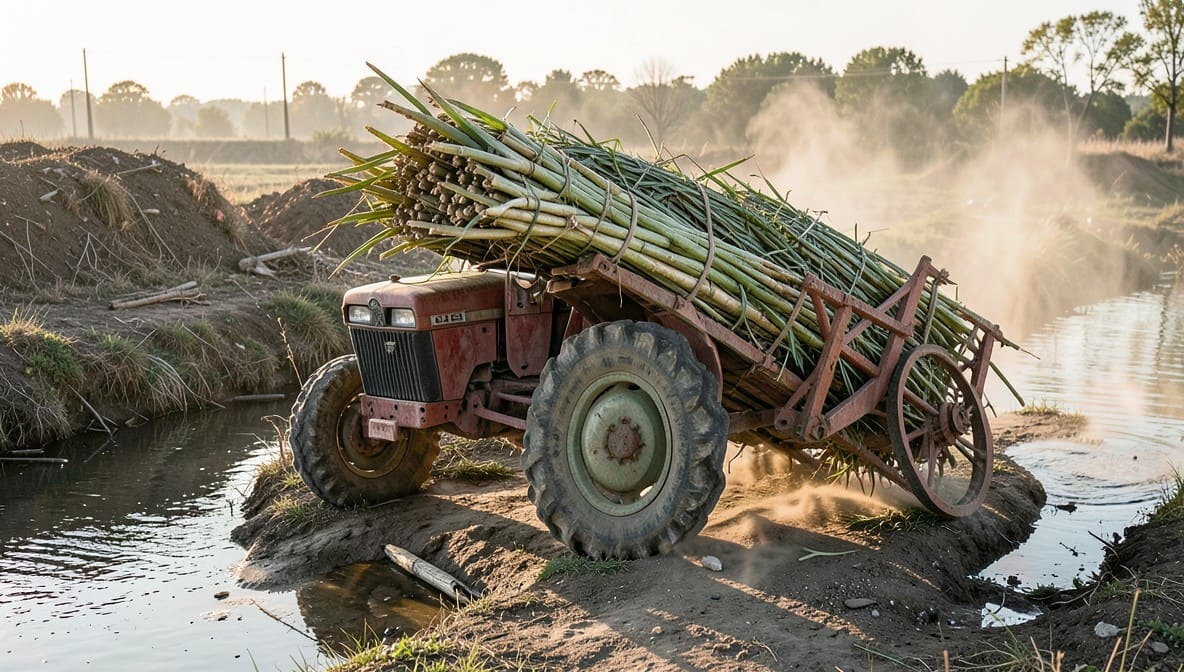
The complainant, Shri Chalthan Vibhag Khand Udhyog, Sahkari Mandali Limited, purchased a New Holland sugar-cane harvester on 27.05.2012. The machine was insured with The Oriental Insurance Company Ltd. from 22.02.2014 for an IDV of Rs.79,35,490. On 09.12.2015 the harvester caught fire due to a short circuit, resulting in total loss. The complainant lodged a claim immediately; the insurer appointed spot-surveyor Shri Gadiyali and later final surveyor Rahman & Company. A repair quotation dated 03.03.2015 amounted to Rs.1,23,88,889.74, exceeding the IDV, thereby obligating the insurer to settle the claim on the basis of the IDV.
Key Facts
- 27.05.2012: Purchase of sugar-cane harvester from New Holland.
- 22.02.2014: Insurance policy issued, IDV Rs.79,35,490.
- 09.12.2015: Fire incident causing total loss.
- 12.08.2015: Spot survey report submitted by Shri Gadiyali.
- 30.10.2018: Final survey and investigation reports filed by the insurer.
- 07.12.2016: Insurer repudiated the claim, citing lack of a valid Certificate of Periodical Inspection (CPI).
- 12.06.2017: Complaint No. 73/2017 filed before the Gujarat CDRC.
- 20.08.2026: Judgment pronounced.
Procedural History
- 12.06.2017: Complaint filed under Section 17 of the Consumer Protection Act, 1986.
- Various dates: Submission of documentary evidence by both parties, including policy schedule, repair quotation, letters, CPI certificates, and investigation reports.
- 20.08.2026: The Commission delivered its order, partially allowing the complaint.
Relief Sought
The complainant sought:
- Settlement of the claim on the basis of the IDV.
- In the absence of a fundamental breach, payment of 75 % of the IDV on a non-standard basis.
- Interest on the awarded amount from the date of filing of the complaint.
- Compensation for mental harassment and costs of the proceedings.
The Legal Issue
Whether the absence of a valid Certificate of Periodical Inspection (CPI) for a sugar-cane harvester, classified as a special purpose vehicle under Rule 176 of the Gujarat Motor Vehicles Rules, 1989, amounts to a fundamental breach that justifies the insurer’s repudiation of the claim, and what quantum of compensation is appropriate under the Consumer Protection Act.
Arguments Presented
For the Complainant
The complainant argued that:
- The sugar-cane harvester is a special purpose vehicle used exclusively for agricultural activities and is exempt from the requirement of a CPI under Rule 176.
- Even assuming a CPI is mandatory, the breach is not fundamental under the Motor Vehicles Act, and therefore the insurer is obliged to settle the claim on a non-standard basis, i.e., 75 % of the IDV.
- The insurer’s delay of more than two years violated IRDA guidelines prescribing settlement within 30 days.
- The claimant is entitled to interest, mental harassment compensation, and costs.
For the Respondent
The insurer contended that:
- Rule 172A of the Gujarat Motor Vehicles Rules makes the CPI mandatory for all motor vehicles, including the harvester.
- The absence of a valid CPI at the time of loss constitutes a fundamental breach of the Motor Vehicles Act, justifying total denial of the claim.
- Precedents such as New India Assurance Co. Ltd. v. Birbal Singh Jhakhar support the view that lack of statutory compliance permits repudiation.
The Court's Analysis
The Commission examined the statutory framework governing motor-vehicle fitness and periodical inspection. It noted that Rule 176 expressly exempts “special purpose vehicles” used in agricultural or construction activities from the requirement of a CPI. The harvester in question fit squarely within this exemption, as evidenced by the complainant’s documentary proof and the nature of its use.
"When the sugar cane harvester machine is a special purpose vehicle for use in agricultural activities and not for any transport activities, then CPI is not mandatory."
The Commission further distinguished the present case from the insurer’s cited authorities, which dealt with breaches involving transport vehicles where the CPI is a condition precedent. It held that a breach of Rule 172A does not become fundamental unless it defeats the very purpose of the insurance contract. Here, the insurer had already accepted the risk by issuing the policy; the lack of a CPI did not affect the insurer’s liability to the insured value.
Applying the principle of non-standard settlement under the Consumer Protection Act, the Commission calculated 75 % of the IDV (Rs.79,35,490 × 0.75 = Rs.59,51,617). It also ordered interest at 8 % per annum from the date of filing of the complaint (12.06.2017) until realization, in line with Section 17 of the Act. Compensation for mental harassment (Rs.25,000) and costs (Rs.10,000) were awarded as ancillary relief.
The Verdict
The Gujarat CDRC partially allowed the complaint. It directed The Oriental Insurance Co. Ltd. to pay Rs.59,51,617 (75 % of the IDV) with 8 % interest from 12 June 2017 until payment, Rs.25,000 for mental harassment, and Rs.10,000 towards costs of the complaint. The order was to be complied with within the time prescribed by the Commission.
What This Means For Similar Cases
CPI Exemption for Special Purpose Vehicles
- Practitioners must examine whether the insured vehicle qualifies as a special purpose vehicle under Rule 176 before invoking CPI non-compliance as a defence.
- Even if a CPI is absent, insurers may still be liable on a non-standard basis unless the breach is demonstrably fundamental.
Non-Standard Settlement Quantum
- Courts may award 75 % of the IDV where a fundamental breach is absent, aligning with the Consumer Protection Act’s remedial ethos.
- Interest is calculated from the filing date of the complaint, not from the date of loss, reinforcing the importance of timely filing.
Documentation and Timelines
-
Insurers should maintain contemporaneous records of CPI status and communicate any deficiencies promptly to avoid claims of unreasonable delay.
-
Claimants should preserve all policy documents, repair quotations, and correspondence to substantiate the claim and counter repudiation.
-
Actionable Takeaways:
- Verify vehicle classification under Gujarat Motor Vehicles Rules before denying claims.
- If CPI is missing but the vehicle is exempt, consider offering a non-standard settlement rather than total denial.
- Compute interest from the complaint filing date as per Section 17, CP Act.
- Document all communications to pre-empt allegations of delay.