The National Green Tribunal has affirmed that while environmental clearance is not required for soil extraction in linear highway projects under a now-set-aside notification, illegal mining beyond permitted depth remains a punishable environmental violation. The Tribunal upheld penalties and environmental compensation for excessive excavation, emphasizing that statutory exemptions do not override compliance with mining limits or ecological restoration obligations.
Background & Facts
The Dispute
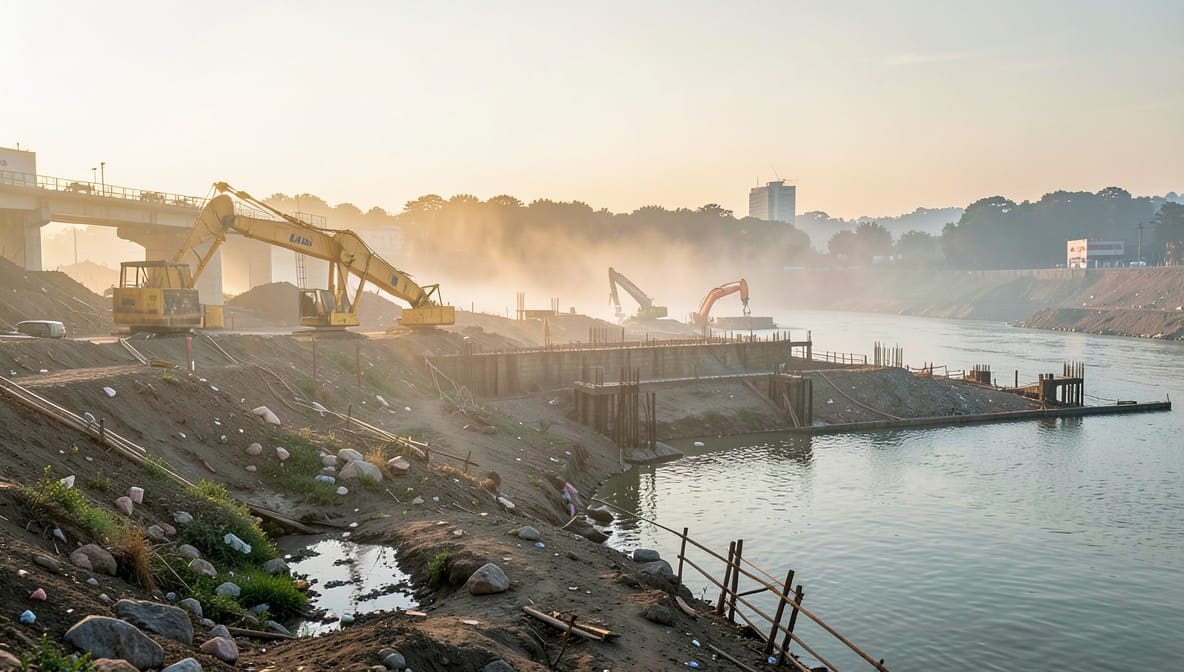
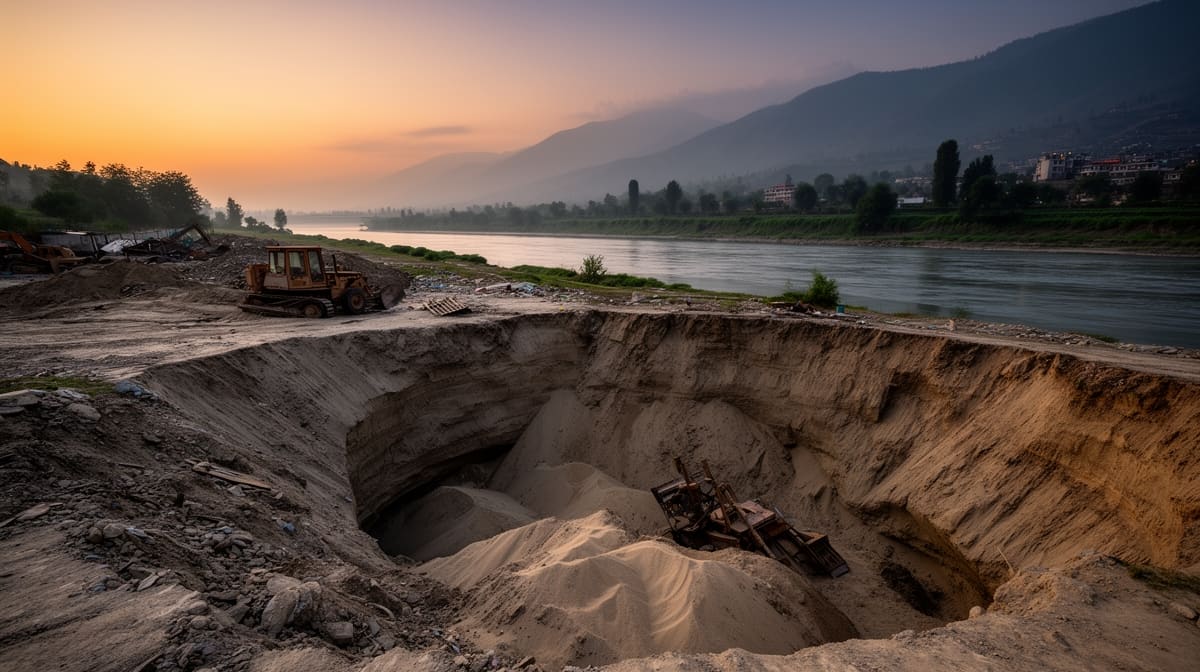
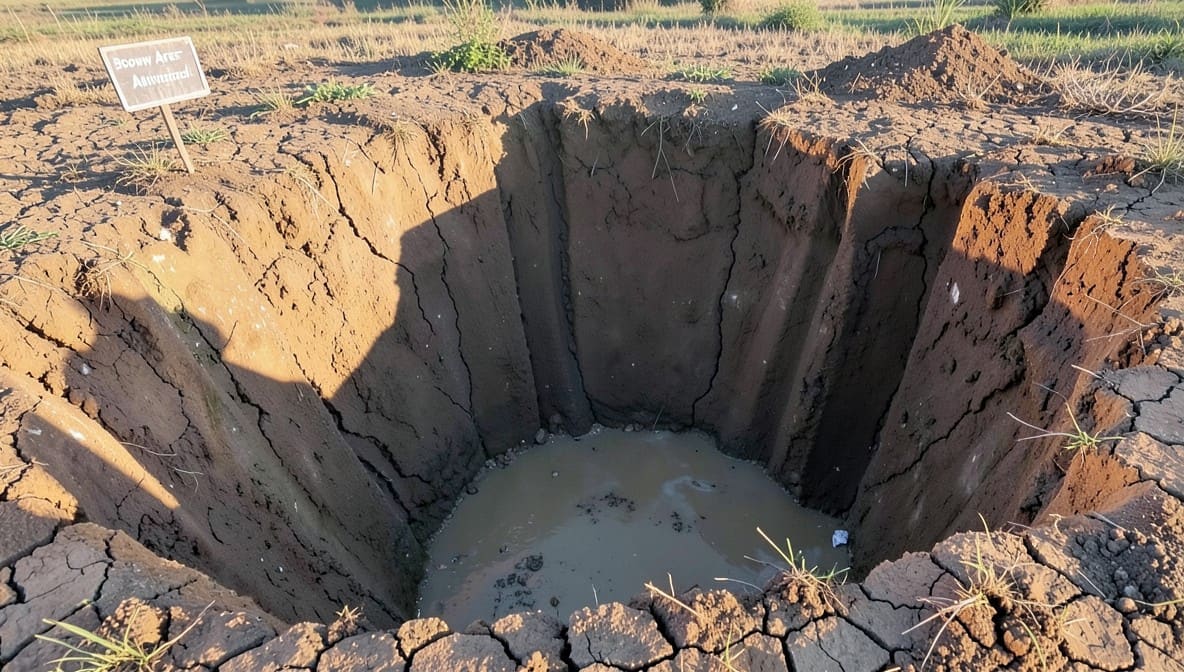
The applicant, Arun Tiwari, a resident of village Narcha, Post Nunsai, District Jalaun, Uttar Pradesh, filed a letter petition on 12.06.2023 alleging that M/s Gawar Construction Limited, the project proponent for the Bundelkhand Expressway, engaged in illegal soil mining from agricultural lands. The applicant claimed that mining was conducted up to 10 - 15 meters depth, far exceeding the permitted 2 meters, without consent from landowners, and that this activity had damaged local roads and degraded the environment since February 2020.
Key Facts
- The Bundelkhand Expressway is a 296.07 km, four-lane access-controlled highway connecting Gonda village (Chitrakoot) to Kudrail village (Etawah), developed by UPEIDA at a cost of ₹14,716 crores.
- Construction began on 15.01.2020 and was completed in two packages: Package IV on 30.06.2022 and Package V on 26.07.2022.
- M/s Gawar Construction Limited was awarded Packages IV and V covering approximately 75 km in the tehsils of Orai and Jalaun.
- The Mining Department of Jalaun issued 162 mining permissions between December 2020 and April 2022 for 79 villages, authorizing extraction of 17,001,696 cubic meters of soil from 2,336.46 acres.
- The Environmental Clearance (EC) for the entire expressway was granted to UPEIDA by SEIAA, UP on 23.11.2019.
- The applicant submitted photographs showing deep excavations and alleged collusion between the project proponent and UPEIDA officials.
Procedural History
- 12.06.2023: Letter petition filed by Arun Tiwari with the National Green Tribunal.
- 04.10.2023: NGT constituted a joint committee comprising UPPCB, MoRTH, PWDD, and District Magistrate, Jalaun to investigate.
- 12.12.2023: Joint Committee submitted a report clearing the project proponent of illegal mining.
- 15.12.2023: NGT rejected the joint committee’s report for failing to address environmental compliance.
- 12.02.2024: Another status report filed by authorities reaffirming compliance.
- 26.02.2024: NGT impleaded M/s Gawar Construction Limited and issued notice.
- 06.05.2024: Applicant submitted photographic evidence; NGT directed CPC B to conduct independent inspection.
- 03.07.2024 & 04.07.2024: CPC B officials conducted site visits.
- 14.08.2024: CPC B report disclosed that mining depth ranged from 0.5 m to 16 m, far exceeding the 2 m limit.
- 13.12.2024: Mining Department communicated illegal extraction volume to UPPCB.
- 04.12.2024: District Magistrate ordered compounding of offence and imposed penalty of ₹1,29,50,000.
- 09.12.2024: Penalty deposited by respondent no. 6.
- 21.03.2025: NGT directed UPPCB to recalculate environmental compensation.
- 14.07.2025: Environmental compensation of ₹2,76,99,185 deposited by respondent no. 6.
- 18.03.2025: UPPCB submitted remediation plan for 32 sites.
- 16.07.2025: Respondent reported remediation completed at 13 sites; 9 sites blocked by landowners.
- 06.11.2025: Respondent reported remediation underway at 5 remaining sites (70% complete).
- 02.02.2026: Final hearing concluded.
- 01.04.2026: Order pronounced.
The Parties' Positions
Applicant (Arun Tiwari): Alleged illegal, unconsented, deep mining causing environmental degradation and road damage. Argued that the project proponent circumvented environmental norms and violated mining permissions.
Respondent No. 6 (M/s Gawar Construction Limited): Contended that no separate EC was required for soil extraction under Notification S.O. 1224(E) dated 28.03.2020, which exempted linear projects. Asserted that mining was conducted within permissions issued between April 2020 and March 2022, and that all works were completed before the Supreme Court’s judgment of 21.03.2024 set aside the exemption.
Relief Sought
The applicant sought: (1) cessation of illegal mining; (2) environmental compensation for land degradation; (3) restoration of mined land; (4) penalty for violation of mining norms; and (5) directions to hold UPEIDA and the project proponent accountable.
The Legal Issue
The central question was whether exemption from Environmental Clearance under Notification S.O. 1224(E) dated 28.03.2020 absolves a project proponent from liability for illegal soil extraction beyond the permitted depth, and whether environmental compensation and remediation remain mandatory despite such exemption.
Arguments Presented
For the Appellant/Petitioner
The applicant argued that the exemption under the 2020 Notification did not override state mining laws or environmental safeguards. He cited the CPC B report showing mining depths up to 16 meters, far exceeding the 2-meter limit, and emphasized that landowners were not consulted. He relied on Municipal Corporation of Greater Mumbai v. Ankita Sinha to affirm the Tribunal’s suo moto jurisdiction to act on letter petitions. He contended that ecological damage, regardless of statutory exemptions, triggers liability under the Environment (Protection) Act, 1986.
For the Respondent/State
The respondent argued that the 2020 Notification explicitly exempted soil extraction for linear projects from EC requirements. It submitted that mining permissions were obtained from the Mining Department, and all works were completed before the Supreme Court’s judgment of 21.03.2024. It relied on the Supreme Court’s clarification in NHAI v. Noble M. Paikada (15.05.2024), which protected projects with work orders issued after 28.03.2020. It further stated that penalties and environmental compensation had already been paid and remediation was underway.
The Court's Analysis
The Tribunal examined the interplay between statutory exemptions and environmental obligations. It acknowledged that the 2020 Notification exempted separate EC for soil extraction in linear projects, and that the Supreme Court’s judgment of 21.03.2024 did not apply retroactively to projects with work orders issued after 28.03.2020. The Tribunal accepted the respondent’s position that no separate EC was required.
"The exemption under the Notification dated 28.03.2020 was in force during the entire period of mining activity by Respondent No. 6, and the Supreme Court’s subsequent judgment does not invalidate actions lawfully undertaken during the exemption period."
However, the Tribunal sharply distinguished between EC requirements and compliance with mining permissions. It held that while EC was not mandatory, the Mining Department’s permission explicitly capped extraction depth at 2 meters. The CPC B report confirmed that pits reached depths of up to 16 meters - a clear violation of the permission conditions.
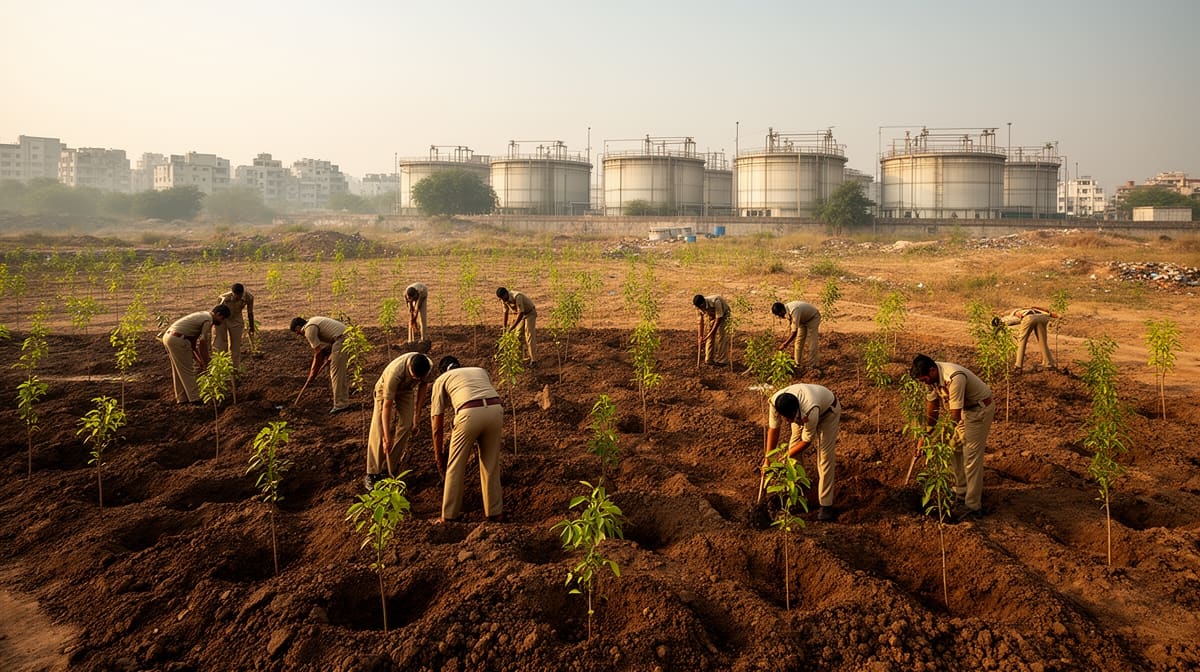
The Tribunal emphasized that environmental damage is not excused by the absence of EC. It noted that the UPPCB had independently assessed ecological harm and levied compensation of ₹2,76,99,185, which the respondent had deposited. The Tribunal further observed that the remediation plan - involving slope stabilization and vetiver grass plantation - was being implemented, with 18 of 32 sites already restored.
The Tribunal rejected the applicant’s request for further action, noting that the respondent had discharged all statutory liabilities: penalty paid, environmental compensation deposited, and remediation in progress. The Tribunal also noted that landowners of nine sites were unwilling to permit remediation as the pits had filled with water and were being used for other purposes.
The Verdict
The applicant’s Original Application was disposed of. The Tribunal held that while M/s Gawar Construction Limited violated mining depth limits by excavating soil up to 16 meters against a 2-meter cap, the violation was addressed through: (1) a penalty of ₹1,29,50,000 imposed by the District Magistrate and deposited on 09.12.2024; (2) environmental compensation of ₹2,76,99,185 levied by UPPCB and deposited on 14.07.2025; and (3) remediation of 18 out of 32 sites, with the remaining 5 sites to be completed within 20 days of the order. No further action was warranted.
What This Means For Similar Cases
Environmental Compensation Is Independent of EC Exemptions
- Practitioners must advise clients that exemption from EC does not exempt them from liability for environmental damage under the Environment (Protection) Act, 1986.
- Even if a project falls under a notified exemption, exceeding mining depth limits or causing land degradation triggers mandatory compensation.
- UPPCB and CPC B retain independent authority to assess and levy environmental damage compensation regardless of EC status.
Remediation Is Non-Negotiable, Even If Landowners Resist
- The Tribunal accepted partial remediation but did not absolve the proponent of full responsibility.
- Practitioners should ensure clients document all attempts to engage landowners and seek alternative remedies (e.g., court orders) if access is denied.
- Delays due to weather (e.g., rainfall) are acceptable if timelines are adhered to and progress is documented - as shown by the 70% completion report.
Statutory Exemptions Are Time-Bound and Context-Specific
- The Supreme Court’s clarification in NHAI v. Noble M. Paikada confirms that exemptions apply only to projects with work orders issued after 28.03.2020.
- Projects initiated before that date remain subject to prior EC norms.
- Legal teams must verify the exact date of work order issuance and mining commencement to determine applicable regulatory regime.