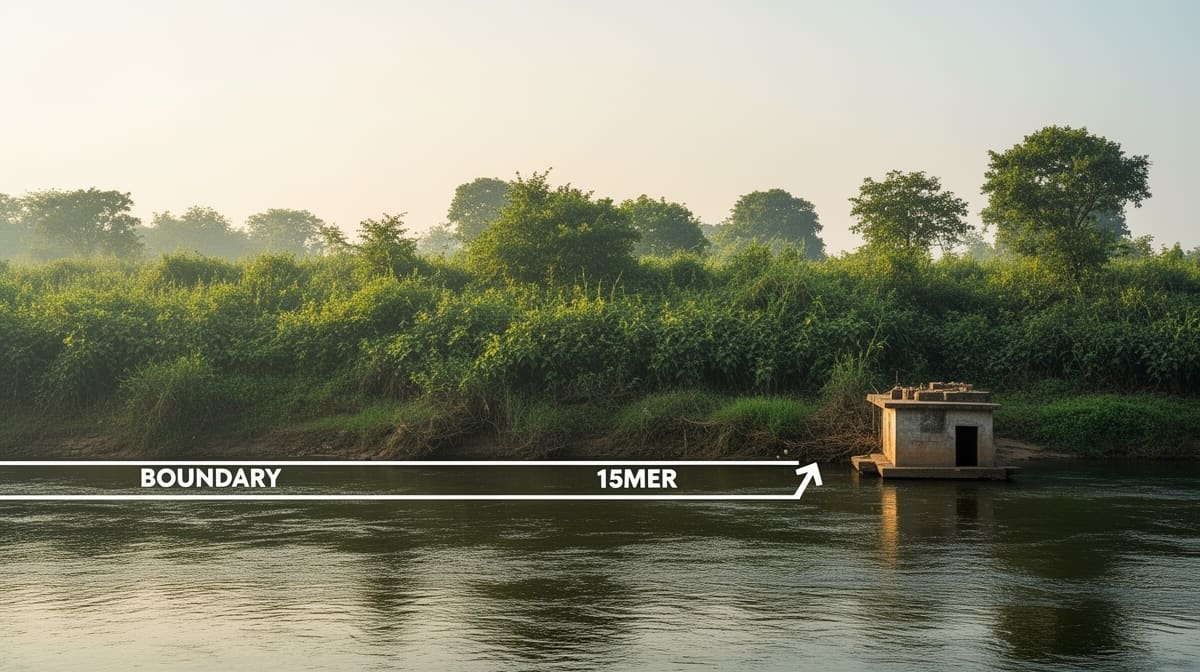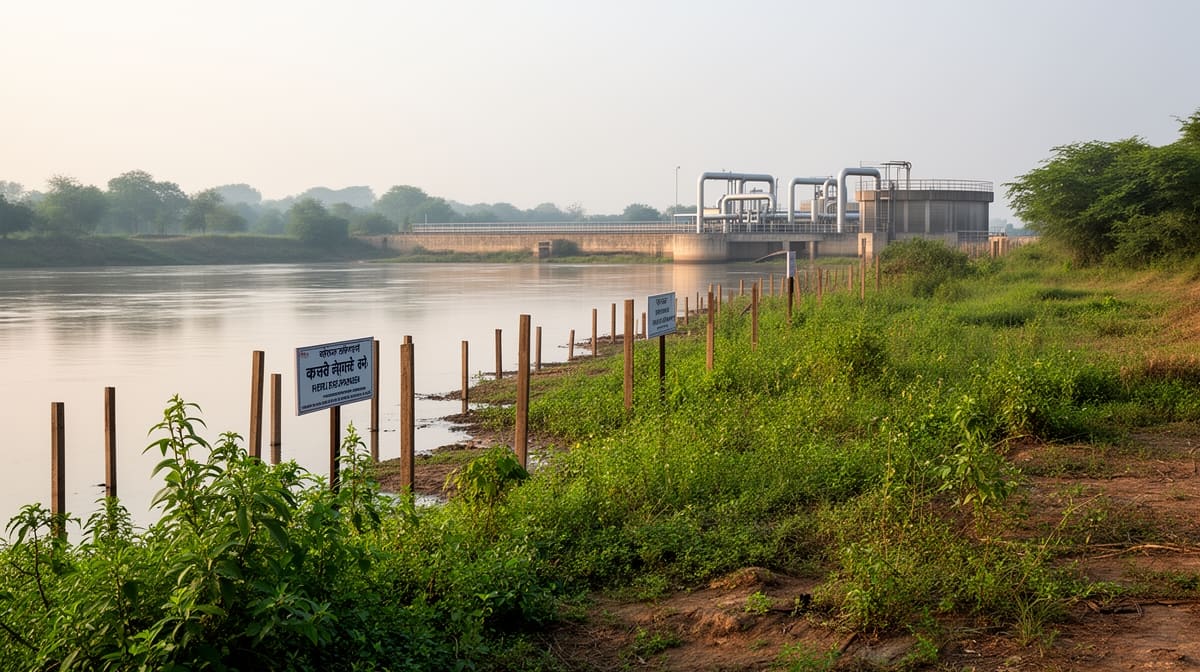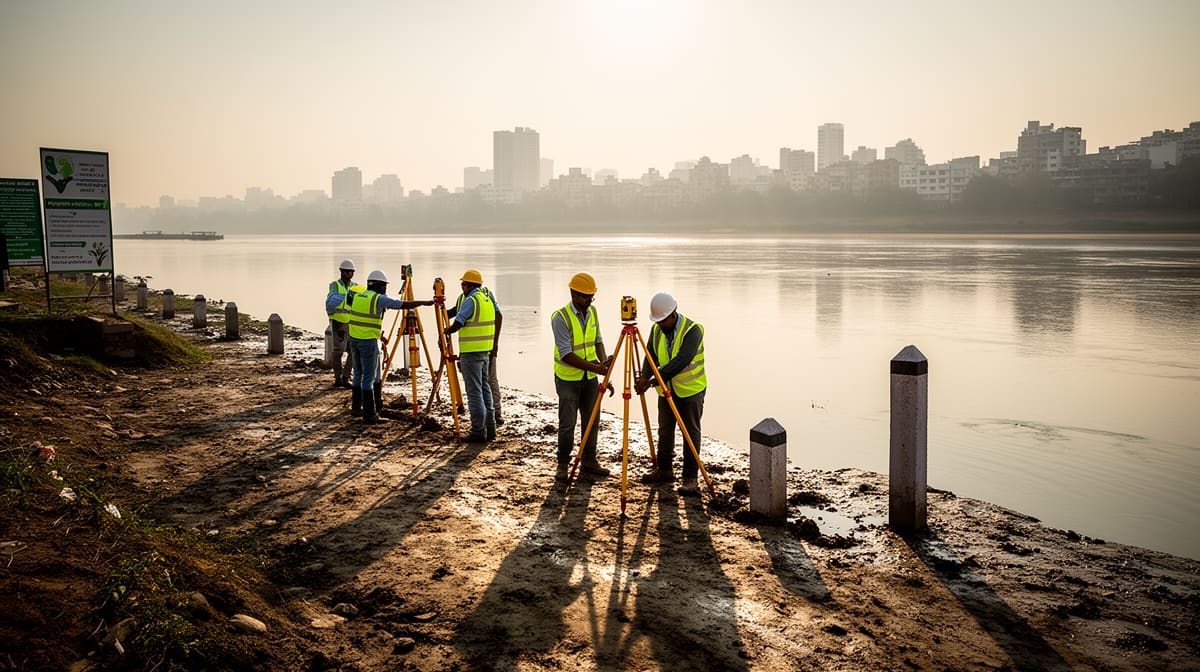
The National Green Tribunal has reaffirmed the statutory sanctity of the River Ganga Rejuvenation Order, 2016, holding that construction activities on the river’s floodplain without prior approval from the National Mission for Clean Ganga constitute a clear violation of environmental law. This judgment establishes a critical precedent for infrastructure projects near ecologically sensitive river zones across India.
Background & Facts
The Dispute
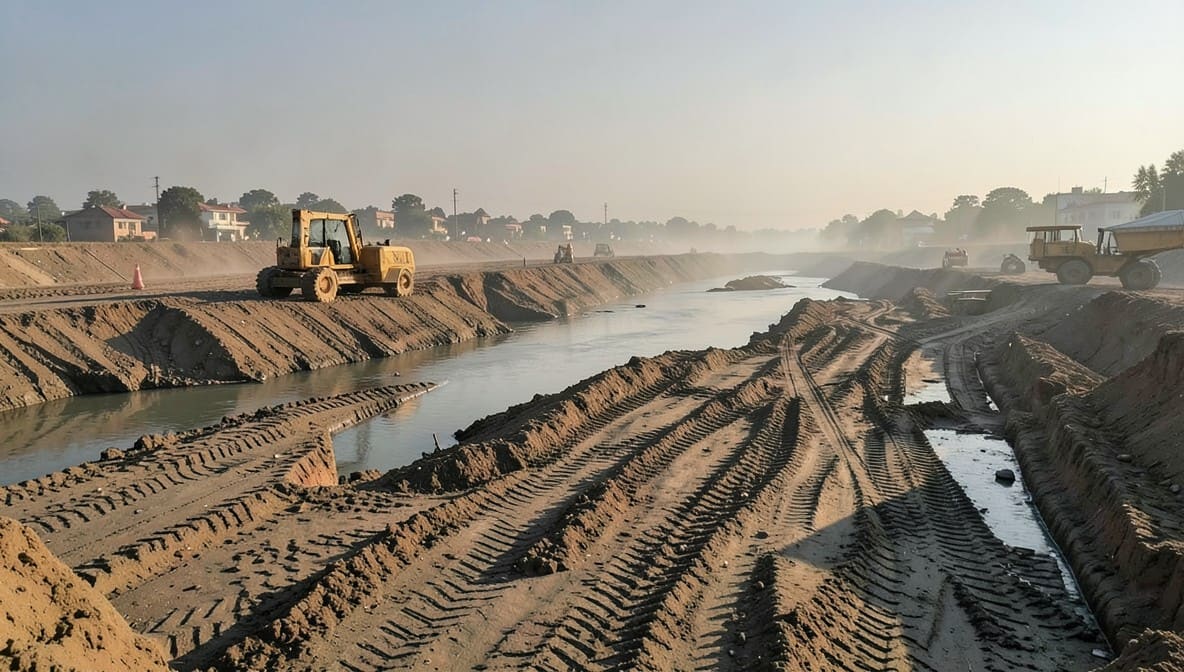
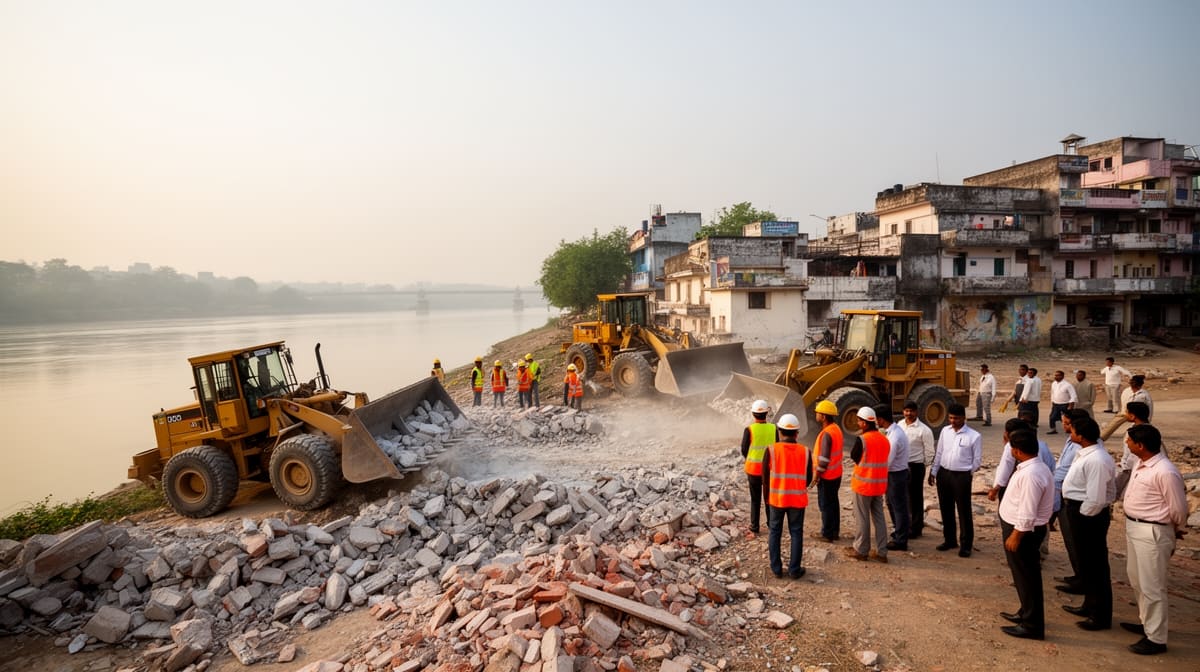
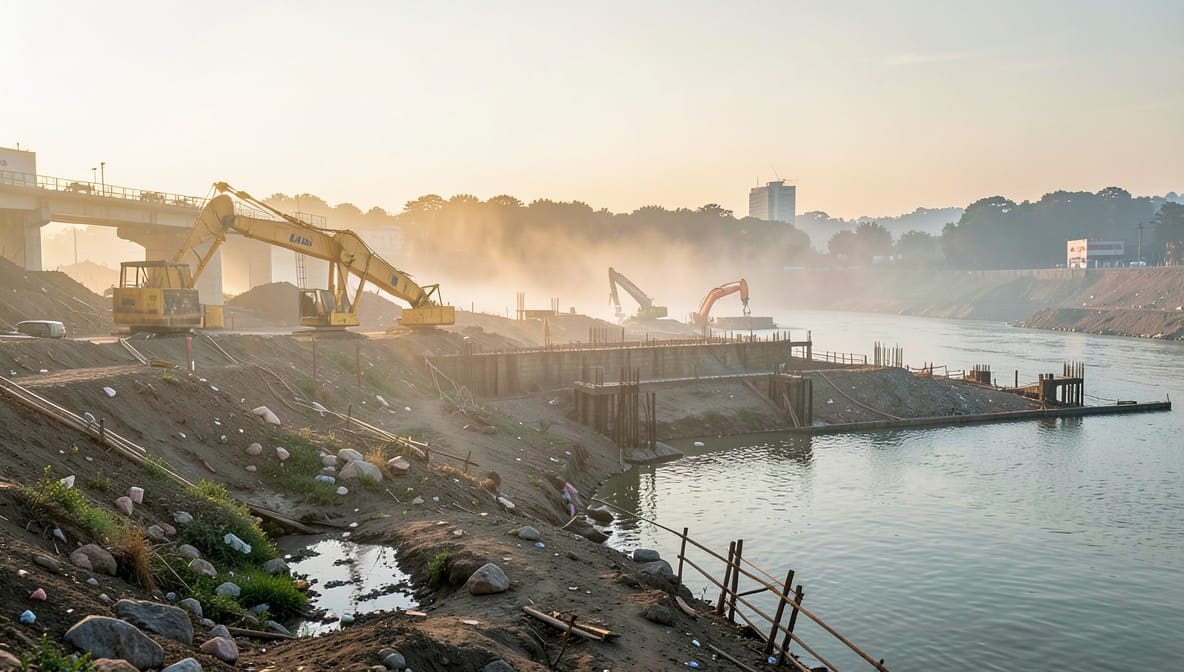
The Applicant, Bharatiya Kisan Union Purwa, filed an Original Application before the National Green Tribunal challenging the unauthorized construction of a 3.1 km road bridge across the River Ganga at Prayagraj under the Inner Ring Road Project. The project, undertaken by the National Highways Authority of India (NHAI) and its contractor M/s GPT Infra Projects Ltd., involved building a major bridge between Naini and Jhunsi, directly over the active floodplain of the Ganga. The Applicant alleged that the construction commenced without obtaining mandatory prior approval from the National Mission for Clean Ganga (NMCG) and that concrete batching plants were operating without Consent to Operate (CTO) from the Uttar Pradesh Pollution Control Board (UPPCB).
Key Facts
- The project, designated as "Construction of 4 Lane Prayagraj Southern Bypass (Phase-1)", spans 7.66 km with a 3.1 km bridge over the Ganga downstream of Sangam.
- The project was awarded to M/s GPT Infra Projects Ltd. on 17.10.2023, with the agreement executed on 21.11.2023.
- Construction activities, including foundation work for the bridge, commenced in late 2023.
- On 09.09.2024, the Applicant filed RTI applications with NMCG and District Magistrate, Prayagraj, revealing no record of prior approval for the bridge.
- On 12.08.2024, RTI response from NMCG confirmed no application or approval for the bridge was on record.
- On 03.10.2024, UPPCB confirmed via RTI that no CTE or CTO had been granted for the concrete batching plants.
- Two batching plants (CP-18 and CP-30) were operating at Kuriya and Nibi Kalan without statutory consent under the Water (Prevention and Control of Pollution) Act, 1974 and Air (Prevention and Control of Pollution) Act, 1981.
- The UPPCB issued a notice on 27.12.2024 imposing an environmental compensation of Rs. 10,00,000 on M/s GPT Infra Projects Ltd. for illegal operation of batching plants.
- A Joint Committee constituted by the District Magistrate, Prayagraj, inspected the site on 31.12.2024 and confirmed violations of Clause 4(1)(ix) and Clause 6(3) of the River Ganga Rejuvenation Order, 2016.
- On 01.05.2025, NHAI obtained retrospective approval from NMCG for the bridge construction.
- On 03.05.2025 and 07.05.2025, UPPCB issued CTOs to the two batching plants.
Procedural History
- 09.09.2024: Applicant filed RTI applications with NMCG and District Magistrate, Prayagraj.
- 12.08.2024: RTI response from NMCG confirmed no prior approval for bridge.
- 03.10.2024: UPPCB confirmed no CTE/CTO for batching plants.
- 24.10.2024: NGT issued notice in OA No. 1250/2024.
- 23.12.2024: District Magistrate constituted Joint Committee for inspection.
- 31.12.2024: Joint Committee inspection completed; violations documented.
- 27.12.2024: UPPCB issued notice for Rs. 10 lakh environmental compensation.
- 01.05.2025: NHAI obtained retrospective NMCG approval.
- 03.05.2025: CTO issued for batching plant at Nibi Kalan.
- 07.05.2025: CTO issued for batching plant at Naini.
- 20.03.2026: Hearing concluded.
- 22.04.2026: Order pronounced.
The Parties' Positions
Applicant: Argued that construction on the floodplain violated Clause 4(1)(ix) and Clause 6(3) of the River Ganga Rejuvenation Order, 2016, which declares the riverbank and floodplain a construction-free zone. The Applicant emphasized that retrospective approval cannot legitimize prior environmental harm and that the operation of batching plants without CTO caused air and water pollution.
Respondents (NHAI, UPPCB, NMCG, etc.): Contended that while initial construction commenced without approval, the necessary permissions were subsequently obtained - NMCG approval on 01.05.2025 and CTOs on 03.05.2025 and 07.05.2025. They submitted that the project had environmental clearance under EIA Notification, 2006, and that the UPPCB had already initiated action for environmental compensation.
Relief Sought
The Applicant sought:
- Immediate stoppage of construction on the floodplain.
- Direction to NMCG to revoke retrospective approval.
- Imposition of environmental compensation for past violations.
- Direction to UPPCB to enforce penalties for illegal operation of batching plants.
- Direction to District Ganga Committees to monitor compliance.
The Legal Issue
The central question was whether construction of a bridge on the active floodplain of the River Ganga without prior approval from the National Mission for Clean Ganga under Clause 42 of the River Ganga Rejuvenation Order, 2016 constitutes a statutory violation, and whether retrospective approval can absolve prior environmental harm.
Arguments Presented
For the Petitioner
The Applicant relied on Clause 4(1)(ix) and Clause 6(3) of the River Ganga Rejuvenation Order, 2016, which explicitly prohibit any construction on the riverbank or floodplain. The Applicant cited M.C. Mehta v. Union of India to argue that environmental norms are not subject to post-facto validation. The operation of batching plants without CTO was argued to be a continuous violation under the Water and Air Acts, and the Rs. 10 lakh penalty was deemed inadequate without recovery and remediation.
For the Respondent
NHAI and UPPCB argued that the project had obtained all other clearances - Environmental Clearance (14.11.2023), Forest Clearance (30.10.2023), and Inland Waterways NOC (19.07.2024). They emphasized that NMCG approval was obtained on 01.05.2025 and CTOs were granted on 03.05.2025 and 07.05.2025, thereby curing the procedural lapse. They contended that the environmental compensation notice of Rs. 10 lakh was sufficient and under process.
The Court's Analysis
The Tribunal examined the River Ganga Rejuvenation Order, 2016, issued under the Environment (Protection) Act, 1986, and found it to have statutory force. Clause 4(1)(ix) creates a non-negotiable construction-free zone on the floodplain to preserve groundwater recharge and ecological integrity. Clause 6(3) prohibits any structure on the river, its banks, or floodplain, with only narrow exceptions for natural calamities or religious events - neither of which applied here.
"The bank of River Ganga and its flood plain shall be construction free Zone to reduce pollution sources, pressures and to maintain its natural ground water recharge functions."
The Tribunal rejected the argument that retrospective approval validates prior violations. It held that environmental law is not procedural but substantive: the harm caused by construction on the floodplain during the period of non-compliance (November 2023 to April 2025) cannot be undone by later permission. The Court distinguished between procedural compliance and ecological consequence.
Regarding the batching plants, the Tribunal noted that while CTOs were eventually granted, the period of unregulated operation (from late 2023 to May 2025) involved emissions of particulate matter, noise, and water consumption from private borewells - all in violation of the Water and Air Acts. The UPPCB’s imposition of Rs. 10 lakh compensation was acknowledged but deemed incomplete without confirmation of recovery.
The Tribunal further emphasized the duty of District Ganga Committees to act as proactive watchdogs, not merely reactive bodies. The failure of the District Magistrate’s office to prevent the violation until after an RTI-driven complaint was noted as a systemic lapse.
The Court also highlighted the NMCG’s own letter dated 10.04.2025, which expressed concern over NHAI’s pattern of seeking approval after commencement of work and directed action against responsible officials - a fact that undermined NHAI’s claim of good faith.
The Verdict
The Applicant succeeded in part. The Tribunal directed:
- NHAI shall obtain prior NMCG approval for all future projects under the River Ganga Rejuvenation Order, 2016, and shall not commence work without it.
- The UPPCB shall complete recovery of the Rs. 10,00,000 environmental compensation imposed on M/s GPT Infra Projects Ltd. within three months.
- The UPPCB shall impose additional environmental compensation for the period of illegal operation of batching plants (November 2023 to May 2025), following due process.
- A joint inspection by UPPCB, District Magistrate, Prayagraj, and NHAI/GPT Infra shall be conducted within three months to assess environmental damage caused by the bridge construction; if damage is found, remedial action shall be mandated.
- All pending interim applications are disposed of.
What This Means For Similar Cases
Environmental Approvals Are Not Retroactively Validating
- Practitioners must argue that retrospective environmental approvals do not erase prior violations - harm caused during unapproved construction remains actionable.
- Courts will assess ecological impact, not just procedural compliance.
- In future litigation, the period of unauthorized activity must be quantified for compensation claims.
District Ganga Committees Must Act Proactively
- District-level authorities cannot wait for RTIs or complaints to act.
- They are statutorily mandated under the River Ganga Rejuvenation Order to monitor floodplain activity.
- Failure to act may render them liable for negligence in environmental governance.
Batching Plants and Infrastructure Projects Require Strict CTO Compliance
- Any concrete or asphalt plant operating near rivers must have CTO under Water and Air Acts - no exceptions.
- The issuance of CTO after violation does not negate liability for the period of non-compliance.
- Environmental compensation must be recovered, not merely imposed.