The National Green Tribunal has delivered a critical clarification on the limits of state-level exemptions from environmental clearances, reinforcing that no administrative notification can override the statutory framework governing mineral extraction and ecological protection. This ruling carries immediate implications for mining regulation across India, particularly in ecologically sensitive river basins.
Background & Facts
The Dispute
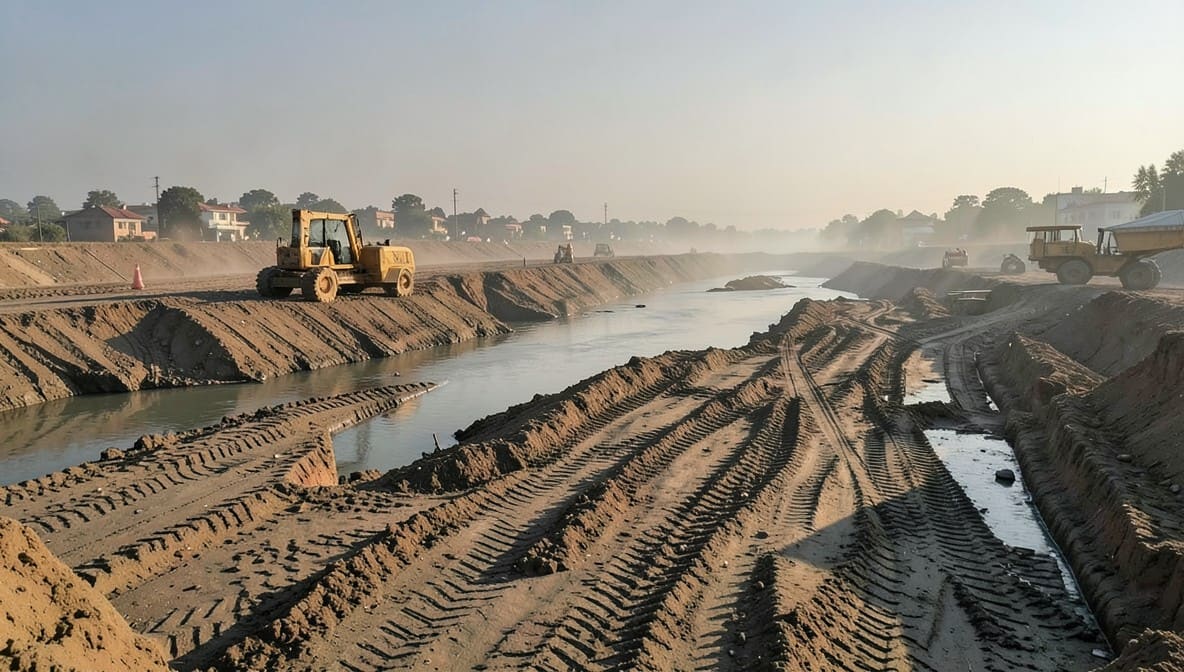
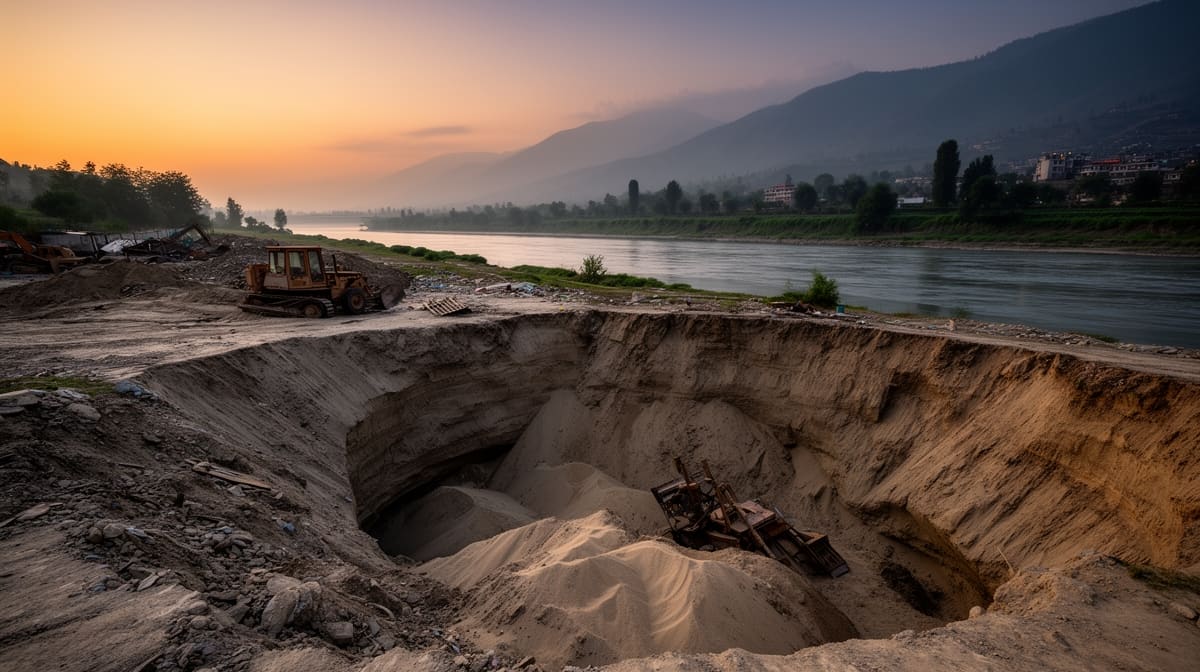
The matter arose from a news report in Daily Excelsior dated 09.07.2024, alleging large-scale illegal sand mining along the Jhelum River embankment in Jammu & Kashmir, which threatened flood control infrastructure and endangered thousands of residents. The petition highlighted unregulated extraction activities enabled by a state notification that purportedly exempted certain sand mining operations from mandatory Environmental Clearance (EC) under the Environment (Protection) Act, 1986.
Procedural History
- 09.07.2024: Media report published detailing destruction of Jhelum embankment due to unregulated sand mining
- 2024: Original Application No. 924/2024 filed before the National Green Tribunal seeking intervention
- 15.11.2022: Government of Jammu & Kashmir issued Notification S.O. 599, amending the Minor Mineral Concession Rules, 2016 to exempt cases listed in Appendix-IX of MoEF&CC’s 28.03.2020 notification from EC requirements
- 26.11.2025: Respondent No. 5 filed a compliance report asserting the validity of the exemption
- 09.02.2026: Hearing before NGT Principal Bench, New Delhi
Relief Sought
The applicant sought immediate cessation of all sand mining activities in the Jhelum basin pending a comprehensive environmental audit, and declared the state’s exemption notification ultra vires the central environmental regulatory framework.
The Legal Issue
The central question was whether a state government can, through a notification under the Mines and Minerals (Development and Regulation) Act, 1957, exempt minor mineral extraction from the mandatory requirement of Environmental Clearance under the Environment (Protection) Act, 1986, thereby bypassing national environmental safeguards.
Arguments Presented
For the Petitioner
The petitioner argued that the Environment (Protection) Act, 1986 is a central legislation enacted under Article 253 of the Constitution to implement international environmental obligations. Any state notification that undermines the EC regime violates the supremacy of central environmental law. The petitioner relied on M.C. Mehta v. Union of India to assert that ecological protection is a fundamental duty under Article 51A(g), and that exemptions for sand mining - especially near river embankments - constitute a direct threat to public health and safety.
For the Respondent
The respondents contended that the amendment to the Minor Mineral Concession Rules, 2016 was validly issued under Section 15 read with Section 23C of the MMDR Act, 1957, which permits states to frame rules for minor minerals. They argued that Appendix-IX exemptions were intended for small-scale, non-industrial extraction and that the state had the legislative competence to regulate local customary practices by Hanjis and Muleteers under the third proviso. They further claimed that no short-term permits were currently being issued, rendering the issue academic.
The Court's Analysis
The Tribunal examined the hierarchy of environmental laws and the nature of Environmental Clearance as a statutory precondition, not merely an administrative formality. It noted that the Environment (Protection) Act, 1986, and its associated rules, including the Environmental Impact Assessment Notification, 2006, establish a uniform national standard. The Tribunal held that the MMDR Act, 1957, while granting states rule-making power over minor minerals, cannot override the substantive environmental obligations imposed by the Environment (Protection) Act.
"The power to frame rules under the MMDR Act cannot be used to nullify the mandatory requirement of Environmental Clearance under the Environment (Protection) Act, which is a comprehensive legislative scheme for ecological protection."
The Court distinguished the exemption for manual, customary extraction by local communities (third proviso) from the blanket exemption for Appendix-IX activities, which included commercial-scale mining. It emphasized that the latter category clearly falls within the ambit of projects requiring EC under the 2006 Notification. The Tribunal further observed that the state’s claim of non-issuance of permits was insufficient to moot the legal issue, as the existence of an unlawful exemption creates a continuing risk of violation.
The Verdict
The National Green Tribunal held that the Jammu & Kashmir government’s exemption notification is invalid to the extent it removes the requirement of Environmental Clearance for activities listed in Appendix-IX. The Court directed the Central Pollution Control Board and MoEF&CC to review all such state-level exemptions nationwide and issue binding guidelines to ensure compliance with the Environment (Protection) Act, 1986.
What This Means For Similar Cases
Environmental Clearance Is Non-Delegable
- Practitioners must challenge any state notification that seeks to exempt mining or construction projects from EC requirements under the Environment (Protection) Act
- The supremacy of central environmental law over state rule-making in this domain is now firmly established
- Any project falling under the 2006 EIA Notification must obtain EC regardless of state exemptions
Customary Extraction ≠ Commercial Mining
- The exemption for manual extraction by Hanjis and Muleteers remains valid but must be strictly confined to non-mechanized, small-scale, subsistence-level activity
- Authorities must distinguish between customary use and commercial sand mining disguised as local practice
- Evidence of mechanized equipment, bulk transportation, or sale to third parties triggers EC requirements
Regulatory Oversight Must Be Centralized
- The NGT has mandated a national review of similar exemptions in other states
- Practitioners should monitor state notifications for hidden EC waivers and file preemptive applications before NGT if violations are suspected
- The CPCB and MoEF&CC are now under obligation to issue uniform guidelines to prevent jurisdictional arbitrage