The National Green Tribunal has delivered a decisive ruling affirming that project proponents cannot circumvent mandatory Environmental Clearance by artificially bifurcating a single development into smaller plots. The judgment reinforces the principle that cumulative built-up area must be assessed holistically under the EIA Notification, 2006, and that procedural manipulation to evade statutory obligations will not be tolerated.
Background & Facts
The Dispute
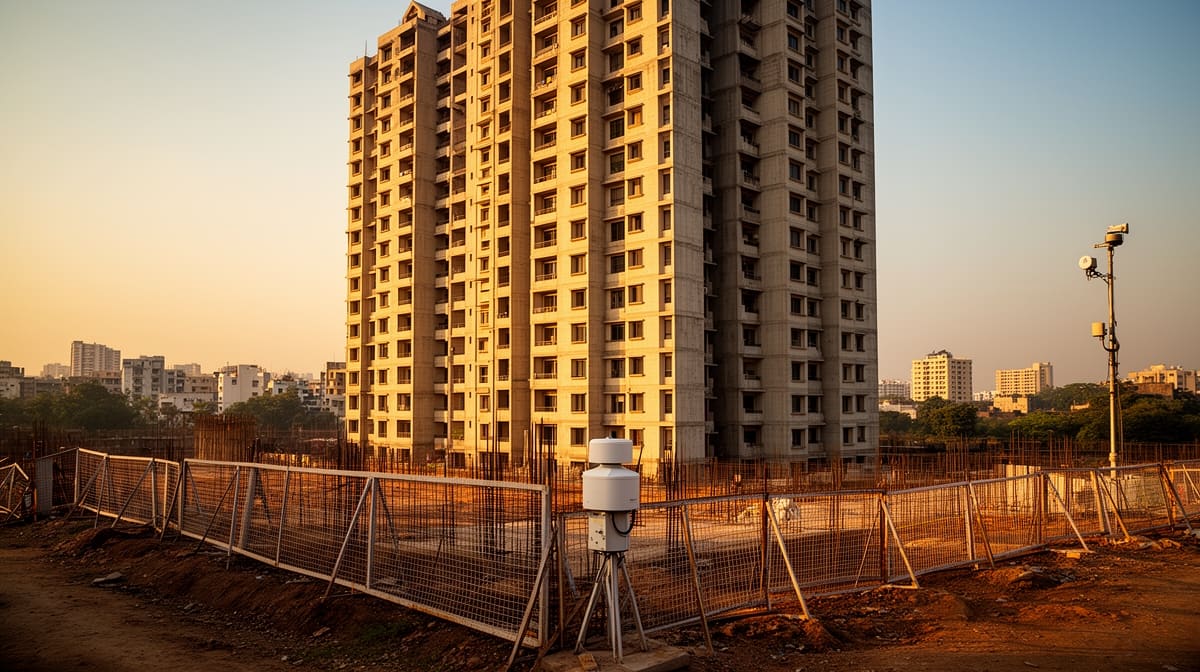
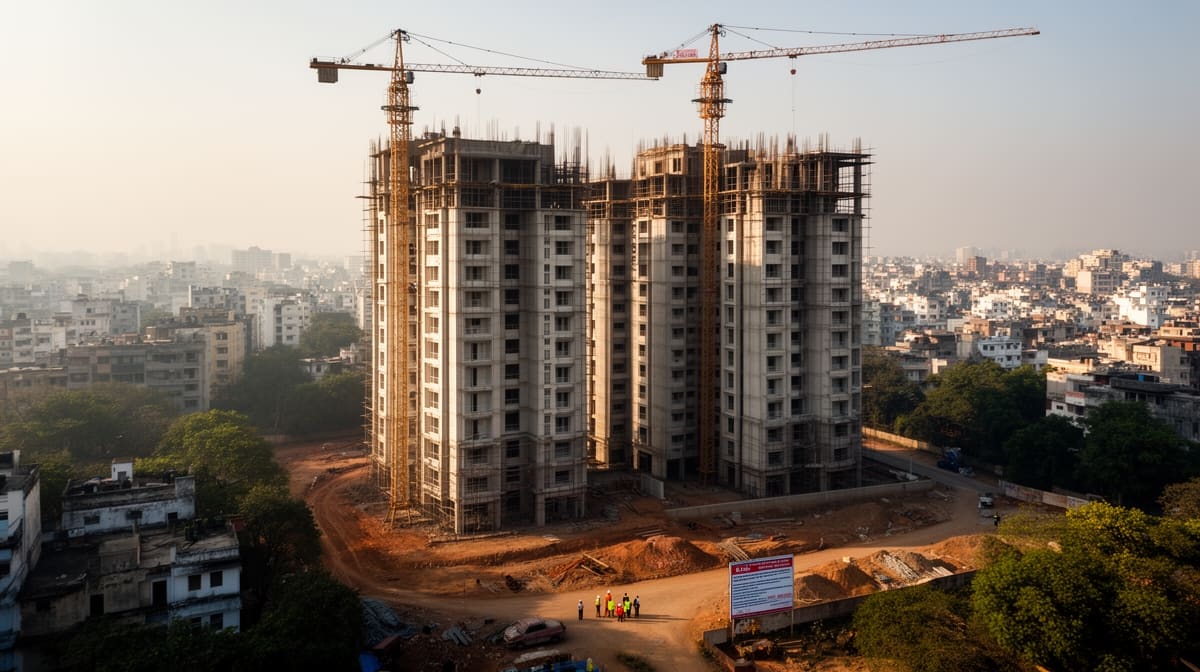
The applicant, Mr. Tanaji Gambhire, alleged that M/s. Prayeja City, a joint venture of Bhandari Gelada Associates LLP and Prayeja Developers LLP, constructed a large residential-commercial complex at Vadgaon Budruk, Pune, without obtaining prior Environmental Clearance (EC) under the Environment (Protection) Act, 1986 and the EIA Notification, 2006. The project, branded as "Prayeja City-I" and "Prayeja City-II", was developed on two adjacent plots - Plot No.1 (48,694 sq. m. BUA) and Plot No.2 (18,461 sq. m. BUA) - with a combined total built-up area (BUA) of 67,154.88 sq. m. The applicant contended that these were not two independent projects but parts of a single, integrated development, deliberately split to avoid triggering the 20,000 sq. m. EC threshold.
Procedural History
- 2007 - 2017: The Project Proponent (PP) obtained multiple building sanctions from Pune Municipal Corporation (PMC) for Plot No.1, progressively increasing BUA beyond 20,000 sq. m. without applying for EC.
- 2008: First plinth check certificate issued for Plot No.1, marking commencement of construction without EC.
- 2013: PP acquired adjacent land (Plot No.2) and bifurcated the project into two separate entities for planning purposes.
- 2019: Applicant filed complaint; SEIAA issued show-cause notice; PP applied for ex-post facto EC under MoEF&CC’s 2017 amnesty scheme, which was rejected.
- 2020: NGT constituted a Joint Committee to assess violations and recommend compensation.
- 2021: Supreme Court set aside NGT’s interim order on procedural grounds but allowed the Joint Committee’s factual findings to stand.
- 2022 - 2023: PP filed fresh EC application under MoEF&CC’s 2021 SOP, pending before SEIAA.
Relief Sought
The applicant sought demolition of illegal structures, environmental compensation under Section 15 of the NGT Act, 2010, prohibition of benefits derived from the project, and restoration of the ecological site.
The Legal Issue
The central question was whether the cumulative built-up area of two separately sanctioned plots, developed as a single integrated project, must be aggregated to determine the requirement for prior Environmental Clearance under the EIA Notification, 2006, and whether the 5-year limitation under Section 15 of the NGT Act bars compensation for violations occurring beyond that period.
Arguments Presented
For the Petitioner
The applicant argued that the bifurcation of Plot No.1 and Plot No.2 was a deliberate evasion tactic to circumvent the 20,000 sq. m. EC threshold. He cited the Joint Committee Report, which confirmed shared infrastructure, unified management, and common ownership. He relied on Central Pollution Control Board v. M/s. Goel Ganga Developers to assert that the polluter pays principle mandates compensation for the entire period of violation, irrespective of limitation, and that the Supreme Court’s remand did not invalidate factual findings.
For the Respondent
The Project Proponent contended that Plot No.1 and Plot No.2 were legally distinct projects with separate approvals, amenities, and ownership structures. They argued that the 20,000 sq. m. threshold applies per project, not cumulatively, and that the applicant’s claim was barred by limitation under Section 15 of the NGT Act, 2010, as the cause of action arose in 2007. They further submitted that their pending EC application under the 2021 SOP rendered the application infructuous.
The Court's Analysis
The Tribunal examined the EIA Notification, 2006, which mandates EC for "Building and Construction Projects" exceeding 20,000 sq. m. BUA. It rejected the PP’s argument that separate PMC sanctions automatically rendered the projects independent. The Court emphasized that statutory compliance cannot be evaded by artificial fragmentation. The Joint Committee’s findings, affirmed by the Supreme Court’s remand order, established that the two plots were functionally and physically integrated: shared utilities, common access, unified marketing, and coordinated construction timelines.
"The Project Proponent has adopted tactics to overcome the requirement of EC... on the pretext that two separate sanctions were taken for two separate projects."
The Tribunal distinguished between procedural compliance (PMC approvals) and substantive environmental law (EIA Notification). While PMC may grant building permits based on urban planning norms, the EIA Notification imposes a separate, mandatory environmental threshold. The Court held that the cumulative BUA of 67,154.88 sq. m. clearly triggered the EC requirement.
On limitation, the Court accepted the PP’s argument that Section 15 of the NGT Act prescribes a 5-year limitation period for filing applications seeking compensation. It held that while violations occurring before 2015 could not be the basis for compensation, the period from July 2, 2015 (date of filing) to November 16, 2020 (date of first EC application) was actionable. The Joint Committee’s calculation of Rs. 7,36,87,500 for 1,965 days of violation, based on CPCB’s 2022 guidelines, was found to be methodologically sound and proportionate.
The Court declined to order demolition, recognizing the rights of third-party flat purchasers and the existence of remedial mechanisms under the 2021 SOP. It held that compensation, not destruction, was the appropriate remedy under the polluter pays principle.
The Verdict
The applicant succeeded on the core issue. The Tribunal held that the cumulative built-up area of a project must be aggregated to determine EC obligations under the EIA Notification, 2006, and that bifurcation to evade statutory thresholds constitutes illegal circumvention. The Project Proponent was directed to deposit Rs. 7,36,87,500 as environmental damage compensation within two months, to be utilized by the Maharashtra Pollution Control Board for ecological restoration.
What This Means For Similar Cases
Cumulative BUA Cannot Be Ignored
- Practitioners must assess total built-up area across all plots under common ownership or management when determining EC obligations.
- Developers cannot rely on separate PMC approvals to justify non-compliance with EIA thresholds.
- Environmental authorities must scrutinize project structure holistically, not just on paper approvals.
Limitation Period Caps Compensation, Not Violation
- While violations may span decades, compensation under Section 15 of the NGT Act is limited to the 5-year window preceding the filing date.
- Practitioners should file environmental complaints promptly to preserve claims for full compensation.
- Authorities must calculate EDC based on the most recent 5-year period of non-compliance, not the entire duration of violation.
Remediation Over Demolition Is the New Norm
- Courts are increasingly prioritizing environmental restoration over demolition, especially where third-party rights exist.
- The 2021 MoEF&CC SOP provides a viable pathway for regularization through EC application, EMD, and bank guarantees.
- Practitioners should advise clients to proactively apply for ex-post facto EC under the SOP rather than risk litigation.