The Kerala High Court has delivered a critical reaffirmation of evidentiary standards in criminal prosecutions for rash and negligent driving, setting aside convictions based entirely on the testimony of a witness who was unconscious at the time of the incident. This judgment underscores that even in cases involving serious consequences, the burden of proof remains unshakably on the prosecution, and speculative inferences cannot substitute for credible evidence.
Background & Facts
The Dispute
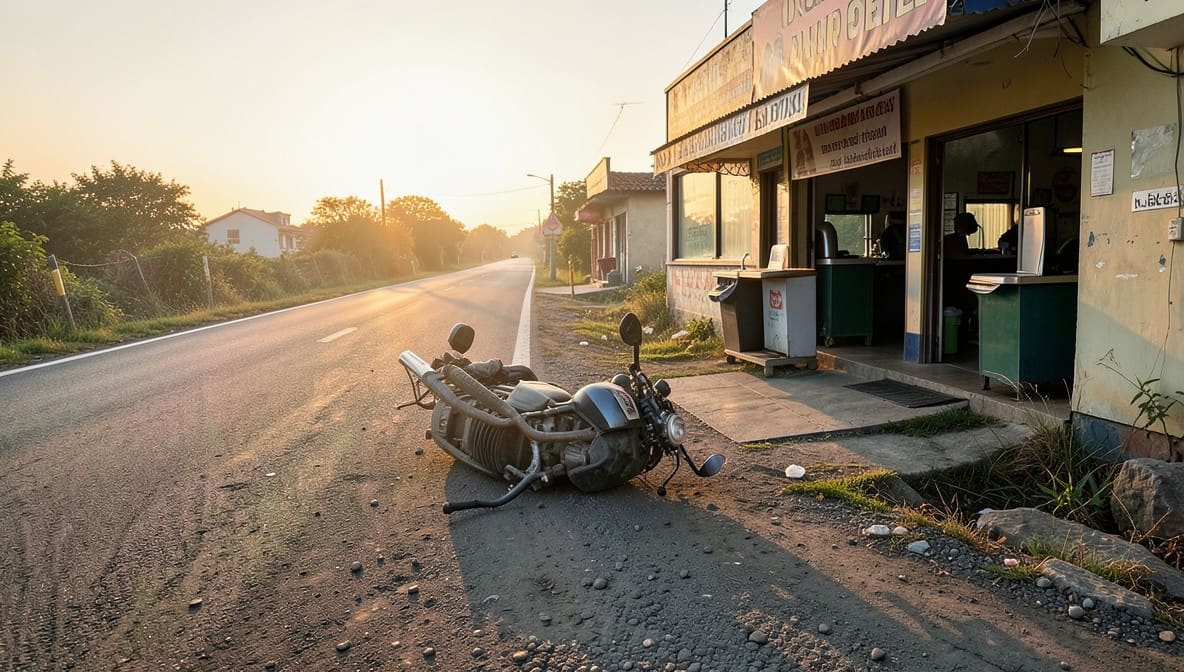
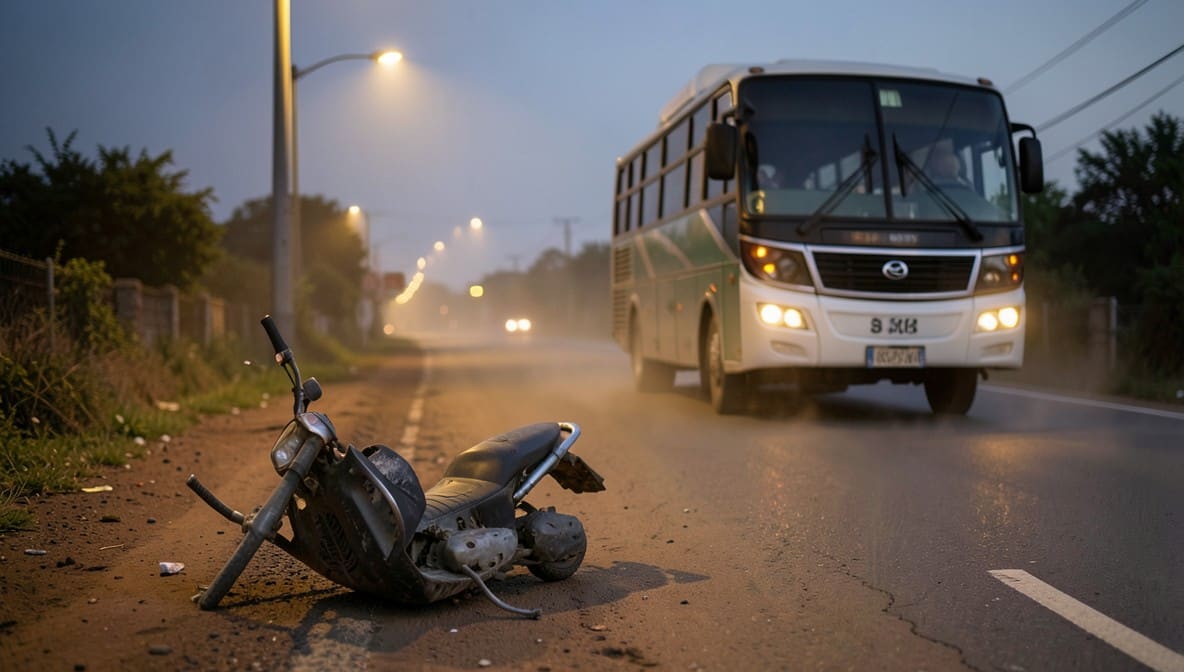
On 11 July 2006, a stage carriage driven by the petitioner, P. Ramaswamy, collided head-on with a motorbike on the Munnar-Pooppara road. The motorbike’s rider, the victim, died at the scene. His wife, PW5, who was riding pillion, sustained grievous injuries and was hospitalized. The prosecution alleged that the petitioner’s reckless driving caused the collision, leading to charges under Sections 279, 338, and 304A of the Indian Penal Code.
Procedural History
- 2007: Trial commenced before Judicial Magistrate First Class, Nedumkandam
- 2010: Trial Court convicted petitioner under all three IPC sections and imposed sentences of three months, one year, and two years’ imprisonment respectively
- 2011: Additional Sessions Court, Thodupuzha, confirmed conviction but modified sentence - removed punishment under Section 279 and reduced fine under Section 304A from Rs.10,000 to Rs.5,000
- 2012: Revision petition filed before Kerala High Court challenging the concurrent findings
Relief Sought
The petitioner sought acquittal on the grounds that the sole eyewitness testimony relied upon by the courts below was inherently unreliable due to the witness’s prolonged unconsciousness and inability to observe the events leading to the collision.
The Legal Issue
The central question was whether a conviction under Sections 279, 338, and 304A IPC can be sustained when the only eyewitness to the alleged rash driving was unconscious at the moment of impact and could not have perceived the manner of driving.
Arguments Presented
For the Petitioner
The petitioner’s counsel argued that PW5’s testimony was inadmissible as evidence of the petitioner’s driving conduct because she lost consciousness immediately after the collision and regained it only after 42 days. Relying on State of Maharashtra v. Damu and Rajendra Prasad v. State of U.P., counsel contended that evidence must be credible, contemporaneous, and capable of independent corroboration. No other witness testified to the petitioner’s driving behavior, and no mechanical or forensic evidence established negligence.
For the Respondent
The State, through the Senior Public Prosecutor, argued that the cumulative effect of the prosecution’s evidence - including the nature of the collision, the position of the vehicles, and the absence of any other contributing factor - justified the conviction. It was submitted that the courts below were entitled to draw reasonable inferences from circumstantial evidence, even in the absence of direct observation by PW5.
The Court's Analysis
The Court undertook a rigorous appraisal of PW5’s testimony, emphasizing that her inability to perceive the events preceding the collision rendered her account legally insufficient to establish the essential ingredient of rash and negligent driving. The Court noted that while circumstantial evidence may suffice in criminal cases, it must form a complete chain excluding every reasonable hypothesis of innocence. Here, the chain was broken at its first link.
"It would be highly unsafe and improper to fasten the petitioner with the criminal liability for rash and negligent driving on the basis of the above statement of PW5."
The Court distinguished State of Karnataka v. K. Ramesh where eyewitnesses provided consistent accounts of driving behavior, and Suresh Kumar v. State of Haryana, where technical evidence corroborated negligence. In contrast, this case lacked any objective evidence - no skid marks, no speed measurement, no mechanical failure report, and no independent eyewitness. The courts below erred in treating a witness’s post-accident recollection as probative of the actus reus.
The Court further held that Section 304A IPC requires proof of negligence causing death, not merely the occurrence of death following a collision. Without evidence of how the vehicle was driven, the conviction could not stand.
The Verdict
The petitioner won. The Kerala High Court held that conviction under Sections 279, 338, and 304A IPC cannot rest on the testimony of a witness who was unconscious at the time of the incident. The judgments of the Trial and Appellate Courts were set aside, and the petitioner was acquitted of all charges. His bail bond was cancelled and he was set at liberty.
What This Means For Similar Cases
Witness Credibility Must Be Scrutinized at the Threshold
- Practitioners must challenge prosecution evidence where witnesses claim to have observed events they could not have perceived due to trauma, unconsciousness, or physical obstruction
- Courts must conduct a preliminary assessment of witness capacity before admitting testimony as substantive evidence
- In road accident cases, reliance on a single injured witness without corroboration is now legally untenable
Circumstantial Evidence Requires a Complete Chain
- The absence of direct eyewitnesses does not permit courts to fill evidentiary gaps with speculation
- Prosecution must produce objective evidence - vehicle damage patterns, speed data, road conditions, or independent witnesses - to support allegations of rash driving
- Mere occurrence of a fatal collision is not proof of criminal negligence under Section 304A IPC
Judicial Review of Concurrent Findings Is Not Futile
- Revisional jurisdiction under Section 401 CrPC remains a vital safeguard against erroneous convictions based on flawed evidence appreciation
- High Courts must intervene where lower courts ignore the foundational requirement of reliable testimony, even if findings are "concurrent"
- This judgment reinforces that natural justice demands evidentiary integrity, not procedural deference