Topic

eyewitness testimony

Eyewitness testimony in Indian law refers to oral evidence given by a person who directly observed a crime, and its admissibility and reliability are assessed under the Indian Evidence Act, 1872.

21 articlesLatest August 2026
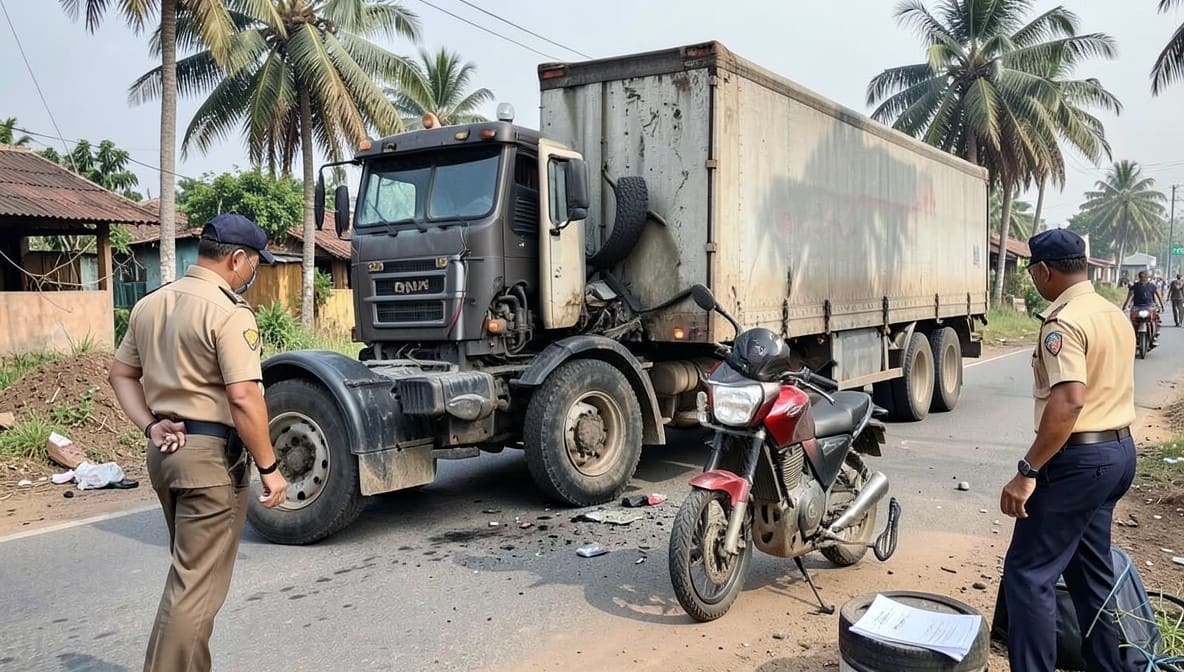
Motor Accident Claims | Preponderance of Probability Suffices for Negligence Under MV Act: AP HC Awards ₹18.95 Lakh Compensation
|Andhra Pradesh High Court

Motor Accident Claims | Preponderance of Probability Suffices for Negligence Under MV Act: AP HC Awards ₹18.95 Lakh Compensation

The Andhra Pradesh High Court reaffirmed that motor accident claims require proof only on a preponderance of probability, not beyond reasonable doubt, aligning with social welfare legislation. The court set aside the MACT’s dismissal and awarded ₹18.95 lakh to the dependents of a deceased police constable, emphasizing the lower standard of proof in civil negligence cases.

Section 302 IPC | Credible Eyewitness Testimony Overrides Absence of Motive for Murder Conviction: Andhra Pradesh HC
Case Law Analysis
|Andhra Pradesh High Court

Section 302 IPC | Credible Eyewitness Testimony Overrides Absence of Motive for Murder Conviction: Andhra Pradesh HC

The Andhra Pradesh High Court ruled that a murder conviction under Section 302 IPC can stand on the strength of unimpeachable eyewitness testimony and medical evidence alone, even if motive is not established. This reinforces the primacy of direct ocular evidence in criminal trials, setting a precedent for prosecutors and defence counsel in cases lacking clear motive.

Section 164 CrPC | Confessional Statement Must Be Inculpatory and Voluntary to Sustain Conviction: Jharkhand HC Acquits in Double Murder Case
Case Law Analysis
|Jharkhand High Court

Section 164 CrPC | Confessional Statement Must Be Inculpatory and Voluntary to Sustain Conviction: Jharkhand HC Acquits in Double Murder Case

Jharkhand High Court sets aside convictions in a double murder case, ruling that a Section 164 CrPC statement lacking inculpatory content and voluntary recording cannot form the sole basis for conviction. The judgment underscores that uncorroborated eyewitness accounts and stale evidence fail to meet the 'beyond reasonable doubt' standard.

Section 302 IPC | Eyewitness Testimony Must Be Corroborated Through Rigorous Cross-Examination; FIR Delay and Contradictions Fatal to Conviction: Allahabad HC
Case Law Analysis
|Allahabad High Court

Section 302 IPC | Eyewitness Testimony Must Be Corroborated Through Rigorous Cross-Examination; FIR Delay and Contradictions Fatal to Conviction: Allahabad HC

Allahabad High Court acquitted accused in a murder case, ruling that prosecution witnesses' contradictions, unexplained FIR delay, and failure to subject testimony to rigorous cross-examination failed to prove guilt beyond reasonable doubt. The judgment reinforces that eyewitness accounts alone are insufficient without corroboration and procedural compliance.

Section 304 Part II IPC | Sentence Reduced to Time Served Due to Two-Decade Trial Delay and Unblemished Conduct : Jharkhand HC
Case Law Analysis
|Jharkhand High Court

Section 304 Part II IPC | Sentence Reduced to Time Served Due to Two-Decade Trial Delay and Unblemished Conduct : Jharkhand HC

The Jharkhand High Court reduced a five-year sentence to time served after a 20-year trial delay, affirming that prolonged judicial inaction can justify proportionate sentencing even in serious culpable homicide cases. This sets a critical precedent for courts to weigh delay as a mitigating factor in sentencing, particularly for accused with clean records and no flight risk.

Section 34 IPC | Liability for Attempted Murder Requires Active Participation, Not Mere Presence: Jharkhand HC
Case Law Analysis
|Jharkhand High Court

Section 34 IPC | Liability for Attempted Murder Requires Active Participation, Not Mere Presence: Jharkhand HC

The Jharkhand High Court acquits two accused under Section 307 IPC when medical evidence contradicted the victim’s claim of stone assault, holding that Section 34 cannot extend collective liability without proof of active, intentional involvement. This ruling sharpens the threshold for common intention in violent offenses, protecting bystanders from vicarious criminal liability.

Section 483 BNSS | Bail Mandatory When Eyewitnesses Fail to Implicate Accused: MP HC Jabalpur
|Madhya Pradesh High Court

Section 483 BNSS | Bail Mandatory When Eyewitnesses Fail to Implicate Accused: MP HC Jabalpur

Madhya Pradesh High Court rules that bail must be granted under Section 483 of Bharatiya Nagarik Suraksha Sanhita, 2023 when prosecution eyewitnesses do not support allegations against the accused. The judgment underscores that pre-trial detention cannot be justified solely on police statements if trial witnesses exonerate the accused.

Section 302/149 IPC | Fractures Alone Sufficient for Murder Conviction Without Sharp Weapon Injuries : Allahabad HC
Case Law Analysis
|Allahabad High Court

Section 302/149 IPC | Fractures Alone Sufficient for Murder Conviction Without Sharp Weapon Injuries : Allahabad HC

Allahabad HC ruled that fractures of ribs and limbs, even without sharp weapon injuries, can sustain a murder conviction under Section 302/149 IPC if the injuries are ordinarily sufficient to cause death. The court emphasized that eyewitness testimony alone can uphold such convictions, reinforcing the principle that the nature of injuries-not the weapon-determines culpability.

Leave to Appeal Granted Against Acquittal When Eyewitness and Medical Evidence Corroborate Grievous Hurt Under IPC 324 : Bombay HC
Case Law Analysis
|Bombay High Court

Leave to Appeal Granted Against Acquittal When Eyewitness and Medical Evidence Corroborate Grievous Hurt Under IPC 324 : Bombay HC

The Bombay High Court has granted leave to appeal against an acquittal in a grievous hurt case, holding that consistent eyewitness testimony and medical evidence establishing fracture and surgical intervention constitute sufficient grounds for appellate review. This reinforces that acquittals cannot stand where credible, corroborated evidence of serious bodily harm exists, even if the trial court erred in its evaluation.