
The Supreme Court has reaffirmed that conscious possession of weapons is a prerequisite for conviction under Sections 25-1B(a) and 26 of the Arms Act, 1959. In dismissing the State of Jharkhand’s appeal, the Court upheld the High Court’s acquittal of Jagdish Lakra, holding that mere recovery of weapons from his premises, without proof of dominion or knowledge, is insufficient to establish guilt. The judgment underscores the necessity of proving conscious possession in Arms Act cases, particularly in regions affected by extremist activities where coercion may vitiate voluntary possession.
Background & Facts
The Dispute
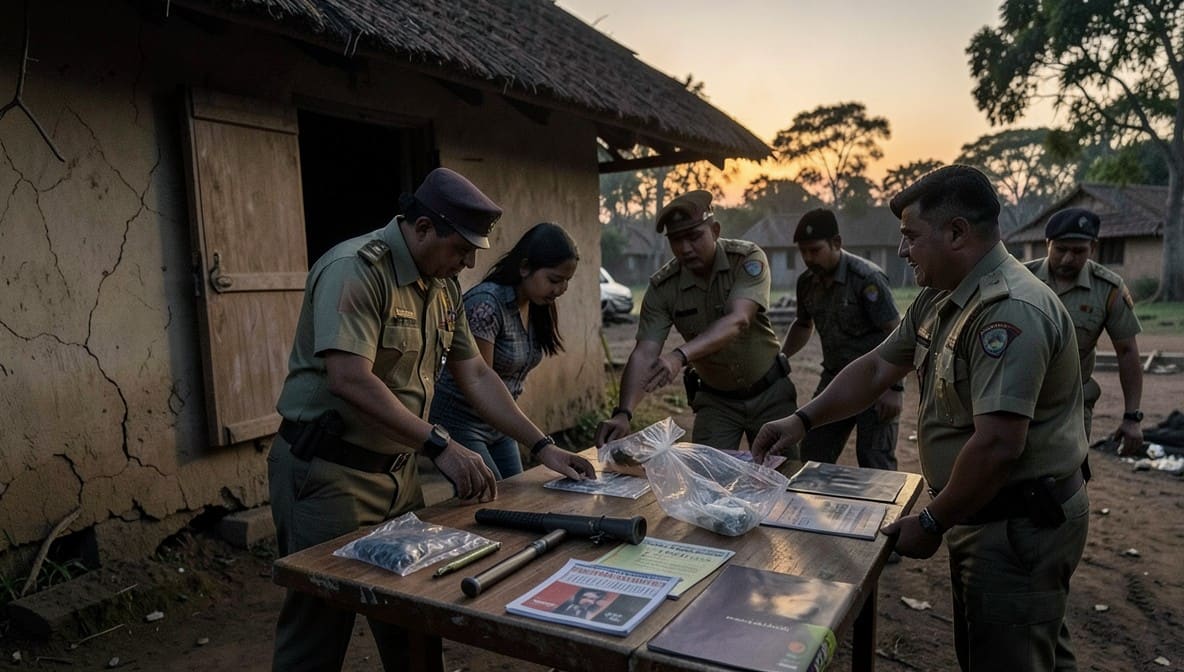
The case arises from a police raid conducted on 12.08.2001 in village Dora, Jharkhand, based on secret information that extremists were sheltering in the house of Jagdish Lakra. During the raid, four individuals attempted to flee, and one, Birendra Oraon, was apprehended. A search of Lakra’s house revealed incriminating articles, including a country-made stein gun, extremist literature, and medicines. Lakra claimed that the extremists had forcibly occupied his house and left the articles behind.
Key Facts
- 12.08.2001: Police and CRPF conducted a raid in village Dora based on secret information about extremists sheltering in Jagdish Lakra’s house
- 04:00 AM: Extremists arrived at Lakra’s house
- 06:00 AM: Police surrounded the house; three extremists fled, while Birendra Oraon was apprehended
- Recovery: A country-made stein gun, ammunition pouch, extremist literature, and medicines were seized from Lakra’s house under a seizure memo
- Statement of Birendra Oraon: Confirmed that the seized articles belonged to the fleeing extremists and were left in Lakra’s house
- Statement of Jagdish Lakra: Claimed the extremists forcibly occupied his house and left the articles under duress
Procedural History
- FIR Registration: Case registered based on the statement of Chetnanad Sinha, Officer-in-Charge of Senha Police Station
- Charge-Sheet: Filed against Jagdish Lakra, Chatru Oraon, Birendra Oraon, and Anil Kumar Pandey under Sections 25(1-B)(a), 26, and 35 of the Arms Act, 1959, and Sections 116 IPC and 17(i) of the Criminal Law Amendment Act
- Trial Commencement: Charges framed on 03.06.2002; six witnesses examined, five of whom turned hostile
- Trial Court Verdict: Convicted Jagdish Lakra under Sections 25-1B(a) and 26 of the Arms Act, sentencing him to rigorous imprisonment for three years and one year, respectively
- Appellate Court: Upheld the Trial Court’s conviction and sentence
- High Court: Allowed Criminal Revision No. 285/2009 on 09.05.2023, setting aside the conviction on grounds of perversity and lack of proof of conscious possession
- Supreme Court: Special Leave Petition (Crl.) No. 4978 of 2024 filed by the State of Jharkhand; appeal dismissed on 13.07.2026
Relief Sought
The State of Jharkhand sought to overturn the High Court’s acquittal of Jagdish Lakra and restore the concurrent findings of conviction and sentence passed by the Trial Court and Appellate Court under Sections 25-1B(a) and 26 of the Arms Act.
The Legal Issue
The central question before the Supreme Court was whether mere recovery of weapons from a person’s premises is sufficient to establish conscious possession under Sections 25-1B(a) and 26 of the Arms Act, 1959, or whether the prosecution must prove that the accused had dominion and knowledge of the weapons.
Arguments Presented
For the Appellant (State of Jharkhand)
- Reliability of Evidence: Argued that the evidence of P.W.8 and P.W.9 (official witnesses) consistently corroborated the raid, arrest, and seizure, with no material contradictions despite lengthy cross-examination
- Seizure and Recovery: Contended that the seizure memo, confessional statement, arms examination report, and material exhibits were duly proved through competent witnesses, establishing the prosecution’s case
- Hostile Witnesses: Submitted that the testimony of official witnesses should not be discarded merely because independent witnesses turned hostile, especially in extremist-affected areas where fear and intimidation prevail
- Concurrent Findings: Argued that the High Court erred in exercising revisional jurisdiction by interfering with the concurrent findings of conviction recorded by the Trial Court and Appellate Court without cogent reasons
For the Respondent (Jagdish Lakra)
- Involuntary Possession: Contended that the extremists forcibly occupied his house and left the weapons behind; he had no voluntary role in harbouring them
- Lack of Dominion: Argued that the stein gun was not under his conscious possession or control, and mere recovery was insufficient to establish guilt under the Arms Act
- Social Realities: Highlighted the coercive environment in Jharkhand, where extremists often forcibly occupy villagers’ houses, exposing them to grave danger if they resist
- Legal Precedent: Relied on Francis Xavier Salemao vs. State Through Public Prosecutor (2007 SCC Online Bom 1261), which held that possession must involve consciousness or knowledge and dominion over the weapon
The Court's Analysis
The Supreme Court examined the evidence and the reasoning of the High Court, emphasizing the legal requirement of conscious possession under the Arms Act. The Court observed:
"The possession of firearm must have an element of consciousness or knowledge of that possession and where he is not in actual physical possession, he has nonetheless a power or control over that weapon so that his possession thereof continues despite physical possession being in someone else. In any disputed question of possession specific facts admitted or proved will alone establish the existence of the factual relation of control or the dominion of the person over it necessary to determine whether that person was not in possession of the thing in question."
The Court noted that the Trial Court and Appellate Court had erred by swaying away with the mere recovery of weapons, ignoring the lack of evidence to prove that the articles were under Lakra’s conscious possession. The Court highlighted:
- Timing of Events: The extremists arrived at Lakra’s house at 04:00 AM and fled by 06:00 AM, leaving the articles behind. The short duration of their stay raised doubts about Lakra’s voluntary possession
- Explanation of Coercion: Lakra’s statement that the extremists forcibly occupied his house and left the articles under threat of life was corroborated by the appellant’s own submission that reluctance of local witnesses to support the prosecution is common due to fear and intimidation in extremist-affected areas
- Legal Principle: The Court reiterated that coercive possession or possession under threat of life cannot be the sole basis for conviction, as it lacks the element of consciousness required under the Arms Act
The Court concluded that the High Court’s view was plausible and justified, based on a proper appreciation of evidence, and found no illegality or perversity in the impugned judgment.
The Verdict
The Supreme Court dismissed the appeal filed by the State of Jharkhand, upholding the High Court’s acquittal of Jagdish Lakra. The Court held that the prosecution failed to establish conscious possession of the recovered weapons, rendering the conviction under Sections 25-1B(a) and 26 of the Arms Act, 1959 unsustainable.
What This Means For Similar Cases
Conscious Possession Is Non-Negotiable
- Burden of Proof: Prosecutors must rigorously prove that the accused had knowledge and dominion over the recovered weapons. Mere recovery from the premises is insufficient to establish guilt under the Arms Act
- Contextual Evidence: Courts will scrutinize the circumstances of possession, including the duration of stay, coercion, and social realities of the region, to determine whether possession was voluntary or forced
Hostile Witnesses Alone Cannot Defeat Prosecution
- Official Witnesses: The testimony of police officers and investigating officers carries significant weight, especially when independent witnesses turn hostile due to fear or intimidation
- Corroborative Evidence: Prosecutors should ensure seizure memos, forensic reports, and material exhibits are duly proved to strengthen the case, even in the absence of independent witnesses
Revisional Jurisdiction Must Be Exercised Sparingly
- Concurrent Findings: High Courts should avoid interfering with concurrent findings of conviction unless there is glaring perversity or illegality in the lower courts’ judgments
- Plausible View: If the High Court’s view is plausible and well-reasoned, the Supreme Court is unlikely to overturn it, even if another view could have been taken
Practitioners must tailor their arguments to emphasize conscious possession and dominion over weapons, particularly in cases involving extremist activities or coercive environments.





