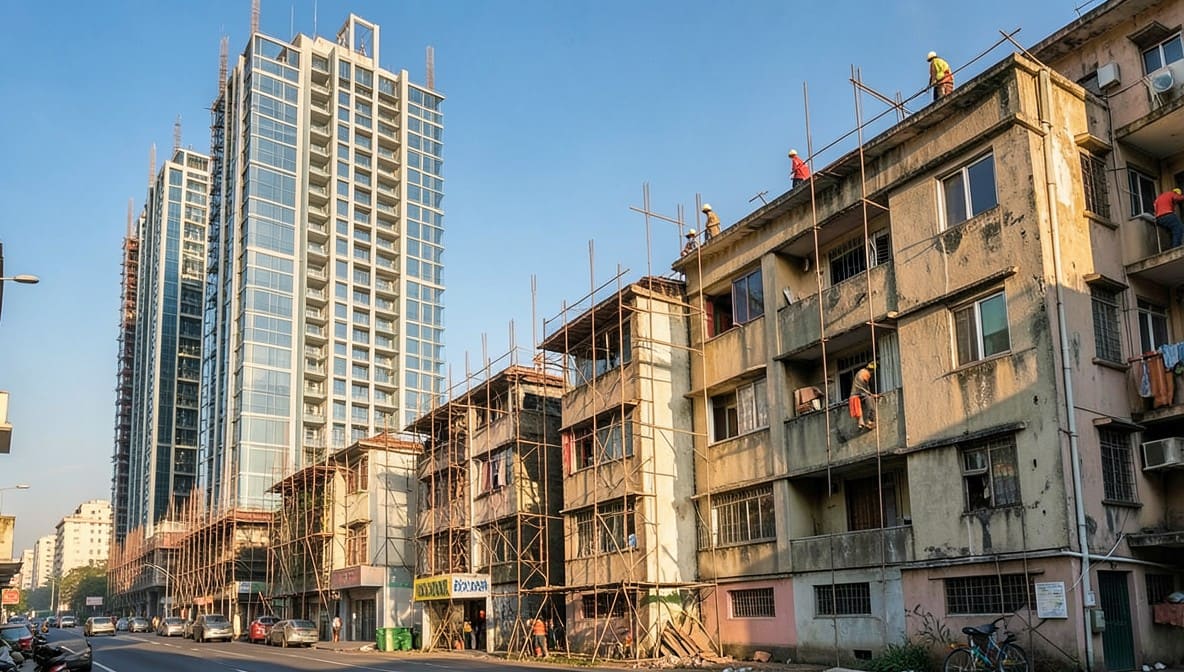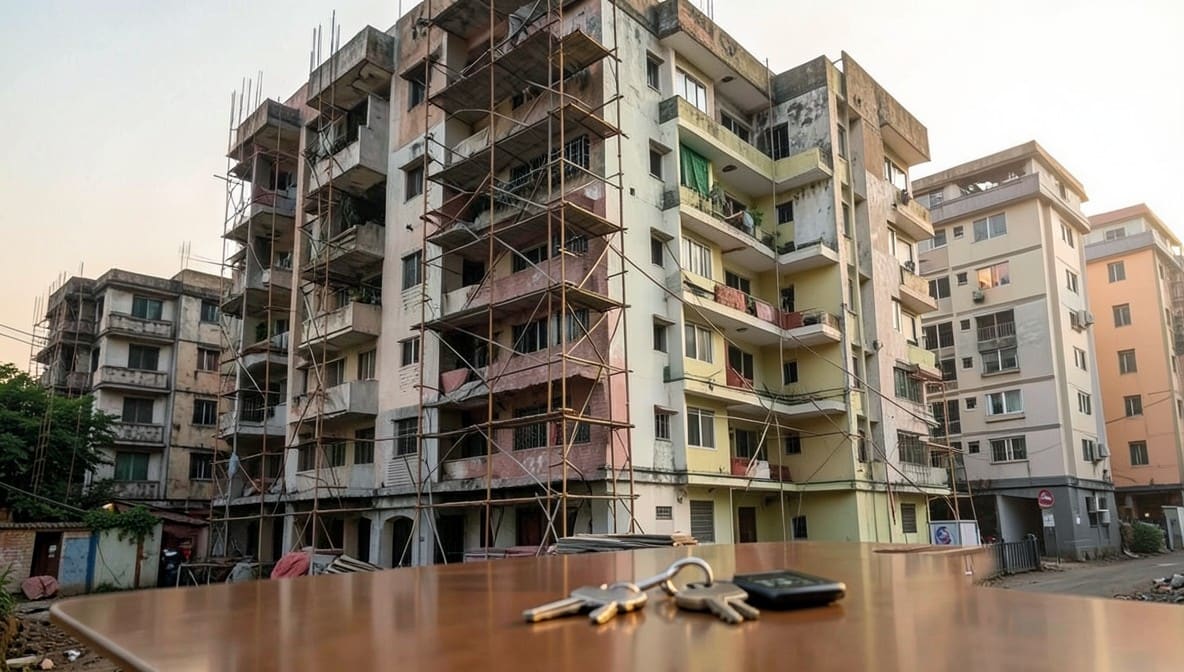
The Bombay High Court has clarified the scope of Section 9 of the Arbitration and Conciliation Act, 1996 in disputes arising from redevelopment agreements. The judgment holds that dissenting members of a housing society, even if they have not signed the development agreement, are bound by the majority resolution and must vacate their flats if the developer complies with the agreed terms. This ruling underscores the primacy of collective decisions in cooperative societies and limits the grounds on which interim relief can be denied under arbitration proceedings.
Background & Facts
The Dispute
The petitioner, M/s. Kings Builders and Developers (I) Pvt. Ltd., entered into a Development Agreement dated 15 October 2025 with Kailas Cooperative Housing Society Ltd. (Respondent No. 1) for the redevelopment of the society’s property. The agreement was approved by a majority of the society’s 42 members, with Respondent Nos. 2 to 9 dissenting. The petitioner sought a direction under Section 9 of the Arbitration Act compelling the dissenting members to vacate their flats, as required under Clause 30 of the Development Agreement.
Key Facts
- Society Registration: Respondent No. 1 Society was registered on 26 May 1966 and owns Plot Nos. 74 and 75 under a registered Conveyance Deed dated 26 September 1966.
- Occupation Certificate: Obtained on 19 February 1972.
- Redevelopment Resolution: Passed in the General Body Meeting on 2 September 2018 under Section 79A of the Maharashtra Co-operative Societies Act, 1960.
- Collector’s Order: On 25 May 2023, the Collector directed bifurcation of Property Register Cards, leading to fresh cards being issued.
- Special General Body Meeting: Held on 3 December 2023, where the petitioner was selected as the developer. Out of 35 members present, 33 voted in favour.
- Development Agreement: Executed on 15 October 2025 between the petitioner and Respondent No. 1 Society. Key clauses include:
- Clause 15: Payment of 50% corpus amount upon vacation of premises.
- Clause 16: Fixed deposit of Rs. 3 crores in the name of Mr. Nilesh Kudalkar with the Society.
- Clause 18: Payment of transit rent.
- Clause 19: Security deposit equal to three months’ transit rent.
- Clause 29: Obtaining Zero FSI Intimation of Disapproval (IOD).
- Clause 30: Issuance of two months’ notice to members to vacate after obtaining Zero FSI IOD.
- Clause 32: Obtaining Full FSI IOD, Commencement Certificate, Fungible FSI, and TDR within 12 months of demolition.
- Clause 75: Arbitration clause.
- Clause 81: Supersession of all prior agreements upon execution of the Development Agreement.
Procedural History
- 22 December 2025: Petitioner obtained Zero FSI IOD and forwarded a copy to the Society.
- 24 December 2025: Society informed all members of the Zero FSI IOD.
- 20 February 2026: Petitioner issued notices to Respondent Nos. 2 to 9, calling upon them to vacate their flats under Clause 30. Enclosures included:
- Signed Permanent Alternate Accommodation Agreements (PAAA).
- Cheques towards corpus amount (Clause 15), transit rent (Clause 18), security deposit (Clause 19), and shifting charges (Clause 10).
- 21 April 2026: Structural Engineer classified the building as C-1 category (requiring urgent redevelopment).
- 7 May 2026: Petitioner invoked the arbitration clause.
- 20 May 2026: Present Commercial Arbitration Petition (L) No. 17922 of 2026 filed before the Bombay High Court.
The Parties' Positions
Petitioner’s Contention
- Complied with all obligations under the Development Agreement, including obtaining Zero FSI IOD and issuing vacation notices.
- Ready to execute PAAA and disburse monetary benefits (corpus, transit rent, security deposit, etc.).
- Clause 81 of the Development Agreement supersedes all prior agreements, including tender conditions.
- Dissenting members cannot obstruct redevelopment approved by the majority.
Respondents’ Contention
- Respondent Nos. 2 to 8:
- Did not sign the Development Agreement; thus, no privity of contract or arbitration agreement exists.
- Petitioner failed to supply critical documents (e.g., tender conditions, financial details).
- Petitioner breached Clause 30 (vacation notice) and Clause 32 (post-demolition obligations).
- Petitioner failed to deposit Rs. 2 crores as refundable security, as allegedly agreed.
- Respondent No. 9:
- Flat No. C-11 is subject to testamentary proceedings (Miscellaneous Testamentary Petition (L) No. 12845 of 2021), where the court directed summary eviction of the unauthorized occupant.
- Redevelopment benefits (transit rent, corpus, etc.) should be paid to the beneficiary (Anna) under the Will, with the Executor as custodian.
Relief Sought
The petitioner sought:
- Direction to Respondent Nos. 2 to 9 to execute PAAA and vacate their flats.
- Interim injunction restraining the respondents from obstructing redevelopment.
- Appointment of a Court Receiver to take possession if respondents fail to comply.
The Legal Issue
The central question was whether Section 9 of the Arbitration Act empowers the court to grant interim relief against non-signatories to a redevelopment agreement, where:
- The majority of society members approved the redevelopment.
- The dissenting members occupy flats in the society’s building.
- The developer has complied with the terms of the agreement.
Arguments Presented
For the Petitioner
- Relied on Clause 30 of the Development Agreement, arguing that the petitioner complied with all conditions precedent (obtaining Zero FSI IOD, issuing notices, etc.).
- Cited Clause 81 to contend that the Development Agreement supersedes all prior agreements, including tender conditions.
- Submitted that the dissenting members’ objections (non-supply of documents, alleged breaches) are premature and should be adjudicated in arbitration.
For the Respondents
- Respondent Nos. 2 to 8:
- Contended that the petition is not maintainable as they did not sign the Development Agreement, creating no privity of contract.
- Argued that the petitioner breached Clause 30 (vacation notices) and Clause 32 (post-demolition obligations).
- Alleged non-supply of critical documents (e.g., tender conditions, financial details) and failure to deposit Rs. 2 crores as refundable security.
- Respondent No. 9:
- Highlighted the testamentary proceedings concerning Flat No. C-11, where the court directed eviction of the unauthorized occupant.
- Sought direction for redevelopment benefits to be paid to the beneficiary (Anna) under the Will, with the Executor as custodian.
The Court's Analysis
Scope of Section 9 Jurisdiction
The court emphasized that Section 9 is a discretionary power aimed at preserving the efficacy of arbitration proceedings. The court’s role is limited to:
- Determining the existence of a valid arbitration agreement.
- Assessing whether disputes capable of arbitration have arisen or are likely to arise.
- Granting interim protection if refusal would frustrate arbitration.
The court relied on the Division Bench judgment in Pranav Constructions Limited to hold that:
- Individual grievances (e.g., validity of resolutions, discrimination, implementation issues) cannot be adjudicated under Section 9.
- Such disputes must be agitated before the Co-operative Court (Section 91 of the Maharashtra Co-operative Societies Act) or Civil Court, as appropriate.
Maintainability Against Non-Signatories
The court rejected the respondents’ argument that the petition is not maintainable against non-signatories:
- Majority Resolution: The redevelopment was approved by the General Body through resolutions, binding all members, including dissenters.
- Occupation of Premises: The dissenting members’ occupation of flats affects the implementation of redevelopment, justifying interim measures under Section 9.
- Distinction Between Section 8 and Section 9: While Section 8 (reference to arbitration) requires privity of contract, Section 9 (interim relief) does not. The court cited Pranav Constructions to hold that non-signatories occupying premises can be subjected to interim measures if their occupation obstructs redevelopment.
Alleged Breach of Tender Conditions
The respondents contended that the Development Agreement violates tender conditions. The court held:
- Clause 81 of the Development Agreement supersedes all prior agreements, including tender conditions.
- Whether the tender process was irregular or violated is a disputed question of fact, requiring evidence and adjudication, which cannot be finally examined under Section 9.
Non-Supply of Documents
The respondents alleged that the petitioner failed to supply critical documents (e.g., tender conditions, financial details). The court observed:
- Transparency is expected in redevelopment, and members are entitled to material information.
- However, no prejudice was demonstrated to justify stopping redevelopment.
- The petitioner expressed readiness to furnish documents, and no material showed that non-supply invalidated the redevelopment.
Financial Obligations
The respondents alleged that the petitioner failed to deposit Rs. 2 crores as refundable security. The court noted:
- The petitioner furnished a fixed deposit of Rs. 3 crores under Clause 16, as supported by the Society.
- The dispute regarding the quantum of security deposit is a matter for arbitration, not Section 9 proceedings.
Compliance with Clauses 30 and 32
- Clause 30 (Vacation Notice):
- The petitioner obtained Zero FSI IOD on 22 December 2025, forwarded a copy to the Society, and issued vacation notices on 20 February 2026.
- The notices were accompanied by PAAA, cheques for corpus, transit rent, security deposit, and shifting charges.
- The court held that prima facie compliance with Clause 30 was established.
- Clause 32 (Post-Demolition Obligations):
- The respondents argued that the petitioner failed to comply with Clause 32 (obtaining Full FSI IOD, Commencement Certificate, etc.).
- The court held that Clause 32 becomes operative only after demolition, which cannot commence without vacant possession. Thus, no breach was established.
Structural Report and Urgency
The court noted the Structural Engineer’s report classifying the building as C-1 category, indicating urgency for redevelopment. While the court did not base its decision solely on this report, it acknowledged that delay could have consequences.
Special Position of Respondent No. 9
The court distinguished Flat No. C-11 from other flats due to the testamentary proceedings:
- The flat is subject to a Will dated 1 March 2012, with the court previously directing summary eviction of the unauthorized occupant.
- The court applied the principle in Ritesh Haldar, holding that redevelopment should not defeat ownership claims or unlawfully dispossess occupants.
- Directed that redevelopment benefits (transit rent, corpus, etc.) be paid to the beneficiary (Anna) through the Executor, as per the testamentary order.
"The principle underlying Ritesh Haldar is that redevelopment should not become a means either to defeat ownership claims or to unlawfully dispossess a person in occupation."
The Verdict
The court partly allowed the petition with the following directions:
- Respondent Nos. 2 to 9 must execute the Permanent Alternate Accommodation Agreements (PAAA) within two weeks of the petitioner tendering the same, along with all required documents and payments.
- Upon execution of PAAA, the petitioner must comply with all obligations under the Development Agreement, including payment of:
- Corpus amount (50% under Clause 15).
- Transit rent (Clause 18).
- Security deposit (equivalent to three months’ transit rent under Clause 19).
- Shifting charges (Clause 10).
- Brokerage and other monetary benefits.
- Respondent Nos. 2 to 9 must hand over quiet, vacant, and peaceful possession of their flats (A-5, A-13, A-16, B-5, B-8, B-9, C-7, and C-11) to the petitioner within two weeks of the petitioner’s compliance.
- Temporary injunction restraining Respondent Nos. 2 to 9 from obstructing redevelopment, except through lawful remedies.
- Objections raised by Respondent Nos. 2 to 8 (e.g., breach of tender conditions, non-supply of documents, validity of resolutions) are left open for adjudication before the competent forum.
- For Flat No. C-11, redevelopment benefits must be paid to the beneficiary (Anna) through the Executor, as per the testamentary order.
- If respondents fail to comply, the petitioner may apply for appointment of the Court Receiver to take possession.
- The petitioner’s claim for reimbursement of transit accommodation costs is declined, with liberty to pursue it before the Arbitral Tribunal.
- No order as to costs.
What This Means For Similar Cases
Non-Signatories Cannot Frustrate Redevelopment
- Majority Resolution Prevails: Dissenting members of a cooperative society cannot obstruct redevelopment merely because they did not sign the agreement. The collective decision of the majority binds all members, including non-signatories.
- Interim Relief Under Section 9: Courts can grant interim relief under Section 9 against non-signatories if their occupation affects the implementation of redevelopment. This aligns with the principle in Pranav Constructions that Section 9 is not contingent on privity of contract.
Limited Scope of Section 9 Proceedings
- No Adjudication of Individual Grievances: Courts cannot examine disputes relating to:
- Validity of resolutions.
- Alleged discrimination among members.
- Implementation of redevelopment.
- Breach of tender conditions. Such disputes must be agitated before the Co-operative Court or Civil Court.
- Prima Facie Compliance Suffices: For interim relief, the court only examines prima facie compliance with the agreement. Disputed questions of fact (e.g., whether photocopies of cheques suffice) are left to arbitration.
Safeguards for Occupants with Competing Claims
- Testamentary or Ownership Disputes: Where flats are subject to testamentary proceedings or ownership disputes, courts must ensure redevelopment does not defeat legitimate claims. Benefits (transit rent, corpus, etc.) should be disbursed to the rightful beneficiary (e.g., heir under a Will) through the legal representative (e.g., Executor).
- Structural Urgency: Courts may consider structural reports (e.g., C-1 category buildings) to emphasize the urgency of redevelopment, though such reports alone do not determine the outcome.
Practical Takeaways for Practitioners
- For Developers:
- Ensure strict compliance with clauses triggering vacation notices (e.g., obtaining Zero FSI IOD, issuing notices).
- Document all communications with society members to establish prima facie compliance.
- Be prepared to furnish all material documents to members to avoid allegations of non-transparency.
- For Dissenting Members:
- Objections to redevelopment (e.g., breach of tender conditions, non-supply of documents) must be raised before the Co-operative Court or Civil Court, not under Section 9.
- Non-signatories can still be compelled to vacate if the majority approves redevelopment and the developer complies with the agreement.
- For Societies:
- Majority resolutions are binding on all members, including dissenters. Ensure procedural compliance (e.g., General Body Meetings, Collector’s orders) to avoid challenges.
- Transparency is critical - supply all material documents to members to prevent disputes.
- For Arbitrators/Tribunals:
- Disputed questions (e.g., validity of tender conditions, quantum of security deposit) are better adjudicated in arbitration than under Section 9.
- Monetary defaults (e.g., non-payment of corpus) are capable of compensation, unlike delays in redevelopment, which may affect all members.