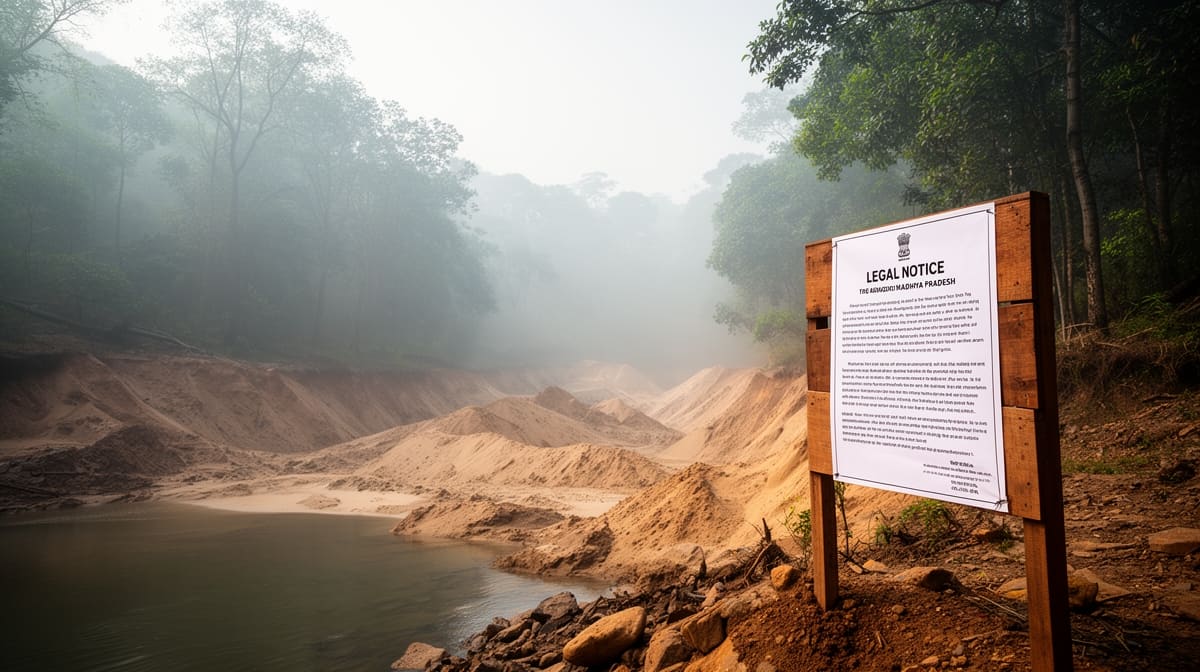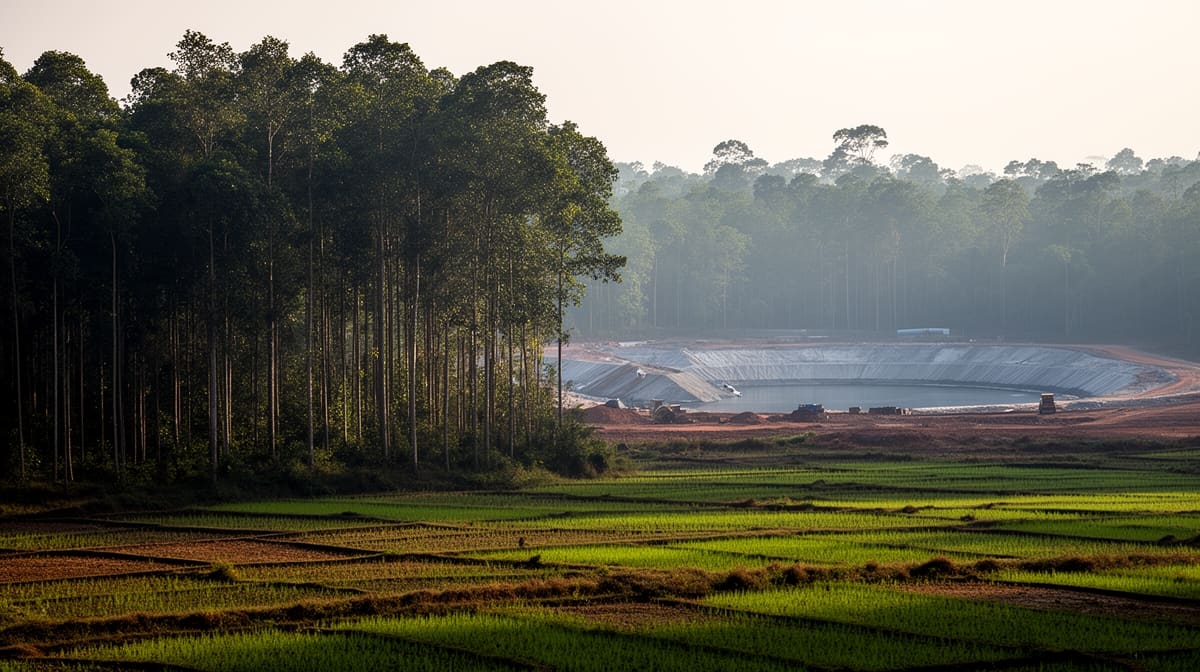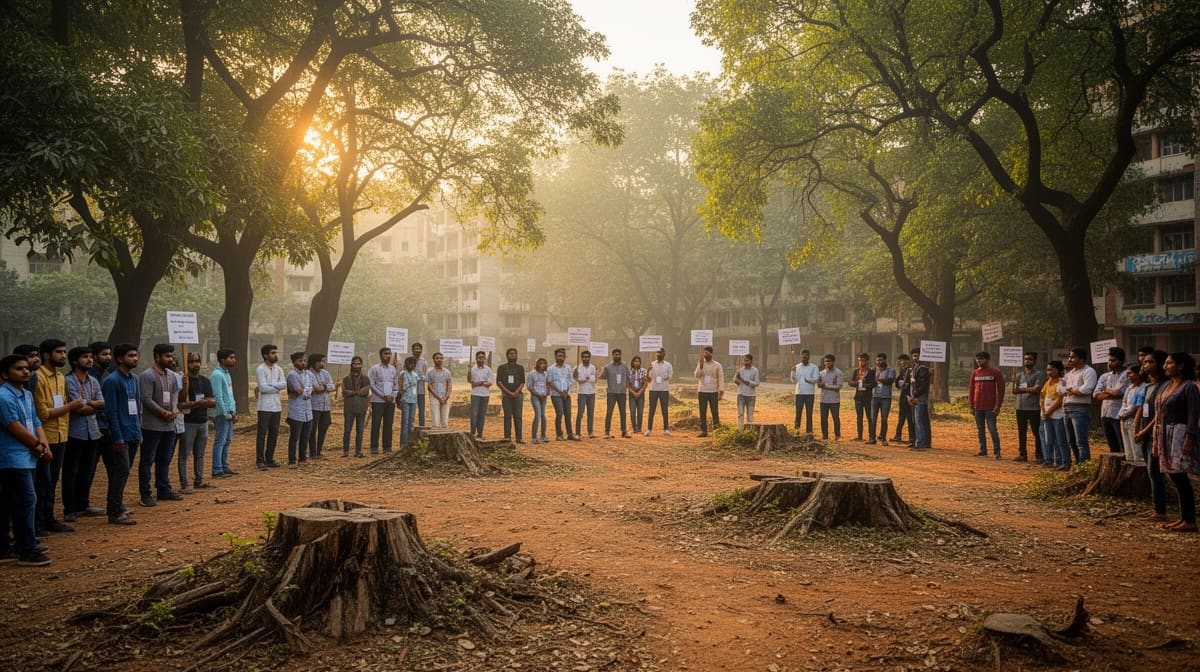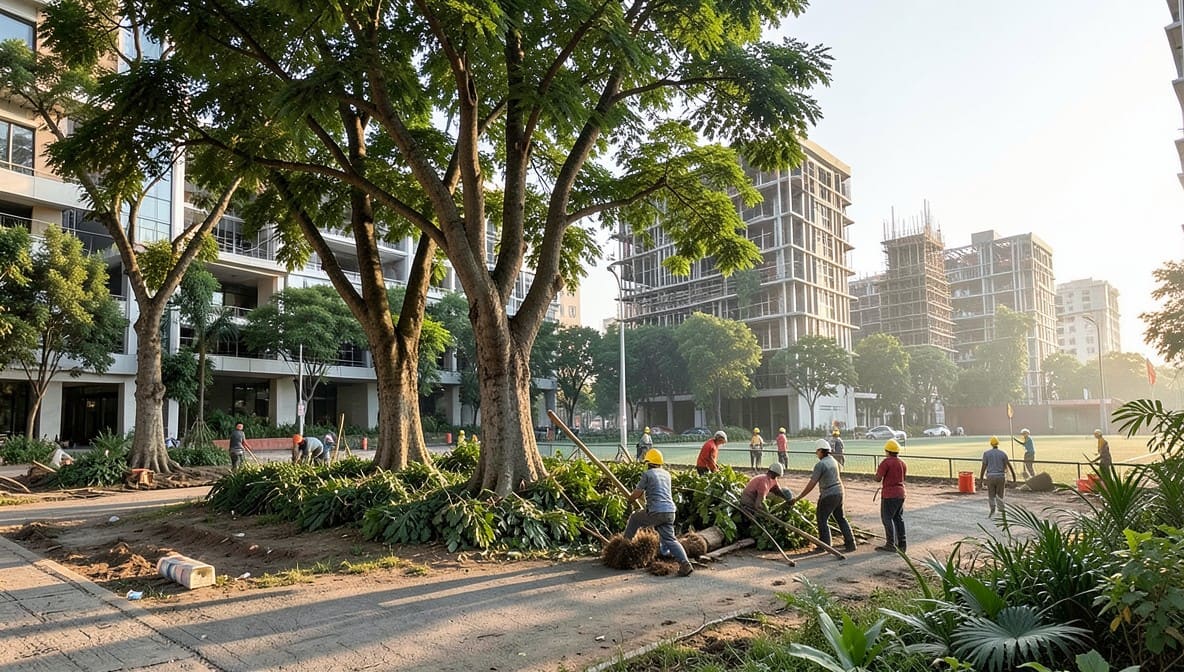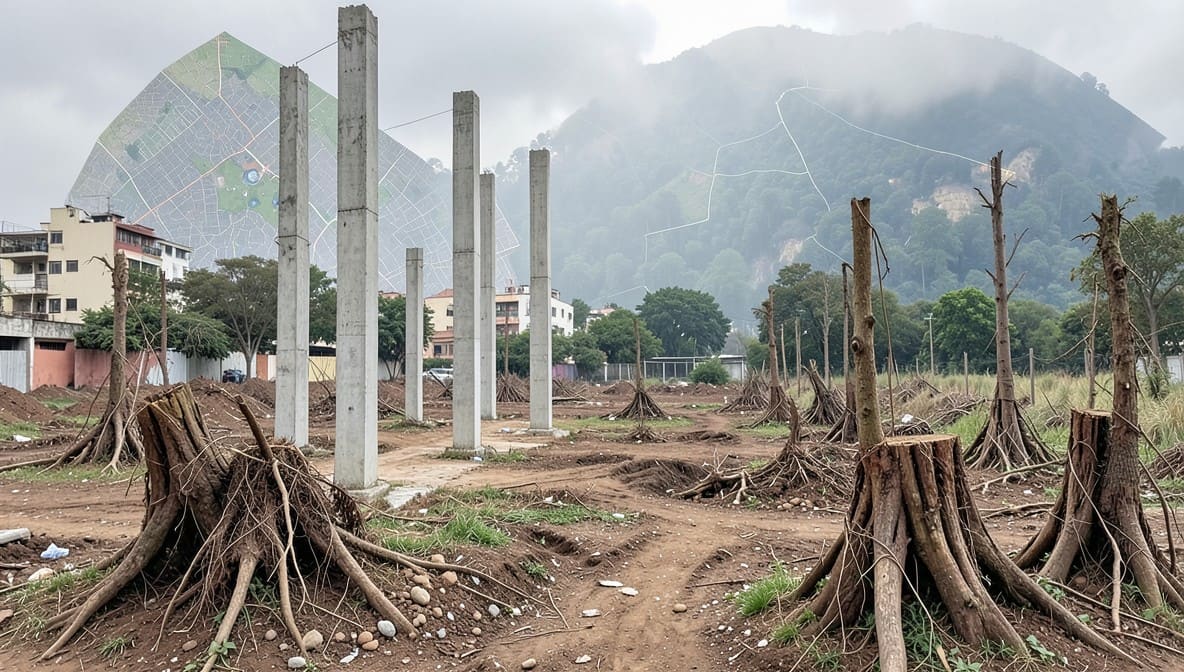
The National Green Tribunal has delivered a decisive ruling clarifying that no project can claim deemed environmental clearance under the EIA Notification, 2006 unless all statutory prerequisites are strictly fulfilled, and that illegal tree felling or unauthorized construction nullifies any such claim. This judgment reinforces the primacy of procedural compliance in environmental governance.
Background & Facts
The Dispute
The applicant, Renu Bala, filed an Original Application before the National Green Tribunal alleging that M/s World Street Sports Limited (Respondent No. 7), a subsidiary of Omaxe Ltd. (Respondent No. 8), undertook massive illegal tree felling and construction activities at Sector 19B, Dwarka, New Delhi, for the project titled "The Omaxe State". The project, covering a net plot area of 2,03,961.50 sq.m. and a total built-up area of 2,55,051.42 sq.m., was alleged to have commenced without obtaining mandatory Environmental Clearance (EC) under the EIA Notification, 2006, and without Consent to Establish (CTE) under the Water (Prevention and Control of Pollution) Act, 1974 and the Air (Prevention and Control of Pollution) Act, 1981.
Key Facts
- The project falls under Item 8(b) of Schedule II to the EIA Notification, 2006, classified as a "Township and Area Development Project" requiring prior EC.
- The total plot area is 2,48,610.53 sq.m., with 2,191 trees present on site as of September 2024.
- The State Environment Impact Assessment Authority (SEIAA), Delhi, issued Terms of Reference (ToR) on 03.01.2024.
- The State Level Expert Appraisal Committee (SEAC), Delhi, recommended grant of EC on 07.03.2024, subject to conditions including no tree felling without Forest Department permission.
- The tenure of SEIAA and SEAC, Delhi, expired on 05.09.2024, and the application was transferred to the Central Expert Appraisal Committee (CEAC).
- CEAC, in its 131st meeting on 30.09.2024 and 01.10.2024, recommended EC subject to the condition: "No trees shall be cut without permission from the State Forest Department."
- The Ministry of Environment, Forest and Climate Change (MoEF&CC) raised an Additional Document Sought (ADS) on 02.01.2025 seeking details of tree felling procedures under the Delhi Preservation of Trees Act, 1994.
- A second ADS was raised on 23.09.2025, which remains unsubmitted as of the hearing date.
- The PARIVESH portal status as of the judgment date was "ADS Raised" - indicating no EC had been granted.
- The project proponent claimed deemed EC under Clause 8(iii) of the EIA Notification, 2006, and asserted that only temporary structures were erected under O.M. dated 29.03.2022.
- Satellite imagery and photographs submitted by the applicant showed concrete columns, excavation, and removal of trees between October 2021 and December 2024.
- The project proponent submitted an application for tree felling on 21.11.2024, which was pending.
- The Central Empowered Committee (CEC) granted conditional permission for tree felling on 17.02.2026 - after the alleged illegal felling had occurred.
- The Delhi Pollution Control Committee (DPCC) granted CTE on 22.07.2025, with retrospective validity from 09.07.2024.
Procedural History
- 07.03.2024: SEAC, Delhi, recommends EC subject to conditions.
- 05.09.2024: Tenure of SEIAA and SEAC, Delhi, expires; application transferred to CEAC.
- 30.09.2024 & 01.10.2024: CEAC recommends EC subject to tree felling permission.
- 02.01.2025: MoEF&CC raises ADS seeking SOP for tree felling from Delhi Forest Department.
- 07.02.2025: MoEF&CC writes to DCF (West) seeking procedural details.
- 15.02.2025: Project proponent urges MoEF&CC to issue EC.
- 23.09.2025: MoEF&CC raises second ADS on tree felling permission - unsubmitted.
- 22.07.2025: DPCC grants CTE retrospectively.
- 12.06.2025: Original Application No. 137/2025 filed before NGT.
- 05.05.2025: NGT issues notice and interim order restraining illegal tree felling and construction.
- 23.03.2026: Hearing concluded; order reserved.
- 22.04.2026: Judgment pronounced.
The Parties' Positions
For the Applicant
- The project is covered under Item 8(b) of the EIA Notification, 2006 and requires prior EC.
- No EC has been granted; PARIVESH status confirms "ADS Raised".
- The project proponent commenced construction and felled trees without EC or Forest Department permission.
- The plea of deemed EC under Clause 8(iii) is invalid because conditions imposed by CEAC were not complied with.
- Satellite evidence proves illegal felling and permanent construction.
- CTE granted by DPCC is invalid as it was issued without EC.
For the Respondents
- Respondent No. 7 claims deemed EC under Clause 8(iii) of the EIA Notification, 2006, arguing that the 105-day timeline for decision expired without communication from MoEF&CC.
- Asserts that only temporary structures (sales gallery, refuge area) were erected under O.M. dated 29.03.2022.
- Denies illegal tree felling, claiming tree loss was due to natural causes and that an application for permission was pending.
- Challenges the applicant’s locus standi, alleging personal vendetta due to unfulfilled EoI for commercial unit reservation.
Relief Sought
The applicant sought:
- Immediate cessation of all construction and tree felling activities.
- Declaration that the project lacks valid EC and CTE.
- Direction to MoEF&CC to deny EC due to violations.
- Direction to DPCC and Tree Officer to impose penalties for illegal construction and tree felling.
- Direction to conduct a site inspection and submit action taken report.
The Legal Issue
Can a project proponent claim deemed environmental clearance under Clause 8(iii) of the EIA Notification, 2006 when the Expert Appraisal Committee’s recommendation is conditional, statutory conditions are violated, and no permission for tree felling has been obtained under the Delhi Preservation of Trees Act, 1994?
Arguments Presented
For the Appellant/Petitioner
The applicant relied on the S.P. Muthuraman v. Union of India and Manoj Mishra v. Union of India judgments by the NGT, which held that deemed clearance under Clause 8(iii) requires strict compliance with all procedural steps: submission of a complete application, issuance of ToR, submission of final EIA report, and an unambiguous recommendation by the EAC/SEAC. The applicant argued that the CEAC’s recommendation was expressly conditional on obtaining Forest Department permission - a condition not fulfilled. The applicant further cited MC Mehta v. Union of India to establish that felling of 50 or more trees requires CEC approval, which was granted only after the illegal felling occurred. The applicant emphasized that the project proponent had already commenced permanent construction, violating the O.M. dated 29.03.2022, and that the CTE granted by DPCC was invalid without prior EC.
For the Respondent/State
The MoEF&CC and DPCC contended that no EC had been granted and that the PARIVESH status remained "ADS Raised" due to pending documentation on tree felling. The project proponent argued that the 105-day period under Clause 8(i) had lapsed, thereby triggering deemed clearance under Clause 8(iii). It further claimed that the construction was limited to temporary structures permitted under the O.M. dated 29.03.2022 and that tree loss was due to natural causes. The respondent also cited Yatin Stone Crushers v. State of Karnataka and Siddhasiri Souharda Sahakari Nivamitha v. Karnataka State Pollution Control Board to argue that delay in decision-making by regulatory authorities entitles the applicant to deemed clearance. However, the respondents did not dispute the existence of the CEAC’s conditions or the lack of Forest Department permission.
The Court's Analysis
The Tribunal undertook a rigorous analysis of Clause 8(iii) of the EIA Notification, 2006, emphasizing that the doctrine of "deemed clearance" is a legal fiction that must be strictly construed. The Court held that the fiction operates only when all prerequisites under Clause 8(i) and 8(ii) are fully satisfied - including submission of a complete application, issuance of ToR, final EIA report, and an unambiguous recommendation by the EAC/SEAC.
"The word 'deemed' has to be construed differently with reference to the provisions of the Act where it is so used. When a statute enacts that something shall be deemed to have been done, which in fact and in reality was not done, the court is entitled and in fact bound to ascertain for what purposes and between what persons such statutory fiction is to be resorted to and full effect must then be given to the statutory fiction and it should be carried to its logical conclusion."
The Tribunal noted that the CEAC’s recommendation on 01.10.2024 was not unconditional. It explicitly prohibited tree felling without Forest Department permission - a condition that remained unfulfilled. The project proponent had neither obtained such permission nor submitted the required documentation to the MoEF&CC. The Tribunal further held that the mere lapse of time does not validate violations of law. The Court distinguished the Karnataka High Court judgments cited by the respondent, noting that those cases involved unconditional recommendations and no violation of statutory conditions.
The Tribunal also rejected the claim of temporary construction under O.M. dated 29.03.2022. Satellite imagery and photographs submitted by the applicant showed concrete columns, excavation, and site preparation - all indicative of permanent construction, not merely temporary sheds or fencing.
Regarding the CTE granted by DPCC on 22.07.2025, the Tribunal held that such consent cannot be granted retrospectively or independently of EC, as required under the EIA Notification. The CTE was therefore legally unsustainable.
On the issue of tree felling, the Tribunal found that the project proponent had illegally felled trees prior to the CEC’s approval dated 17.02.2026. The Court emphasized that the Supreme Court’s directive in MC Mehta v. Union of India mandates CEC oversight for felling of 50 or more trees, and that compliance with this requirement cannot be circumvented by post-facto approval.
The Verdict
The applicant succeeded. The National Green Tribunal directed:
- The Tree Officer under the Delhi Preservation of Trees Act, 1994 to conduct a spot inspection and determine the number of trees illegally felled by the project proponent before 17.02.2026, taking into account satellite imagery submitted by the applicant, and to impose appropriate remedial and punitive action within eight weeks.
- The Delhi Pollution Control Committee (DPCC) to conduct a site visit, ascertain violations of the EIA Notification and O.M. dated 29.03.2022, and take punitive and remedial action within eight weeks.
- The MoEF&CC to take a final decision on the EC application in accordance with law, considering the violations noted in this order.
- The Tree Officer and Member Secretary, DPCC, to submit an action taken report to the Registrar General of the Tribunal within three months via searchable PDF/OCR-supported format.
What This Means For Similar Cases
Deemed Clearance Is Not a Loophole
- Practitioners must advise clients that deemed EC under Clause 8(iii) is not automatic upon expiry of timelines - it requires strict, complete compliance with all procedural steps.
- Conditional recommendations from EAC/SEAC must be fully satisfied before any construction begins; failure to comply voids any claim to deemed clearance.
- Regulatory delays do not validate prior violations of environmental law.
Tree Felling Requires Absolute Compliance
- Projects involving felling of 50 or more trees must comply with MC Mehta v. Union of India and obtain CEC approval before any cutting occurs.
- Post-facto CEC approval does not cure prior illegal felling; penalties and remediation remain mandatory.
- Satellite imagery and photographic evidence are now established tools for proving illegal tree felling in NGT proceedings.
Temporary Structures Are Not a Shield
- O.M. dated 29.03.2022 permits only boundary walls, temporary sheds, and utilities - not permanent foundations, columns, or excavation.
- Any construction beyond these limits constitutes illegal development, regardless of intent or marketing purpose.
- NGT will rely on visual evidence to distinguish temporary from permanent structures.