The High Court of Himachal Pradesh has clarified that the absence of a Section 65B certificate does not automatically necessitate forensic examination of social media video evidence at the preliminary stage of trial. The judgment reinforces the principle that authenticity of electronic evidence must be assessed in context, during the final evaluation of testimony and documentary material, not through premature procedural mandates.
Background & Facts
The Dispute
The petitioner, Anita Devi, is the victim in Sessions Trial No.13 of 2023, titled 'State of HP vs. Maya Devi and ors.', arising from FIR No.32 of 2022. The case involves allegations of criminal conduct against members of a community under the Scheduled Castes and Scheduled Tribes (Prevention of Atrocities) Act. The petitioner sought to introduce a video recording obtained from social media to challenge the credibility of the defence witness, Hari Krishan alias Veena Ram, by demonstrating inconsistencies in his testimony.
Key Facts
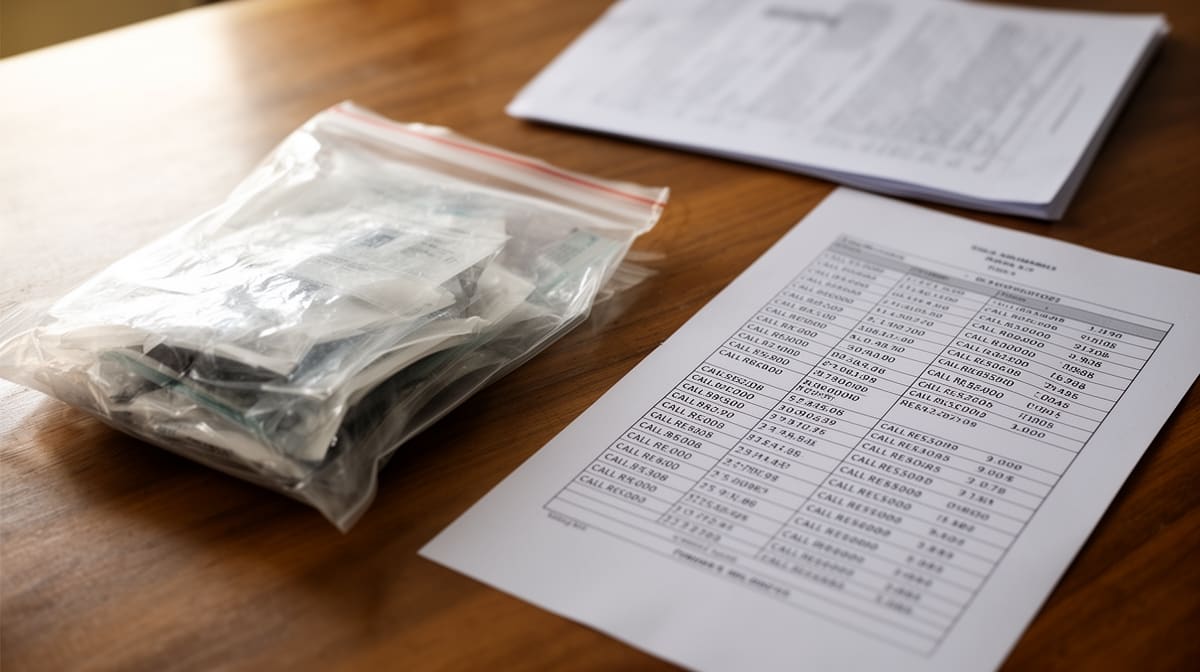
- The video was handed over to the Public Prosecutor on 29.11.2024 via a pen drive
- The pen drive was not taken on record due to absence of a certificate under Section 65B of the Indian Evidence Act
- The petitioner filed an application before the Superintendent of Police, Hamirpur, on 15.12.2024, requesting further investigation including forensic analysis of the video
- The Investigating Officer did not conduct any forensic verification
- A supplementary challan was filed on 01.03.2025 without forensic report
- The Public Prosecutor subsequently moved the Special Judge for direction to send the video for forensic examination
- The Special Judge declined the request on grounds that the trial was still at an early stage and witness examination had not commenced
Procedural History
- 15.02.2022: FIR No.32 of 2022 registered
- 29.11.2024: Petitioner submitted video file (on pen drive) to Public Prosecutor
- 15.12.2024: Petitioner applied to Superintendent of Police for forensic examination
- 01.03.2025: Supplementary challan filed by Investigating Officer without forensic report
- 15.12.2025: Petitioner filed Cr.MA No.486 of 2025 before Special Judge (SC & ST Act), Hamirpur, seeking forensic examination
- 02.02.2026: Special Judge dismissed application, holding forensic examination premature
- 02.03.2026: Petitioner filed Cr.MMO No.127 of 2026 before High Court seeking setting aside of order
Relief Sought
The petitioner sought: (1) setting aside the order dated 02.02.2026; (2) direction to send the video recording for forensic examination; and (3) preservation of the original media for future use in trial.
The Legal Issue
The central question was whether Section 65B of the Indian Evidence Act mandates compulsory forensic examination of social media video evidence at the pre-trial or preliminary stage, when the authenticity of the recording is sought to be challenged and no certificate has been filed.
Arguments Presented
For the Petitioner
Counsel argued that social media videos are inherently susceptible to manipulation and that without forensic verification, their use as impeachment material risks miscarriage of justice. He contended that Section 65B requires authentication, and failure to produce a certificate renders the evidence inadmissible unless independently verified by forensic means. He cited State of Maharashtra v. Dr. Praful B. Desai to argue that electronic evidence must be subjected to technical scrutiny before being relied upon.
For the Respondent
The Deputy Advocate General supported the petitioner’s prayer, acknowledging that while Section 65B is mandatory for admissibility, the trial court’s refusal to order forensic examination at this stage was procedurally sound given that witness examination had not begun and the video’s relevance was limited to impeachment.
The Court's Analysis
The Court observed that the petitioner herself admitted the video’s purpose was to impeach the credibility of a specific defence witness. The Court emphasized that the admissibility and authenticity of electronic evidence are not binary questions to be resolved at the application stage, but are matters for final evaluation during trial.
"If the witness admits the authenticity of the video recording, there would be no need to send it to the forensic expert. The authenticity can also be determined by examining the person who had video-recorded the incident."
The Court held that the trial judge correctly viewed the application as premature. The absence of a Section 65B certificate affects admissibility, but does not automatically trigger a forensic mandate. The Court noted that the trial court retains discretion to permit forensic examination later, if the need arises during cross-examination or when the evidence is formally offered.
The Court further clarified that inherent jurisdiction under Section 482 CrPC is extraordinary and cannot be invoked to circumvent procedural norms or to pre-empt evidentiary processes. No exceptional circumstance warranted interference at this stage.
The Verdict
The petition was dismissed. The High Court upheld the order dated 02.02.2026, holding that forensic examination of the video recording is not mandatory at the preliminary stage of trial. The Court directed that the issue of authenticity and admissibility of the video may be raised again during trial, upon formal production and cross-examination of witnesses.
What This Means For Similar Cases
Forensic Examination Is Not Automatic
- Practitioners must not assume that lack of a Section 65B certificate automatically triggers a forensic mandate
- Courts retain discretion to defer forensic analysis until the stage of evidence appreciation
- Applications for forensic examination must demonstrate specific, material relevance to contested facts, not general suspicion of tampering
Authenticity Can Be Established Through Multiple Avenues
- The person who recorded the video may be examined to establish chain of custody and authenticity
- Admissions by opposing witnesses can render forensic verification unnecessary
- The burden to challenge authenticity lies with the party seeking to exclude the evidence
Procedural Timing Matters in Electronic Evidence
- Applications for forensic testing must be filed at the appropriate stage - not prematurely
- Early-stage applications risk being dismissed as premature, delaying trial progress
- Parties should preserve original media and prepare for potential challenges during cross-examination