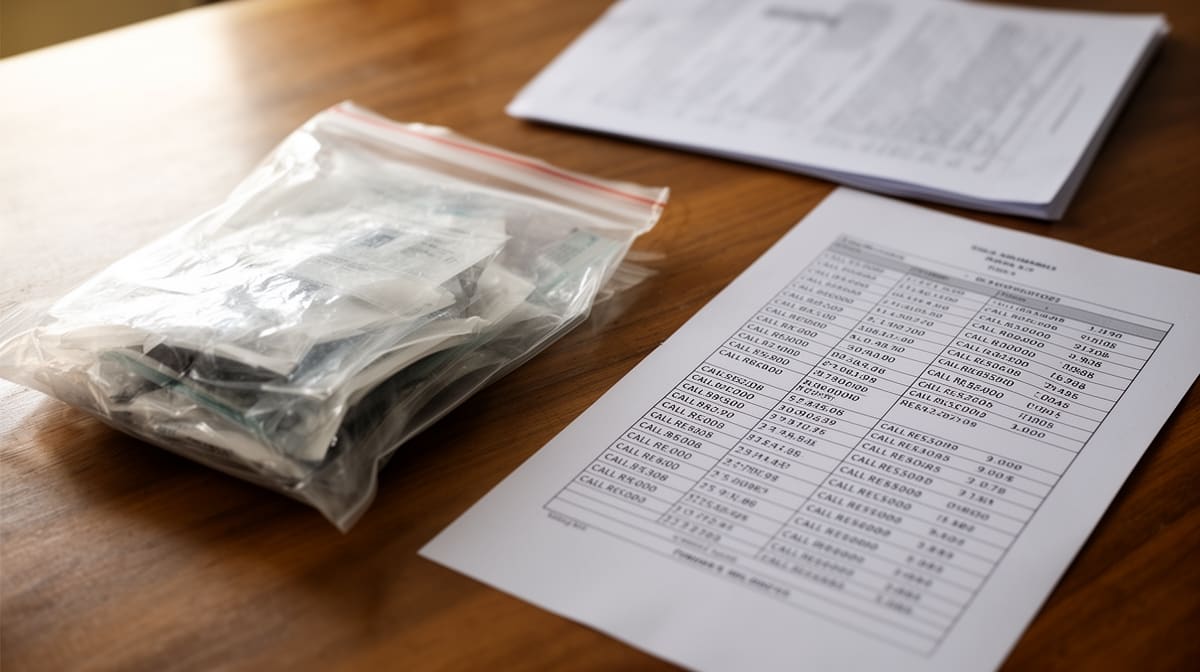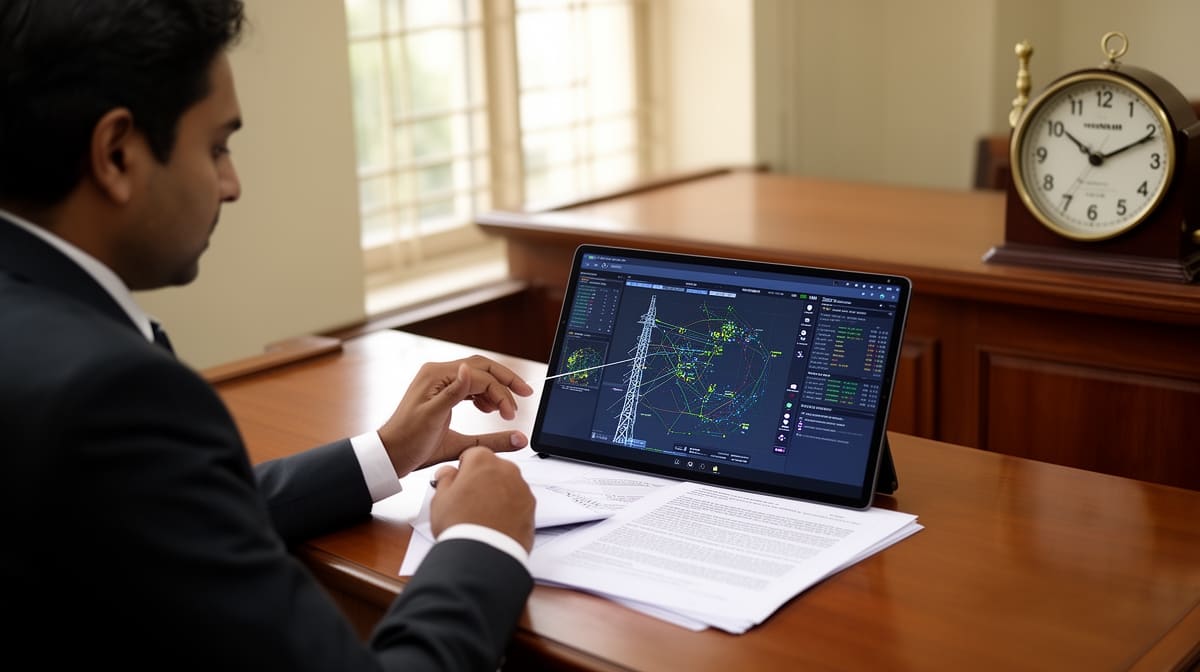
The Madhya Pradesh High Court has affirmed that the preservation of electronic evidence critical to an alibi defence cannot be deferred until the defence stage of trial. In a significant ruling, the Court emphasized that delays in securing Call Detail Records and mobile tower data risk irreversible loss of evidence, undermining the constitutional guarantee of a fair trial under Article 21.
Background & Facts
The Dispute
The petitioner, Siyasharan Gupta, is one of the accused in a criminal case registered under Sections 115(2), 117(2), 296, 351(3) read with 3(5) of the Bharatiya Nyaya Sanhita, 2023 (formerly Sections 323, 325, 294, 506 read with 34 IPC). The complainant, Munnalal, District President of Gahoi Vaishya Samaj, alleged that on 15.01.2025, the accused persons assaulted him at the Gahoi Community Hall in Bhind while opposing their attempt to hold a separate event on the same day as the scheduled Gahoi Day Program. FIR No. 69/2025 was registered on 03.02.2025. Charges were framed on 02.07.2025.
Key Facts
- The petitioner claims he was not present at the scene of the alleged incident on 15.01.2025.
- He asserts he was in Auraiya, Uttar Pradesh, with his wife Malti Gupta and driver Nagendra Singh, proprietor of Balaji Tour & Travels, distributing wedding invitations and shopping for his son’s marriage.
- On 28.03.2025, 16.04.2025, and 26.05.2025, the petitioner submitted written representations to the investigating officer requesting collection and preservation of Call Detail Records (CDR), mobile tower location data, and online payment receipts from the relevant date.
- No action was taken on these representations by the police or prosecution.
- On 24.09.2025, the petitioner filed an application under Section 94 BNSS before the Chief Judicial Magistrate, Bhind, seeking directions to preserve the aforementioned electronic evidence.
- The Trial Court, by order dated 07.11.2025, deferred consideration of the application until the stage of defence evidence.
Procedural History
- 15.01.2025: Alleged incident at Gahoi Community Hall, Bhind
- 03.02.2025: FIR No. 69/2025 registered at Police Station Kotwali, Bhind
- 02.07.2025: Charges framed against accused persons
- 28.03.2025: First representation by petitioner to investigating officer for CDR preservation
- 16.04.2025: Second representation submitted
- 26.05.2025: Third representation submitted
- 24.09.2025: Application filed under Section 94 BNSS for preservation of electronic evidence
- 07.11.2025: Trial Court order deferring consideration of application to defence stage
- 16.03.2026: Petition filed under Section 528 BNSS / Section 482 CrPC before High Court, Gwalior
Relief Sought
The petitioner sought quashing of the order dated 07.11.2025 and immediate directions to preserve the CDR, mobile tower location data, and online payment receipts to substantiate his alibi defence.
The Legal Issue
The central question was whether a trial court may lawfully defer consideration of an application under Section 94 BNSS for preservation of electronic evidence - critical to an alibi defence - until the stage of defence evidence, thereby risking permanent loss of such evidence due to its transient nature.
Arguments Presented
For the Petitioner
Learned counsel argued that Section 94 BNSS empowers the court to summon or preserve documents at any stage of proceedings if necessary for a just decision. The petitioner had repeatedly requested preservation since March 2025, yet no action was taken. Telecom service providers retain CDRs and tower location data only for limited periods, and delay would result in irreversible destruction. Reliance was placed on Vishal Bhati v. State of Madhya Pradesh (15.03.2023), where this Court had directed preservation of similar data to protect fair trial rights.
For the Respondent/State
The State contended that the Trial Court had not rejected the application but merely postponed its consideration to the defence stage, which is procedurally permissible. It was submitted that the accused would have full opportunity to adduce evidence later, and no prejudice would arise. However, the State conceded that if directed by the High Court, preservation of electronic records would not prejudice the prosecution.
The Court's Analysis
The Court examined the nature and purpose of Section 94 BNSS, noting that its language - "necessary or desirable" - must be interpreted liberally to advance justice. The Court observed that electronic evidence, particularly CDRs and mobile tower location data, is inherently ephemeral and susceptible to overwriting or deletion. Failure to preserve such data at the earliest opportunity may result in permanent loss, rendering the accused’s alibi defence impossible to substantiate.
"The basic purpose of judicial proceedings is discovery of truth and that justice is best served when all relevant material is brought before the Court."
The Court cited State of Uttar Pradesh v. Raj Narain (1975) 4 SCC 428, Manu Sharma v. State (NCT of Delhi) (2010) 6 SCC 1, and Tomaso Bruno v. State of Uttar Pradesh (2015) 7 SCC 178 to underscore that non-production of material evidence violates the right to a fair trial under Article 21. It further relied on Anvar P.V. v. P.K. Basheer (2014) 10 SCC 473, which affirmed the evidentiary sanctity of electronic records and the duty to preserve them.
The Court rejected the notion that deferring preservation until the defence stage is adequate. It held that the very purpose of Section 94 BNSS is to prevent such loss at the earliest possible stage. The Trial Court’s order, by effectively allowing time-sensitive evidence to lapse, amounted to a failure in its duty to secure justice.
In exercise of its inherent powers under Section 528 BNSS, the Court found that interference was not only warranted but imperative to prevent abuse of process and to uphold constitutional guarantees.
The Verdict
The petition was allowed. The impugned order dated 07.11.2025 was set aside. The Trial Court is directed to consider and decide the petitioner’s application under Section 94 BNSS for preservation of Call Detail Records, mobile tower location data, and online payment receipts expeditiously, preferably within four weeks from the date of receipt of this order. The concerned authorities shall ensure preservation of the said records in accordance with law. The petition stands disposed of.
What This Means For Similar Cases
Preservation Cannot Be Postponed Until Defence Stage
- Practitioners must file applications under Section 94 BNSS immediately upon identifying the need for electronic evidence, even before charges are framed
- Delay in filing or judicial deferment of such applications constitutes a violation of the accused’s right to a fair trial
- Courts must treat preservation requests under Section 94 BNSS as urgent, not procedural
Electronic Evidence Is Not Secondary Evidence
- CDRs, tower locations, and digital receipts are not "supplementary" - they are primary evidence in modern criminal trials
- Courts must apply the Anvar P.V. standard: electronic evidence must be preserved as it is collected, not after the fact
- Failure to preserve may invite adverse inference under Tomaso Bruno
Proactive Duty of the Trial Court
- Trial courts have a proactive duty under Section 94 BNSS to act on preservation requests without waiting for formal defence evidence
- The phrase "at any stage" in Section 94 BNSS includes pre-defence stages, especially where evidence is perishable
- Judges must treat preservation applications as time-sensitive, akin to bail applications in urgent cases