Topic

Unjust Enrichment

Unjust enrichment in Indian law refers to situations where one party gains a benefit at another's expense without legal justification, requiring restitution.

21 articlesLatest 3 weeks ago
Borrower Refund Limited to Personal Funds | Section 23 CPA 1986, Tripartite Home Loan : SC
Case Law Analysis
|Supreme Court of India

Borrower Refund Limited to Personal Funds | Section 23 CPA 1986, Tripartite Home Loan : SC

The Supreme Court ruled that a homebuyer can recover only the amount paid from personal savings in a tripartite loan arrangement when the builder defaults, not the bank-disbursed loan. It awarded Rs 1.27 crore (personal funds) with 12% interest plus Rs 15 lakh compensation, while confirming the bank’s Rs 2 lakh service deficiency. This clarifies refund limits for buyers financed via builder-bank-buyer tripartite agreements.


Unjust Enrichment - 6% Interest on Refunded E-Auction Bid Awarded | Banking & SARFAESI Act : Jharkhand HC
Case Law Analysis
|Jharkhand High Court

Unjust Enrichment - 6% Interest on Refunded E-Auction Bid Awarded | Banking & SARFAESI Act : Jharkhand HC

The Jharkhand High Court ordered the bank to pay 6% per annum interest on the Rs 30.90 million e-auction refund, finding that keeping the money without a sale certificate constituted unjust enrichment and that the bank’s undertaking was void for duress. The ruling strengthens restitution duties for banks under the SARFAESI Act and protects auction bidders.

Email Reminder of Premium Due Does Not Revive Lapsed Life Insurance Policy | Unjust Enrichment Mandates Premium Refund : Maharashtra State Consumer Commission
Case Law Analysis
|Bombay High Court

Email Reminder of Premium Due Does Not Revive Lapsed Life Insurance Policy | Unjust Enrichment Mandates Premium Refund : Maharashtra State Consumer Commission

The Maharashtra State Consumer Commission ruled that an insurer's email reminder about a pending premium does not constitute revival of a lapsed life insurance policy, but holding onto premiums after denial of claim constitutes unjust enrichment, requiring full refund to the policyholder's estate. This sets a critical precedent for insurers: administrative communication cannot create contractual obligations, yet financial retention without coverage violates consumer rights under the Consumer Protection Act.

CAS-4 Governs Valuation for State-Owned Manufacturers; Unjust Enrichment Inapplicable to Central Excise Refund Claims : CESTAT Chennai
Case Law Analysis
|Custom, Excise & Service Tax Tribunal

CAS-4 Governs Valuation for State-Owned Manufacturers; Unjust Enrichment Inapplicable to Central Excise Refund Claims : CESTAT Chennai

CESTAT Chennai rules that Integral Coach Factory’s refund claims for excess excise duty are not barred by unjust enrichment, as state-owned entities engaged in public manufacturing are exempt from this doctrine. Valuation must follow CAS-4 standards, not the Railway Code, affirming that cost-based accounting methods used in batch production are legally valid for duty calculation and refund eligibility.

Section 11B Central Excise Act | Contractual Exclusion of OID Cess Incidence Bars Unjust Enrichment Claim: CESTAT Chennai
Case Law Analysis
|Custom, Excise & Service Tax Tribunal

Section 11B Central Excise Act | Contractual Exclusion of OID Cess Incidence Bars Unjust Enrichment Claim: CESTAT Chennai

CESTAT Chennai rules that when a contract explicitly prohibits passing on the Oil Industry Development Cess to the buyer, and documentary evidence confirms non-passing of incidence, the refund claim cannot be denied on grounds of unjust enrichment. This sets a critical precedent for oil and energy producers seeking refunds on excess cess paid due to valuation errors, reinforcing contractual intent over presumptive pass-on.

Specific Performance | Interest on Advance Payment Accrues from Date of Receipt Upon Seller's Default : Kerala HC
Case Law Analysis
|Kerala High Court

Specific Performance | Interest on Advance Payment Accrues from Date of Receipt Upon Seller's Default : Kerala HC

The Kerala High Court ruled that when a seller defaults on a sale agreement, the buyer is entitled to interest on the advance payment from the very date it was made, not from the date of filing suit. This corrects unjust enrichment and aligns restitution principles with commercial reality, impacting all property buyers who advance funds under conditional agreements.

Cenvat Credit Refund Finality | Revenue’s Non-Appeal After Sanction Bars Re-Deduction : CESTAT Chandigarh
Case Law Analysis
|Custom, Excise & Service Tax Tribunal

Cenvat Credit Refund Finality | Revenue’s Non-Appeal After Sanction Bars Re-Deduction : CESTAT Chandigarh

CESTAT Chandigarh rules that once a Cenvat credit refund is sanctioned and the revenue department does not appeal, the quantum becomes final and cannot be reopened for re-deduction. This protects manufacturers from retrospective clawbacks and reinforces the principle of finality in tax adjudication, benefiting cement and capital goods industries relying on captive consumption exemptions.

Section 11B Customs and Excise Refund | No Tax Liability Nullifies Limitation Period for Deposits Made Under Protest : CESTAT Chandigarh
Case Law Analysis
|Custom, Excise & Service Tax Tribunal

Section 11B Customs and Excise Refund | No Tax Liability Nullifies Limitation Period for Deposits Made Under Protest : CESTAT Chandigarh

When tax authorities drop a demand entirely, deposits made under protest must be refunded without being barred by the one-year limitation under Section 11B. This ruling protects businesses from being penalized for complying with investigative demands while preserving their legal rights, setting a critical precedent for service tax and customs taxpayers across India.

Unjust Enrichment Barred | Excise Department Must Refund Deposit If Vehicle Not Released Despite Compliance : Rajasthan HC
Case Law Analysis
|Rajasthan High Court

Unjust Enrichment Barred | Excise Department Must Refund Deposit If Vehicle Not Released Despite Compliance : Rajasthan HC

Rajasthan High Court rules that authorities cannot retain both the vehicle and deposit amount when release is not effected, ordering refund of Rs. 8,20,000 with bank interest. The judgment reinforces that administrative compliance does not entitle the state to unjust enrichment, setting a precedent for excise and police coordination failures.

EPFO Enhanced Pension Cut-off Date | Pre-1.9.2014 Retirees Ineligible but Entitled to Refund of Voluntary Deposits : MP HC
|Madhya Pradesh High Court

EPFO Enhanced Pension Cut-off Date | Pre-1.9.2014 Retirees Ineligible but Entitled to Refund of Voluntary Deposits : MP HC

The Madhya Pradesh High Court ruled that pensioners retiring before 1 September 2014 are ineligible for EPFO’s enhanced pension under the Sunil Kumar B. precedent, but must be refunded voluntary deposits made in reliance on earlier EPFO communications. The judgment underscores equitable estoppel, mandating restitution for pensioners who acted on official representations.

Criminal Acquittal Voids Civil Demand for Electricity Theft | Section 135 Electricity Act 2003: Chhattisgarh HC
Case Law Analysis
|Chhattisgarh High Court

Criminal Acquittal Voids Civil Demand for Electricity Theft | Section 135 Electricity Act 2003: Chhattisgarh HC

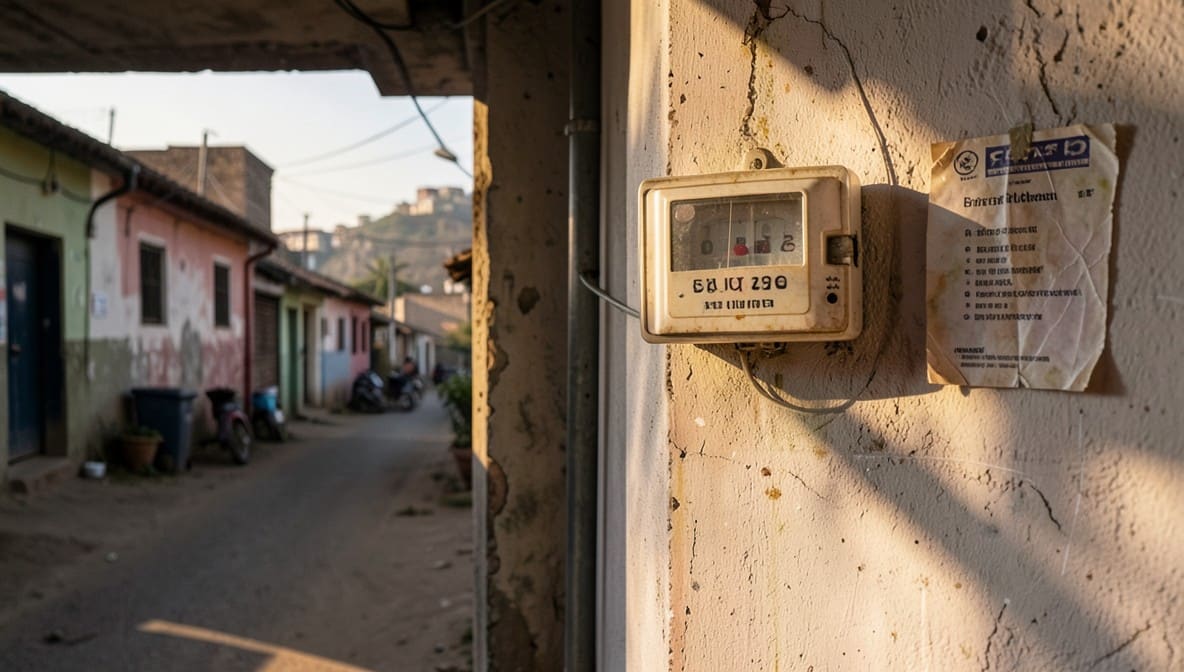
The Chhattisgarh High Court has ruled that when a criminal charge under Section 135 of the Electricity Act is acquitted, any civil demand for recovery of alleged theft charges must be refunded, as civil liability cannot stand without a valid criminal finding. This protects consumers from dual punishment and reinforces that unjust enrichment claims cannot survive the collapse of their criminal foundation.

Unjust Enrichment | Public Authorities Bound to Pay for Work Done on Oral Directions Verified by Official Committee : Punjab & Haryana HC
Case Law Analysis
|Punjab and Haryana High Court

Unjust Enrichment | Public Authorities Bound to Pay for Work Done on Oral Directions Verified by Official Committee : Punjab & Haryana HC

Public authorities cannot evade payment for work executed on their oral instructions when an official committee has verified the scope and value of the work. Refusal to pay under such circumstances constitutes unjust enrichment, entitling contractors to recovery even without a written contract - a critical safeguard for government contractors relying on administrative directives.

Void Contract for Stamp Duty Evasion | Payments Recoverable to Prevent Unjust Enrichment; Assignment Valid, Fabricated Receipts Require Proof : Madras HC
Case Law Analysis
|Madras High Court

Void Contract for Stamp Duty Evasion | Payments Recoverable to Prevent Unjust Enrichment; Assignment Valid, Fabricated Receipts Require Proof : Madras HC

The Madras High Court ruled that while dual sale agreements designed to evade stamp duty are void, payments made under them are recoverable to prevent unjust enrichment. It affirmed the validity of contract assignments and emphasized that claims based on fabricated receipts demand concrete, verifiable evidence - not mere assertions.

Rule 21(3) ADD Rules, 1995 | Automatic Refund of Provisional Anti-Dumping Duty Mandated Upon Withdrawal, Regardless of Unjust Enrichment Claims : CESTAT Mumbai
Case Law Analysis
|Custom, Excise & Service Tax Tribunal

Rule 21(3) ADD Rules, 1995 | Automatic Refund of Provisional Anti-Dumping Duty Mandated Upon Withdrawal, Regardless of Unjust Enrichment Claims : CESTAT Mumbai

CESTAT Mumbai holds that Rule 21(3) of the Anti-Dumping Duty Rules, 1995 creates a non-discretionary obligation to refund provisional duties when not confirmed, rendering unjust enrichment defenses under Section 11B of the Central Excise Act inapplicable. This protects importers from prolonged financial uncertainty and clarifies that statutory refund mechanisms override equitable doctrines in customs law.