The Bombay High Court has affirmed that even where a contract termination is held illegal, specific performance cannot be granted unless the party seeking it demonstrates clear, unequivocal readiness and willingness to perform its core obligations. This judgment reinforces the principle that contractual enforcement hinges on actual capacity and intent to fulfill essential terms, not merely on the invalidity of termination.
Background & Facts
The Dispute
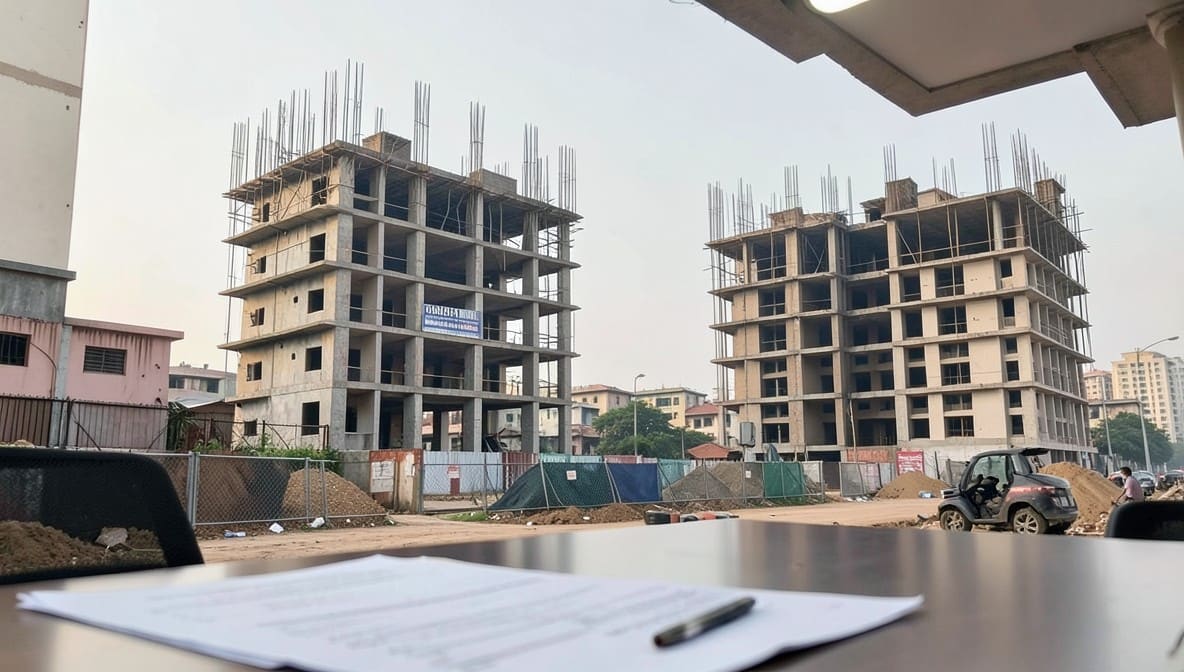
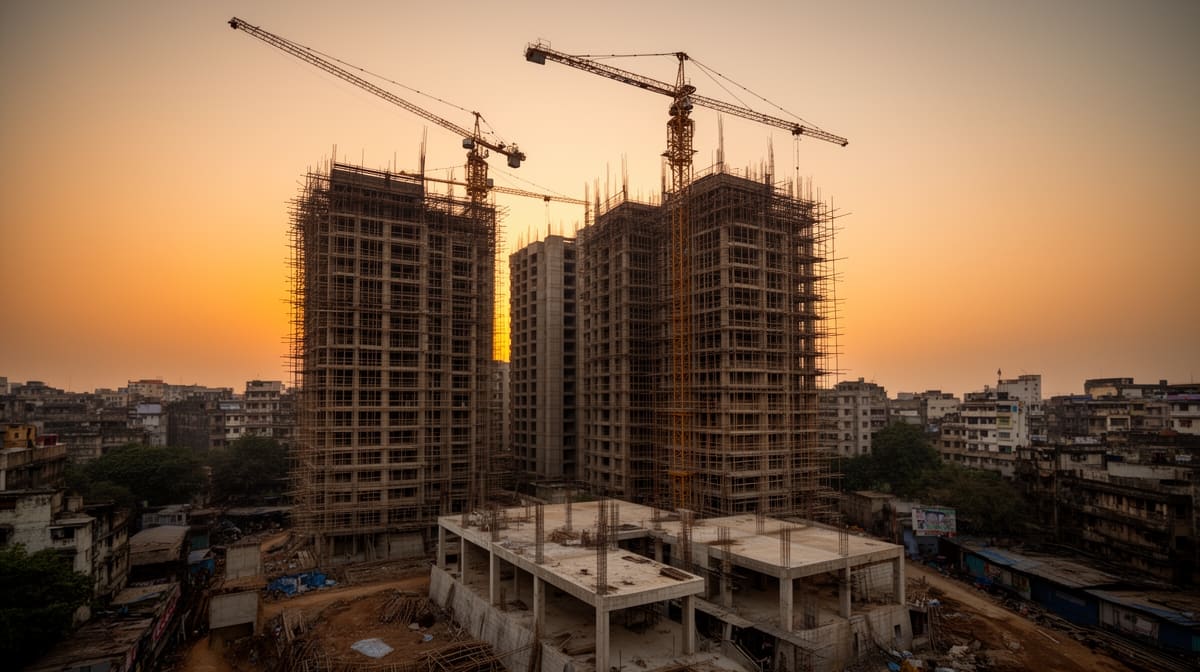
The dispute arose between Shri Mahavir Developers (Petitioners) and Shri Mahavir Jaina Vidyalaya, a charitable trust (Respondent No. 1), along with its trustees and former partners. The parties entered into a Memorandum of Understanding dated 09.04.2005 and a detailed Development Agreement dated 30.04.2007 for the redevelopment of property located in Gowalia Tank, Mumbai. The Developer was granted exclusive rights to redevelop the Trust’s property in exchange for a consideration of Rs. 3.69 Crores. The core obligation was to construct a new Hostel Building and a Jain Derasar (Temple) with a combined area of not less than 32,000 square feet (the "Agreed Area"), replacing the existing structures.
Key Facts
- The Development Agreement was structured under Regulation 33(7) of the Development Control and Promotion Regulations 2034 (DCR), which provided for incentive Floor Space Index (FSI) to enable enhanced development.
- Clause 5 of the Development Agreement provided that if the incentive area certified by the Municipal Authorities fell below 16,000 square feet (50% of the Agreed Area), the consideration of Rs. 3.69 Crores would be reduced at Rs. 2,500 per square foot of shortfall, with the Trust required to refund the excess amount.
- The Developer was obligated to construct the Hostel with highest priority, and the Agreed Area was non-negotiable under any circumstances.
- On 02.12.2014, the Municipal Corporation of Greater Mumbai (MCGM) issued an Intimation of Disapproval (IOD) for construction of only 25,838 square feet (Reduced Area), citing inability to verify the existence of a fifth floor of the existing Hostel.
- The Developer contended that the parties had mutually shifted from Regulation 33(7) to Regulation 33(6) of the DCR as an interim measure, pending verification of the fifth floor’s legality.
- On 25.11.2014, the Trust wrote to the Developer commending the IOD for 2880.58 square meters (31,006.56 sq. ft.), suggesting acquiescence to the Reduced Area.
- On 04.03.2016, the Trust issued a Termination Notice, alleging breach due to failure to secure approval for the Agreed Area.
- The Developer filed a counter-claim seeking declaration that the Termination Notice was illegal and that the Development Agreement remained subsisting.
Procedural History
- 09.04.2005: Memorandum of Understanding executed
- 30.04.2007: Development Agreement executed
- 02.12.2014: MCGM issued IOD for 25,838 sq. ft. (Reduced Area)
- 25.11.2014: Trust acknowledged receipt of IOD and praised Developer’s efforts
- 04.03.2016: Trust issued Termination Notice
- 2017 - 2019: Arbitration proceedings conducted by sole arbitrator (former Chief Justice of a High Court)
- 01.10.2019: Arbitral Award issued - held Termination Notice illegal, denied specific performance, ordered refund of Rs. 3.69 Crores with interest
- 17.10.2019: Arbitral Award modified (minor corrections)
- 12.02.2023: Commercial Arbitration Petition No. 128 of 2023 filed under Section 34 of the Arbitration and Conciliation Act, 1996
- 16.03.2026: Judgment reserved
- 06.04.2026: Judgment pronounced by Bombay High Court
The Parties' Positions
Developer’s Position:
- Termination was illegal under Clauses 28 and 29 of the Development Agreement, which barred unilateral termination.
- The parties had mutually deviated from Regulation 33(7) to Regulation 33(6) as a pragmatic compromise.
- The MCGM Order of 23.09.2014 approved 31,006.56 sq. ft. for the Hostel, and adding the Temple’s 600 sq. ft. reduced the shortfall to only 393.44 sq. ft.
- The Trust had consented to the Reduced Area through its 2014 letter.
- The Developer was ready and willing to perform and sought specific performance.
Trust’s Position:
- Delivery of 32,000 sq. ft. was the non-negotiable, fundamental condition of the contract.
- The Developer never demonstrated readiness to deliver the Agreed Area, as its pleadings consistently conditioned performance on uncertain future approvals.
- The shift to Regulation 33(6) was an interim step, not a contractual amendment.
- No mutual agreement existed to reduce the Agreed Area.
- The Developer’s conduct showed lack of commitment to the core obligation.
Relief Sought
The Developer sought:
- Setting aside of the Arbitral Award dated 01.10.2019 and its modification dated 17.10.2019
- Declaration that the Development Agreement is valid and subsisting
- Direction for specific performance of the Agreement
- In the alternative, damages for illegal termination
The Trust sought:
- Upholding of the Arbitral Award
- Delivery of vacant possession of the Subject Property
- Refund of Rs. 3.69 Crores with interest to be paid by the Trust to the Developer
The Legal Issue
Can a party successfully claim specific performance of a contract if it has not demonstrated readiness and willingness to perform its essential obligation, even where the other party’s termination of the contract is held to be illegal?
Arguments Presented
For the Petitioner (Developer)
The Developer argued that the Arbitral Tribunal’s findings were inherently contradictory: if the Termination Notice was illegal, the contract must subsist, and specific performance must follow as a matter of course. It relied on Clauses 28 and 29 of the Development Agreement, which provided for specific performance as the sole remedy for breach. It cited the MCGM Order dated 23.09.2014 and the Trust’s letter dated 25.11.2014 as evidence of mutual acquiescence to a revised area. It contended that the Tribunal ignored vital evidence and misapplied the doctrine of readiness and willingness by requiring absolute certainty where commercial flexibility was evident. It further argued that the dispute fell within the exclusive jurisdiction of the Small Causes Court under the Presidency Small Cause Courts Act, 1882, as it involved eviction of a licensee.
For the Respondent (Trust)
The Trust countered that specific performance is not automatic upon finding a termination illegal. It emphasized that the Agreed Area of 32,000 sq. ft. was the foundational term of the contract, and the Developer’s pleadings consistently conditioned performance on future approvals, demonstrating lack of readiness. It argued that the MCGM Order did not validate the fifth floor and that the Trust’s 2014 letter was merely an acknowledgment of progress, not a waiver of contractual rights. It contended that the license granted to the Developer was incidental to development rights and not a standalone tenancy protected under the PSCC Act. It also asserted that the Charity Commissioner’s consent was not a jurisdictional precondition for arbitration, especially since it was raised for the first time in Section 34 proceedings.
The Court's Analysis
The Court undertook a rigorous analysis of the Arbitral Tribunal’s reasoning under the narrow lens of Section 34 of the Arbitration and Conciliation Act, 1996, which permits interference only on grounds of patent illegality, perversity, or violation of public policy.
The Court rejected the Developer’s contention that the Tribunal’s findings were inherently contradictory. It held that the Tribunal had correctly distinguished between the legality of termination and the enforceability of specific performance. While the Tribunal found that the Trust had no contractual right to terminate - thus rendering the Termination Notice illegal - it also found that the Developer had never demonstrated readiness and willingness to deliver the Agreed Area of 32,000 sq. ft. This was not a mere technicality but a failure to meet the essential condition of the contract.
"The Learned Arbitral Tribunal has been satisfied that delivery of 32,000 square feet of redeveloped area is a fundamental and essential feature of the agreement between the parties, and that the Developer was not ready and willing to perform on this count."
The Court emphasized that readiness and willingness must be real and demonstrable, not merely pleaded. The Developer’s own pleadings revealed that its commitment to deliver the Agreed Area was contingent upon certification of a demolished fifth floor - a condition it could not substantiate. The Court noted that the Developer’s later argument - that the Temple’s area could be added to the Hostel’s area to reduce the shortfall - was raised for the first time in Section 34 proceedings and could not be entertained.
The Court also dismissed the jurisdictional challenges under the PSCC Act, holding that the Developer’s right to enter the property was an ancillary license tied to development rights, not a standalone tenancy. The Court cited Associate Builders v. Delhi Development Authority and Dyna Technologies v. Crompton Greaves Limited to underscore that courts must not re-appreciate evidence or substitute their view for that of the arbitrator, provided the reasoning is plausible and the outcome is commercially logical.
The Tribunal’s solution - invalidating termination, denying specific performance, and ordering restitution through refund of Rs. 3.69 Crores with interest - was held to be a balanced, equitable outcome that restored the parties to their pre-contractual positions without awarding damages to either side, given that both had entered the agreement with eyes open.
The Verdict
The Petition under Section 34 of the Arbitration and Conciliation Act, 1996, was dismissed. The Arbitral Award dated 01.10.2019, as modified on 17.10.2019, was upheld. The Trust was directed to refund Rs. 3.69 Crores to the Developer, along with interest at 9% per annum from 04.03.2016 until actual payment. The Developer was directed to deliver vacant and peaceful possession of the Subject Property to the Trust within 8 weeks of the judgment. Costs of Rs. 1,00,000 were awarded to the Trust.
What This Means For Similar Cases
Specific Performance Requires Concrete Readiness, Not Conditional Promises
- Practitioners must ensure that pleadings for specific performance clearly articulate how the party will fulfill the core obligation - not merely assert readiness.
- Conditional performance (e.g., "if approval is granted") is insufficient to establish readiness under Section 20 of the Specific Relief Act, 1963.
- Courts and arbitrators will examine contemporaneous conduct and correspondence to assess genuine intent.
Termination Illegality Does Not Automatically Trigger Specific Performance
- A finding that termination is unlawful does not create an automatic right to specific performance.
- The remedy of specific performance remains discretionary and requires proof of both contractual validity and party readiness.
- Restitution (refund + possession) may be the appropriate remedy where performance is impossible or unenforceable.
Ancillary Licenses Are Not Protected Tenancies Under PSCC Act
- Licenses granted under development agreements are incidental to the primary right to redevelop and do not attract protection under the PSCC Act.
- Courts will look at the nature of the right - whether it is for mere occupation or for commercial exploitation - to determine applicability of tenant protection laws.
- Arbitrability of such disputes is preserved if the license is tied to a broader commercial arrangement.