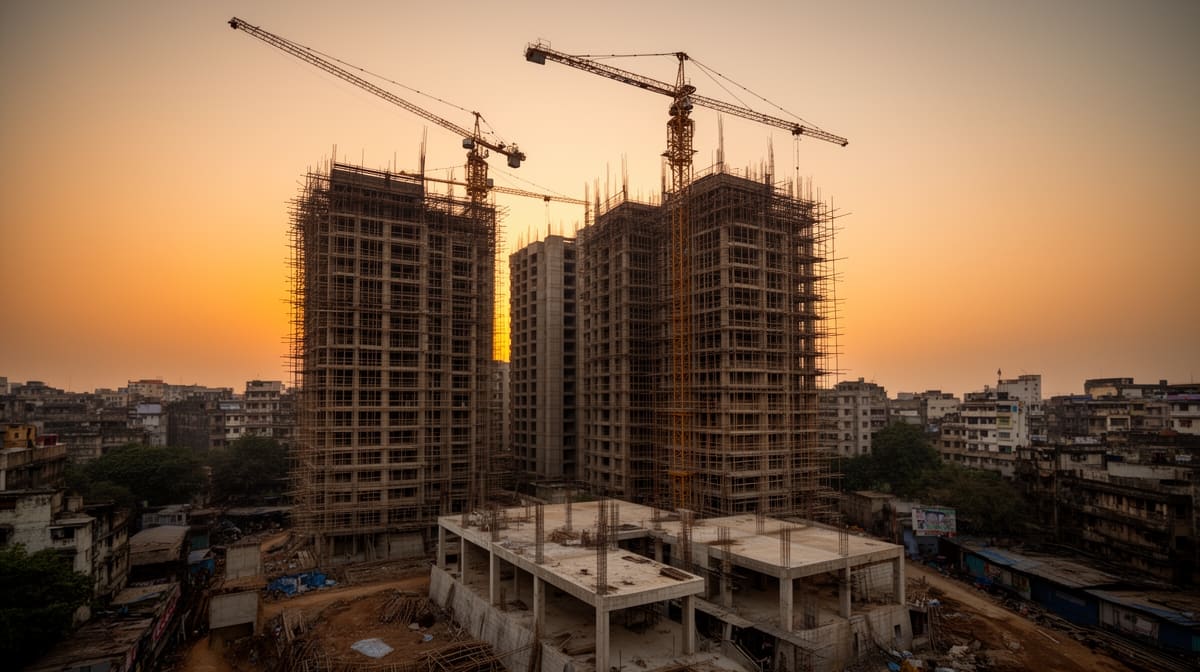
The Bombay High Court has delivered a pivotal ruling on the limits of arbitral tribunals' power to modify contractual terms under interim relief provisions. In a case involving a complex redevelopment agreement, the Court held that while tribunals may preserve the status quo, they cannot rewrite the parties' bargain by inventing new commercial mechanisms such as a right of first refusal for Transferable Development Rights. This judgment reinforces the principle that interim measures must protect, not reconstruct, the underlying contract.
Background & Facts
The Dispute
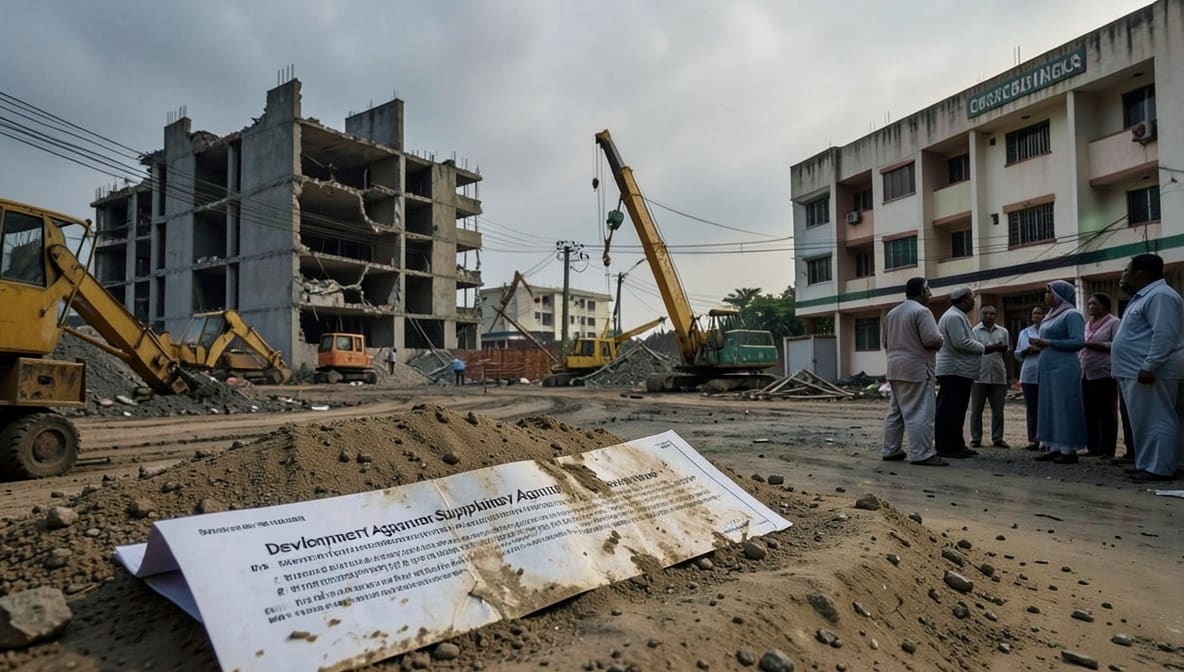
The dispute arose from a 2011 Development Agreement between Khimchand Prithviraj Kothari, the owner of a 608.70 square metre land in Mumbai, and M/s. Earth Realtors, a developer. The agreement envisaged redevelopment of a 1940-era building housing 84 tenants, with net revenues shared 45:55 in favour of the developer. Crucially, the agreement contemplated construction of a new building on the same land, with conveyance to a cooperative society formed by purchasers. The parties also entered into a 2012 Letter Agreement, wherein the developer agreed to bear the first Rs.6.25 crore in redevelopment expenses, after which costs would be shared equally.
Procedural History
- 2011: Development Agreement executed with mutual obligations on redevelopment and revenue sharing.
- 2013: Municipal Commissioner granted concession on open space requirement, enabling higher building height.
- 2014: Supreme Court in Kohinoor CTNL struck down the enabling provision for such concessions, invalidating the approved plan.
- 2023: Building demolished after obtaining IOD under new DCPR, 2034, which permitted 32-metre buildings without open space.
- June 4, 2024: Owner issued Termination Notice, alleging frustration of contract and breach by developer.
- July 3, 2025: Dispute referred to arbitration under Section 9 of the Arbitration and Conciliation Act.
- October 28, 2025: Arbitral Tribunal issued Impugned Order staying termination and imposing new TDR sale conditions.
- February 24, 2026: Bombay High Court heard challenge under Section 37.
Relief Sought
The Petitioner sought to set aside the Impugned Order, arguing that the Arbitral Tribunal had unlawfully rewritten the Development Agreement by creating a novel right of first refusal for TDR sales and mandating monthly financial disclosures beyond contractual obligations. The Respondent sought to uphold the order as a necessary interim measure to preserve the subject matter of arbitration.
The Legal Issue
The central question was whether an arbitral tribunal, under Section 17 of the Arbitration and Conciliation Act, 1996, may impose new contractual terms - such as a structured right of first refusal and mandatory price discovery mechanism for Transferable Development Rights - that were never contemplated by the parties in their original agreement.
Arguments Presented
For the Petitioner
The Petitioner contended that the Impugned Order violated Section 14(1)(b) of the Specific Relief Act, 1963, which bars specific performance of contracts requiring mutual volition. The developer’s right to sell TDRs was never part of the Development Agreement, which only permitted in-situ development. The Tribunal’s imposition of a four-week notice period and right of first refusal effectively created a new contract, contrary to the parties’ intent. The 2012 Letter Agreement, though suppressed by the developer, further demonstrated the parties’ mutual control over expenses and terms. The Petitioner relied on Sushil Kumar Agarwal v. Meenakshi Sadhu to argue that the agreement was not amenable to specific performance due to its dependence on joint decision-making.
For the Respondent
The Respondent argued that the Tribunal’s order was a necessary interim measure to prevent irreparable harm and preserve the subject matter of arbitration. The developer had already incurred substantial expenses, demolished the building, and executed PAAAs with tenants. The TDR mechanism was not a new contract but a protective device to ensure the owner received fair value from development rights generated from his land. The Tribunal’s directions on expense disclosure were justified under Clause 11 of the Development Agreement, which permitted the developer to incur costs and recover them from net revenues. The owner’s delay in seeking relief and failure to invoke frustration until after demolition undermined his claim.
The Court's Analysis
The Bombay High Court undertook a meticulous review of the Arbitral Tribunal’s order, distinguishing between permissible interim protection and impermissible contractual rewriting. The Court affirmed that Section 17 empowers tribunals to grant interim measures that preserve the status quo, but not to create new rights or obligations.
"The Learned Arbitral Tribunal has rendered a reasonable finding that despite the 'no termination clause' in the Development Agreement, the contract was indeed capable of termination on account of any material breach."
The Court upheld the Tribunal’s stay on the Termination Notice, its direction for financial disclosures, and its restraint on unilateral TDR sales. However, it found the right of first refusal mechanism in Paragraphs 84(e) and (f) of the Impugned Order to be fundamentally flawed. The Tribunal had effectively mandated a price discovery process and a binding sale mechanism, which transformed an interim protective order into a conclusive contractual arrangement.
The Court emphasized that Section 17 does not permit tribunals to act as arbitrators of commercial fairness beyond the parties’ agreement. The four-week window for the owner to secure a higher buyer, coupled with mandatory deposit of proceeds and monthly account disclosures, went beyond preservation and entered the realm of contract modification. Such a structure, the Court held, was not merely protective but prescriptive, and thus ultra vires the scope of interim relief.
The Court further noted that the owner’s conduct - delay in filing proceedings, failure to invoke frustration after Kohinoor CTNL, and participation in the Supplementary Agreement draft - undermined his claim of sudden breach. The Tribunal’s finding that the developer had a material interest in the land under Sushil Kumar Agarwal was upheld, affirming that development agreements with revenue-sharing structures are amenable to specific performance.
The Verdict
The Petitioner succeeded in part. The Bombay High Court upheld the Impugned Order in all respects except the TDR sale mechanism. The Court held that interim relief cannot create new contractual rights, and modified Paragraphs 84(e) and (f) to require the Arbitral Tribunal’s prior approval for any TDR sale, thereby restoring the balance between protection and contractual fidelity.
What This Means For Similar Cases
Interim Relief Cannot Create New Contractual Terms
- Practitioners must argue that any interim order must strictly preserve the existing contractual framework, not introduce novel commercial mechanisms.
- Tribunals may restrain parties from acting but cannot mandate price discovery, right of first refusal, or mandatory sale procedures absent explicit contractual terms.
- Any attempt to impose such terms will be struck down as an impermissible rewriting of the contract under Section 17.
TDRs Must Be Handled Within Original Agreement Bounds
- Where development rights are not explicitly transferable in the agreement, arbitral tribunals cannot infer such rights as part of interim relief.
- Developers cannot use interim orders to monetize TDRs independently; any sale must be subject to the original agreement’s revenue-sharing and consent provisions.
- Owners may challenge TDR-related interim directions as exceeding the tribunal’s statutory mandate.
Delay and Conduct Matter in Interim Applications
- Delay in seeking relief, especially after substantial project milestones (e.g., demolition, IOD issuance), weakens claims for interim protection.
- Parties must raise all contractual objections - such as suppression of side agreements - at the earliest opportunity; post-hoc invocation may be viewed as tactical.
- Courts will weigh conduct holistically: silence, participation in negotiations, and failure to invoke frustration can negate claims of breach or frustration.